Fires of Consciousness
 83
83

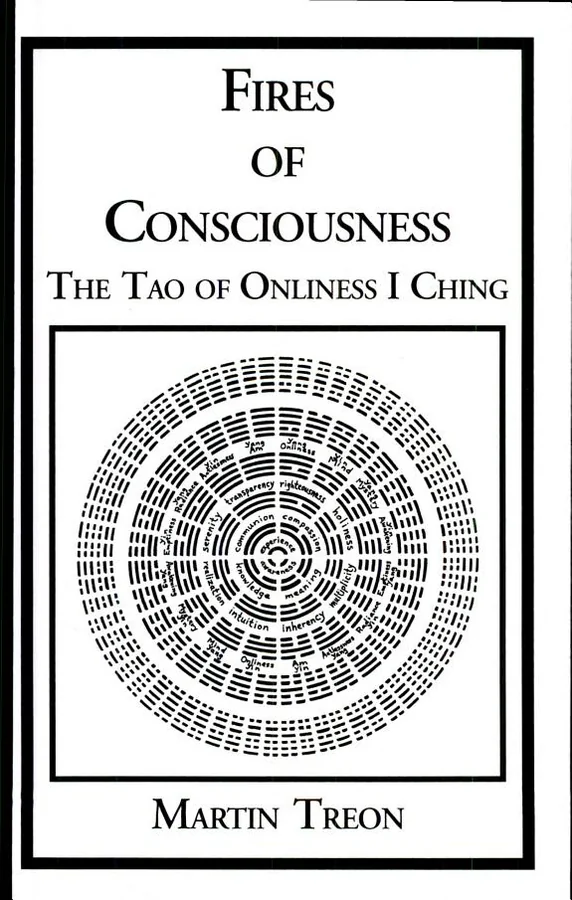
Fires of Consciousness
Martin Treon's "Fires of Consciousness" is not a book for the casual dabbler. Its strength lies in its unyielding commitment to exploring the mechanics of spiritual transformation with a directness that can feel almost austere. Treon avoids flowery language, opting instead for precise, sometimes demanding, expositions on concepts like the "Inner Fire." One particularly striking passage discusses the difference between intellectual assent to esoteric doctrines and the actual energetic shift required for genuine progress, a distinction often blurred in contemporary spiritual discourse. However, the book's density can also be its primary limitation. Without prior grounding in Hermeticism or Gnosticism, readers may find themselves adrift in its technical terminology and abstract arguments. The lack of explicit real-world examples or case studies, while perhaps intentional to maintain focus on inner mechanics, can make the concepts feel somewhat detached. Despite these challenges, "Fires of Consciousness" offers a potent distillation of esoteric principles for those willing to engage deeply.
📝 Description
83
Martin Treon's 1996 book "Fires of Consciousness" dissects esoteric principles for personal evolution.
Published in 1996, "Fires of Consciousness" is not an introductory text. Martin Treon wrote it for serious students of Western esotericism, assuming familiarity with basic occult concepts. The book offers a deep examination of complex metaphysical frameworks and their application to personal growth. It challenges conventional interpretations and encourages contemplation of inner transformation.
Treon distinguishes between intellectual knowledge and experiential change, focusing on spiritual awakening. The "Inner Fire" is presented as a key transformative agent in the psyche, drawing parallels to alchemical concepts like the *ignis philosophicus*. The work also covers the subtle bodies and their energetic interactions, explaining their role in spiritual development. This text is for those seeking a systematic approach to inner transformation.
Published in the mid-1990s, "Fires of Consciousness" engages with traditions revived in the late 19th and early 20th centuries, such as Theosophy and ceremonial magic. It offers a perspective distinct from the spiritual literature prevalent at the time, aligning more closely with traditional occult philosophy. The book addresses a period of renewed interest in esoteric studies.
💡 Why Read This Book?
• Gain a precise understanding of the "Inner Fire" concept, differentiating it from purely psychological heat and connecting it to alchemical processes as detailed by Treon. • Learn about the energetic mechanics of the subtle bodies and their role in spiritual progression, a core tenet explored in the text's mid-section. • Acquire a critical framework for evaluating spiritual growth beyond superficial intellectualization, as advocated in the book's concluding chapters on experiential realization.
⭐ Reader Reviews
Honest opinions from readers who have explored this book.
❓ Frequently Asked Questions
What is the primary focus of Martin Treon's "Fires of Consciousness"?
The book primarily focuses on the mechanics of spiritual transformation and consciousness evolution through esoteric principles, particularly drawing on alchemical and Gnostic ideas to explain inner development.
When was "Fires of Consciousness" originally published?
Martin Treon's "Fires of Consciousness" was first published in 1996, placing it within the wave of esoteric literature accessible in the digital age.
Is "Fires of Consciousness" suitable for beginners in esoteric studies?
It is generally not recommended for absolute beginners. The work assumes familiarity with foundational esoteric concepts and delves into complex metaphysical frameworks, making it more suitable for intermediate to advanced students.
What esoteric traditions influence "Fires of Consciousness"?
The book draws heavily from Western Esoteric traditions, including Hermeticism, Gnosticism, and alchemical philosophy, integrating their concepts into its exploration of consciousness.
Does the book offer practical exercises for spiritual development?
While the book outlines principles for spiritual development, its focus is more on the theoretical and energetic mechanics rather than providing a step-by-step guide with explicit exercises. It aims to inform the reader's inner work.
What distinguishes "Fires of Consciousness" from other spiritual books from the 1990s?
Unlike much New Age literature of the era, Treon's work offers a more rigorous and traditionally aligned perspective, avoiding generalized self-help platitudes for a systematic exploration of occult philosophy.
🔮 Key Themes & Symbolism
The Inner Fire Metaphor
The central theme revolves around the concept of an 'Inner Fire,' not as a mere psychological metaphor but as an actual energetic principle of transformation within the human constitution. Treon explores how this internal fire, akin to the alchemical *ignis philosophicus*, is essential for spiritual purification and awakening. The text details how cultivating and directing this force leads to the dissolution of lower psychic patterns and the emergence of higher consciousness, distinguishing between passive experience and active, directed spiritual work.
Consciousness as an Energetic Field
Treon posits consciousness not as a passive byproduct of the brain but as a dynamic, energetic field that can be shaped and expanded. The book elaborates on the subtle bodies (etheric, astral, mental) as vehicles for this consciousness, explaining how their energetic integrity and interrelationship are crucial for spiritual progress. It examines the interplay of these bodies with the physical form and how imbalances or blockages within them impede spiritual realization, offering a framework for understanding esoteric healing and development.
Experiential Realization vs. Intellectual Grasp
A significant theme is the radical distinction between merely knowing esoteric doctrines intellectually and truly experiencing them. Treon argues that true spiritual transformation occurs through direct, energetic realization, not through accumulating knowledge alone. The work critiques the tendency in esoteric circles to prioritize theoretical study over the practical application and internal alchemical work required to bring about genuine change in one's being and perception.
The Alchemical Process of Self-Transformation
The book interprets the stages of spiritual awakening through the symbolic language and processes of classical alchemy. It applies alchemical concepts like dissolution (*solutio*), purification (*purificatio*), and coagulation (*coagulatio*) to the inner work of the aspirant. Treon suggests that understanding these alchemical stages provides a blueprint for the psychological and energetic restructuring necessary to achieve higher states of consciousness and spiritual liberation.
💬 Memorable Quotes
Direct passages from the work, attributed to the author.
“The true fire within is not a passing emotion but a directed force for transmutation.”
— This statement emphasizes the active and purposeful nature of spiritual energy. It differentiates genuine inner work from fleeting emotional states, highlighting the alchemical principle of using focused will and understanding to effect profound change.
“To know the path is not to walk it; the energetic shift precedes intellectual comprehension.”
— This highlights Treon's core argument against purely academic approaches to esotericism. It suggests that energetic alignment and internal transformation are the true drivers of spiritual progress, occurring before or alongside intellectual understanding.
“The subtle bodies are not mere concepts but energetic matrices that shape our reality.”
— This points to the tangible, functional aspect of the subtle anatomy in esoteric thought. It implies that understanding and working with these energetic layers is key to influencing one's experiences and consciousness.
“The mind, when rightly focused, becomes the crucible for spiritual fire.”
— This interpretation emphasizes the role of mental discipline and intention in esoteric practice. It positions the focused mind as the essential tool or vessel for channeling and utilizing the transformative 'Inner Fire'.
💡 Key Ideas
Editorial paraphrase of the work's core concepts — not direct quotes.
Alchemy of the soul requires the dissolution of the fixed to allow for the birth of the new.
This paraphrased concept directly links inner work to alchemical principles. It refers to the necessary breaking down of ingrained personality structures or limiting beliefs to pave the way for spiritual rebirth and higher awareness.
🌙 Esoteric Significance
Tradition
The work is deeply rooted in the Western Esoteric tradition, drawing heavily from Hermeticism and Gnosticism, with significant nods to alchemical philosophy. Treon's approach can be seen as a modern articulation of concepts found in classical Hermetic texts like the Corpus Hermeticum, reinterpreting them through the lens of consciousness studies and energetic principles. It departs from simpler forms of New Age spirituality by demanding a rigorous engagement with the symbolic and energetic mechanics of transformation, aligning more closely with the initiatory schools of thought.
Symbolism
Key symbols include the 'Inner Fire,' representing the divine spark and transformative energy within the human being, analogous to the alchemical *ignis philosophicus*. The concept of the 'subtle bodies' (etheric, astral, mental) is central, symbolizing the layered energetic vehicles through which consciousness operates and evolves. Treon also implicitly uses alchemical symbolism, framing spiritual growth as a process of purification and transmutation of the lower self into a higher spiritual nature.
Modern Relevance
Contemporary practitioners of Western Esotericism, particularly those focused on consciousness research and inner alchemy, find Treon's work relevant. Thinkers exploring the energetic basis of psychology and spiritual development, as well as modern ceremonial magicians seeking a theoretical underpinning for their practices, draw upon his articulation of subtle energies and transformative processes. His emphasis on direct energetic realization continues to inform discussions on authentic spiritual evolution versus purely intellectual pursuits.
👥 Who Should Read This Book
• Students of Hermeticism and Gnosticism seeking a deeper, more systematic exploration of consciousness transformation and the role of inner energetic forces. • Aspiring practitioners of alchemy who wish to understand the psychological and energetic parallels to the Great Work, as described in Treon's text. • Individuals engaged in comparative esoteric studies looking to analyze the integration of alchemical and Gnostic concepts within a 1990s esoteric framework.
📜 Historical Context
Martin Treon's "Fires of Consciousness" emerged in 1996, a period marked by the internet's increasing influence on the dissemination of esoteric knowledge. This era saw a resurgence of interest in Western occult traditions, moving beyond the more New Age-centric spiritual movements of the preceding decades. Treon's work engaged with the legacy of Hermeticism and Gnosticism, traditions that had seen significant scholarly and popular revival since the late 19th century, notably through figures like Helena Blavatsky and the Theosophical Society. Unlike contemporary popularizers who often simplified complex ideas, Treon's approach was more rigorous, aligning with a desire among some students for deeper, less compromised explorations of occult philosophy. His work can be seen as part of a lineage that includes authors like Dion Fortune, who also sought to articulate the practical application of esoteric principles within a structured framework, though Treon's emphasis on the energetic mechanics of consciousness perhaps set him apart.
📔 Journal Prompts
The 'Inner Fire' as a directed force: How does this concept challenge common understandings of spiritual energy?
Reflect on the energetic mechanics of the subtle bodies as described by Treon. What imbalances might you perceive?
Contrast intellectual knowledge of esoteric principles with direct energetic realization. Where do you find yourself on this spectrum?
The alchemical process of dissolution: Identify a fixed aspect of your personality that needs transmutation.
Consider the mind as a crucible. How can intention and focus be used to direct inner transformative energies?
🗂️ Glossary
Inner Fire
A central concept in Treon's work, representing an intrinsic, energetic principle within the human constitution that serves as the catalyst for spiritual transformation and consciousness evolution, akin to the alchemical 'philosophical fire'.
Subtle Bodies
Energetic vehicles or layers of consciousness beyond the physical body, typically including the etheric, astral, and mental bodies. These are considered essential for spiritual experience and development.
Energetic Mechanics
The study and understanding of how spiritual and psychic energies function, interact, and produce effects within the individual and their environment, as explored in esoteric traditions.
Transmutation
In an esoteric context, the process of transforming lower or impure aspects of the self (psychic, emotional, energetic) into higher, purified states, mirroring alchemical processes of changing base metals into gold.
Experiential Realization
True spiritual understanding and transformation achieved through direct, internal experience and energetic shifts, as opposed to purely intellectual comprehension or theoretical knowledge.
Ignis Philosophicus
Latin for 'Philosopher's Fire,' a key concept in alchemy referring to the subtle, transformative fire used by initiates to purify and perfect matter, often interpreted esoterically as the divine spark or spiritual will within.
Solutio
The alchemical stage of dissolution, representing the breaking down of solidified or fixed forms. Esoterically, it relates to the dissolution of egoic structures, limiting beliefs, and psychic blockages to allow for renewal.
This book appears in 1 collection
🔮 Readers Also Liked
Browse all →







From the “I Ching” Collection
View all →








More Free Occult Philosophy Books
View all →