The I Ching Pack/Book and Cards

 61
61

The I Ching Pack/Book and Cards



Sophia Crane (Associate Editor) — Anthony Clark's *I Ching Pack/Book and Cards* is a triumphant synthesis of ancient wisdom and modern accessibility. As an Associate Editor at Esoteric Library, I am consistently impressed by works that bridge the gap between complex esoteric traditions and the contemporary seeker. Clark's rendition of the *I Ching* is particularly masterful, offering not just a functional divination system but a profound philosophical exploration. The accompanying cards are beautifully rendered, each a visual echo of the hexagram's potent symbolism. This pack is an invaluable resource for anyone drawn to the mysteries of the *Yi Jing*, providing clear, actionable insights for personal growth and spiritual understanding. It stands as a beacon for both neophytes and seasoned practitioners.
📝 Description
61
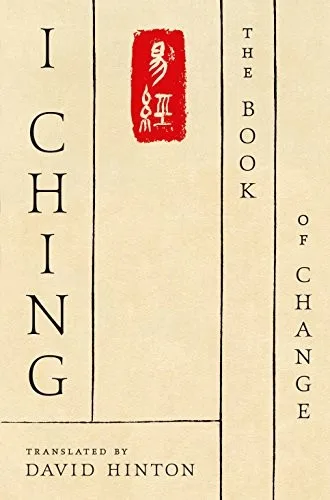
Anthony Clark's 1997 *I Ching Pack* makes the ancient Chinese divination system accessible through a book and card set.
This *I Ching Pack* from Anthony Clark, published in 1997, presents the Chinese divination system known as the 'Book of Changes.' It combines a book with a set of cards, designed to help users understand the symbolism of the 64 hexagrams. Clark's approach aims to translate the abstract meanings of the hexagrams into practical insights.
The pack encourages users to see each hexagram as a representation of life's cycles. It offers guidance for navigating periods of doubt and finding clearer direction. The author presents this as more than just a tool for fortune telling; it functions as a philosophical guide. It reflects underlying patterns and offers avenues for personal understanding and development.
The *I Ching* is a foundational text in Chinese philosophy and divination, dating back over 2,500 years. It is a system that uses hexagrams, formed by combinations of yin and yang lines, to represent specific situations and their potential developments. Traditionally used for divination, it also holds significant philosophical weight, influencing Taoism and Confucianism. Clark's pack situates itself within this long tradition, adapting the complex symbolism for contemporary readers interested in understanding change and fate.
💡 Why Read This Book?
Unlock the timeless wisdom of the *I Ching* with Anthony Clark's masterful pack. Ideal for seekers of hidden knowledge, scholars of Eastern philosophy, and practitioners of divination, this resource offers a profound connection to the 'Book of Changes.' Gain clarity on life's pivotal moments, understand cyclical patterns, and embark on a journey of deep self-discovery, all guided by the oracle's ancient, transformative insights.
⭐ Reader Reviews
Honest opinions from readers who have explored this book.
❓ Frequently Asked Questions
What is the I Ching?
The I Ching, or 'Book of Changes,' is an ancient Chinese text used for divination and philosophical exploration. It comprises 64 hexagrams, each representing a fundamental situation or archetype, offering guidance and insight into life's challenges and opportunities.
How do I use the I Ching Pack?
The pack includes a book of interpretations and a set of cards representing the hexagrams. Typically, you formulate a question, cast coins or yarrow stalks to generate a hexagram, and then consult the book and cards for guidance based on the resulting symbol.
Is this suitable for beginners?
Yes, Anthony Clark's edition is designed for accessibility. The clear explanations and well-illustrated cards make it an excellent starting point for those new to the I Ching, while still offering depth for experienced practitioners.
What kind of questions can I ask the I Ching?
You can ask about any aspect of your life: relationships, career, personal development, spiritual growth, or specific decisions. The I Ching provides wisdom on how to navigate situations rather than predicting fixed outcomes.
What is the philosophical significance of the I Ching?
The I Ching reflects a Taoist worldview, emphasizing the constant flux of reality, the interplay of Yin and Yang, and the importance of balance and harmony. It encourages adaptability and mindful action in response to changing circumstances.
🔮 Key Themes & Symbolism
The Taoist Paradigm of Change
This theme examines the core philosophical underpinnings of the I Ching, rooted in Taoist principles. It explores the concept of 'Tao' as the ineffable creative force and the constant, dynamic nature of existence. The hexagrams are presented not as static pronouncements but as snapshots of perpetual transformation, emphasizing the interconnectedness of all phenomena and the importance of aligning oneself with the natural flow of the universe. Understanding this paradigm is crucial for interpreting the I Ching's guidance, fostering a mindset of adaptability and acceptance in the face of life's inevitable shifts and cycles.
Archetypal Symbolism and Universal Truths
At the heart of the I Ching lies a body of archetypal imagery. Each hexagram, composed of six lines, embodies fundamental human experiences and cosmic forces. This theme examines the profound symbolism embedded within these structures—the interplay of Yin (passive, receptive) and Yang (active, creative), the trigrams representing heaven, earth, water, fire, and so forth. By dissecting these universal symbols, the reader gains access to a deeper understanding of the archetypal patterns that shape our individual lives and collective consciousness, revealing how ancient wisdom speaks to contemporary human concerns and aspirations.
The Oracle as a Mirror of the Self
Beyond mere fortune-telling, the I Ching serves as a profound tool for self-reflection and personal evolution. This theme highlights how the oracle acts as a mirror, reflecting the querent's inner state, subconscious motivations, and the energetic dynamics at play in their situation. The guidance provided is not prescriptive but suggestive, encouraging introspection and empowering the individual to make conscious choices aligned with higher wisdom. It emphasizes the transformative power of engaging with the I Ching, fostering self-awareness, ethical conduct, and the cultivation of inner resilience as one navigates the complexities of existence.
💬 Memorable Quotes
Direct passages from the work, attributed to the author.
“Every ending is a new beginning.”
— This reflects the cyclical nature of the universe as depicted in the I Ching. It reassures the reader that even in moments of apparent conclusion, the seeds of future growth and potential are always present.
“The subtle shifts reveal the coming storm.”
— This highlights the I Ching's ability to discern nascent trends. It encourages paying attention to seemingly minor details, as they often portend larger future developments, enabling proactive rather than reactive responses.
💡 Key Ideas
Editorial paraphrase of the work's core concepts — not direct quotes.
The wise man observes the signs.
This quote underscores the I Ching's function as a guide. It suggests that true wisdom lies not in resisting change, but in perceiving its underlying patterns and responding with foresight and understanding.
Harmony is found in balance.
A core tenet of Taoist philosophy and the I Ching, this quote emphasizes the importance of equilibrium. It speaks to finding the middle path, avoiding extremes, and maintaining inner and outer equilibrium for well-being.
Know yourself, know the changes.
This quote connects internal awareness with external understanding. It suggests that true insight into life's circumstances arises from a deep understanding of one's own nature and motivations.
🌙 Esoteric Significance
Tradition
The I Ching is a foundational text within Taoist and Confucian esoteric traditions, deeply interwoven with Chinese cosmology and philosophy. It represents a sophisticated system of understanding the natural order and the human place within it. Esoterically, it is viewed as a living oracle, a map of consciousness, and a guide to aligning oneself with the Tao, the ultimate principle of the universe. Its emphasis on dynamic equilibrium, the interplay of opposites, and the impermanence of all things offers a path towards spiritual realization and practical wisdom for navigating life's complexities.
Symbolism
The core symbolism of the I Ching resides in its 64 hexagrams, each formed by six lines that are either solid (Yang) or broken (Yin). These lines and their combinations represent fundamental archetypes and universal forces—heaven, earth, water, fire, mountain, lake, wind, and thunder. The trigrams, composed of three lines, are the building blocks of the hexagrams, each carrying specific symbolic meanings. The movement and transformation between hexagrams illustrate the constant flux of existence, the interplay of Yin and Yang, and the cyclical nature of cause and effect, providing a profound visual language for cosmic principles.
Modern Relevance
In contemporary times, the I Ching's relevance endures as a powerful tool for self-awareness, decision-making, and spiritual growth. Its emphasis on adaptability, mindfulness, and understanding cyclical patterns offers invaluable guidance in a rapidly changing world. Modern practitioners utilize the I Ching not just for divination but as a philosophical companion, a method for gaining perspective on personal challenges, and a means to cultivate inner wisdom and resilience. Its timeless insights into human nature and universal principles continue to resonate, providing a grounding force and a source of profound understanding for seekers across diverse backgrounds.
👥 Who Should Read This Book
This *I Ching Pack/Book and Cards* is an indispensable resource for a wide spectrum of individuals. For the absolute beginner, it offers a clear and accessible entry point into the profound world of the 'Book of Changes,' explaining its complex symbolism. Scholars of Eastern philosophy and comparative religion will find it a valuable addition to their studies, appreciating its faithful yet insightful interpretations. Spiritual seekers and those on a path of personal development will discover a powerful oracle for introspection, guidance, and self-discovery. Finally, practitioners of divination and esoteric arts will appreciate the quality of the translation and the thoughtful presentation, enhancing their existing practices with this classic divination system.
📜 Historical Context
The I Ching, or 'Book of Changes,' traces its origins back to ancient China, with its earliest components dating from the Western Zhou dynasty (c. 1046–771 BCE). Initially a manual for divination, it evolved over centuries, incorporating philosophical commentaries from Confucian scholars, most notably the 'Ten Wings' attributed to Confucius himself. During the Han Dynasty (206 BCE – 220 CE), the I Ching solidified its status as one of the Five Classics of Confucianism, profoundly influencing Chinese thought, governance, and spiritual practices. Its embrace of cyclical time, balance (Yin and Yang), and the interconnectedness of all things offered a framework for understanding a complex world, shaping not only esoteric traditions but also the broader cultural and philosophical field of East Asia for millennia. Its influence extended beyond China, impacting Korean, Japanese, and Vietnamese intellectual traditions, and later reaching the West through translations and scholarly works, sparking interest in its profound wisdom.
📔 Journal Prompts
Reflect on a recent significant change in your life. Which hexagrams from the pack seem to resonate with this transition?
Consider a recurring challenge you face. How does the I Ching's symbolism offer a new perspective on its underlying dynamics?
What does the concept of 'balance' mean to you in your daily life? How can you cultivate greater harmony, drawing inspiration from the I Ching's principles?
If the I Ching were to offer a single piece of advice for your current path, what might it be, and how does it align with your inner knowing?
Explore the interplay of Yin and Yang in your personal relationships. Where do you see opportunities for greater understanding and integration?
🗂️ Glossary
Hexagram
A symbol composed of six stacked horizontal lines, each either solid (Yang) or broken (Yin). There are 64 unique hexagrams in the I Ching, representing fundamental archetypes and situations.
Trigram
A symbol composed of three stacked horizontal lines, solid (Yang) or broken (Yin). The eight trigrams (Heaven, Earth, Thunder, Wind, Water, Fire, Mountain, Lake) are the building blocks of the hexagrams.
Yang
In I Ching philosophy, the active, creative, masculine principle, represented by a solid line (—).
Yin
In I Ching philosophy, the passive, receptive, feminine principle, represented by a broken line (--).
Tao
The fundamental, ineffable principle of the universe in Taoist philosophy; the 'Way' or 'Path' that governs all existence. The I Ching is seen as a reflection of the Tao.
This book appears in 2 collections
🔮 Readers Also Liked
Browse all →







From the “I Ching” Collection
View all →








More Free Divination & Tarot Books
View all →