Female Buddhas
 78
78

Female Buddhas
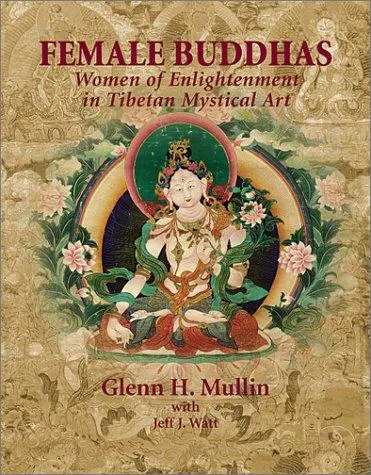
Glenn H. Mullin and Jeff J. Watt's "Female Buddhas" offers a crucial corrective to the predominantly male-centric narratives that have long dominated Buddhist studies and popular understanding. The strength of this work lies in its comprehensive cataloging of female enlightened beings, drawing from a wide array of Tibetan Buddhist traditions. The detailed descriptions of iconography, paired with biographical sketches, provide a solid foundation for appreciating these figures. One particularly illuminating section discusses the lineage of Yeshe Tsogyal, highlighting her pivotal role in the transmission of Nyingma teachings. A potential limitation, however, is the sheer density of information, which might prove overwhelming for casual readers. While the scholarly apparatus is robust, the prose could occasionally benefit from greater accessibility for those less familiar with Buddhist terminology. Nonetheless, the book serves as an indispensable resource for anyone seeking to understand the full spectrum of spiritual realization within Buddhism. It is a vital scholarly undertaking that brings essential figures out of the shadows.
📝 Description
78
Published in 2002, Female Buddhas examines the feminine principle in Buddhist traditions.
This 2002 volume by Glenn H. Mullin and Jeff J. Watt details the lives, teachings, and iconography of female figures who achieved Buddhahood. It moves beyond commonly discussed male figures to highlight the contributions and spiritual attainments of women across various Buddhist schools and historical periods. The book is suited for practitioners and scholars of Buddhism, especially those interested in comparative religion, gender in religion, and Buddhist iconography. It appeals to individuals seeking a deeper understanding of enlightenment's diverse expressions and the historical roles women played in spiritual traditions. Those interested in Buddhist art history and its symbolic representations will also find considerable value in its content.
The work emerged during a time of growing academic and spiritual attention to previously overlooked voices in religious studies. As Buddhist scholarship progressed globally, a need arose to re-examine canonical narratives and historical records to incorporate the experiences and contributions of women. The 2002 publication aligned with increasing feminist scholarship and a wider re-evaluation of patriarchal structures within many established religions, including Buddhism.
Female Buddhas addresses the esoteric tradition within Buddhism that acknowledges the potential for Buddhahood in feminine forms. This challenges interpretations that have historically centered male attainment. The book examines specific mandalas, mantras, and tantric practices associated with female deities, placing them within the broader context of Vajrayana's complex symbolic systems. It traces the historical development and transmission of these feminine lineages, asserting their legitimate place within the Buddhist path to enlightenment.
💡 Why Read This Book?
• Gain an understanding of the historical and doctrinal basis for female enlightenment, moving beyond common misconceptions, by examining specific figures like Yeshe Tsogyal, whose role in the Nyingma tradition is detailed. • Appreciate the nuanced iconography and symbolism associated with female Buddhas, learning to interpret their unique visual representations and their significance, as explored in sections on tantric goddesses. • Discover the diverse lineages and transmission histories of female enlightened masters, understanding their integral role in preserving and advancing Buddhist teachings across centuries, as presented through various schools and periods.
⭐ Reader Reviews
Honest opinions from readers who have explored this book.
❓ Frequently Asked Questions
What is the historical significance of the 2002 publication date for 'Female Buddhas'?
The 2002 publication date places 'Female Buddhas' within a growing wave of feminist scholarship and a broader re-evaluation of gender roles in religious traditions, aiming to highlight previously underrepresented figures and teachings.
Which specific Buddhist traditions are primarily covered in Glenn H. Mullin's 'Female Buddhas'?
The work primarily focuses on Tibetan Buddhist traditions, exploring figures and lineages within schools like the Nyingma, Kagyu, and Sakya, among others.
How does 'Female Buddhas' address the concept of Buddhahood not being limited by gender?
It achieves this by presenting biographical accounts and doctrinal explanations of numerous women who attained Buddhahood, demonstrating that enlightenment is accessible to all practitioners regardless of gender.
Are there discussions of specific female Buddhas or enlightened women?
Yes, the book extensively covers figures such as Yeshe Tsogyal, Tara, and various dakinis, detailing their lives, teachings, and symbolic representations.
What kind of insights into Buddhist art does 'Female Buddhas' provide?
It offers detailed insights into the iconography of female Buddhas, explaining the symbolic meaning of their attributes, postures, and mandalas, which is crucial for understanding Buddhist art history.
Who are Glenn H. Mullin and Jeff J. Watt, the authors of 'Female Buddhas'?
Glenn H. Mullin is a renowned scholar of Tibetan Buddhism and author, while Jeff J. Watt is a prominent curator and scholar specializing in Himalayan art, particularly Buddhist iconography.
🔮 Key Themes & Symbolism
The Feminine Principle in Enlightenment
This theme interrogates the notion that Buddhahood is solely attainable by males. The book meticulously details the lives and spiritual achievements of numerous women who reached full enlightenment, presenting them not as exceptions but as integral figures within Buddhist cosmology. It highlights how the feminine principle, often associated with wisdom (prajna) and emptiness, plays an important role in the path to awakening, challenging patriarchal interpretations that have historically marginalized female spiritual authority.
Iconography of Female Buddhas
A significant focus is placed on the visual language used to depict female Buddhas and enlightened female practitioners. This includes analyzing their specific mudras (hand gestures), symbolic implements (like vajras or lotuses), adornments, and the color palettes used in their representations. Understanding this iconography is presented as key to deciphering their specific spiritual functions and the particular wisdom traditions they embody, offering a visual lexicon for practitioners and art historians.
Lineages of Female Masters
The work traces the historical continuity and transmission of teachings through female spiritual lineages. It demonstrates that women have not only attained enlightenment but have also served as vital gurus, scholars, and dharma protectors throughout Buddhist history. By documenting these lineages, the book aims to restore recognition to the significant role women played in preserving, developing, and disseminating Buddhist philosophy and practice across different geographical regions and historical epochs.
Tantric Practice and Female Deities
Within the context of Vajrayana Buddhism, the book explores the prominent role of female deities and enlightened women as consorts and embodiments of enlightened activity. It examines tantric practices that involve visualization and mantra recitation related to these figures, explaining their significance in catalyzing spiritual transformation. This section emphasizes the integration of masculine and feminine energies as essential components of advanced tantric realization.
💬 Memorable Quotes
Direct passages from the work, attributed to the author.
“The attainment of Buddhahood is not dependent on gender.”
— This central tenet underscores the book's mission: to demonstrate that spiritual liberation and full enlightenment are universally accessible, irrespective of one's sex, thereby challenging historical biases within religious traditions.
“Yeshe Tsogyal was instrumental in the preservation of Nyingma teachings.”
— This highlights the active role of female practitioners not just in achieving enlightenment, but in safeguarding and transmitting important spiritual knowledge, emphasizing their foundational importance in specific Buddhist schools.
“The iconography of female Buddhas reveals their specific wisdom aspects.”
— This points to the symbolic language of Buddhist art, suggesting that the visual attributes and forms of female enlightened beings are not arbitrary but convey profound doctrinal and experiential meaning.
“Understanding female lineages is key to a complete view of Buddhist history.”
— This emphasizes the necessity of including women's contributions to fully grasp the development and transmission of Buddhist thought and practice, correcting incomplete historical narratives.
“The feminine principle is inseparable from the realization of emptiness.”
— This connects the feminine aspect within Buddhist philosophy to core concepts like prajna (wisdom) and shunyata (emptiness), suggesting a deep, intrinsic link between the two for achieving ultimate realization.
🌙 Esoteric Significance
Tradition
This work primarily fits within the Vajrayana and Mahayana Buddhist traditions, with a strong emphasis on Tibetan Buddhism. It aligns with esoteric Buddhist principles by exploring advanced practitioners and specific tantric lineages that utilize complex visualizations, mantras, and rituals aimed at rapid enlightenment. The book departs from solely scholarly interpretations by implicitly validating the esoteric practices associated with these female figures, positioning them as legitimate paths to Buddhahood within the broader Buddhist esoteric landscape.
Symbolism
Key symbols explored include the lotus, representing purity and enlightenment emerging from muddy circumstances, and the vajra (diamond scepter), symbolizing indestructible wisdom and skillful means. The dakini, often depicted as wild, fierce, and ethereal female figures, represents enlightened energy and the transformative power of wisdom that cuts through delusion. These symbols are not merely decorative but are integral to understanding the specific attributes and functions of female Buddhas in their practice and iconography.
Modern Relevance
Contemporary practitioners and scholars of Tibetan Buddhism, particularly those interested in tantric practices and the role of women, draw heavily on this work. Thinkers and groups focused on feminist Buddhism, comparative religion, and Buddhist art history utilize its research to build more inclusive understandings. The book’s emphasis on the feminine principle in enlightenment speaks to modern spiritual movements seeking balance and integration of diverse energies.
👥 Who Should Read This Book
• Students of Tibetan Buddhism: Those seeking a deeper, more comprehensive understanding of the tradition's history, doctrines, and key figures beyond the commonly known male lamas and Buddhas. • Comparative religion scholars: Researchers interested in gender studies, the evolution of religious thought, and the diverse expressions of spiritual attainment across different cultural and religious contexts. • Art historians and practitioners of Buddhist art: Individuals who wish to understand the rich iconography, symbolism, and narrative context behind the depictions of female Buddhas and enlightened women in Himalayan art.
📜 Historical Context
Published in 2002, "Female Buddhas" emerged during a flourishing period for gender studies within religious scholarship and a growing global interest in Buddhism. The late 20th and early 21st centuries saw a concerted effort to re-examine canonical texts and historical narratives, which had often been filtered through patriarchal lenses. This book contributed significantly to this re-evaluation by focusing specifically on the often-overlooked female figures within Buddhist traditions, particularly Tibetan Buddhism. It arrived at a time when scholars like Rita Gross were also actively publishing on feminist interpretations of Buddhism, challenging established norms. While not facing overt censorship, the work implicitly challenged the traditional male-centric view prevalent in many Buddhist institutions and academic circles, offering a more inclusive historical and doctrinal perspective.
📔 Journal Prompts
The iconography of female Buddhas and its relationship to wisdom.
Reflect on the concept of Buddhahood not being dependent on gender.
The role of Yeshe Tsogyal in preserving Buddhist teachings.
How do the symbolic attributes of female deities inform their esoteric functions?
The historical transmission of Buddhist knowledge through female lineages.
🗂️ Glossary
Buddhahood
The state of perfect enlightenment, wisdom, and compassion achieved by a Buddha. It represents the ultimate spiritual attainment in Buddhism, characterized by freedom from suffering and the cycle of rebirth.
Vajrayana
A branch of Mahayana Buddhism, often referred to as Tantric Buddhism, that utilizes specific techniques like mantra, mudra, and visualization to achieve enlightenment rapidly. It is prominent in Tibet, Bhutan, and Mongolia.
Iconography
The visual images and symbols used in the study or representation of sacred figures, subjects, or concepts, particularly in religious art. It involves understanding the meaning behind specific attributes and forms.
Dakini
In Vajrayana Buddhism, dakinis are female beings, often depicted as wild and fierce, who represent enlightened wisdom and transformative energy. They can be earthly practitioners or celestial beings who guide and protect practitioners.
Prajna
Sanskrit term for 'wisdom' or 'insight,' particularly the wisdom that understands the true nature of reality (emptiness). It is considered a crucial element for achieving Buddhahood.
Lineage
A succession of spiritual teachers and disciples, tracing back to an original enlightened source. In Buddhism, lineage transmission is vital for the authentic continuation of teachings and practices.
Mantra
A sacred utterance, sound, or phrase, often in Sanskrit, used in meditation and ritual to invoke spiritual power or focus the mind. Mantras are considered to have transformative potential.
🔮 Readers Also Liked
Browse all →









More Free Occult Philosophy Books
View all →