A Natural History of Magick
 71
71

A Natural History of Magick
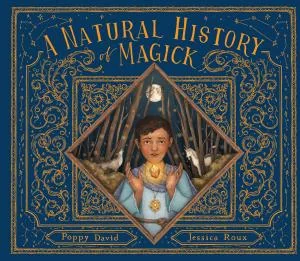
Poppy David's *A Natural History of Magick* arrives with an impressive physical presentation, a clear nod to the archival feel of its purported 1920s origin. The concept of a globetrotting naturalist, Professor Conrad Gessner, cataloging magic as if it were a rare beetle is an inspired framing device. Its strength lies in the detailed, almost scientific approach to magical phenomena through Gessner's imagined lens, offering sketches and 'precise notes' that invite close examination. However, the book's primary limitation is its fictionalized authorship; while charming, this conceit can sometimes obscure the actual historical influences or sources that likely informed its creation. A particularly intriguing section details the 'sympathetic resonance' between objects, drawing parallels to early theories of magnetism and a pervasive ether, presenting it not as mere folklore but as an observable principle. It offers a unique perspective, but readers should remain aware of its constructed nature. This volume succeeds in presenting magic as a subject of empirical curiosity, albeit a fictionalized one.
📝 Description
71
Poppy David's A Natural History of Magick presents itself as a 1920s naturalist's guide to magic.
This volume imagines itself as a compilation by the fictional naturalist Professor Conrad Gessner, assembled in the 1920s for his grandson. It illustrates magical phenomena, treating magic as an inherent, observable natural force rather than supernatural intervention. The book is physically designed to resemble a historical artifact, featuring a gold foil-embossed cloth cover, a ribbon marker, and sprayed gold edges.
Its intended audience includes readers interested in the intersection of naturalism, folklore, and occult studies. The book appeals to those who appreciate historical presentation, detailed illustrations, and a contemplative approach to magical theory. It is also for collectors drawn to finely crafted, aesthetically pleasing volumes. Individuals interested in how magic was perceived and documented before more academic or ritualistic classifications would find value here.
The book's conceit places it within the early 20th century, a period marked by growing interest in occultism and spiritualism. It aligns with pantheistic or animistic viewpoints found in Neopagan and Hermetic traditions of that era. Gessner's approach seeks to reconcile empirical observation with unseen energies, reflecting a moment when scientific inquiry and mystical exploration sometimes converged.
💡 Why Read This Book?
• Gain a unique perspective on magic as a natural force, akin to studying botany or zoology, as presented through Professor Gessner's imagined fieldwork from the 1920s. • Explore the visual language of magic through detailed, historical-style sketches and notes, understanding how symbols were perceived and cataloged by early 20th-century occult enthusiasts. • Appreciate the book's exquisite physical craftsmanship, including its gold foil-embossed cover and sprayed gold edges, offering a tactile connection to the historical aesthetic it aims to evoke.
⭐ Reader Reviews
Honest opinions from readers who have explored this book.
❓ Frequently Asked Questions
What is the purported origin of A Natural History of Magick?
The book is presented as a compilation by the fictional naturalist Professor Conrad Gessner, allegedly created in the 1920s as a guide for his grandson, detailing magic as a natural phenomenon.
What does 'magic as a natural force' mean in this book?
It means magic is framed not as supernatural or divine intervention, but as an inherent, observable, and catalogable aspect of the universe, similar to biological or physical laws.
What kind of illustrations are featured in the book?
The book includes intriguing sketches and precise notes, characteristic of a naturalist's field journal, documenting magical elements, symbols, and phenomena.
Who is the author, and when was it first published?
The author is Poppy David, and the book was first published on September 7, 2021. The narrative within the book, however, is presented as being compiled in the 1920s by a fictional Professor Conrad Gessner.
What is the physical design of A Natural History of Magick?
It features a gold foil-embossed cloth cover, a ribbon marker, and sprayed gold edges, designed to resemble a valuable historical artifact.
What historical period does the book's internal narrative reference?
The internal narrative references the 1920s, portraying Professor Conrad Gessner's work during that era. The book itself, as a published work, is from 2021.
🔮 Key Themes & Symbolism
Magic as Naturalism
This theme reframes magic not as an external supernatural force, but as an intrinsic element of the natural world, observable and catalogable like flora and fauna. The work adopts the perspective of a naturalist, Professor Conrad Gessner, who meticulously documents magical phenomena with sketches and notes. This approach seeks to bridge the gap between empirical study and esoteric traditions, suggesting that the hidden currents of magic are as real and present as the physical laws governing the universe, waiting to be understood through careful observation and classification.
Historical Documentation of Esoterica
The book functions as a historical artifact in its own right, presenting a fictionalized account of magic's documentation in the early 20th century. It highlights how magical beliefs, symbols, and practices were perceived and recorded during a period of intense interest in the occult. By framing this documentation within a naturalist's journal from the 1920s, it offers a unique lens on the history of esoteric thought, treating ancient and arcane knowledge as specimens worthy of scientific curiosity and archival preservation.
The Power of Sympathetic Resonance
A core concept explored is sympathetic resonance, the idea that objects or entities can influence each other through unseen connections or shared essences. This principle, often found in folk magic and Hermetic philosophy, is presented here through the naturalist's observational framework. The book illustrates how these connections were understood and utilized, treating them as fundamental properties of the magical world, akin to magnetic forces or wave propagation, emphasizing the interconnectedness of all things within the natural magical order.
Symbolism as Natural Language
The work treats magical symbols not as arbitrary signs but as a fundamental language of nature, integral to understanding its hidden forces. These symbols are depicted and analyzed as visual manifestations of magical principles, much like the structure of a plant reveals its properties. The book suggests that by deciphering this symbolic lexicon, one can gain access to deeper understandings of the natural world and its inherent magical currents, treating them as essential components in the 'natural history' of the arcane.
💬 Memorable Quotes
Direct passages from the work, attributed to the author.
“Magic is not a force apart from nature, but nature's most intricate expression.”
— This statement captures the book's central thesis: that magic is an inherent, observable aspect of the universe, not an external or supernatural phenomenon, challenging traditional dualistic views.
“The patterns of the unseen echo the forms of the seen.”
— This suggests a principle of correspondence, a key tenet in many esoteric traditions, implying that the hidden magical world has a discernible structure that is mirrored in the physical reality we perceive.
“Each sigil, a seed of intention, planted in the ether.”
— This vivid metaphor likens magical symbols (sigils) to living entities, emphasizing their active role in manifesting desires within the subtle energetic fields of existence.
“The naturalist's eye discerns the magical in the mundane.”
— This highlights the book's unique approach, suggesting that magic is not confined to rare events but is present everywhere, discoverable by those trained to observe the subtle workings of the world.
“Sympathetic bonds, like invisible threads, connect all.”
— This interpretation of sympathetic magic emphasizes the interconnectedness of reality, positing that relationships between seemingly disparate things are governed by unseen energetic links.
🌙 Esoteric Significance
Tradition
The work aligns broadly with Hermetic and Neopagan traditions, particularly those emphasizing immanent divinity and the natural world as a locus of magical power. It carries the Hermetic principle of 'As Above, So Below' by suggesting that the principles governing magical phenomena are observable within the natural order. While not strictly adhering to Kabbalistic or Gnostic frameworks, it shares their interest in hidden correspondences and the idea that the universe is imbued with divine or magical intelligence accessible through specific methods of inquiry and understanding.
Symbolism
Key symbols likely explored include sigils, amulets, and natural elements (herbs, stones, celestial bodies) viewed through a magical lens. Sigils, for instance, are presented not merely as drawn signs but as potent focal points for intention, embodying a concept's essence. Natural elements are treated as repositories of specific energies, capable of sympathetic interaction. Celestial bodies, often depicted in astrological charts, are understood as exerting tangible influences, forming part of the observable 'magical weather' of the cosmos.
Modern Relevance
Contemporary practitioners of modern witchcraft, neo-paganism, and Hermeticism can find resonance in the book's naturalistic approach to magic. Thinkers and artists interested in speculative naturalism or eco-mysticism might draw inspiration from its framing of magic as an inherent aspect of the environment. The book's focus on detailed observation and cataloging can also appeal to those within occult communities who seek to develop more systematic or scholarly approaches to magical practice and theory, moving beyond purely intuitive methods.
👥 Who Should Read This Book
• Aspiring occult naturalists and speculative biologists seeking to explore the intersection of magical theory and empirical observation. • Collectors of fine occult literature who appreciate exquisite book design and historical presentation, even in fictionalized contexts. • Students of esoteric history interested in how magic was conceptualized and documented during the early 20th century, particularly through the lens of naturalist scholarship.
📜 Historical Context
Poppy David's *A Natural History of Magick* arrives as a 2021 publication, but its internal narrative is framed within the intellectual milieu of the 1920s. This era was a fertile ground for esoteric explorations, fueled by the spiritualist movements of the late 19th century and the burgeoning interest in psychology and comparative religion. Figures like Aleister Crowley were actively publishing influential occult texts, while the Theosophical Society, founded by Helena Blavatsky in 1875, had disseminated a broad range of spiritual and occult ideas globally. Gessner's approach, treating magic as a 'natural force,' mirrors a tendency within some occult circles to reconcile mystical traditions with scientific or pseudoscientific frameworks, seeking empirical validation for arcane principles. This contrasts with more dogmatic religious views that would classify such pursuits as heresy. The book's presentation reflects a fascination with the 'unseen world' that characterized much of the period's popular and intellectual culture.
📔 Journal Prompts
Professor Gessner's catalog of magical phenomena, detailing the 'sympathetic resonance' between objects.
The concept of magic as nature's intricate expression, as opposed to a supernatural force.
The symbolic language of sigils as described in the naturalist's notes.
Reflecting on the 'unseen threads' connecting elements in your own environment.
The naturalist's eye discerning the magical within the mundane aspects of daily life.
🗂️ Glossary
Sympathetic Resonance
The principle that objects or entities can influence each other through unseen connections, based on shared essences or principles, akin to how magnets attract.
Sigil
A symbol created to represent a specific intention or magical concept, often used as a focal point for ritual or manifestation.
Natural Force
In this context, magic is defined as an inherent, observable property of the universe, analogous to gravity or electromagnetism, rather than a supernatural phenomenon.
Ether
A hypothetical medium once thought to permeate all space, often invoked in early 20th-century esoteric and scientific theories to explain the transmission of forces.
Correspondence
The Hermetic principle stating that elements in different realms (e.g., macrocosm and microcosm, spiritual and material) are linked and reflect each other, often expressed as 'As Above, So Below'.
Immanence
The concept that divine or magical power resides within the natural world, rather than being transcendent or external to it.
Cataloging
The process of systematically documenting and classifying phenomena, applied here to magical elements as a naturalist would study biological specimens.
This book appears in 1 collection
🔮 Readers Also Liked
Browse all →









From the “Numerology” Collection
View all →









More Free Occult Philosophy Books
View all →