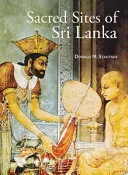
Sacred Sites of Sri Lanka
 76
76

Sacred Sites of Sri Lanka
Stadtner's "Sacred Sites of Sri Lanka" presents a compelling case for the island's unparalleled status in Buddhist history. The detailed descriptions of Anuradhapura's ancient stupas and the intricate rituals surrounding the Tooth Relic in Kandy are particularly vivid. One strength lies in the author's ability to connect architectural forms to their underlying spiritual functions, moving beyond mere description to interpret meaning. A notable passage discusses the early monastic complexes, illustrating the organized structure of the Sangha in ancient Sri Lanka. However, the book could benefit from a more explicit engagement with contemporary scholarly debates surrounding the dating of certain inscriptions or the precise origins of specific relics, which are sometimes presented with less critical distance than might be ideal for academic readers. The lack of comparative analysis with other Buddhist sites in Southeast Asia is a missed opportunity for broader contextualization. Despite this, the work offers a valuable resource for understanding Sri Lanka's unique Buddhist heritage.
📝 Description
76
Donald M. Stadtner's 2004 book documents Buddhist pilgrimage sites across Sri Lanka.
Donald M. Stadtner's "Sacred Sites of Sri Lanka" details the island nation's deep spiritual heritage, focusing on Buddhist pilgrimage locations. The book examines the historical development, architectural importance, and ongoing rituals at these sites. It emphasizes Sri Lanka's role as a major center for Buddhist traditions outside India, recounting the arrival of the Bodhi tree sapling and the veneration of the Buddha's tooth relic. These events underscore the island's historical significance within Buddhism.
This volume is valuable for students of Buddhist history and art, offering detailed analyses of religious structures and their evolution. Travelers can use it to gain a deeper understanding of Sri Lanka's culture beyond typical tourism, finding context for its many stupas, monasteries, and sacred mountains. Practitioners of Buddhist meditation and philosophy will appreciate the descriptions of sites linked to key scriptural events, connecting them to ancient practices. The book also speaks to anyone interested in the intersection of religion, history, and architecture.
This book engages with the esoteric tradition by focusing on the physical manifestations of spiritual practice and belief. Sri Lanka's history as a repository for Buddhist relics and its role in preserving early Buddhist doctrines offer a tangible connection to the transmission of spiritual knowledge. The sites described are not merely historical markers but loci of continuous devotion and contemplation, reflecting an ongoing engagement with the sacred. The book's attention to ritual and the veneration of relics points to practices that bridge the material and the spiritual, central concerns within many esoteric paths.
💡 Why Read This Book?
• Gain an understanding of Sri Lanka's pivotal role in preserving Buddhist traditions, particularly through the veneration of the Bodhi tree sapling, a concept explored in detail. • Discover the historical and architectural evolution of key Buddhist sites like Anuradhapura, understanding their significance beyond mere ruins. • Learn about the daily veneration practices surrounding the Buddha's eye-tooth in Kandy, offering a tangible connection to ancient devotional rituals.
⭐ Reader Reviews
Honest opinions from readers who have explored this book.
❓ Frequently Asked Questions
What is the historical significance of the Bodhi tree in Sri Lanka?
The Bodhi tree in Sri Lanka is a descendant of the original tree under which Siddhartha Gautama attained enlightenment. Its arrival in Sri Lanka, brought by Sanghamitta Theri, signifies the island's deep integration into Buddhist history and its role as a spiritual sanctuary.
When was Buddhism first established in Sri Lanka?
Buddhism was formally established in Sri Lanka in the 3rd century BCE, following the visit of Mahinda, son of the Indian Emperor Ashoka. This event marked the beginning of the island's long association with Buddhist philosophy and practice.
What makes the Temple of the Tooth in Kandy so important?
The Temple of the Tooth (Sri Dalada Maligawa) in Kandy is paramount because it houses the sacred tooth relic of the Buddha. This relic is considered one of the most important Buddhist relics, and its daily veneration attracts thousands of devotees.
How does the book 'Sacred Sites of Sri Lanka' differentiate Sri Lanka's Buddhist heritage from India's?
The book highlights Sri Lanka's role as a preserver of Theravada Buddhism, especially after certain traditions waned in India. It emphasizes the island's unique lineage of relics and monastic traditions, solidified by royal patronage and geographical isolation.
Are there non-Buddhist religious influences discussed in the book?
While the primary focus is on Buddhist sites, the original blurb suggests the book acknowledges other religious influences on the island, indicating a broader cultural context beyond exclusive Buddhism.
What types of sacred sites are covered in the book?
The book covers a range of sacred sites including ancient stupas (dagobas), monasteries, pilgrimage routes, and locations associated with key events in the Buddha's life and the transmission of Buddhism to Sri Lanka.
🔮 Key Themes & Symbolism
Buddhist Relic Veneration
The book details the profound significance of relics, particularly the Buddha's tooth, in Sri Lankan Buddhism. It explores how the veneration of these physical remnants of the enlightened one serves as a focal point for devotion, merit-making, and the legitimization of spiritual and political authority. The daily rituals at the Temple of the Tooth in Kandy are presented as a living evidence of this ancient practice, connecting contemporary devotees directly to the historical Buddha and his teachings.
Island as Spiritual Sanctuary
Stadtner emphasizes Sri Lanka's role as a crucial sanctuary for Buddhism, especially during periods of upheaval in its Indian homeland. The arrival of the Bodhi tree sapling and the establishment of monastic traditions are examined as evidence of the island's commitment to preserving the Dharma. This theme highlights how geographical isolation and dedicated patronage fostered a unique and enduring Buddhist culture, making Sri Lanka a vital repository of Theravada practice and doctrine.
Architectural Manifestations of Dharma
The book interprets the architectural forms of Sri Lankan sacred sites, such as stupas (dagobas) and monastic complexes, as physical embodiments of Buddhist principles. It explains how the design and placement of these structures reflect cosmological beliefs, serve as aids to meditation, and facilitate community worship. The evolution of stupa architecture, from early hemispherical forms to more complex designs, illustrates the development of Buddhist art and ritual over centuries.
The Buddha's Journeys and Influence
A central theme is the direct connection between Sri Lanka and the Buddha, marked by his supposed visits and the subsequent transmission of his teachings and relics. The work explores the narrative of the Buddha's presence on the island, establishing it as a blessed land. This narrative underpins the deep reverence for its sacred sites and the belief that they hold a special spiritual potency due to this historical association.
💬 Memorable Quotes
Direct passages from the work, attributed to the author.
“No country, apart from India, is as closely allied with the Buddha's travels as Sri Lanka.”
— This statement underscores Sri Lanka's unique position in Buddhist history, suggesting a spiritual and historical connection that rivals even the Buddha's homeland in certain aspects of tradition preservation.
“Today the Buddha's eye-tooth is venerated daily by thousands in Kandy and regarded as a priceless relic.”
— This highlights the enduring power of relic veneration in contemporary Sri Lanka, illustrating how ancient Buddhist practices remain vibrant and central to the spiritual lives of many.
“Sri Lanka received corporal relics and a branch of the bodhi tree after his death.”
— This fact establishes the island's early and profound connection to the Buddha's legacy, positioning it as a key recipient of sacred artifacts that solidified its importance in the Buddhist world.
“Buddhism is not the only religion to have influenced the island.”
— This brief statement hints at the broader religious and cultural field of Sri Lanka, suggesting that the book might explore the interplay of different spiritual traditions on the island.
“The Buddha visited Sri Lanka thrice.”
— This specific detail reinforces the narrative of the Buddha's direct engagement with the island, providing a historical and spiritual basis for the sanctity of its numerous pilgrimage sites.
🌙 Esoteric Significance
Tradition
The work aligns with the broad Esoteric Library's focus on spiritual traditions often overlooked by mainstream academia. While not strictly adhering to a single lineage like Hermeticism or Kabbalah, it engages with the practical, devotional, and historically continuous aspects of Buddhism, particularly Theravada. Its esoteric angle lies in exploring the profound spiritual energy and historical resonance embedded within physical locations, viewed as conduits for accessing higher states of consciousness and historical connection.
Symbolism
Key symbols explored include the *Dāgaba* (stupa), representing the enlightened mind and housing sacred relics, acting as a cosmic axis. The *Bodhi tree* symbolizes enlightenment and spiritual awakening, its lineage in Sri Lanka a potent symbol of Dharma continuity. The *Relic of the Tooth* represents the tangible presence of the Buddha, a source of immense spiritual power and national identity, connecting the terrestrial to the transcendent.
Modern Relevance
Contemporary Buddhist practitioners, scholars of comparative religion, and those interested in mindfulness and sacred geography draw upon the insights found in works like Stadtner's. Thinkers exploring the intersection of place, memory, and spiritual practice find value in the detailed accounts of Sri Lanka's sites. The book appeals to modern inquiries into how ancient spiritual landscapes continue to shape cultural identity and personal devotion in the 21st century.
👥 Who Should Read This Book
• Scholars of Buddhist history and art seeking detailed analyses of Sri Lanka's religious architecture and iconography. • Cultural travelers and pilgrims interested in understanding the historical and spiritual significance of sites like Anuradhapura and the Temple of the Tooth. • Students of comparative religion and esoteric traditions looking to explore the unique preservation of Theravada Buddhism and its material culture.
📜 Historical Context
Donald M. Stadtner's "Sacred Sites of Sri Lanka" emerges from a rich tradition of scholarship on Buddhist art and history, particularly concerning South and Southeast Asia. Published in 2025, it builds upon decades of archaeological and textual research, informed by figures like S. Paranavitana, whose work on Sri Lankan epigraphy and history set significant precedents. The book arrives in an era where interest in Buddhist heritage sites is high, driven by both academic curiosity and cultural tourism. While not facing overt censorship, works on religious history often navigate sensitive interpretations of sacred narratives. The book's focus on Theravada Buddhism situates it within a continuous lineage dating back to the 3rd century BCE establishment of Buddhism by Mahinda, a central moment in the island's history. This focus distinguishes it from scholarship primarily concerned with Mahayana or Vajrayana traditions prevalent elsewhere.
📔 Journal Prompts
The veneration of the Buddha's eye-tooth: Reflect on the power of relics in spiritual practice.
The Bodhi tree's lineage: Consider the concept of spiritual continuity across generations and geography.
Architectural forms of Dāgabas: Analyze how physical structures can embody abstract spiritual principles.
The concept of Lankādeepa: Explore the idea of a land blessed by spiritual presence.
Mahinda's arrival in the 3rd century BCE: Contemplate the impact of foundational spiritual missions.
🗂️ Glossary
Dāgaba
A dome-shaped Buddhist stupa, typically enshrining relics of the Buddha or other revered figures. Dāgabas serve as focal points for worship and pilgrimage in Sri Lanka and other Buddhist countries.
Bodhi Tree
The sacred fig tree under which Siddhartha Gautama (the Buddha) attained enlightenment. A sapling of the original Bodhi tree in Bodh Gaya, India, was brought to Sri Lanka and is venerated.
Temple of the Tooth
Sri Dalada Maligawa, located in Kandy, Sri Lanka. It houses the sacred relic of the Buddha's left canine tooth, one of the most important Buddhist relics globally.
Mahinda
The son of Emperor Ashoka of India, credited with bringing Buddhism to Sri Lanka in the 3rd century BCE, thus establishing the island's profound Buddhist heritage.
Sanghamitta Theri
A Buddhist nun and the daughter of Emperor Ashoka. She is traditionally credited with bringing a sapling of the Bodhi tree from India to Sri Lanka.
Lankādeepa
An ancient name for Sri Lanka, often used in Buddhist scriptures and lore to denote the island as a place blessed by the Buddha's presence and a stronghold of his teachings.
Relic Veneration
The practice of honoring and worshipping physical remains or objects associated with revered spiritual figures, such as the Buddha. This is a central aspect of devotion in many Buddhist traditions.