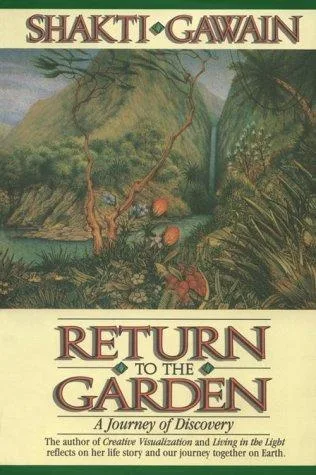
Return to the garden
 84
84

Return to the garden
Shakti Gawain’s "Return to the Garden" presents a gentle yet firm invitation to reconsider our relationship with the planet. Gawain’s strength lies in her ability to articulate complex spiritual and ecological ideas with disarming simplicity. The concept of the 'inner garden' as a mirror to our external connection with nature is particularly compelling, offering a framework for personal accountability and healing. However, the book sometimes leans into broad generalizations about humanity's fall from grace, which, while evocative, could benefit from more nuanced exploration of historical and cultural factors contributing to our current ecological state. A particularly striking passage is her discussion on recognizing the energetic presence in natural elements, encouraging a shift from passive observation to active, reciprocal connection. Ultimately, "Return to the Garden" serves as a warm, accessible primer on re-establishing a vital spiritual link with the Earth.
📝 Description
84
Published in 1992, Shakti Gawain's 'Return to the Garden' posits a direct link between ecological health and inner well-being.
Shakti Gawain's 1992 book, 'Return to the Garden,' moves beyond conventional self-help to address the energetic connection between humanity and the natural world. Gawain suggests that modern society's estrangement from nature mirrors an internal disconnect. She argues that restoring our relationship with the Earth is crucial for both individual peace and the healing of the planet.
The book offers accessible ideas to help readers reconnect with the Earth and cultivate a sense of belonging. It is aimed at those who feel distant from nature or wish to deepen their spiritual practice with an ecological focus. Readers interested in earth-based spirituality, holistic personal development, and those who respond to metaphorical language will find resonance in Gawain's work. It serves as a guide for newcomers to these ideas and offers a fresh perspective for experienced practitioners.
Emerging in the early 1990s, 'Return to the Garden' aligns with a period of heightened environmental awareness and a growing interest in nature-based spirituality, often associated with the New Age movement. This era saw thinkers exploring interconnectedness across disciplines, attempting to synthesize scientific and spiritual perspectives. Gawain's work contributed to this discourse by advocating for an integrated worldview that recognized the profound link between the planet's well-being and human consciousness, addressing ecological concerns through a spiritual lens.
💡 Why Read This Book?
• Understand the concept of the 'inner garden' as a metaphor for your soul's connection to nature, learning how to cultivate it for personal well-being, a core idea presented throughout the book. • Explore 'energetic healing' in relation to the Earth, gaining practical perspectives on how your own emotional state influences your ecological connection, as detailed in the book's early chapters. • Reconnect with the 'Great Mother' archetype, a central symbol in the book representing nature's nurturing force, and learn methods to honor and draw strength from this feminine divine principle.
⭐ Reader Reviews
Honest opinions from readers who have explored this book.
❓ Frequently Asked Questions
When was Shakti Gawain's 'Return to the Garden' originally published?
Shakti Gawain's 'Return to the Garden' was first published in 1992, a period when ecological awareness and nature-based spirituality were gaining significant traction.
What is the central metaphor in 'Return to the Garden'?
The central metaphor is the 'inner garden,' representing the soul's original, uncorrupted state, and its direct connection to the health and vitality of the external natural world.
Does the book offer practical exercises for readers?
Yes, the book guides readers toward practices that foster a deeper connection with nature, encouraging mindfulness and reverence for the Earth's energies.
Is 'Return to the Garden' considered a New Age book?
Yes, it is often categorized within the New Age movement due to its focus on spiritual growth, personal transformation, and a holistic view of humanity's relationship with the planet.
What esoteric tradition does 'Return to the Garden' draw from?
While not strictly tied to one tradition, it draws from earth-based spiritualities, shamanic perspectives, and a general reverence for the divine feminine present in nature.
Who would benefit most from reading this book?
Individuals feeling disconnected from nature, those interested in eco-spirituality, and anyone seeking to deepen their spiritual practice through an ecological lens would find value in its teachings.
🔮 Key Themes & Symbolism
Inner and Outer Garden
The core concept of 'Return to the Garden' is the parallel between our internal spiritual state and our external relationship with the natural world. Gawain posits that a neglected or 'overgrown' inner life leads to a similar estrillamiento from the Earth's vitality. Cultivating an 'inner garden' involves tending to one's spiritual well-being, fostering self-awareness, and healing emotional wounds. This internal work, she argues, directly impacts our ability to perceive, appreciate, and interact harmoniously with the natural environment, transforming our ecological footprint into a footprint of reverence.
Energetic Connection to Nature
Gawain emphasizes that nature is not merely a physical resource but a living, energetic entity. The book explores how to attune oneself to the subtle energies present in plants, animals, water, and earth. This involves moving beyond a purely rational or utilitarian view of the natural world to one of conscious communion. By recognizing and respecting these energies, readers are encouraged to participate in a reciprocal relationship, fostering healing not only for themselves but for the planet as a whole, aligning with animistic principles found in many indigenous traditions.
The Great Mother Archetype
Central to the book's spiritual framework is the archetype of the 'Great Mother,' personifying the nurturing, life-giving, and sustaining aspects of the Earth. Gawain suggests that modern society has largely lost its connection to this powerful feminine principle, leading to exploitation and imbalance. Re-establishing this connection involves honoring the sacredness of creation, embracing cyclical rhythms of life and death, and recognizing the inherent wisdom and power within the natural world. This theme appeals to Goddess spirituality movements that gained prominence in the late 20th century.
Sacred Space and Healing
The book guides readers in understanding and creating 'sacred space,' both internally and externally. This involves consciously imbuing environments – be it a personal sanctuary or a natural landscape – with intention, reverence, and positive energy. Gawain suggests that such spaces act as conduits for healing, spiritual insight, and a deeper sense of belonging. By transforming ordinary spaces into places of sacred encounter, individuals can foster personal transformation and strengthen their bond with the Earth, mirroring practices found in various ritualistic traditions.
💬 Memorable Quotes
Direct passages from the work, attributed to the author.
“The Earth is alive, and we are part of its life.”
— This statement captures the book's foundational premise: that humanity is not separate from but intrinsically connected to the living planet. It challenges anthropocentric views and calls for a recognition of Earth's sentience and our role as integral components of its being.
“Our inner state is mirrored in our relationship with the outer world.”
— Gawain proposes a direct correlation between personal psychological and spiritual well-being and how we interact with our environment. This suggests that healing our inner landscape is a prerequisite for fostering a healthier, more harmonious relationship with nature.
“Every plant, every stone, every creature holds a unique energy.”
— This highlights the animistic or panentheistic perspective within the book, asserting that life and consciousness are not limited to humans but are present in all elements of the natural world, inviting readers to perceive this inherent sacredness.
“Creating sacred space invites healing and connection.”
— This points to the practical application of the book's philosophy, suggesting that by consciously dedicating and honoring spaces, we open pathways for personal transformation and a more profound bond with the Earth.
💡 Key Ideas
Editorial paraphrase of the work's core concepts — not direct quotes.
To return to the garden is to remember our true nature.
This paraphrased concept suggests that the 'garden' symbolizes an original, pure state of being, connected and whole. The act of 'returning' implies a process of shedding societal conditioning and reclaiming an innate, essential self in harmony with the cosmos.
🌙 Esoteric Significance
Tradition
While not strictly adhering to a single esoteric lineage, "Return to the Garden" draws heavily from earth-based spiritualities, animism, and the principles of Goddess spirituality. It echoes themes found in Neopaganism and certain streams of Western esotericism that emphasize the immanence of the divine in nature. The work departs from more rigidly structured traditions by focusing on intuitive connection and personal experience over dogma or complex ritual systems, positioning itself as a broadly accessible spiritual guide for ecological consciousness.
Symbolism
The primary symbol is the 'Garden,' representing a state of primal innocence, abundance, and harmonious connection between the soul and the natural world. The 'Great Mother' archetype serves as another potent symbol, embodying the nurturing, creative, and sustaining forces of the Earth, often suppressed in patriarchal societies. 'Sacred Space' functions symbolically as a locus where this divine feminine energy can be accessed and honored, acting as a bridge between the inner spiritual realm and the outer physical environment.
Modern Relevance
Gawain's work continues to be relevant for contemporary eco-spirituality movements, ecofeminism, and mindfulness-based practices focused on nature connection. Thinkers and practitioners in permaculture, deep ecology, and nature therapy often draw upon similar principles of interconnectedness and reverence for the Earth. The book's emphasis on personal responsibility for planetary health through inner transformation appeals to current discussions on climate anxiety and the need for holistic solutions that address both psychological and ecological well-being.
👥 Who Should Read This Book
• Individuals feeling alienated from nature or seeking to deepen their spiritual practice through an ecological lens, offering accessible concepts for re-establishing a sense of belonging. • Practitioners of eco-spirituality, Goddess spirituality, or earth-based traditions looking for affirmations and gentle guidance to reinforce their existing paths. • Readers interested in holistic healing and personal growth who wish to explore the profound connection between inner well-being and the health of the planet.
📜 Historical Context
Published in 1992, "Return to the Garden" emerged during a vibrant period for ecological and spiritual thought. The late 20th century witnessed a growing environmental movement and the mainstreaming of New Age philosophies, which often sought to integrate Eastern mysticism, indigenous wisdom, and Western psychology. This era saw contemporaries like Marianne Williamson popularizing spiritual principles for everyday life, and thinkers such as James Hillman exploring archetypal psychology with a focus on the soul and nature. Gawain's work contributed to a broader discourse that challenged the mechanistic worldview dominant since the Enlightenment, advocating instead for an animistic or panentheistic understanding of the universe. While not facing overt censorship, its ideas aligned with a burgeoning interest in Goddess spirituality and Earth-based practices, often positioned as an alternative to institutionalized religion and a corrective to ecological exploitation.
📔 Journal Prompts
The concept of the 'inner garden' and its current state.
Recognizing the 'energetic presence' in a natural element.
Reflecting on the 'Great Mother' archetype in your life.
Cultivating 'sacred space' in your immediate environment.
Your personal connection to the Earth's life force.
🗂️ Glossary
Inner Garden
A metaphor for the soul's pristine, natural state of being, characterized by wholeness, connection, and vitality. Cultivating it involves inner work and self-awareness.
Energetic Healing
The process of restoring balance and harmony within oneself and in relation to the environment by working with subtle life energies.
Great Mother
An archetype representing the nurturing, life-giving, and creative forces of the Earth and the divine feminine.
Sacred Space
An environment, whether internal or external, consciously imbued with reverence, intention, and positive energy to facilitate connection and healing.
Ecological Consciousness
An awareness and understanding of humanity's interconnectedness with the natural world and the ethical responsibilities that arise from it.
Archetype
A universal, inherited pattern of thought or imagery derived from the experiences of the human race, often manifesting in myths and symbols.
Spiritual Practice
Any activity or discipline undertaken with the intention of connecting with the divine, cultivating inner peace, or deepening self-understanding.
🔮 Readers Also Liked
Browse all →









More by Shakti Gawain
All books →




More Free Occult Philosophy Books
View all →