General Ahiman Rezon
 82
82

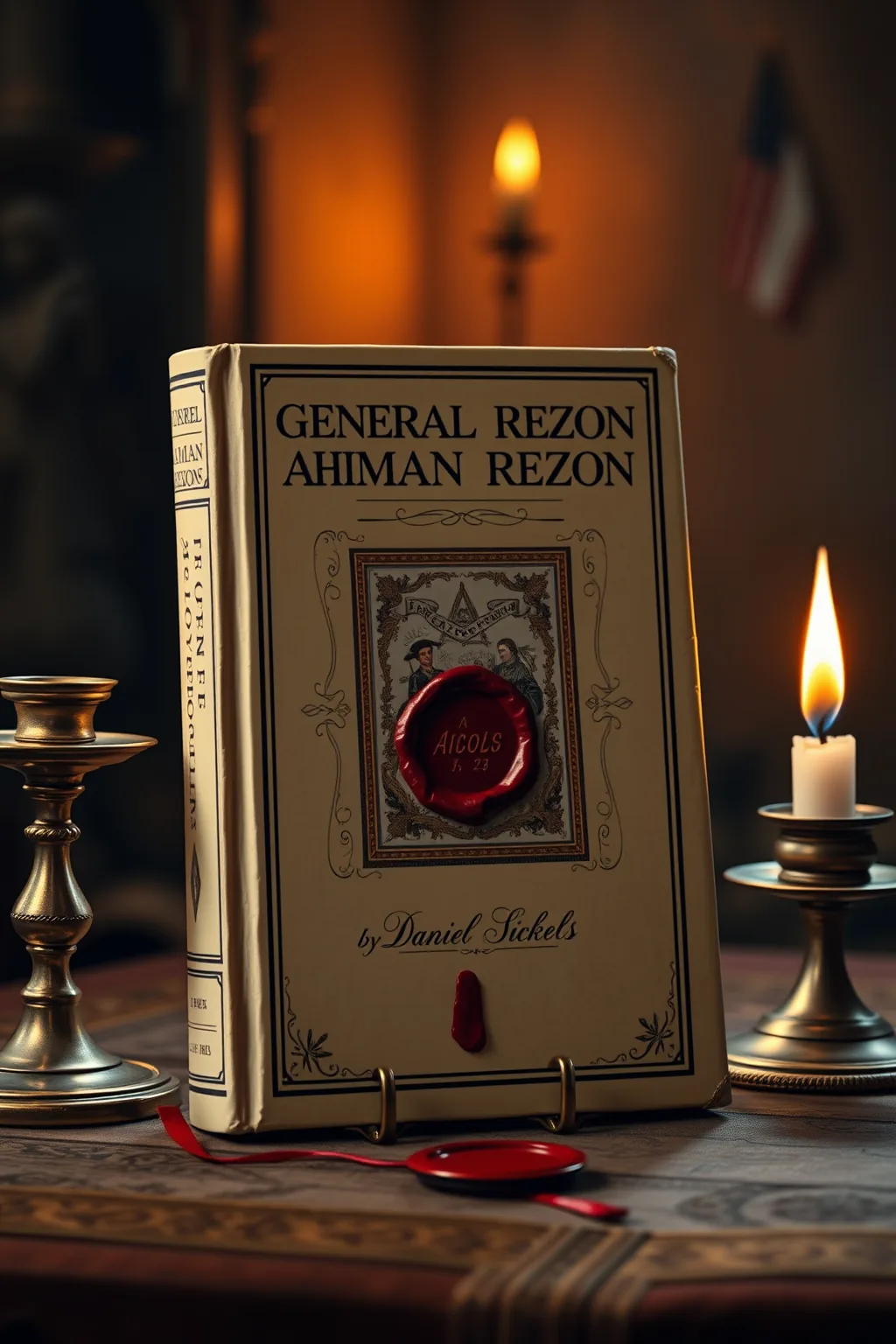
General Ahiman Rezon


By Evander Ashcroft (Alchemy & Hermeticism Editor) — Daniel Sickels' 'General Ahiman Rezon' is an indispensable artifact for anyone serious about the esoteric dimensions of Freemasonry. While ostensibly a manual of rituals, it functions as a profound symbolic primer, illuminating the allegorical journeys undertaken by Masons. The work offers a rare, unvarnished insight into the period's fraternal practices, revealing the deep currents of moral philosophy and spiritual aspiration woven into each ceremony. Its strength lies in its comprehensive documentation and its subtle invitation to ponder the deeper meanings behind the pomp. Essential reading for students of Western esotericism and Masonic history.
📝 Description
82
Daniel Sickels published the 'General Ahiman Rezon' in 1868, detailing Masonic rituals.
The 'General Ahiman Rezon' by Daniel Sickels, first published in 1868, examines the symbolic language and philosophical underpinnings of Masonic rituals. It covers the Entered Apprentice, Fellow-craft, and Master Mason degrees, presenting a detailed account of their ceremonies. The book includes solemn funeral rites, suggesting a connection to older traditions. It also contains musical notation for Masonic hymns, adding an auditory element to the study of these practices.
Sickels' work aims to unlock a deeper understanding of the moral and spiritual precepts central to Freemasonry. While not revealing overt secrets, it serves as a guide for comprehending the veiled artistry and enduring legacy of the fraternity. It is intended for those seeking a more thorough grasp of its philosophical aspects.
This text situates itself within the tradition of Masonic esoteric literature, which seeks to interpret the symbolic and allegorical dimensions of the fraternity's rituals and teachings. Such works often aim to reveal deeper philosophical and spiritual meanings accessible through careful study, connecting Masonic practices to broader streams of Western esotericism. The 'General Ahiman Rezon' contributes to this by detailing specific rituals and their symbolic components, offering a framework for understanding the moral and spiritual lessons intended for the Masonic initiate.
💡 Why Read This Book?
Uncover the symbolic heart of Freemasonry and its philosophical underpinnings. 'General Ahiman Rezon' provides a detailed exploration of rituals, offering insights into moral development and spiritual progression. Ideal for seekers of hidden knowledge, Masonic scholars, and practitioners interested in the historical context and symbolic richness of fraternal traditions.
⭐ Reader Reviews
Honest opinions from readers who have explored this book.
❓ Frequently Asked Questions
Does this book reveal 'secrets' of Freemasonry?
While the 'General Ahiman Rezon' details Masonic rituals and ceremonies, it does not disclose what is considered truly secret. Instead, it offers a comprehensive understanding of the symbolic and philosophical aspects of the degrees for those seeking knowledge.
Who is the intended audience for this book?
This book is primarily intended for Freemasons seeking to deepen their understanding of their rituals and the philosophy behind them. It also appeals to scholars of secret societies, historians, and those interested in esoteric traditions.
What is the historical significance of this work?
Published in the 19th century, the 'General Ahiman Rezon' provides a valuable historical snapshot of Masonic practices and the prevailing fraternal culture of its time, offering a window into the organizational and ceremonial life of the Craft.
Are there musical elements included in the book?
Yes, the 'General Ahiman Rezon' features musical notation for several Masonic hymns, adding an auditory dimension to the ritualistic experience and reflecting the importance of music in Masonic gatherings.
What kind of model documents are included?
An appendix contains a series of model documents designed for various Masonic situations, offering practical examples for lodge administration and formal proceedings within the fraternity.
🔮 Key Themes & Symbolism
The Art of Ritual and Symbolism
This theme studies the profound significance of Masonic ritual as a vehicle for spiritual and moral instruction. It explores how ceremonies, from the foundational degrees to more advanced rites, are meticulously crafted to convey timeless truths through allegory and symbolism. The text illuminates the symbolic language embedded within the actions, words, and objects used in Masonic gatherings, demonstrating how these elements serve to guide the aspirant towards self-knowledge and a deeper understanding of the universe. It highlights the transformative power of ritualized practice in shaping character and fostering a connection to a tradition of wisdom.
The Journey of the Soul: Degrees and Progression
The 'General Ahiman Rezon' charts the esoteric journey of the soul through the established degrees of Freemasonry. Each degree represents a distinct stage of spiritual development, a step further into understanding the mysteries of existence. The book meticulously details the ceremonies associated with the Entered Apprentice, Fellow-craft, and Master Mason, revealing them not as mere procedural steps, but as profound allegorical pathways. This progression is framed as a journey of self-discovery, moral refinement, and the pursuit of higher knowledge, emphasizing the Masonic ideal of continuous personal growth and enlightenment.
Masonic Ethics and Funeral Rites
Beyond the symbolic and ceremonial, this work underscores the ethical framework that underpins Freemasonry, particularly evident in its solemn funeral rituals. These rites, detailed with sensitivity and gravity, reflect a profound respect for life, death, and the eternal. They serve as a powerful reminder of mortality, the importance of a well-lived life, and the hope for an afterlife. The text implicitly conveys the Masonic commitment to virtue, charity, and brotherhood, demonstrating how these principles are not only taught but also actively practiced and memorialized within the fraternity.
💬 Memorable Quotes
Direct passages from the work, attributed to the author.
“The rough ashlar must be made smooth.”
— This signifies the Masonic principle of self-improvement, transforming one's natural, unpolished state into one of refinement and virtue through education and moral discipline.
“Laborare est orare.”
— This Latin phrase, often associated with monastic traditions, translates to 'to work is to pray.' It reflects the Masonic emphasis on dedicated effort and the sacredness found in honest toil and duty.
“We build not with hands, but with hearts.”
— This highlights the esoteric nature of Masonic work, suggesting that the true construction is internal – building character, wisdom, and spiritual understanding, rather than physical structures.
“Light dispels darkness.”
— A fundamental Masonic symbol, representing the pursuit of knowledge, truth, and enlightenment as the means to overcome ignorance, superstition, and moral confusion.
“The square and compasses guide our steps.”
— These iconic Masonic symbols represent morality and temperance, urging the practitioner to live a life guided by ethical principles and self-control in all their actions.
🌙 Esoteric Significance
Tradition
This work is deeply rooted in the Western Esoteric Tradition, specifically within the framework of Hermeticism, Kabbalah, and Neoplatonism, which have historically influenced Masonic philosophy. It embodies the principle of 'As Above, So Below,' translating cosmic truths into practical ethical and moral guidance for the individual. The rituals and symbols are designed to act as keys, unlocking inner understanding and facilitating a conscious connection with higher principles and the divine.
Symbolism
The 'General Ahiman Rezon' is replete with potent symbolism drawn from ancient operative and speculative traditions. Key symbols include the architectural tools (square, compasses, level, plumb line), which represent moral virtues and methods for righteous living. Light and darkness symbolize knowledge versus ignorance, while the geometric patterns and celestial references speak to the order of the universe and the aspirant's place within it. The journey through the degrees itself is a potent symbol of personal transformation and the pursuit of spiritual illumination.
Modern Relevance
In an age often perceived as fragmented and lacking in deep meaning, the 'General Ahiman Rezon' offers a compelling counterpoint. Its emphasis on moral rectitude, self-improvement, and the search for universal truths remains profoundly relevant. The structured approach to personal development through symbolic ritual provides a valuable model for those seeking a more intentional and meaningful existence. For practitioners, it offers a historical anchor; for seekers, a gateway to understanding enduring wisdom traditions.
👥 Who Should Read This Book
This compendium is essential for current Freemasons seeking a deeper, more nuanced understanding of their ritualistic practices and the philosophical underpinnings of their fraternity. Scholars of Western esotericism, secret societies, and religious history will find it an invaluable primary source for understanding 19th-century Masonic thought. Aspiring practitioners and seekers of ancient wisdom will discover a collection of symbolic language and moral philosophy designed to guide personal growth and spiritual exploration. Its detailed nature also appeals to those interested in the historical evolution of fraternal organizations and their enduring impact.
📜 Historical Context
The 'General Ahiman Rezon' emerges from the vibrant intellectual and cultural milieu of the 19th century, an era characterized by a renewed interest in ancient wisdom, mystical traditions, and organized fraternal societies. Freemasonry, already well-established, experienced significant growth and diversification during this period. This work reflects the prevailing emphasis on ritualistic precision, moral instruction, and the cultivation of a shared fraternal identity. The inclusion of musical notation and detailed appendices for model documents suggests a desire for both spiritual edification and practical organization within the Craft. It stands as a evidence of the enduring appeal of structured spiritual exploration and the desire to codify and transmit profound philosophical teachings through symbolic ceremony.
📔 Journal Prompts
Reflect on a personal 'rough ashlar' and the steps you are taking to smooth it.
How can the symbols of the square and compasses be applied to your daily decision-making?
Consider the concept of 'laborare est orare' in your own work and life. Where do you find sacredness?
Meditate on the symbolism of light and darkness. What areas of your life could benefit from more 'light'?
How does the idea of a structured spiritual journey, as represented by Masonic degrees, resonate with your personal path?
🗂️ Glossary
Ahiman Rezon
A title for Masonic Constitutions or books of laws and rituals, often containing the history, rules, and ceremonial instructions for a Masonic lodge and its members.
Entered Apprentice
The first degree in Freemasonry, representing the initial stage of a Mason's journey, focused on foundational teachings, moral principles, and the symbolic tools of labor.
Fellow-craft
The second degree in Freemasonry, symbolizing intellectual and practical development, encouraging the craftsman to apply their knowledge and skills to build a meaningful life.
Master Mason
The highest of the 'craft' degrees in Freemasonry, representing wisdom, completion, and the culmination of the allegorical journey, often involving contemplation of life's mysteries.
Ashlar
A stone shaped by the builder's art. In Freemasonry, the 'rough ashlar' represents an unprepared or unrefined individual, while the 'perfect ashlar' symbolizes a person who has attained moral and spiritual perfection.
This book appears in 2 collections
🔮 Readers Also Liked
Browse all →









From the “Secret Societies” Collection
View all →



More Free Freemasonry & Secret Societies Books
View all →