Exploring the Dark Night of the Soul Experience...
 82
82

Exploring the Dark Night of the Soul Experience...
Neal Gray's "Exploring the Dark Night of the Soul Experience" tackles a subject often relegated to hushed tones or misdiagnosed entirely. The strength of the book lies in its straightforward approach, stripping away mystical jargon to present the "dark night" as a palpable, albeit difficult, stage of spiritual development. Gray’s assertion that Protestant seminary education, unlike Catholic institutions, often omits this crucial topic is a sharp, verifiable observation. However, while the book excels at describing the *what*, it occasionally falters in offering extensive *how-to* guidance for navigating the experience beyond discernment. The passage describing the pastor mistaking spiritual desolation for "a form of de-pression" is particularly poignant and sadly common. Despite this limitation, the work provides a much-needed framework for understanding profound spiritual abandonment as a divine crucible.
📝 Description
82
Neal Gray's 2019 book examines the spiritual desolation of the dark night.
Neal Gray's work offers a focused look at the spiritual desolation known as the dark night of the soul. He notes that many theological programs do not prepare individuals for this experience. The book separates this spiritual phenomenon from clinical depression, detailing its subjective nature and potential path toward spiritual growth. It is written for clergy, spiritual directors, and students who may encounter the dark night without a framework for understanding it. Gray aims to help readers see periods of spiritual dryness not as a sign of failure, but as a divine process that can lead to transformation. Those feeling a deep spiritual questioning or a sense of God's absence will find guidance within its pages.
The central idea is that the dark night is an active, though painful, work of the divine. Gray differentiates between the dark night of the senses and the more comprehensive dark night of the spirit. He stresses the importance of discernment, encouraging readers to view this time not as an illness but as a refining process for deeper spiritual union. The book situates this experience within contemporary theological discussion, noting its historical neglect in some academic and pastoral circles.
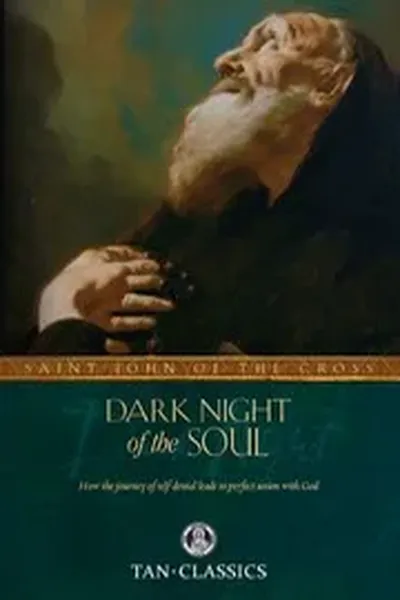
This book engages with a mystical tradition stretching back to Saint John of the Cross in the 16th century. The 'dark night' concept describes a period of intense spiritual trial and purification, often characterized by a perceived absence of God's presence. While rooted in Christian mysticism, the experience of spiritual desolation and its potential for transformation resonates across various contemplative traditions. Gray's work attempts to reintegrate this often challenging aspect of the spiritual life into contemporary theological and pastoral understanding, distinguishing it from purely psychological interpretations of distress.
💡 Why Read This Book?
• Gain a clear distinction between spiritual desolation and clinical depression, a concept elaborated on by Gray's analysis of pastoral misinterpretations. • Understand the historical neglect of the "dark night" within Protestant theological circles, a point Gray raises concerning seminary education circa 2019. • Recognize the "dark night" not as a personal failing but as a potential divine process, a core thesis explored through the original blurb's description of God's "gracious work."
⭐ Reader Reviews
Honest opinions from readers who have explored this book.
❓ Frequently Asked Questions
What is the "dark night of the soul" as defined by Neal Gray?
Gray defines the "dark night" as a period of profound spiritual desolation and perceived absence of God's presence, often mistaken for mental illness but understood within the book as a divine process for spiritual purification and deeper union.
Why is the "dark night" rarely discussed in Protestant seminaries?
The book suggests that, outside of Catholic seminaries, the "dark night" concept is seldom examined in theological education, leaving many Protestant pastors unprepared to recognize or address it when it arises in their lives or congregations.
Can the "dark night" be confused with depression?
Yes, Gray notes that without understanding, a pastor might discern this "gracious work of God" as a personal mental problem like "de-pression," highlighting the need for theological and spiritual literacy on the subject.
When was Neal Gray's "Exploring the Dark Night of the Soul Experience" first published?
The book was first published on March 7, 2019, making its examination of this spiritual phenomenon relatively contemporary within esoteric and theological literature.
What is the primary goal of the "dark night" according to the book?
The work posits that the "dark night" serves as a crucible for spiritual growth, intended to purify the soul and lead to a more profound and unmediated union with the divine, transforming the individual's spiritual life.
Who is Neal Gray?
Neal Gray is the author of "Exploring the Dark Night of the Soul Experience," a work published in 2019 that addresses the spiritual phenomenon of the "dark night" from a theological and personal perspective.
🔮 Key Themes & Symbolism
Spiritual Desolation vs. Mental Illness
The book meticulously differentiates the profound spiritual emptiness of the "dark night" from clinical depression. It argues that failing to recognize this distinction, a common issue in theological training as of 2019, leads to misdiagnosis. Instead of secular psychological frameworks, Gray suggests understanding this desolation as a divine process, a "gracious work of God" aimed at purification and deeper spiritual connection, rather than a personal pathology.
The Neglected Phenomenon
Gray highlights a significant gap in contemporary theological education, particularly outside Catholic seminaries, regarding the "dark night." This lack of academic and pastoral preparation, evident in the book's initial blurb, leaves many clergy unprepared for this intense spiritual experience. The work aims to rectify this by providing a framework for understanding and navigating what is often a surprising and disorienting phase.
Divine Crucible for Union
Fundamentally, the book presents the "dark night" not as an endpoint but as a transformative phase. It is described as a "gracious work of God" designed to strip away attachments and purify the soul. This process, while agonizing, ultimately serves to foster a more direct and profound union with the divine, moving the individual beyond superficial spiritual experiences.
Discernment and Pastoral Care
A crucial element of Gray's exploration is the call for "discernment." The work empowers readers, especially pastors and spiritual directors, to correctly identify the "dark night" and respond appropriately. By understanding its nature, one can avoid misinterpreting it as a personal failing or mental health crisis, thereby facilitating a more constructive engagement with this intense spiritual journey.
💬 Memorable Quotes
Direct passages from the work, attributed to the author.
“A seminary-trained Protestant pastor may well enter into the dark night of the soul without any warning and without any understanding.”
— This statement from the original blurb underscores a critical deficiency in theological education. It points to the practical consequence of neglecting the "dark night" as a subject, leaving clergy vulnerable to misinterpreting profound spiritual experiences.
“The pastor who has never heard of this phenomenon may discern this gracious work of God in his or her life as a personal mental problem.”
— This interpretation highlights the danger of misdiagnosis. It suggests that a lack of theological awareness can lead individuals to pathologize a divinely intended spiritual process, treating it as mere "de-pression" rather than a catalyst for growth.
“In seminary education (other than perhaps in a Catholic seminary), the concept of the dark night is rarely examined, if ever.”
— This observation pinpoints a specific academic failing. It implies that a significant portion of theological training, as of 2019, fails to equip future spiritual leaders with essential knowledge about a crucial aspect of the spiritual life.
“distinguishing it from clinical depression and charting its potential spiritual trajectory.”
— This descriptive phrase from the book's content summary highlights its dual focus: clear differentiation from psychological conditions and a forward-looking perspective on spiritual progression through the "dark night."
💡 Key Ideas
Editorial paraphrase of the work's core concepts — not direct quotes.
Exploring the Dark Night of the Soul Experience... addresses the common lack of preparedness for this phenomenon.
This paraphrase from the book's descriptive scope emphasizes its practical aim. It seeks to fill an informational void, providing readers with the understanding needed to face spiritual desolation not with fear, but with informed awareness.
🌙 Esoteric Significance
Tradition
While rooted in Christian mysticism, the "dark night" as explored by Gray speaks to broader esoteric traditions that speak of spiritual trials and purification. It aligns with concepts found in Gnosticism (the descent into matter for eventual ascent) and Hermeticism (the alchemical process of dissolution and reformation). Gray's work, however, remains grounded in a Christian framework, emphasizing divine agency and union, distinguishing it from purely psychological or secular self-help interpretations.
Symbolism
The "darkness" itself is the primary symbol, representing not absence but a profound, often overwhelming, presence of the divine that purifies the soul by stripping away sensory and intellectual comforts. The "night" symbolizes a state of unknowing and disorientation, a necessary prelude to spiritual illumination. The "experience" signifies the active, lived reality of this transformative process, moving beyond mere theoretical understanding.
Modern Relevance
Contemporary spiritual seekers, particularly those disillusioned with purely secular self-help or dogmatic religious approaches, find Gray's work relevant. It speaks to a desire for deeper, authentic spiritual experiences. Thinkers and practitioners in contemplative Christianity, and even those exploring cross-tradition spiritual paths, draw on the "dark night" concept to understand periods of spiritual dryness or existential questioning as potentially sacred pathways.
👥 Who Should Read This Book
• Clergy and spiritual directors seeking to better understand and guide congregants through periods of spiritual desolation, moving beyond misinterpretations of mental health issues. • Theological students and seminarians desiring a more comprehensive education in spiritual theology, particularly those in Protestant denominations where the "dark night" is less frequently addressed. • Individuals experiencing profound spiritual questioning or a perceived "absence of God" who are looking for a framework to interpret their struggles as a potential path to deeper spiritual union.
📜 Historical Context
The concept of the "dark night of the soul" was famously articulated by Saint John of the Cross in the 16th century, particularly in his poem "Dark Night" and subsequent commentaries. His work, deeply rooted in Carmelite mysticism, described a process of purification through spiritual desolation. Neal Gray's 2019 book engages with this historical tradition but places it within a contemporary context, specifically critiquing the relative absence of this topic in modern Protestant theological education. While John of the Cross's writings were a central to Catholic contemplative practice, their integration into broader Protestant pastoral training has been inconsistent. Gray's work implicitly contrasts with the burgeoning field of positive psychology and secular approaches to mental well-being that gained prominence in the late 20th and early 21st centuries, offering a distinctly theological and spiritual interpretation of profound inner darkness.
📔 Journal Prompts
The pastor's misinterpretation of God's "gracious work" as "de-pression".
The lack of preparation for the "dark night" within seminary education.
Distinguishing the "dark night of the soul experience" from clinical depression.
The potential for spiritual growth through perceived divine absence.
The role of "discernment" in navigating spiritual desolation.
🗂️ Glossary
Dark Night of the Soul
A spiritual concept, popularized by St. John of the Cross, describing a phase of profound spiritual desolation, dryness, and perceived absence of God's presence, understood as a process of purification.
Spiritual Desolation
A state of inner emptiness, lack of spiritual consolation, and a feeling of being cut off from divine presence, distinct from clinical depression.
Discernment
The practice of carefully distinguishing between different spiritual influences, movements, and experiences to understand God's will or the nature of a spiritual phenomenon.
Seminary Education
Formal training provided by theological institutions, preparing individuals for ordained ministry or other religious leadership roles, which the book notes may lack focus on the "dark night."
Gracious Work of God
An interpretation of spiritual trials or difficult periods as divinely ordained and intended for the individual's ultimate spiritual benefit and closer union with the divine.
Dark Night of the Senses
The initial stage of the "dark night," characterized by a loss of satisfaction in outward spiritual practices and sensory consolations.
Dark Night of the Spirit
A deeper, more profound stage of the "dark night," involving a purification of the intellect, will, and memory, leading to a more direct experience of God.