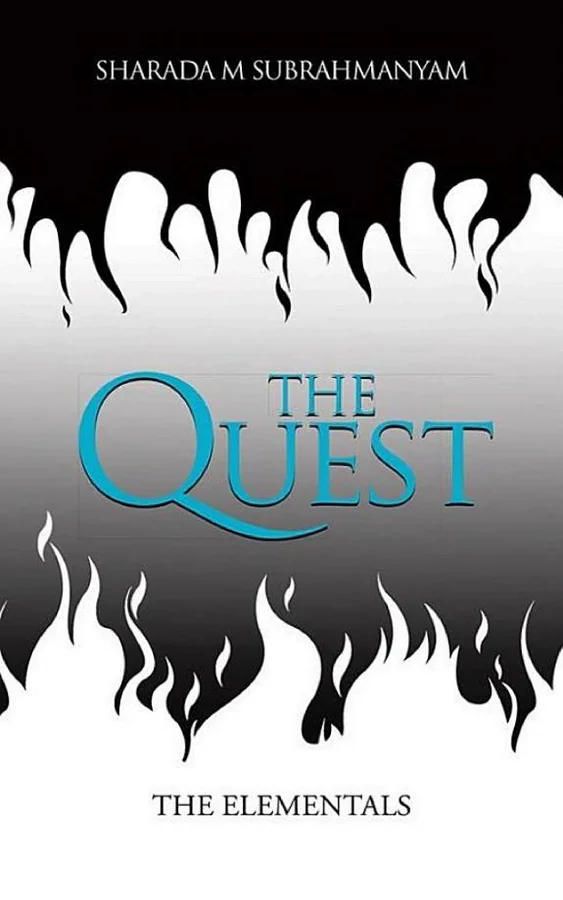
The Elementals: the Quest
 77
77

The Elementals: the Quest
Sharada M Subrahmanyam’s The Elementals: The Quest presents a series of philosophical riddles that, while intellectually stimulating, can feel somewhat detached from a cohesive narrative arc. The initial riddle concerning "nothing" is particularly potent, immediately setting a tone of deep inquiry. However, the subsequent allegories, while well-crafted, lack the consistent impact of the opening. The strength of the book lies in its ability to pose questions that linger, forcing readers to confront their assumptions about existence and value. A limitation is the lack of explicit guidance or contextualization for some of the more abstract concepts, which might leave newcomers to esoteric literature feeling adrift. The passage describing a force "firm, irresolute, Powerful, but gentle" effectively captures the paradoxical nature of the elemental forces discussed. Ultimately, The Elementals: The Quest offers a challenging, if occasionally opaque, intellectual exercise for the dedicated seeker.
📝 Description
77
Sharada M Subrahmanyam published The Elementals: The Quest in 2015, a collection of allegorical narratives.
The Elementals: The Quest presents a series of riddles and allegorical stories that prompt contemplation on existence, consciousness, and reality. Sharada M Subrahmanyam structured the work to engage readers intellectually and intuitively. The text invites a re-examination of conventional perceptions through introspection and layered questioning.
This book is for those drawn to philosophical inquiry and seekers of hidden knowledge. It appeals to readers who enjoy intellectual puzzles and allegorical storytelling. Those interested in the intersection of spirituality and literature, or who have an existing interest in esoteric traditions, will find it particularly suited to their curiosity about wisdom.
Published in 2015, The Elementals: The Quest reflects a modern interest in classical philosophical riddles and allegorical wisdom literature. While not directly aligned with specific historical movements like Theosophy or Hermeticism, it taps into a contemporary resurgence of metaphysical exploration. Its appearance coincided with the increased digital availability of esoteric texts, offering a path for global audiences seeking understanding beyond established academic or religious frameworks.
💡 Why Read This Book?
• You will learn to deconstruct complex philosophical riddles, similar to those found in ancient wisdom traditions, by engaging with the specific structure of the "greater than god" enigma presented in the book. • You will gain a new perspective on the concept of "hunger" as a driving force for existence and knowledge, as explored through the "ever hungry" entity in the text. • You will feel a renewed appreciation for the paradoxical nature of power and gentleness, as illustrated by the description of a force capable of moving mountains yet swayed by gentle stirrings, a core motif in the elemental narratives.
⭐ Reader Reviews
Honest opinions from readers who have explored this book.
❓ Frequently Asked Questions
What is the core theme of The Elementals: The Quest?
The core theme revolves around profound philosophical riddles that explore the nature of existence, consciousness, and fundamental forces. It challenges conventional perceptions through allegorical questioning, notably focusing on paradoxes like nothingness being greater than God.
Who is Sharada M Subrahmanyam and what is their background?
Information on Sharada M Subrahmanyam's specific background is not widely available in public records, but their work suggests a deep engagement with philosophical and esoteric inquiry, likely drawing from classical riddle traditions.
When was The Elementals: The Quest first published?
The Elementals: The Quest was first published on June 17, 2015, making it a contemporary contribution to esoteric literature.
What kind of riddles are featured in the book?
The book features philosophical and allegorical riddles that probe concepts such as 'nothingness,' 'hunger,' and the inherent qualities of powerful yet gentle forces, designed to provoke deep thought.
Is The Elementals: The Quest a part of a specific esoteric tradition?
While not explicitly tied to one tradition, the book's structure and themes echo classical wisdom literature and philosophical inquiry found across various esoteric lineages, encouraging self-discovery rather than adherence to dogma.
What does the riddle 'I am greater than god' refer to?
This riddle, featured prominently in the book, famously refers to 'Nothing.' It plays on the idea that 'nothing' is something that even a supreme being cannot surpass, and that its absence is desired by the wealthy.
🔮 Key Themes & Symbolism
The Power of Nothingness
The work intensely explores the paradoxical concept of 'nothingness' as a foundational element, even positing it as 'greater than God.' This theme challenges materialistic viewpoints, suggesting that emptiness or void holds immense potential and is a prerequisite for all existence. The riddles guide the reader to understand that what is perceived as absent or lacking can, in fact, be the most potent force, influencing both the destitute and the needy.
Existential Hunger and Thirst
Subrahmanyam uses the metaphors of 'hunger' and 'thirst' to represent the fundamental drives of existence. Entities within the book 'live if you feed me' and 'die if you quench me,' illustrating a perpetual state of need or consumption that defines life. This theme invites contemplation on the insatiable nature of desire, knowledge, and experience, suggesting that life's essence is sustained by its continuous engagement with these primal forces.
Paradoxical Nature of Forces
The text studies the dualistic and often contradictory qualities inherent in powerful forces. Described as 'firm, irresolute, Powerful, but gentle,' these forces possess immense capability, able to 'rip apart mountains,' yet are also susceptible to subtle influences. This exploration encourages readers to recognize that strength does not preclude gentleness, and that seemingly opposing attributes can coexist within a single entity or concept.
The Riddle as a Metaphysical Key
Central to the book is the function of riddles themselves as tools for unlocking deeper truths. The structured presentation of enigmas, like the five-letter word puzzle, serves not merely as an intellectual exercise but as a method for engaging the mind and spirit. Each riddle is a pathway, designed to dismantle conventional understanding and open perception to the subtle, underlying realities of existence.
💬 Memorable Quotes
Direct passages from the work, attributed to the author.
“I am ever hungry, And live if you feed me. I am never thirsty, And die if you quench me.”
— This statement personifies a fundamental aspect of existence that requires continuous engagement and sustenance to persist. It speaks to the perpetual nature of certain drives or concepts, suggesting that stagnation or satiation leads to cessation.
“The poor have me, The rich need me, And death comes to those who eat me.”
— This riddle points to 'Nothing' as the answer. It highlights how the absence of material wealth defines poverty, while the wealthy, despite their possessions, may still feel a void or lack, and the ultimate consequence of consuming 'nothing' is oblivion.
“I see much, but change little.”
— This describes an entity or principle that possesses vast observational capacity but remains largely unaffected or unaltered by what it perceives. It suggests a detached, perhaps cosmic, perspective.
“I am firm, irresolute, Powerful, but gentle;”
— This paradoxical description captures the complex nature of elemental forces or perhaps consciousness itself. It highlights how immense power can coexist with a lack of fixed resolve, and how great strength can manifest with profound gentleness.
“I have enough strength to rip apart mountains, Yet be moved by gentle stirrings,”
— This further elaborates on the duality of power. It illustrates that even the most formidable forces are not immune to subtle influences, suggesting a delicate balance and interconnectedness within the natural and metaphysical realms.
🌙 Esoteric Significance
Tradition
The Elementals: The Quest aligns with a broad, non-denominational esoteric approach that values direct philosophical inquiry and symbolic interpretation. It draws from the tradition of wisdom literature found across many cultures, particularly the use of riddles and allegories to convey profound truths, reminiscent of Gnostic texts or Hermetic aphorisms, but without strict adherence to their specific doctrines.
Symbolism
Key symbols include "Nothingness," representing the primal void and source of all potential, and "Hunger," symbolizing the driving force of existence and desire. The "Elemental Force" itself, described paradoxically as powerful yet gentle, symbolizes the dynamic, often contradictory, nature of cosmic energies and consciousness that shape reality.
Modern Relevance
Contemporary thinkers and practitioners interested in consciousness studies, philosophical psychology, and modern interpretations of alchemical or Hermetic principles find resonance in Subrahmanyam's work. It speaks to a modern desire for self-discovery and a questioning of materialist paradigms, offering a framework for contemplation relevant to mindfulness and existential exploration.
👥 Who Should Read This Book
• Seekers of philosophical depth: Individuals who enjoy unraveling complex riddles and exploring abstract concepts about existence, consciousness, and the nature of reality will find the text engaging. • Students of esoteric literature: Those studying the history and diverse expressions of esoteric thought will appreciate this contemporary example of wisdom literature that uses allegorical forms. • Introspective individuals: Readers drawn to self-reflection and a re-examination of their perceptions will benefit from the book's prompts that encourage contemplation on fundamental life questions.
📜 Historical Context
Published in 2015, The Elementals: The Quest emerged during a period of renewed interest in philosophical inquiry and esoteric thought, particularly online. Unlike the foundational texts of movements like Theosophy, which gained traction in the late 19th and early 20th centuries, Subrahmanyam's work is a contemporary exploration. It taps into a lineage of wisdom literature that includes classical philosophical riddles and allegorical narratives, but without direct affiliation to a specific historical school. Its publication year places it alongside a broader digital dissemination of metaphysical ideas, accessible to a global audience seeking introspection. While not directly engaging with contemporaries in the same vein, its style reflects the questioning spirit found in authors exploring consciousness and symbolic language, making it relevant to those interested in modern interpretations of ancient philosophical problems.
📔 Journal Prompts
The riddle's answer: 'Nothing.' Reflect on the paradoxical power attributed to emptiness.
The concept of "ever hungry." How does this drive manifest in your own pursuit of knowledge or experience?
The description of power: 'firm, irresolute, Powerful, but gentle.' Identify instances where these opposing qualities coexist in forces you observe.
The poor have nothing, the rich need nothing. Analyze the societal implications of this statement regarding value and desire.
Contemplate the force that 'dies if you quench me.' What aspects of life or consciousness fit this description?
🗂️ Glossary
Elemental
In this context, refers to fundamental forces or principles underlying existence, presented through allegorical riddles rather than classical elemental theory (earth, air, fire, water).
Riddle
A question or statement phrased in a deliberately ambiguous or puzzling way, requiring ingenuity in ascertaining its answer or meaning, used here as a vehicle for philosophical exploration.
Nothingness
A core concept explored in the book, posited not as a mere absence but as a potent force, greater than God and essential for existence, challenging conventional materialist views.
Hunger
Metaphorically represents the inherent drive, desire, or need that sustains existence and consciousness, implying that life persists through continuous engagement and consumption.
Gentle Stirrings
Refers to subtle influences or forces that can affect even the most powerful entities, highlighting the interconnectedness and delicate balance within the universe.
Quench
To satisfy or extinguish, used metaphorically in relation to the 'hunger' of existence; to fully satisfy this primal drive leads to cessation or death of that entity.
Irresolute
Characterized by a lack of firmness or certainty; hesitant. Used to describe powerful forces that may not be fixed or absolute, possessing a fluid or adaptable nature.
This book appears in 1 collection
🔮 Readers Also Liked
Browse all →








From the “Elementals” Collection
View all →







More Free Occult Philosophy Books
View all →