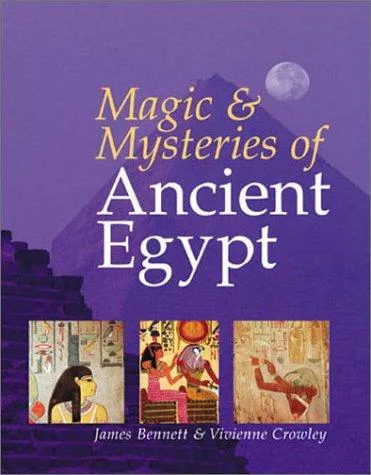
Magic and mysteries of ancient Egypt
 84
84

Magic and mysteries of ancient Egypt
Bennett’s "Magic and Mysteries of Ancient Egypt" attempts to bridge the gap between historical Egyptology and esoteric interpretation, a task fraught with potential pitfalls. The book shines when it details specific rituals or explains the symbolic weight of certain deities, such as its treatment of Thoth as a divine scribe and magician. However, the central argument—that ancient Egyptian practices reveal a coherent, unified magical system accessible today—occasionally strains against the historical record. Bennett's discussion of the *Book of the Dead* is particularly illustrative, detailing spells intended for the deceased’s journey, though the interpretation sometimes leans towards a generalized occult framework rather than the specific nuances of the original texts. It is a valuable resource for those already steeped in esoteric thought, but may prove less convincing for readers seeking strictly academic rigor. The work ultimately serves as an accessible entry point to a specific, mystical lens through which to view ancient Egypt.
📝 Description
84
James Bennett's 2001 book investigates the esoteric and symbolic dimensions of Pharaonic civilization.
James Bennett's "Magic and Mysteries of Ancient Egypt," published in 2001, examines the rituals, beliefs, and magical practices that were central to ancient Egyptian society. It goes beyond a simple historical or archaeological account, seeking to reveal the underlying metaphysical currents that shaped this civilization. The book considers the roles of priests, magicians, and pharaohs as figures who channeled divine power and maintained cosmic order.
This work is for readers drawn to the occult and mystical interpretations of ancient Egypt, rather than conventional historical narratives. It addresses those who want to grasp the magical worldview of the Egyptians, their concepts of the afterlife, and the symbolic meaning within their art and architecture. It is also useful for students of comparative religion, esoteric traditions, and ancient civilizations interested in the magical frameworks of the past.
Published in 2001, this book appeared during a time of growing popular interest in ancient Egypt and a rise in modern esoteric movements. While mainstream Egyptology emphasizes empirical evidence, Bennett's work caters to a desire to understand the spiritual and magical aspects of the civilization. It engages with interpretations of Egyptian mythology and ritual that have influenced occult traditions for centuries, including those associated with figures like Aleister Crowley and the Hermetic Order of the Golden Dawn, who looked to ancient Egypt for esoteric knowledge.
💡 Why Read This Book?
• Understand the Egyptian concept of the soul, including the *Ka* and *Ba*, to grasp their unique views on life, death, and rebirth, a perspective distinct from many Western spiritual traditions. • Explore the magical function of hieroglyphs, learning how the ancient Egyptians believed written symbols could channel divine power and influence reality, a concept explored within the book’s sections on sacred texts. • Gain insight into the Egyptian understanding of Thoth, the god of magic and wisdom, and his role in cosmic order and the administration of magical knowledge, as detailed in Bennett's analysis of key deities.
⭐ Reader Reviews
Honest opinions from readers who have explored this book.
❓ Frequently Asked Questions
What is the significance of Thoth in ancient Egyptian magic according to the book?
The book portrays Thoth as the divine scribe and magician, central to the administration of cosmic order and magical knowledge. He is depicted as the inventor of writing and the arbiter of divine law, whose wisdom was sought by both gods and humans in matters of spellcraft and esoteric understanding.
Does "Magic and Mysteries of Ancient Egypt" discuss the Egyptian afterlife beliefs?
Yes, James Bennett's work extensively covers Egyptian afterlife beliefs, focusing on the elaborate funerary rituals and the spells found in texts like the *Book of the Dead*, designed to guide the deceased safely through the underworld and ensure rebirth.
What is the Egyptian concept of the 'Ka' and 'Ba' as presented in the book?
The book explains the *Ka* as the life force or vital essence, and the *Ba* as the soul or personality that could travel between the earthly and spiritual realms. Understanding these concepts is crucial to grasping the Egyptian view of the soul's journey after death.
How does the book interpret the role of hieroglyphs?
Bennett interprets hieroglyphs not merely as a writing system but as potent symbols imbued with magical power. The book suggests the Egyptians believed these sacred carvings could influence events and channel divine energies, functioning as powerful talismans.
Is James Bennett's book based on academic Egyptology?
While drawing on historical Egyptian civilization, "Magic and Mysteries of Ancient Egypt" primarily focuses on esoteric and mystical interpretations. It complements, rather than replaces, purely academic Egyptological studies by exploring the magical worldview.
When was 'Magic and Mysteries of Ancient Egypt' first published?
The book 'Magic and Mysteries of Ancient Egypt' by James Bennett was first published in 2001, reflecting an interest in esoteric interpretations of ancient civilizations at the turn of the millennium.
🔮 Key Themes & Symbolism
The Egyptian Soul Complex
The book dissects the intricate Egyptian understanding of the soul, detailing components like the *Ka* (life force) and *Ba* (personality/spirit). It explores how these elements were believed to function during life and, crucially, after death. The narrative emphasizes the Egyptians' sophisticated cosmology, where maintaining the integrity of these soul aspects was paramount for achieving immortality and reading through the Duat, the Egyptian underworld, through specific rituals and spells detailed in funerary texts.
Hieroglyphs as Magical Power
Bennett presents hieroglyphs as far more than a mere communication tool. The work argues for their intrinsic magical efficacy, suggesting the ancient Egyptians viewed them as conduits for divine energy and cosmic forces. The act of carving or writing these symbols was believed to manifest their power in reality. This perspective extends to their use in temples, tombs, and amulets, where inscriptions served protective, invocational, and transformative purposes, solidifying the link between sacred language and potent magic.
Deities and Cosmic Order
Central to the book's exploration is the role of the Egyptian pantheon in maintaining cosmic balance. Deities like Thoth, the god of wisdom, magic, and writing, are highlighted for their important functions in governing the universe and its magical laws. The text examines how rituals and myths surrounding these gods were not just stories but active mechanisms for aligning human endeavors with divine will, ensuring prosperity, justice, and the cyclical renewal of life, death, and rebirth.
Rituals for the Afterlife
The book provides an in-depth look at the elaborate funerary rites and spells designed to ensure a successful passage into the afterlife. It examines texts such as the *Book of the Dead*, detailing the purpose of various incantations and rituals aimed at protecting the deceased from dangers in the Duat and facilitating their judgment and eventual resurrection. This focus underscores the Egyptian belief in the power of ritual to overcome mortality and achieve eternal life.
💬 Memorable Quotes
Direct passages from the work, attributed to the author.
“The Egyptians believed the Ka represented the vital essence, the animating force of existence.”
— This highlights the fundamental Egyptian concept of the *Ka*, emphasizing its role not just as life itself, but as the very spark that animates all beings, distinct from the physical body and the spiritual soul.
“Hieroglyphs were not simply letters, but carriers of divine energy.”
— This statement underscores the book's interpretation of Egyptian writing as inherently magical, suggesting that the visual forms of hieroglyphs were understood to possess active power, capable of influencing the world.
“Thoth presided over magical knowledge and the sacred scribal arts.”
— This points to the central role of Thoth in the Egyptian magical tradition, positioning him as the ultimate source and administrator of esoteric wisdom and the practice of sacred writing.
“The Ba was the aspect of the soul that could journey beyond the tomb.”
— This interpretation focuses on the mobility and distinct nature of the *Ba*, illustrating its function as the spiritual component capable of traversing the domains of the living and the dead after physical demise.
“Rituals were essential for the deceased to read through the trials of the Duat.”
— This emphasizes the practical, active role of ritual in Egyptian funerary beliefs, portraying spells and ceremonies as necessary tools for overcoming the dangers and challenges of the underworld journey.
🌙 Esoteric Significance
Tradition
This work engages with the Hermetic and Theosophical traditions, which have long viewed ancient Egypt as a foundational source of esoteric knowledge. Bennett interprets Egyptian cosmology and practices through a lens that seeks universal magical principles, aligning with the Hermetic maxim 'As Above, So Below.' It departs from purely historical accounts by emphasizing the magical efficacy of rituals and symbols, positioning ancient Egypt as a primary wellspring of Western occultism, rather than solely an archaeological subject.
Symbolism
Key symbols explored include the Ankh, representing life and immortality, and the Eye of Horus (Udjat), a potent symbol of protection, healing, and royal power. The book interprets the Ankh not just as a relic but as a living representation of cosmic vitality, while the Udjat is presented as a powerful amulet capable of warding off evil and restoring wholeness, reflecting their deep significance in Egyptian magical practice and belief systems.
Modern Relevance
Contemporary practitioners of Western esotericism, particularly those in Hermetic and ceremonial magic circles, continue to draw inspiration from Bennett's interpretations. The book's focus on deities like Thoth and its exploration of concepts like the Egyptian soul complex inform modern magical systems and comparative studies of religious traditions. Thinkers and practitioners interested in the archetypal dimensions of ancient mythologies and their application in personal spiritual development find resonance in its approach to Egyptian mysticism.
👥 Who Should Read This Book
• Students of esoteric traditions seeking to understand the perceived magical underpinnings of ancient Egyptian civilization. • Comparative religion scholars interested in exploring the mystical interpretations of Pharaonic beliefs beyond standard historical narratives. • Individuals fascinated by ancient symbolism and cosmology who wish to learn how these elements were integrated into magical practices and beliefs about the afterlife.
📜 Historical Context
Published in 2001, James Bennett’s "Magic and Mysteries of Ancient Egypt" appeared at a time when popular interest in ancient Egypt's esoteric dimensions remained strong, fueled by earlier occult revivals and ongoing archaeological discoveries. While mainstream Egyptology, represented by scholars like Zahi Hawass who advocated for rigorous scientific approaches, focused on material evidence, Bennett’s work catered to an audience seeking spiritual and mystical interpretations. This book fits within a tradition that views ancient Egypt as a source of primeval wisdom, a perspective influenced by 19th and early 20th-century occultists and thinkers such as Helena Blavatsky and Aleister Crowley, who incorporated Egyptian symbolism into their systems. Unlike purely academic texts, Bennett’s work engaged with the perceived magical legacy of Egypt, drawing parallels with modern esoteric practices and contributing to the broader discourse on ancient mysticism.
📔 Journal Prompts
The Egyptian concept of the *Ka* and its relation to vital force.
Reflect on the symbolic power attributed to hieroglyphs.
Consider the role of Thoth in maintaining cosmic and magical order.
The purpose of rituals as described in the *Book of the Dead*.
The Egyptian understanding of the soul's journey beyond death.
🗂️ Glossary
Ka
In ancient Egyptian belief, the spiritual double or life force of a person, which required sustenance and was believed to persist after death.
Ba
The aspect of the soul often depicted as a human-headed bird, representing personality and the ability to travel between the earthly realm and the afterlife.
Duat
The Egyptian underworld or field of the dead, a perilous landscape through which the sun god Ra and the souls of the deceased traveled during the night.
Book of the Dead
A collection of ancient Egyptian funerary spells and texts intended to guide the deceased through the dangers of the underworld and into the afterlife.
Thoth
The Egyptian god of writing, magic, wisdom, and the moon, often depicted with the head of an ibis or as a baboon.
Ankh
An ancient Egyptian hieroglyphic symbol that represented life, immortality, and the concept of eternal existence.
Udjat
The Eye of Horus, a powerful symbol of protection, royal power, and good health in ancient Egyptian mythology and amulets.
🔮 Readers Also Liked
Browse all →








More by James Bennett
All books →
More Free Occult Philosophy Books
View all →