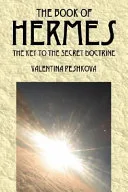
The Book of Hermes - The Key to the Secret Doctrine
 82
82

The Book of Hermes - The Key to the Secret Doctrine
Peshkova Valentina's "The Book of Hermes" offers a structured approach to the often-chaotic landscape of occult philosophy. Its strength lies in its systematic presentation of core Hermetic principles, particularly the concept of correspondence. The work attempts to distill complex ideas into a digestible format, which is commendable. However, its primary limitation is the relative lack of original scholarly engagement; it largely synthesizes existing material without significant new interpretation or primary source analysis, making it feel more like a comprehensive primer than a groundbreaking treatise. A particularly illustrative section details the symbolic journey of the soul, providing a clear, albeit traditional, framework for esoteric progression. For those new to the deeper currents of Hermetic thought, it serves as a useful, if not entirely unique, guide.
📝 Description
82
Peshkova Valentina published The Book of Hermes: The Key to the Secret Doctrine in November 2007.
This book acts as a guide to fundamental occult principles, aiming to foster a deeper understanding of mystical philosophies. It presents these ideas not as abstract theories, but as practical tools for interpreting reality. The work is organized to clarify the basic tenets of secret doctrines, making them approachable for devoted students of the esoteric.
It is written for serious practitioners and scholars of occult philosophy, especially those interested in Hermeticism, Gnosticism, and comparative mysticism. The text suits individuals looking to move past surface level explanations and engage with the core structures of esoteric knowledge. A basic grasp of metaphysical concepts is recommended for readers to fully appreciate the depth of the material.
Valentina's work appeared in the early 21st century, a time when interest in esoteric traditions grew, partly due to digital spread and a rejection of purely materialistic views. The book sought to establish a unified framework for understanding the 'secret doctrine' that connects various mystical paths. It pushed back against more eclectic or New Age approaches, stressing a return to core Hermetic sources. Its 2007 release placed it in a period of scholarly and practitioner reassessment of historical occult texts.
💡 Why Read This Book?
• Gain a structured understanding of Hermetic principles like the Law of Correspondence, presented as a foundational element for perceiving universal connections. • Explore the symbolic language of creation as detailed within the text, offering a unique lens through which to interpret spiritual texts and practices from 2007. • Access a synthesized overview of "secret doctrine" concepts, providing a coherent framework for those seeking to understand the esoteric underpinnings of various mystical traditions.
⭐ Reader Reviews
Honest opinions from readers who have explored this book.
❓ Frequently Asked Questions
When was The Book of Hermes by Peshkova Valentina first published?
The Book of Hermes: The Key to the Secret Doctrine by Peshkova Valentina was first published in November 2007. This date places it within a period of renewed interest in esoteric studies.
What is the central theme of The Book of Hermes?
The central theme is to unlock and explain the fundamental principles of "secret doctrine" or occult philosophy, focusing on concepts like correspondence and the interconnectedness of all things.
Is The Book of Hermes suitable for absolute beginners in occult philosophy?
While it aims to make complex ideas accessible, the book assumes a foundational understanding of metaphysical concepts. It is best suited for those already engaged with esoteric studies.
What esoteric traditions does the book draw upon?
The book primarily draws upon Hermeticism and Gnosticism, seeking to illuminate the common threads and underlying structures shared by various mystical paths.
Does the book provide practical exercises for the reader?
The book focuses on theoretical and philosophical understanding, presenting principles as keys to inner realization rather than offering explicit practical exercises.
What distinguishes this book from other esoteric guides published around 2007?
Its distinction lies in its systematic and structured approach to distilling core "secret doctrine" tenets, aiming for clarity and coherence in presenting these often-esoteric concepts.
🔮 Key Themes & Symbolism
The Secret Doctrine Unveiled
This theme centers on the book's ambitious goal: to reveal the foundational 'Secret Doctrine' that allegedly underlies all true mystical and esoteric traditions. Peshkova Valentina presents this doctrine not as a singular dogma, but as a set of universal laws and principles governing existence. The text aims to provide the 'key' to understanding these principles, making them accessible through reasoned exposition and symbolic interpretation. This approach seeks to unify disparate occult philosophies under a common, ancient wisdom framework, emphasizing that true knowledge is not created but rediscovered.
Principles of Correspondence
A central to Hermetic philosophy, the principle of 'As Above, So Below' is thoroughly explored. The book elucidates how macrocosmic universal laws are reflected in the microcosm of human consciousness and the material world. It argues that understanding these correspondences is crucial for any serious student of the occult, enabling one to perceive the interconnectedness of all phenomena. This theme serves as a practical tool for interpreting symbols and events, linking the seen with the unseen.
The Soul's Journey
The book explores the esoteric understanding of the soul's nature, its descent into material existence, and its potential for ascent back to divine consciousness. This narrative arc is presented through symbolic language and philosophical reasoning, drawing parallels with Gnostic cosmologies. The text outlines the stages and challenges involved in this spiritual evolution, emphasizing self-awareness and the application of occult principles as pathways to liberation and reintegration with the divine source.
Symbolic Language of Creation
This theme focuses on the idea that the universe itself is written in a symbolic language, with every element, form, and event carrying deeper meaning. The Book of Hermes interprets various symbols and archetypes, showing how they function as keys to unlocking the greater mysteries of existence. By understanding this symbolic grammar, readers are encouraged to see beyond the superficial appearance of reality and perceive the underlying spiritual architecture, a practice central to many esoteric disciplines.
💬 Memorable Quotes
Direct passages from the work, attributed to the author.
“The universe is a divine thought made manifest.”
— This statement expresses the idealistic and monistic underpinnings of the 'Secret Doctrine,' suggesting that reality originates from a singular, conscious, divine source, and all existence is a projection or expression of this thought.
“To know the cause, observe the effect.”
— This succinctly expresses the principle of correspondence, indicating that the nature of underlying causes can be understood by examining their manifest effects in the material world or human experience.
“The path of return is the path of inner knowing.”
— This highlights the Gnostic and Hermetic emphasis on internal realization. The journey back to a divine state is achieved not through external rituals alone, but through cultivating inner wisdom and self-awareness.
“Form is the shadow of spirit.”
— This metaphor emphasizes the primacy of the spiritual realm over the material. Physical forms are seen as transient manifestations or 'shadows' cast by eternal, spiritual realities.
“All is one, and the one is all.”
— A classic expression of pantheistic or panentheistic thought, this phrase underscores the fundamental unity of existence, asserting that the divine permeates and constitutes all things.
🌙 Esoteric Significance
Tradition
The work is firmly rooted in the Western Esoteric Tradition, drawing heavily from Hermeticism, Gnosticism, and elements of Neoplatonism. It positions itself as a key to understanding the 'Secret Doctrine,' a term historically associated with foundational, often hidden, cosmological and theological principles. Valentina's contribution lies in synthesizing these ancient streams into a more accessible format for contemporary readers, aiming to bridge the gap between historical esoteric thought and modern inquiry.
Symbolism
Central symbols include the Caduceus, representing balance, mediation, and the union of opposites – a key Hermetic concept. The Ouroboros, the serpent eating its tail, signifies cyclical existence, eternity, and the primordial unity of all things. The Triangle, often representing the Trinity or divine mind, is also explored as a fundamental geometric symbol of creation and manifestation within the book's framework.
Modern Relevance
Contemporary practitioners of Hermeticism, Gnosticism, and comparative mysticism find value in "The Book of Hermes" for its clear articulation of core principles. Thinkers and groups focused on esoteric cosmology, consciousness studies, and symbolic interpretation often reference its structured approach. Its emphasis on universal laws and interconnectedness continues to resonate with individuals seeking a philosophical framework beyond mainstream materialism or organized religion.
👥 Who Should Read This Book
• Students of Hermeticism and Gnosticism seeking a structured exposition of core doctrines and symbolic language. • Comparative mysticism researchers looking for a synthesis of ancient esoteric principles from a 2007 perspective. • Individuals interested in understanding the concept of a unified 'Secret Doctrine' as a foundational framework for occult philosophy.
📜 Historical Context
Peshkova Valentina's "The Book of Hermes: The Key to the Secret Doctrine," published in 2007, emerged during a period of significant digital expansion for esoteric literature. The early 21st century witnessed a growing public engagement with spiritual and metaphysical concepts, often facilitated by online forums and e-books, contrasting with the more academic or closed-circle traditions of earlier decades. Valentina's work sought to provide a coherent synthesis of Hermetic and Gnostic ideas, aiming to offer a foundational text for a new generation of seekers. This era also saw continued scholarly interest in Western Esotericism, with figures like Wouter J. Hanegraaff publishing influential works on the subject. Valentina’s book positioned itself as a guide to the 'secret doctrine,' a concept explored by various thinkers, notably Helena Blavatsky, though Valentina’s approach is distinct in its specific synthesis and publication date. The reception was primarily within online occult communities, where its structured approach was appreciated for its clarity.
📔 Journal Prompts
The concept of correspondence: how does 'As Above, So Below' manifest in your daily life?
Reflect on the symbolism of the Caduceus as presented in the book.
Meditate on the idea of the universe as a divine thought.
Consider the stages of the soul's return journey described in the text.
Explore the 'Secret Doctrine' as a unifying principle for different spiritual paths.
🗂️ Glossary
Secret Doctrine
The fundamental, often hidden, set of universal laws and principles believed to underpin all genuine esoteric and mystical traditions, representing an ancient, unified wisdom.
Hermeticism
An esoteric tradition based on writings attributed to Hermes Trismegistus, emphasizing principles such as correspondence, causation, and divine unity, influential in Western occultism.
Gnosticism
A diverse set of religious and philosophical movements emphasizing salvation through gnosis (knowledge), often featuring a dualistic worldview and a complex cosmology involving divine emanations.
Principle of Correspondence
The Hermetic axiom 'As Above, So Below,' signifying that the patterns and laws governing the macrocosm (universe) are reflected in the microcosm (human being and the material world).
Microcosm
The small world; often refers to the human being as a reflection or miniature representation of the greater universe (macrocosm).
Macrocosm
The great world; the universe considered as a complete and unified whole, containing all principles and forces.
Divine Mind
The ultimate source of all reality, conceived as a supreme consciousness or intelligence from which the universe emanates and by which it is sustained.