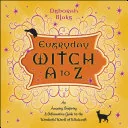
Everyday Witch A to Z
 71
71

Everyday Witch A to Z
Deborah Blake’s *Everyday Witch A to Z* successfully sidesteps the dry, arcane tone that often alienates newcomers to witchcraft. Its alphabetical structure acts as a convenient springboard, allowing readers to dip in and out of topics ranging from the serious (like ethical spellcasting) to the whimsical (like the proper care of a broomstick). The original blurb's promise of "serious and silly, factual and fanciful" is largely delivered, particularly in sections detailing correspondences or common ritual components. However, the book’s very accessibility can sometimes feel like a limitation; deeper dives into the historical or theological nuances of specific traditions are understandably absent, given its encyclopedic, introductory scope. For instance, the explanation of the "Book of Shadows" is practical but brief, focusing on its function as a personal grimoire rather than its historical evolution. Despite this, the work shines in its ability to normalize witchcraft, presenting it as a vibrant, adaptable, and even humorous path. It's a solid, friendly entry point for the curious soul.
📝 Description
71
Deborah Blake's 2012 book, Everyday Witch A to Z, defines witchcraft terms from A to Z.
This encyclopedia acts as an A-to-Z guide to witchcraft, published in 2012. It aims to make occult practices understandable for a general audience by mixing factual explanations with humorous anecdotes. The book covers many topics, from basic ideas to more playful aspects of the Craft, making it easy to read and engaging. It serves as a reference for people interested in Pagan and Wiccan traditions without using complex academic language. Everyday Witch A to Z is meant for those new to witchcraft or looking for a friendly introduction to esoteric ideas. Experienced practitioners who enjoy a funny, practical approach will also find value here. The book appeals to readers who might feel put off by serious or difficult occult texts. Anyone wanting to explore Paganism, Wicca, or magic theory from a hands-on, accessible viewpoint will find this useful.
Published in 2012, Everyday Witch A to Z appeared as interest in alternative spirituality grew. Following earlier figures in modern witchcraft, Blake's book offered accessible information. It fit a trend for practical, relatable witchcraft guides, differing from more closed or academic historical approaches. The book’s tone matches a cultural shift toward personal spiritual paths.
💡 Why Read This Book?
• Learn practical spellcrafting techniques and the purpose of common tools like the athame, as detailed in the book's glossary, enabling you to begin simple magical workings. • Discover the significance of seasonal observances like the "Wheel of the Year," providing a framework for connecting with natural cycles and enhancing your spiritual practice. • Gain an understanding of fundamental concepts such as correspondences (herbs, colors, crystals), empowering you to personalize spells and rituals beyond generic instructions.
⭐ Reader Reviews
Honest opinions from readers who have explored this book.
❓ Frequently Asked Questions
What is the primary focus of Deborah Blake's *Everyday Witch A to Z*?
The book serves as an A-to-Z encyclopedia of witchcraft, demystifying occult concepts with humor and practicality for beginners and curious minds alike.
When was *Everyday Witch A to Z* first published?
*Everyday Witch A to Z* by Deborah Blake was first published on May 8, 2012.
Is this book suitable for experienced witches or only beginners?
While excellent for beginners, experienced practitioners may also appreciate its lighthearted approach and practical, accessible summaries of various topics.
Does the book cover specific deities or pantheons?
The book touches on deity work and different spiritual paths within witchcraft, offering general guidance rather than exhaustive theological studies.
What kind of topics are covered in the A to Z format?
It covers a wide range, from spellcasting basics, tools, and correspondences to concepts like the Book of Shadows and the Wheel of the Year, all presented with humor.
Can I use this book to start my own Book of Shadows?
Yes, the book provides foundational knowledge and practical advice that can inspire and inform the creation of your personal Book of Shadows.
🔮 Key Themes & Symbolism
Accessible Witchcraft Knowledge
This work breaks down complex magical concepts into digestible, alphabetical entries, making witchcraft approachable for everyone. It avoids jargon and arcane language, focusing instead on practical application and understanding. Topics range from the mundane (like cleaning your athame) to the metaphysical (like understanding correspondences), presented with a light touch that encourages learning without intimidation. The book aims to show that magick can be integrated into everyday life, not just reserved for ceremonial settings.
Personalized Magical Practice
A core theme is the encouragement of individual interpretation and practice within witchcraft. Blake emphasizes that there isn't one 'right' way to be a witch. Readers are prompted to adapt concepts like the Book of Shadows or spellcasting to their personal beliefs and lifestyles. The book highlights the importance of intuition and personal connection to the Craft, fostering a sense of empowerment and agency for the practitioner.
Humor and Whimsy in the Craft
Unlike many esoteric texts, *Everyday Witch A to Z* embraces humor and a playful spirit. This approach helps to destigmatize witchcraft and make it feel more relatable and less intimidating. The book infuses even serious topics with lightheartedness, suggesting that magick can be fun and joyful. This tone aims to create a welcoming atmosphere for newcomers and a refreshing perspective for seasoned practitioners.
The Witch's Toolkit and Environment
The book details essential tools and elements of a witch's practice, from the athame and wand to the altar and sacred space. It explains their symbolic meanings and practical uses in rituals and spellwork. Furthermore, it touches upon the energetic significance of the environment, including correspondences related to colors, herbs, and celestial bodies, providing readers with a foundational understanding of how to build and utilize their magical resources effectively.
💬 Memorable Quotes
Direct passages from the work, attributed to the author.
“Break out your broomstick, and add a spark of magick to every day.”
— This opening statement captures the book's core philosophy: integrating witchcraft into daily life with enthusiasm and a touch of playful energy, making magick accessible and fun.
“Do stuffy academic tomes on Witchcraft make you want to hide in your broom closet?”
— This rhetorical question highlights the book's intention to offer an alternative to dense, intimidating occult literature, promising a more engaging and less formal approach.
“Now you can get the low-down on everything you ever wondered about Witchcraft, and it's as simple as A, B, C.”
— This conveys the book's promise of comprehensive yet easy-to-understand information, structured alphabetically for maximum clarity and ease of reference.
“sprinkled throughout with humor, flair, and a healthy dose of Witchy wisdom.”
— This describes the book's unique tone—a blend of lightheartedness, practical advice, and genuine occult knowledge, making the learning process enjoyable.
“Unique and fun for everyone, Everyday Witch A to Z”
— This emphasizes the book's broad appeal and its goal of providing an enjoyable and distinctive introduction to witchcraft for a wide audience.
🌙 Esoteric Significance
Tradition
This work aligns broadly with modern eclectic Wicca and contemporary Pagan witchcraft traditions, which emphasize personal practice and adaptability over strict adherence to historical dogma. It draws from a general wellspring of Western esoteric practices, including elements of spellcraft, correspondences, and ritual structure, but presents them in a highly individualized and accessible manner, departing from more rigid, lineage-bound systems.
Symbolism
Key symbols include the athame, representing will and direction, often explained as a tool for directing energy rather than for physical cutting. The broomstick symbolizes purification and the clearing of space, both physically and energetically, for magical work. The Book of Shadows represents the personal accumulation of magical knowledge and practice, a sacred journal unique to each practitioner, embodying their spiritual journey.
Modern Relevance
Contemporary witchcraft practitioners, particularly those identifying with eclectic or beginner-friendly paths, continue to find value in Blake's approach. Online communities and social media platforms often reference the book's clear explanations of basic concepts. Its emphasis on personal practice speaks to modern spiritual seekers who value autonomy and self-discovery, making it a relevant touchstone for those exploring witchcraft outside of established coven structures.
👥 Who Should Read This Book
• Aspiring witches seeking a friendly, non-intimidating introduction to core concepts like spellcasting, tools, and correspondences. • Individuals curious about Pagan or Wiccan paths who feel overwhelmed by traditional, academic, or overly esoteric texts. • Experienced practitioners looking for a lighthearted reference or a way to introduce friends and family to the basics of witchcraft with humor.
📜 Historical Context
Published in 2012, *Everyday Witch A to Z* emerged within a burgeoning digital age where esoteric knowledge became increasingly accessible online, yet a demand persisted for curated, user-friendly physical texts. The mid-2000s and early 2010s saw a significant rise in popular Wicca and neo-paganism, moving beyond the foundational works of Gardner and Valiente. Authors like Scott Cunningham had already paved the way for accessible guides, but Blake's alphabetical, humorous approach offered a distinct angle. This period also saw a counter-current of academic interest in contemporary Paganism, with scholars like Ethan Doyle White documenting its evolution. Blake's work, while not academic, tapped into this broader cultural engagement with witchcraft, offering a non-intimidating entry point that contrasted with more traditional, sometimes dogmatic, grimoires or the dense theoretical works emerging concurrently.
📔 Journal Prompts
Reflect on the symbolic meaning of the athame as presented in the book and how you might use its energy-directing principles in your life.
Consider the concept of the Wheel of the Year and how its cycles might align with or inform your personal rhythm.
Explore the idea of a personal Book of Shadows; what initial entries might you consider creating based on the book's guidance?
Think about the different types of correspondences mentioned (colors, herbs, etc.) and choose one to focus on incorporating into your daily routine.
How does the book's emphasis on humor and adaptability challenge or affirm your preconceptions about witchcraft?
🗂️ Glossary
Athame
A ritual dagger, typically double-edged, used for directing energy, casting circles, and invoking spirits, rather than for physical cutting. It symbolizes the element of fire or air.
Book of Shadows
A personal grimoire or journal containing spells, rituals, correspondences, and magical knowledge accumulated by a witch. It is unique to the individual practitioner.
Correspondences
The symbolic associations between different elements, such as colors, herbs, planets, crystals, and days of the week, used to enhance the power and intention of spells and rituals.
Spellcasting
The practice of intentionally directing energy, often using focused will, visualization, and sometimes tools or words, to bring about a desired outcome or change.
Wheel of the Year
A cyclical calendar marking the eight major seasonal festivals (Sabbats) celebrated in many Wiccan and Pagan traditions, reflecting the earth's natural cycles.
Altar
A sacred space, often a table or flat surface, used for performing rituals and spellwork. It typically holds tools, symbols, candles, and other items relevant to the practitioner's practice.
Witchy Wisdom
A colloquial term referring to the practical knowledge, intuition, and understanding of magical principles and practices associated with witchcraft.
This book appears in 1 collection
🔮 Readers Also Liked
Browse all →









From the “Spellcraft” Collection
View all →



More Free Occult Philosophy Books
View all →