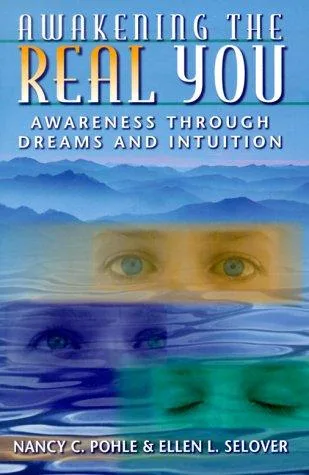
Awakening the real you
 82
82

Awakening the real you
Nancy C. Pohle's "Awakening the Real You" attempts to chart a course beyond the superficialities of modern self-help, aiming for a deeper excavation of the authentic self. The book's strength lies in its persistent call for introspection, urging readers to examine the very architecture of their perceived identities. Pohle’s examination of "ego dissolution" is particularly compelling, presenting the conditioned self not as an enemy, but as a construct to be understood and transcended. However, the work occasionally falters under the weight of its own philosophical aspirations. The prose, while earnest, can sometimes become dense, particularly when discussing the finer points of consciousness without sufficient illustrative examples. A notable passage concerning the "shadow self" – the unacknowledged aspects of personality – could have benefited from more concrete applications, leaving the reader with a theoretical understanding rather than actionable insight. Despite this, the book offers a valuable perspective for those weary of platitudes. Pohle’s "Awakening the Real You" is a serious, albeit sometimes abstract, exploration of personal liberation.
📝 Description
82
Nancy C. Pohle published 'Awakening the Real You' in 1999, moving beyond superficial self-help.
This 1999 text guides readers toward self-discovery by examining the philosophical basis of personal identity and spiritual growth. Pohle presents the 'real you' not as a static concept, but as a conscious state accessible through introspection and an understanding of psychological and spiritual principles. The book acts as a guide for those looking to shed societal conditioning and ingrained beliefs to uncover a more authentic inner self. It is for individuals committed to serious self-inquiry, especially those interested in esoteric philosophy and psychology. Readers who have progressed beyond introductory self-help materials will find a more rigorous examination of consciousness, identity, and personal liberation. Familiarity with or curiosity about concepts like archetypes, the subconscious, or spiritual awakening will be beneficial. The book is suited for the dedicated seeker ready to honestly confront their inner world in pursuit of genuine transformation.
Published in 1999, 'Awakening the Real You' fits within a period of heightened interest in New Age and esoteric thought following late 20th century spiritual movements. The work intersects psychological theories, particularly Jungian concepts like individuation and the collective unconscious, with broader metaphysical ideas. It emerged when Western esoteric traditions and Eastern spiritual practices were gaining broader recognition, interacting with contemporary spiritual discourse.
💡 Why Read This Book?
• Gain a framework for understanding your "ego dissolution" and how societal conditioning shapes your identity, moving beyond surface-level self-improvement techniques as presented in Chapter 3. • Learn practical methods for cultivating "conscious awareness" to discern your authentic self from fabricated personas, a key element discussed in the book's introspective exercises. • Explore the concept of the "higher self" and its connection to universal consciousness, offering a metaphysical perspective not commonly found in secular psychology books.
⭐ Reader Reviews
Honest opinions from readers who have explored this book.
❓ Frequently Asked Questions
What is the primary goal of Nancy C. Pohle's 'Awakening the Real You'?
The primary goal is to guide readers toward discovering and embodying their authentic self by deconstructing societal conditioning and the ego's constructs, as explored throughout the book's introspective framework.
When was 'Awakening the Real You' first published?
Nancy C. Pohle's 'Awakening the Real You' was first published in 1999, reflecting the esoteric and New Age philosophical currents of the late 20th century.
Does the book offer practical exercises for self-discovery?
Yes, the book is structured to encourage introspection and includes implicit guidance for exercises aimed at cultivating conscious awareness and understanding the layers of the self.
Who is the intended audience for 'Awakening the Real You'?
The book is intended for serious seekers of self-knowledge, particularly those interested in esoteric philosophy, psychology, and spiritual growth beyond introductory self-help.
What key concepts are explored in 'Awakening the Real You'?
Key concepts include ego dissolution, conscious awareness, the higher self, and the deconstruction of false identities formed by societal imprints.
How does this book differ from standard self-help literature?
It differs by focusing on deeper philosophical and psychological principles of identity and consciousness, aiming for a more profound and lasting inner transformation rather than superficial changes.
🔮 Key Themes & Symbolism
The Conditioned Ego
Pohle meticulously dissects the 'conditioned ego,' presenting it as a complex edifice built from societal norms, parental imprints, and cultural expectations. This section details how these external influences create a false self, a persona that obscures the reader's innate essence. The work emphasizes that understanding the formation of this ego is the first step toward liberation, moving beyond the superficial layers to reveal a more genuine inner being. It’s not about eradicating the ego, but about recognizing its constructed nature and its limitations on authentic expression.
Conscious Awareness
Central to 'Awakening the Real You' is the cultivation of 'conscious awareness.' Pohle posits this heightened state of perception as the primary tool for self-discovery. It involves observing one's thoughts, emotions, and reactions without immediate judgment, thereby gaining insight into the underlying patterns of the conditioned ego. This practice allows individuals to differentiate between authentic impulses and those dictated by external programming. The book advocates for developing this awareness as a continuous process, essential for peeling back the layers of false identity and connecting with the deeper self.
The Higher Self
The concept of the 'higher self' functions as the ultimate aim of the transformative process outlined in the book. Pohle describes it not as a separate entity, but as the truest, most realized aspect of one's being – pure consciousness, unadulterated by egoic filters. Accessing this state is presented as a journey of integration, where the individual aligns their conscious awareness with this profound inner essence. This theme connects the personal journey of self-realization to broader metaphysical ideas of universal consciousness and inherent spiritual potential within every individual.
Ego Dissolution
The process of 'ego dissolution' is explored as a critical phase in awakening the real you. This doesn't imply destruction, but a profound letting go of the rigid identification with the constructed ego. Pohle guides the reader to understand how clinging to this false self creates suffering and limits potential. The book offers perspectives on how to loosen these identifications through introspection and self-observation, paving the way for a more fluid and authentic experience of existence. It's about transcending the limitations imposed by the ego's self-importance and perceived boundaries.
💬 Memorable Quotes
Direct passages from the work, attributed to the author.
“The self we present to the world is often a carefully constructed facade.”
— This statement highlights the book's core premise: that our outward identity is frequently a product of societal expectations and personal defenses, rather than our innate truth. It sets the stage for exploring how to dismantle this facade.
“True liberation comes from seeing through the ego's illusions.”
— This emphasizes the transformative power of self-awareness. It suggests that recognizing the ego's manipulative tendencies and deceptive narratives is the key to achieving genuine freedom from internal constraints.
“Conscious awareness is the mirror that reflects the true self.”
— This metaphor illustrates the function of mindful attention. By observing our internal and external experiences with clarity, we can perceive the authentic nature of our being, unimpeded by egoic distortions.
“The journey inward is the path to outer authenticity.”
— This aphorism underscores the book's philosophy: that genuine external expression and interaction are predicated on internal self-understanding and integration. Inner work precedes outer manifestation.
“We are not merely the sum of our conditioned responses.”
— This challenges the reader to look beyond automatic reactions and learned behaviors. It asserts that there is a deeper, more essential self that exists independently of these habitual patterns.
🌙 Esoteric Significance
Tradition
This work aligns with the Western Esoteric tradition, particularly drawing upon psychological and philosophical currents that bridge Gnosticism and Hermeticism. It shares with Gnosticism the idea of an obscured inner divinity and the need for gnosis (knowledge) to achieve liberation from a fallen state (the conditioned ego). Its emphasis on self-analysis and the layers of consciousness echoes Hermetic principles of "As Above, So Below," applied to the microcosm of the human psyche. Pohle departs from more ritualistic traditions by focusing primarily on introspective practices and philosophical understanding as the means for awakening.
Symbolism
The book implicitly utilizes the symbolism of layers or veils, representing the various constructs of the conditioned ego that obscure the true self. The 'higher self' can be seen as a symbol of the divine spark or inner light, a recurring motif in many esoteric systems. The journey of 'ego dissolution' itself functions as a symbolic shedding of old skins or masks, a common motif in alchemical and spiritual transformation narratives, signifying rebirth and purification.
Modern Relevance
Pohle's exploration of the conditioned ego and the cultivation of conscious awareness remains highly relevant in contemporary spiritual and psychological discourse. Thinkers and practitioners in mindfulness, self-compassion, and somatic experiencing often engage with similar concepts of deconstructing ingrained patterns. Modern transpersonal psychology and integral theory also draw upon such works to understand the development of consciousness beyond the egoic structure. The book’s emphasis on authentic selfhood continues to inform contemporary discussions on identity and personal fulfillment in an increasingly complex world.
👥 Who Should Read This Book
• Individuals seeking a deeper understanding of their own psyche beyond superficial self-help, particularly those interested in the philosophical underpinnings of identity. • Practitioners of meditation and mindfulness who wish to explore the nature of consciousness and the ego more rigorously, as detailed in the book's discussions on awareness. • Students of comparative spirituality and esoteric traditions who want to see how concepts of the self and liberation are articulated within a modern, introspective framework.
📜 Historical Context
Published in 1999, Nancy C. Pohle's "Awakening the Real You" emerged during a period of intense interest in New Age spirituality and depth psychology. The late 20th century witnessed a surge in popular engagement with concepts drawn from Jungian analysis, Eastern philosophies, and various Western esoteric traditions. Pohle's work can be seen as a product of this milieu, engaging with ideas of individuation and the collective unconscious that were popularized by figures like Carl Jung. While the self-help genre was dominated by authors offering more accessible, often clinically-oriented advice, "Awakening the Real You" positioned itself within a more philosophical and metaphysical framework. It offered a counterpoint to the more externally focused self-improvement trends, emphasizing internal exploration and the deconstruction of the ego. The book resonated with a segment of readers seeking a more rigorous, introspective path to personal transformation, distinct from the mainstream spiritual movements of the era.
📔 Journal Prompts
The conditioned ego's construction: What societal imprints are most evident in your daily reactions?
Reflecting on "conscious awareness," identify one habitual thought pattern you observed without judgment today.
The "higher self" connection: How might aligning with your authentic essence alter your current life path?
Experiences of "ego dissolution": Describe a moment when you felt less identified with your usual self-concept.
Barriers to authenticity: What external expectations are most challenging to see through?
🗂️ Glossary
Conditioned Ego
The constructed sense of self, shaped by external influences like societal norms, upbringing, and cultural conditioning, which often obscures the authentic individual.
Conscious Awareness
A state of heightened self-observation and mindfulness, enabling the individual to perceive thoughts, emotions, and behaviors without immediate judgment or identification.
Higher Self
The deepest, most authentic aspect of an individual's being; pure consciousness or spiritual essence, unadulterated by the ego's limitations.
Ego Dissolution
The process of releasing rigid identification with the constructed ego, allowing for a more fluid and authentic experience of self and reality.
Authentic Self
The true, innate nature of an individual, independent of societal imprints and egoic constructs; the core essence of one's being.
Societal Imprints
The beliefs, values, and behaviors absorbed from society and culture that contribute to the formation of the conditioned ego.
Introspection
The examination of one's own conscious thoughts and feelings; self-reflection as a means of understanding the inner landscape.
🔮 Readers Also Liked
Browse all →









More Free Occult Philosophy Books
View all →