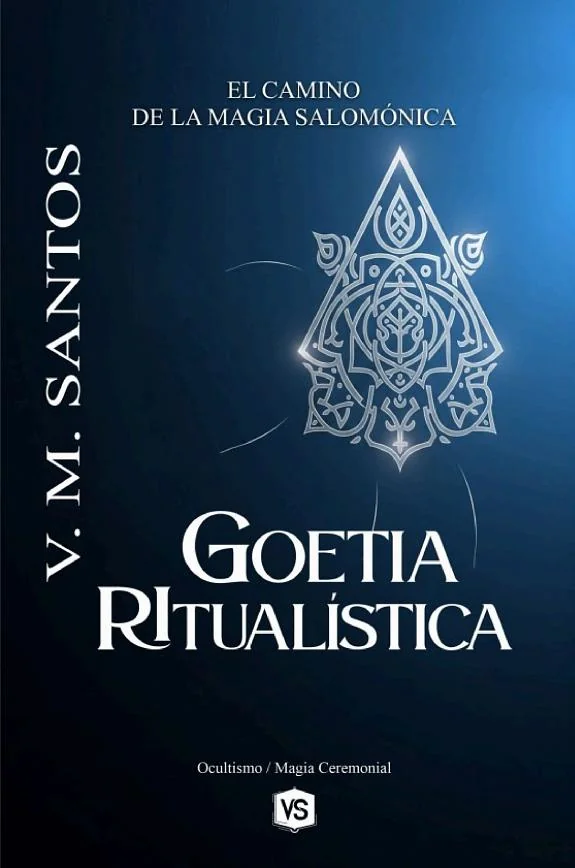
Goetia Ritualística
 83
83

Goetia Ritualística
V. M. Santos's *Goetia Ritualística* offers a commendable departure from the often-sensationalized presentation of Goetic magic. The author’s insistence on structure and ethical engagement provides a much-needed anchor for practitioners navigating this complex system. The work excels in its systematic approach, guiding the reader through the rituals with a clarity that suggests a deep understanding of the material's historical and practical dimensions. A particularly strong aspect is the emphasis on the practitioner's internal development, positing the magical work as a mirror for self-discovery. However, for those already deeply immersed in Goetic studies, the foundational nature of some sections might feel less novel. The interpretation of specific spirit correspondences, while logical, could benefit from further comparative analysis with less common grimoires. Ultimately, *Goetia Ritualística* serves as a solid, ethically-minded gateway into the Solomonic tradition for the serious student.
📝 Description
83
V. M. Santos's Goetia Ritualística presents the Goetic tradition as a structured path for spiritual development.
Goetia Ritualística by V. M. Santos outlines the Goetic tradition as a systematic approach to spiritual growth. The book moves beyond superficial occultism, establishing a framework for personal development through the careful study and application of ritual magic. Santos suggests that engaging with Goetic spirits reflects the practitioner's inner self, emphasizing self-discovery. This text is for serious students who seek depth and ethical grounding in their magical studies.
It appeals to those dedicated to rigorous magical study and personal transformation, desiring understanding, structure, and a balanced perspective. Readers looking to move past sensationalized or fragmented occult information will find a comprehensive guide. The work is particularly suited for individuals interested in the practical application of the Solomonic magical lineage. It acknowledges earlier magical texts that influenced the development of Goetic grimoires.
This book situates itself within the Solomonic magic tradition, a system with roots in the medieval period and often linked to King Solomon. This tradition involves the evocation of spirits, detailed in grimoires such as the Ars Goetia, which is part of the Lemegeton. Santos's work engages with this historical corpus, providing a modern interpretation for contemporary practitioners. It acknowledges earlier magical texts and practices that contributed to the development of these Goetic grimoires.
💡 Why Read This Book?
• Gain a structured, ethical framework for approaching Goetic ritual, moving beyond sensationalism as presented in Chapter 3, 'The Ethical Practitioner.' • Understand the Solomonic magical lineage through the lens of personal initiation, learning how each ritual step contributes to self-discovery as detailed in the 'Initiatory Path' concept. • Engage with the practical application of Solomonic seals, exploring their function in ritual and connection to specific spiritual forces, as discussed in the section on 'The Solomonic Seal'.
⭐ Reader Reviews
Honest opinions from readers who have explored this book.
❓ Frequently Asked Questions
What is the core philosophy behind V. M. Santos's approach to Goetia Ritualística?
The core philosophy emphasizes Goetia as an initiatory path for spiritual development and self-discovery, rather than mere occult technique. It prioritizes ethical engagement and structured practice, moving away from sensationalism.
When was Goetia Ritualística first published?
The book was first published on August 7, 2025.
Does Goetia Ritualística require prior knowledge of magic?
While prior knowledge is beneficial, the book is structured as an initiatory journey. It aims to guide serious students, implying it can serve as a foundational text for those committed to rigorous study.
What distinguishes this book from other Goetia texts?
It distinguishes itself by focusing on structure, ethics, and the spiritual growth of the practitioner, framing Goetic spirits as catalysts for self-realization rather than mere tools.
Is the book suitable for beginners in occultism?
It is suitable for beginners who are serious and committed to a structured, ethical approach to esoteric studies, particularly those interested in the Solomonic magical tradition.
What is the 'Solomonic magic' mentioned in the title?
Solomonic magic refers to a system of ritual magic attributed to King Solomon, often involving the evocation of spirits and the use of specific talismans and invocations, as detailed in historical grimoires.
🔮 Key Themes & Symbolism
The Initiatory Path
The work presents Goetic practice not as a collection of disparate spells, but as a cohesive initiatory journey. Each spirit, seal, and invocation is framed as a step designed to guide the practitioner toward greater self-awareness and spiritual maturity. This perspective reframes the magical work from external manipulation to internal transformation, emphasizing that the true revelation comes from the seeker's own engagement with the process.
Ethical Engagement
A significant theme is the emphasis on an ethical approach to ritual magic. Santos steers clear of sensationalism, advocating for respect, responsibility, and a balanced understanding of the forces involved. This ethical dimension is crucial, positioning the practitioner as a conscious agent rather than a mere manipulator, ensuring that the pursuit of magical knowledge aligns with personal integrity.
Solomonic Tradition
The book is firmly rooted in the Solomonic magical tradition, drawing from historical grimoires and practices attributed to King Solomon. It aims to provide a modern, accessible interpretation of this lineage, focusing on the practical application of its rituals and the understanding of its associated spirits and symbolism. The work seeks to clarify this ancient system for contemporary students.
Self-Discovery Through Ritual
A central tenet is that engaging with Goetic entities and rituals serves as a mirror for the practitioner's inner world. The process of invocation and evocation is depicted as a means of confronting and understanding one's own psyche, desires, and limitations. The book encourages a introspective approach, where the external magical work directly facilitates internal growth and self-knowledge.
💬 Memorable Quotes
Direct passages from the work, attributed to the author.
“Each seal, each spirit, and each invocation reveals much more than hidden techniques: they reveal the seeker themselves.”
— This highlights the book's central thesis: that Goetic ritual is a path to self-knowledge. The external magical operations are presented as catalysts for introspection, reflecting the practitioner's inner state and facilitating personal growth.
“The work breaks with the sensationalism of modern occultism to offer structure, ethics, and depth.”
— This statement underscores the author's intent to provide a serious, grounded approach to Goetia. It positions the book as an antidote to superficial or sensationalized accounts of occult practices, prioritizing substance and responsible study.
“This is not just a book: it is a spiritual journey.”
— This emphasizes the experiential and transformative nature of the content. It suggests that reading the book is meant to be an active process, a path of personal evolution rather than passive information acquisition.
“The reader is guided through an initiatory journey.”
— This phrase points to the structured, progressive nature of the material. It implies that the book is designed to lead the reader step-by-step through complex concepts and practices, akin to a formal magical training.
“Goetia Ritualística – The Path of Solomonic Magic”
— This subtitle clearly defines the book's focus: the practical and spiritual application of Goetic principles within the specific framework of Solomonic magic, indicating a systematic and traditional approach.
🌙 Esoteric Significance
Tradition
This work operates within the Western Esoteric tradition, specifically focusing on the lineage of Solomonic magic and ceremonial evocation. It draws heavily from the corpus of grimoires, particularly the Ars Goetia, and seeks to provide a practical, initiatory framework. Unlike purely Kabbalistic or Gnostic texts, its emphasis is on the direct interaction with a specific hierarchy of spirits as outlined in the Lemegeton, aiming for practical magical results and spiritual transformation.
Symbolism
Central symbols include the magical circle, the triangle of manifestation, and the specific seals (sigils) of the Goetic spirits. The circle represents the sacred, protected space of the magician, a microcosm of divine order. The triangle is where the invoked spirit is commanded to appear and converse. The individual seals are potent symbols, acting as keys or conduits to the specific intelligence and power of each Goetic entity, used for identification and control during ritual.
Modern Relevance
Contemporary practitioners of ceremonial magic, particularly those interested in the Golden Dawn lineage or modern interpretations of grimoire magic, find relevance in Santos's structured approach. Thinkers and groups focusing on practical magic, psychological projection in ritual, and the ethical dimensions of working with non-human intelligences can draw upon its principles. Its emphasis on self-discovery through ritual aligns with modern therapeutic and self-help applications of esoteric practices.
👥 Who Should Read This Book
• Aspiring practitioners of Solomonic magic seeking a structured, ethical introduction to Goetic evocation. • Students of Western Esotericism interested in the historical and practical aspects of grimoire traditions beyond theoretical study. • Individuals focused on personal transformation through ritual magic who value depth, clarity, and responsible practice.
📜 Historical Context
The tradition of Goetia, as codified in grimoires like the Lemegeton (specifically the Ars Goetia), gained significant traction in Western esoteric circles during the 19th and early 20th centuries, heavily influenced by figures like Aleister Crowley and S. L. MacGregor Mathers. These practitioners drew upon earlier medieval manuscripts, often shrouded in mystery and attributed (sometimes apocryphally) to King Solomon. The late 19th century saw a surge in occult revivalism, with movements like the Hermetic Order of the Golden Dawn popularizing ceremonial magic. V. M. Santos’s *Goetia Ritualística*, published in 2025, engages with this long-standing tradition. While figures like Eliphas Lévi explored demonology and magic in the mid-19th century, Santos’s work appears to offer a contemporary, structured reinterpretation, potentially addressing a modern audience’s need for clarity and ethical grounding in practices that were once controversial and sometimes subject to societal censure.
📔 Journal Prompts
The ethical framework for engaging with Goetic spirits presented in Chapter 3.
Reflect on the concept of the 'initiatory path' as applied to your own magical journey.
Analyze the role of the Solomonic seal in facilitating connection with spiritual forces.
Consider how the practice of Goetia, as described, mirrors your inner psychological landscape.
Evaluate the balance between structure and personal revelation in ritual practice.
🗂️ Glossary
Goetia
A branch of ceremonial magic concerned with the evocation of spirits, particularly those listed in the Ars Goetia, part of the Lemegeton grimoire. It is often associated with King Solomon.
Solomonic Magic
A system of ritual magic attributed to King Solomon, characterized by the use of invocations, talismans, and the command of spirits, as found in various historical grimoires.
Initiatory Path
A structured sequence of magical practices and spiritual disciplines designed to guide the practitioner through stages of personal growth and transformation.
Seal (Sigil)
A symbolic representation or glyph, often unique to a specific spirit or divine name, used in ritual magic for invocation, identification, and control.
Evocation
The magical act of calling forth spirits into a visible manifestation or a designated space, typically within a protective circle.
Grimoire
A textbook of magic, typically containing instructions on how to cast spells, perform rituals, and create magical objects, often with sections on spirits and their summoning.
Lemegeton
A 17th-century grimoire of ceremonial magic, commonly known as The Lesser Key of Solomon, divided into five books, including the Ars Goetia.
This book appears in 1 collection
🔮 Readers Also Liked
Browse all →







From the “Goetia” Collection
View all →


More Free Occult Philosophy Books
View all →