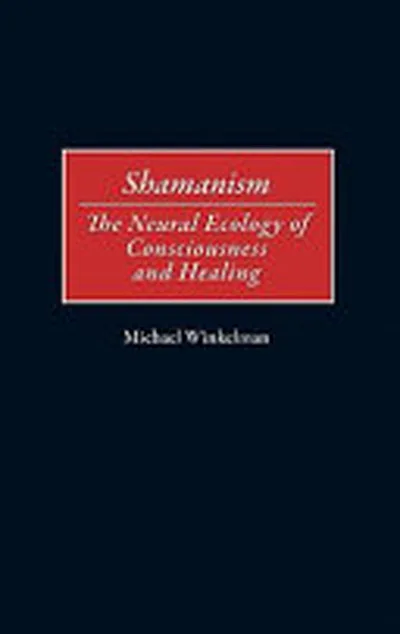
Shamanism
 75
75

Shamanism
Michael Winkelman’s "Shamanism" offers a compellingly systematic approach to a subject often mired in anecdote and New Age romanticism. The book’s strength lies in its rigorous grounding of shamanic phenomena in psychobiology and evolutionary psychology, moving beyond purely cultural or mythological interpretations. Winkelman’s analysis of the death-rebirth motif as a psychobiological process of self-development, for instance, provides a concrete, relatable framework for understanding a core shamanic archetype. However, the sheer academic density might prove challenging for readers solely seeking practical application or a purely spiritual narrative. While comprehensive, the text occasionally feels more like an exhaustive survey than an invitation to direct experience. Nevertheless, for serious students of the subject, Winkelman’s work remains an indispensable, evidence-based exploration of humanity's most ancient spiritual technology.
📝 Description
75
Michael Winkelman's 2000 book Shamanism argues it is humanity's oldest spiritual practice.
Published in 2000, Michael Winkelman's Shamanism presents the practice not just as ritual, but as a fundamental human capacity for altered consciousness. Winkelman posits shamanism as our oldest spiritual tradition, rooted in human biology and cognition. The book examines the neurobiological factors that enable shamanic experiences, suggesting a shared evolutionary basis for these practices across different cultures. It situates shamanism within human history, tracing its origins to the Paleolithic era and contrasting this innate drive with later organized religions and philosophies. Winkelman also engages with academic discussions on shamanism, referencing scholars like Mircea Eliade, and notes the resurgence of shamanic practices in the late 20th century.
The text dissects central shamanic ideas, such as dualistic worldviews, the function of ecstatic states, and the symbolic journey. It highlights the shaman's role as an intermediary between the material and spiritual realms. A key motif is death and rebirth, understood as a psychological process of transformation and integration central to personal development through spiritual engagement.
This work places shamanism within the context of comparative religion and the study of human consciousness. It connects contemporary understandings of shamanic practices to deep historical and psychological roots, viewing them as an inherent aspect of human spiritual development. Winkelman engages with both academic scholarship and the practical resurgence of these traditions in the late 20th century, framing shamanism as a core element of human psychobiology and spiritual expression across diverse cultures and time periods.
💡 Why Read This Book?
• Gain a psychobiological framework for understanding shamanic states, moving beyond mere cultural descriptions, as detailed in the discussion of consciousness architecture. • Comprehend the death-rebirth motif not just as symbolism, but as a fundamental process of self-development rooted in human nature, as explored in chapter analyses. • Grasp shamanism’s enduring relevance by examining its historical persistence from Paleolithic origins, providing context for its modern resurgence.
⭐ Reader Reviews
Honest opinions from readers who have explored this book.
❓ Frequently Asked Questions
What is the central argument of Michael Winkelman's Shamanism?
Winkelman argues that shamanism is a universal human capacity rooted in our psychobiology and consciousness, representing humanity's most ancient spiritual practice, rather than solely a cultural phenomenon.
When was Michael Winkelman's Shamanism first published?
Michael Winkelman's "Shamanism" was first published in the year 2000, marking a significant academic contribution to the study of the subject.
How does the book explain the death and rebirth motif in shamanism?
The book interprets the death and rebirth motif as a core psychobiological process of self-transformation, where the symbolic death of the old self allows for the emergence of a higher, integrated self.
What makes this book different from other books on shamanism?
Its difference lies in its systematic, evidence-based approach, grounding shamanic practices in evolutionary psychology and the neurobiology of consciousness, rather than solely relying on ethnography or spiritual interpretation.
Who is Michael Winkelman?
Michael Winkelman is a prominent anthropologist and ethnographer known for his extensive research and scholarly work on shamanism and altered states of consciousness.
Does the book cover specific shamanic traditions?
While the book focuses on universal principles, it draws upon examples from diverse global traditions to illustrate its cross-cultural arguments about shamanic practices and beliefs.
🔮 Key Themes & Symbolism
Psychobiology of Consciousness
Winkelman posits that shamanic capacities are rooted in universal human psychobiology and the neurobiology of consciousness. This perspective moves beyond purely cultural explanations, suggesting an innate, evolutionary basis for ecstatic states and spiritual experiences. The work explores how specific brain functions and altered states facilitate shamanic journeys and interactions with non-ordinary reality, linking these phenomena to fundamental human cognitive structures.
The Death-Rebirth Motif
A central theme is the symbolic death and rebirth cycle, interpreted not just as a narrative element but as a core process of psychological and spiritual development. This motif represents the shedding of an old self to integrate a transformed, higher-order consciousness. Winkelman examines this archetype across various cultures, highlighting its role in personal growth and the shaman's transformative journey.
Universal Human Practice
The book argues for shamanism as humanity's most ancient and widespread spiritual practice. By analyzing commonalities across diverse global cultures, Winkelman builds a case for a shared human propensity for shamanic experience. This universal aspect is linked to archetypal structures within the human brain and mind, suggesting a deep-seated need for connection to spiritual dimensions.
Modern Resurgence and Understanding
Winkelman addresses the dramatic modern resurgence of shamanism, providing a scholarly foundation for contemporary interest. The work aims to offer a more nuanced understanding, distinguishing between authentic practice and superficial interpretations. It provides context for why these ancient methods continue to hold appeal and efficacy in the modern world, grounded in their connection to fundamental human nature.
💬 Memorable Quotes
Direct passages from the work, attributed to the author.
“Shamanism, humanity's most ancient spiritual practice, has achieved a dramatic modern resurgence.”
— This opening statement sets the stage, highlighting the enduring relevance of shamanic traditions and their significant revival in contemporary society, demanding scholarly attention.
“The foundations and appeal of shamanism are rooted in human nature, the psychobiology of consciousness, and archetypal structures of the brain and mind.”
— This expresses the book's core thesis: shamanism is not merely cultural but a deeply embedded human capacity, explained through biological and psychological frameworks.
“The classic shamanic motif of death and rebirth represents the development of self through the symbolic death of the old self to permit the emergence and integration of a higher order self.”
— This offers a specific interpretation of a key shamanic symbol, framing it as a process of personal transformation and psychological integration relevant to spiritual development.
“Shamanism represents a foundational dimension of human experience, predating many formalized religious structures.”
— This positions shamanism as a primary spiritual technology, existing before and alongside more institutionalized forms of religion, emphasizing its fundamental nature.
“The psychobiological approach reveals the innate potential for shamanic experiences within the human organism.”
— This emphasizes the biological basis for shamanic states, suggesting that these experiences are not solely learned or culturally induced but stem from inherent human capabilities.
🌙 Esoteric Significance
Tradition
While not strictly adhering to a single Western esoteric lineage like Hermeticism or Kabbalah, Winkelman's work provides a crucial bridge. It offers a scientific and psychobiological lens through which esoteric concepts of altered consciousness, spiritual journeys, and archetypal realms can be understood and validated within a broader humanistic framework. It aligns with the Hermetic principle of 'As Above, So Below' by examining the macrocosm of spiritual realms through the microcosm of human consciousness.
Symbolism
The death-rebirth motif is a primary symbol, representing not just literal death but the profound psychological transformation central to many esoteric paths. The shaman's journey to spirit worlds symbolizes the exploration of inner landscapes and higher planes of consciousness, a concept echoed in Gnostic and Hermetic ideas of spiritual ascent and gnosis. The mediating role of the shaman reflects esoteric traditions' emphasis on intermediaries or psychopomps.
Modern Relevance
Contemporary thinkers and practitioners in fields ranging from transpersonal psychology to depth psychology (e.g., Jungian analysis) draw on Winkelman's framework to understand altered states and symbolic processes. Modern shamanic revivalists and ecopsychologists also find value in his psychobiological explanations, which provide a rationale for the efficacy of these ancient practices in addressing modern psychological and existential concerns.
👥 Who Should Read This Book
• Anthropologists and comparative religion scholars: To gain a psychobiologically grounded perspective on the universal aspects of shamanic practices and their evolution. • Psychologists and psychotherapists: To understand the therapeutic potential of altered states of consciousness and symbolic processes explored in shamanic traditions. • Students of consciousness studies: To explore the neurobiological and evolutionary underpinnings of human spiritual experiences and ecstatic states.
📜 Historical Context
Published in 2000, Michael Winkelman's "Shamanism" emerged during a period of renewed academic and popular interest in indigenous practices and altered states of consciousness. It engaged with the legacy of scholars like Mircea Eliade, whose work had popularized shamanism but was sometimes criticized for overgeneralization. Winkelman's approach provided a counterpoint by grounding the discussion in evolutionary psychology and psychobiology, a departure from purely anthropological or comparative religion frameworks prevalent at the time. While not facing overt censorship, the academic reception often involved debates about the definition and scope of shamanism itself, with some scholars preferring more culturally specific analyses. The book offered a systematic framework that influenced subsequent research, distinguishing itself from more mystical or purely experiential accounts gaining traction in the New Age movement.
📔 Journal Prompts
The psychobiology of consciousness and its role in shamanic states.
Reflecting on the death-rebirth motif as a personal transformation process.
Archetypal structures of the brain and their connection to shamanic imagery.
The universal appeal of shamanism across diverse cultures.
Mediating between worlds: personal experiences of liminal states.
🗂️ Glossary
Shamanism
Humanity's oldest spiritual practice, characterized by individuals entering altered states of consciousness to interact with the spirit world for healing and guidance.
Psychobiology
The study of the biological and psychological factors that relate to behavior and mental processes, applied here to understand the roots of shamanic experience.
Altered States of Consciousness
Any mental state significantly different from a normal waking state, often achieved through techniques like drumming, chanting, or meditation.
Archetypal Structures
Innate, universal patterns or images present in the collective unconscious, which influence human experience and behavior, as proposed in psychology.
Death-Rebirth Motif
A common symbolic theme in mythology and spirituality representing transformation, renewal, and the integration of new aspects of the self.
Ecstatic States
States of consciousness characterized by intense emotion, rapture, or spiritual fervor, often associated with shamanic practices.
Neurobiology
The study of the nervous system's structure and function, used by Winkelman to explain the biological basis of shamanic experiences.