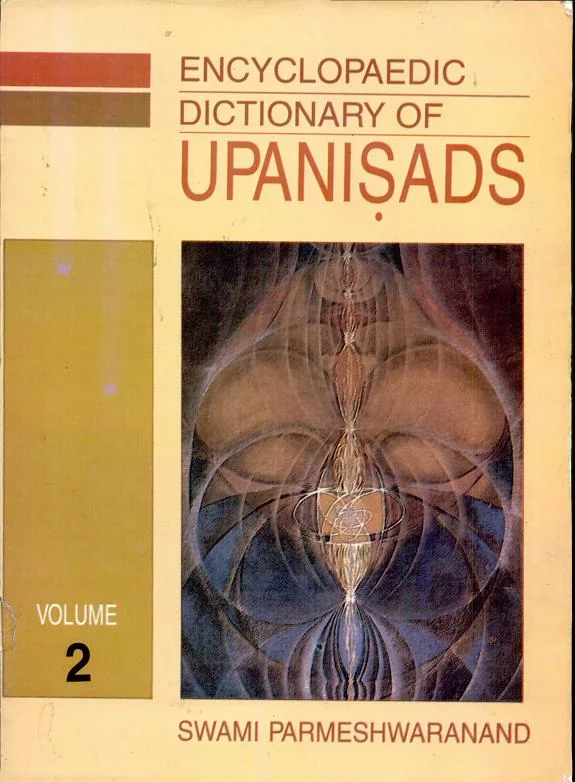
Encyclopaedic Dictionary of Upanisads
 75
75

Encyclopaedic Dictionary of Upanisads
Swami Parmeshwaranand’s "Encyclopaedic Dictionary of Upanisads" is an indispensable tool for anyone grappling with the dense philosophical and spiritual lexicon of these foundational Hindu texts. Its strength lies in its sheer scope and the systematic organization of complex terms. The entry for 'Brahman,' for instance, effectively synthesizes multiple Upanisadic perspectives on the Absolute. However, the work occasionally suffers from a certain dryness; its encyclopedic nature, while accurate, can sometimes obscure the poetic and mystical essence of the original verses. The detailed explanation of the *Pancha Agni Vidya* (Five Fires doctrine) found in the Chandogya Upanisad exemplifies both the book's thoroughness and its potential for overwhelming the uninitiated reader. Despite this, for serious study, it is an authoritative reference.
📝 Description
75
Swami Parmeshwaranand's Encyclopaedic Dictionary of Upanisads was first published in 2000.
This work serves as a detailed lexicon for the philosophical and spiritual texts known as the Upanisads. It aims to clarify the complex terminology, concepts, and figures central to these ancient Sanskrit writings. The dictionary format offers accessible entries for a wide range of terms, from fundamental philosophical ideas to specific deities and rituals discussed within the Upanisadic corpus. It is a useful reference for students and scholars of comparative religion, Eastern philosophies, and Indic traditions. Practitioners of yoga and meditation will also find it beneficial for understanding the scriptural roots of their practices. Those interested in the historical development of metaphysical thought in South Asia will find it helpful for clarifying specific terms and concepts.
The dictionary provides explanations for core Upanisadic concepts such as Brahman (ultimate reality), Atman (the self), Karma (action and consequence), Samsara (the cycle of existence), and Moksha (liberation). It also discusses the significance of key Upanisads like the Brihadaranyaka and Chandogya, along with the sages and seers who conveyed this knowledge. The book's publication in 2000 coincided with a period of high global interest in Eastern spirituality, offering a structured resource for understanding texts that predate Buddhism and Jainism, with origins dating back to approximately 1500-500 BCE. This dictionary bridges a gap, providing a systematic approach to a body of literature that has influenced thinkers across centuries.
Emerging from a long tradition of Indian scholarship focused on the Vedas and Upanisads, this dictionary addresses the need for rigorous textual grounding in a time of growing interest in Eastern spirituality. It situates itself within the lineage of interpreters who have sought to preserve and clarify these foundational texts. By detailing concepts like Brahman, Atman, Karma, Samsara, and Moksha, it connects modern seekers to ancient philosophical inquiries into the nature of reality and consciousness. The work acknowledges the historical depth of these teachings, placing them within a timeline that predates major Indian religions.
💡 Why Read This Book?
• Gain precise definitions for core Upanisadic terms like 'Atman' and 'Brahman', enabling a clearer grasp of their philosophical nuances beyond generalized spiritual concepts. • Understand the specific historical lineage of these texts, contextualizing their influence from their composition around 1500 BCE to their reception by figures like Schopenhauer. • Demystify complex rituals and cosmological ideas explained within specific Upanisads, such as the 'Five Fires doctrine' from the Chandogya Upanisad, providing concrete knowledge.
⭐ Reader Reviews
Honest opinions from readers who have explored this book.
❓ Frequently Asked Questions
What is the primary purpose of the Encyclopaedic Dictionary of Upanisads?
The primary purpose is to provide a comprehensive and accessible reference guide to the complex terminology, concepts, and figures found within the ancient Upanisadic literature of India.
Who is Swami Parmeshwaranand and what is his background?
Swami Parmeshwaranand is an author and scholar specializing in Vedic and Upanisadic literature. His work reflects a deep engagement with traditional Indian philosophical and spiritual scholarship.
When was the Encyclopaedic Dictionary of Upanisads first published?
The Encyclopaedic Dictionary of Upanisads was first published in the year 2000.
What kind of terms can I expect to find defined in this dictionary?
You can expect definitions for a wide array of terms, including philosophical concepts (e.g., Brahman, Atman, Karma), deities, sages, rituals, and specific sections of the Upanisadic texts.
Is this book suitable for beginners in Sanskrit philosophy?
Yes, its dictionary format makes it suitable for beginners by breaking down complex ideas into understandable entries, though prior exposure to philosophical concepts can enhance comprehension.
How does this dictionary relate to the original Upanisads?
It serves as a companion resource, clarifying the language and ideas presented in the original Upanisadic texts, making them more approachable for contemporary readers and scholars.
🔮 Key Themes & Symbolism
Ultimate Reality (Brahman)
The dictionary meticulously defines Brahman not just as a singular entity, but as the pervasive, underlying reality described in diverse Upanisadic passages. It explores the non-dualistic interpretations, contrasting it with dualistic viewpoints, and clarifies terms like 'Nirguna Brahman' (Brahman without attributes) and 'Saguna Brahman' (Brahman with attributes), essential for comprehending Vedanta's metaphysical framework and its divergence from earlier Vedic ritualism.
The Self (Atman)
Central to Upanisadic thought, 'Atman' is examined in detail, distinguishing it from the empirical self. The lexicon clarifies its relationship with Brahman, particularly the concept of 'Atman is Brahman.' It explains the process of realizing the Atman through introspection and discrimination, touching upon concepts like the 'five sheaths' (pancha kosha) that obscure true self-knowledge.
Cycle of Existence (Samsara & Karma)
The dictionary provides definitions for Samsara, the continuous cycle of birth, death, and rebirth, and Karma, the principle of cause and effect governing this cycle. It elucidates how Upanisadic thought views the liberation from this cycle (Moksha) as the ultimate spiritual goal, explaining the role of knowledge (jnana) and right action (karma) in transcending suffering.
Cosmic and Ritualistic Concepts
Beyond pure philosophy, the work deciphers terms related to ancient Indian cosmology and ritual. This includes explanations of concepts like 'Pancha Agni Vidya' (the doctrine of the Five Fires, detailing transmigration through different realms) and the significance of specific Vedic sacrifices and their Upanisadic reinterpretations, bridging the gap between ritualistic and philosophical traditions.
💬 Memorable Quotes
Direct passages from the work, attributed to the author.
“The concept of 'Tat Tvam Asi' (That Thou Art)”
— This foundational Upanisadic statement, meaning 'That Thou Art,' is interpreted as the ultimate realization of the identity between the individual soul (Atman) and the universal consciousness (Brahman), a core tenet of Advaita Vedanta.
“The inner self (Antahkarana) comprises mind, intellect, ego, and memory.”
— This entry clarifies the psychological framework used to analyze the mind's workings, delineating the functions that contribute to our perceived individual identity and our journey towards self-realization.
“The significance of OM as the primordial sound.”
— This highlights the sacred syllable OM, understood as the sonic manifestation of Brahman, representing the entirety of existence and serving as a focal point for meditation and spiritual practice.
💡 Key Ideas
Editorial paraphrase of the work's core concepts — not direct quotes.
Brahman is the source, sustenance, and dissolution of all.
This paraphrased concept highlights Brahman's role as the fundamental ground of existence, encompassing creation, preservation, and eventual reabsorption, emphasizing its all-encompassing nature.
The path to liberation (Moksha) is through knowledge (Jnana).
This summarizes the Upanisadic emphasis on intellectual and spiritual discernment as the primary means to break free from the cycle of rebirth, contrasting with purely ritualistic or devotional paths.
🌙 Esoteric Significance
Tradition
This work primarily engages with the Vedantic tradition, a major school of Hindu philosophy that draws heavily from the Upanisads. While not strictly within Western esoteric lineages like Hermeticism or Kabbalah, its exploration of consciousness, the nature of reality, and the path to liberation aligns with universal metaphysical inquiries found across esoteric traditions. It serves as a bridge, providing the source material for practices that seek inner transformation and understanding of cosmic principles.
Symbolism
Key symbols include 'OM,' representing the primordial sound and the totality of existence, often used as a mantra for meditation. The concept of 'Pancha Agni Vidya' (Five Fires) symbolizes the stages of cosmic creation and transmigration, offering a cosmological map. The 'lotus' (padma) motif, though less explicitly defined as a single entry, appears implicitly in discussions of purity and spiritual unfolding, representing the awakening consciousness.
Modern Relevance
Contemporary practitioners of Advaita Vedanta, Integral Yoga, and various meditation techniques draw directly from the Upanisadic concepts clarified in this dictionary. Thinkers and spiritual teachers exploring consciousness studies, comparative mysticism, and non-dual philosophies often reference the foundational ideas presented here. It remains relevant for those seeking to understand the philosophical underpinnings of modern spiritual movements originating from India.
👥 Who Should Read This Book
• Students of comparative philosophy and religion seeking to understand the foundational texts of Hindu thought and their metaphysical concepts. • Yoga practitioners and meditation teachers aiming to deepen their knowledge of the scriptural origins and philosophical underpinnings of their disciplines. • Scholars of Indology and Sanskrit literature requiring a precise lexicon for interpreting the complex terminology found in the Upanisads.
📜 Historical Context
Published in 2000, Swami Parmeshwaranand's "Encyclopaedic Dictionary of Upanisads" entered a scholarly landscape already shaped by seminal works like Max Müller's translations in the late 19th century and later analyses by scholars such as Sarvepalli Radhakrishnan. The Upanisads, dating from approximately 1500 to 500 BCE, represent an important shift from the ritualistic focus of the earlier Vedas towards metaphysical inquiry. This dictionary emerged during a period of renewed global interest in Eastern philosophies, often fueled by popular movements like the Transcendental Meditation movement, which had popularized concepts derived from the Upanisads. While Western philosophical traditions like Idealism, influenced by thinkers such as Schopenhauer who engaged with translations of the Upanisads, had long incorporated these ideas, Parmeshwaranand's work offers a systematic, Indian scholarly perspective. It provides a structured counterpoint to more esoteric or simplified interpretations, grounding discussions in textual exegesis.
📔 Journal Prompts
The concept of Brahman as the sole reality.
Atman's relationship to the empirical self.
The implications of Samsara and Karma.
The significance of the mantra OM.
The 'Tat Tvam Asi' realization.
🗂️ Glossary
Brahman
The ultimate, unchanging reality that is the source, sustainer, and dissolver of all existence; the Absolute.
Atman
The individual self or soul, often considered identical to Brahman in non-dualistic interpretations.
Samsara
The continuous cycle of birth, death, and rebirth, driven by Karma.
Karma
The law of cause and effect; actions and their consequences that shape future lives.
Moksha
Liberation or release from the cycle of Samsara; the ultimate spiritual goal.
Pancha Agni Vidya
The doctrine of the 'Five Fires,' a cosmological concept detailing stages of existence and transmigration.
Tat Tvam Asi
A Mahavakya (Great Saying) meaning 'That Thou Art,' asserting the identity of Atman and Brahman.
This book appears in 1 collection
🔮 Readers Also Liked
Browse all →









From the “Upanishads” Collection
View all →







More Free Sacred Texts & Gnosticism Books
View all →