Ein Visionär von Gott inspiriert - Nostradamus
 71
71

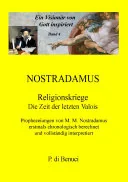
Ein Visionär von Gott inspiriert - Nostradamus
P. di Benuci's "Ein Visionär von Gott inspiriert - Nostradamus" offers a direct confrontation with the 16th-century quatrains, eschewing elaborate theoretical frameworks for chronological presentation and interpretation. The strength lies in its focused approach, linking specific prophecies to the documented tensions between France and the Habsburgs, and the internal strife of the Huguenot Wars. One particularly striking section details the prophetic pronouncements surrounding the ascension of Henry IV, tying the Bourbon king's rise to specific predictive verses. However, the interpretations, while grounded, sometimes lean towards a certainty that might not fully account for the inherent ambiguity of the quatrains. The work's value is primarily in its structured presentation of primary material and context, rather than offering radical new interpretive paradigms. It serves as a solid, if conventional, scholarly tool for engaging with this specific corpus of Nostradamus's work.
📝 Description
71
This 2023 volume presents Nostradamus's 16th-century quatrains with modern interpretations.
P. di Benuci's work, the fourth in a series on divinely inspired figures, offers a chronological arrangement of Nostradamus's quatrains, specifically those from the 16th century. Each verse is presented alongside an interpretation, situating the prophecies within the turbulent historical context of their creation.
The quatrains emerged during a time of immense change in Europe. The text highlights the geopolitical rivalries between France and the Habsburgs, the religious conflicts of the Huguenot Wars, and the dynastic shifts occurring in France. These events, including the transition from the Valois to the Bourbon houses, provide the backdrop for Nostradamus's prophetic writings.
The book examines the idea of divine inspiration as the origin of prophecy and the difficulties inherent in deciphering ambiguous verse. It considers how specific historical moments, like the decline of the Valois dynasty, appear reflected or anticipated in Nostradamus's predictions.
This volume situates Nostradamus's work within the tradition of Renaissance prophecy, a period when astrological and divinatory practices were intertwined with political and religious discourse. It approaches the quatrains as products of an era that sought meaning in celestial signs and divine pronouncements during times of upheaval. The focus on "inspiration by God" aligns with a long history of attributing prophetic abilities to divine or spiritual channels, a common theme in esoteric thought across various cultures.
💡 Why Read This Book?
• Understand the specific historical milieu of 16th-century France, including the conflicts between the Valois and Bourbon dynasties, as directly referenced in the quatrains. • Gain insight into Nostradamus's method of prophetic writing by examining his verses within the context of his era, such as the Huguenot Wars. • Evaluate interpretations of specific quatrains concerning the political shifts of the 16th century, including the ascension of Henry IV.
⭐ Reader Reviews
Honest opinions from readers who have explored this book.
❓ Frequently Asked Questions
What historical period do the Nostradamus quatrains in this book primarily cover?
The quatrains in this volume are specifically focused on the 16th century, a period of significant political and religious upheaval in France, including the end of the Valois dynasty and the rise of Henry IV.
Does the book offer new interpretations of Nostradamus's prophecies?
The book provides interpretations of Nostradamus's 16th-century quatrains, presenting them chronologically alongside the original verses, situating them within their historical context rather than proposing entirely novel interpretive theories.
What major historical events are discussed in relation to the quatrains?
The text connects the quatrains to events such as the rivalry between France and the Habsburg Empire, the Huguenot Wars, and the transition to the Bourbon dynasty under Henry IV.
Is this book a general overview of Nostradamus's work?
No, this book is the fourth volume in a series, focusing specifically on the 16th-century quatrains of Nostradamus and their chronological interpretation.
Who is the author of this specific volume?
The author is P. di Benuci, and this volume was first published on September 14, 2020.
What is the series title this book belongs to?
This book is part of the series titled 'Ein Visionär von Gott inspiriert' (A Visionary Inspired by God).
🔮 Key Themes & Symbolism
16th Century Prophetic Landscape
This volume meticulously reconstructs the prophetic milieu of the 16th century through Nostradamus's quatrains. It emphasizes the chronological ordering of these verses, aligning them with significant historical occurrences such as the intense political rivalry between the French monarchy and the Habsburg Empire. The work highlights how the prophecies reflect the period's anxieties, particularly the religious conflicts of the Huguenot Wars, and the profound dynastic shifts culminating in the ascension of Henry IV.
Divine Inspiration and Interpretation
The core premise of the series, 'Ein Visionär von Gott inspiriert,' frames Nostradamus's work as divinely sanctioned. This volume explores how such inspiration manifests in cryptic verse and the subsequent challenges of interpretation. It looks at the process of linking abstract prophecies to concrete historical events, offering a structured approach to understanding the perceived link between celestial foresight and earthly affairs during a tumultuous era.
Political and Dynastic Transitions
A significant focus is placed on the political ramifications within France during the 16th century. The text examines Nostradamus's quatrains in light of the decline and end of the Valois dynasty and the subsequent establishment of the Bourbon line with Henry IV. This thematic exploration underscores how prophetic literature often engages with, or is interpreted through, the lens of major power shifts and succession crises.
Esoteric Readings of Historical Events
The book practices an esoteric reading of history, treating Nostradamus's quatrains not merely as literature but as coded predictions of future (or concurrent) events. It showcases how prophecies were used to understand and contextualize major historical junctures, such as the religious wars and the establishment of new royal houses, suggesting a belief in a divinely ordained pattern underlying human history.
💬 Memorable Quotes
Direct passages from the work, attributed to the author.
“The quatrains of the 16th century reflect the era's rivalry between France and the Habsburgs.”
— This statement captures the book's approach: grounding Nostradamus's verses in specific geopolitical conflicts of his time, suggesting a direct correlation between historical tensions and prophetic writings.
“The end of the Valois dynasty and the rise of Henry IV are foreseen.”
— This highlights the book's focus on dynastic shifts, interpreting Nostradamus's verses as prescient observations of major political transitions within the French monarchy.
“Chronological ordering aids the interpretation of prophetic texts.”
— This principle guides the book's methodology, emphasizing that understanding the sequence of events and prophecies is crucial for deciphering their meaning.
“The Huguenot Wars provide a backdrop for these prophecies.”
— This points to the significant religious and civil conflicts of the era as a key context for understanding the anxieties and predictions found in Nostradamus's 16th-century writings.
“Nostradamus wrote as a visionary inspired by God.”
— This foundational concept of the series frames the author's intent and the perceived source of his prophetic abilities, setting the stage for the interpretations that follow.
🌙 Esoteric Significance
Tradition
This work fits within the Western Esoteric Tradition, specifically the lineage of Renaissance prophetic literature and astrological divination. It aligns with the Hermetic principle of 'as above, so below,' suggesting that celestial configurations and divine inspiration can inform understanding of earthly events. The series title, 'Ein Visionär von Gott inspiriert,' places it within a broader narrative of individuals divinely chosen to reveal hidden truths, a common motif in Gnostic and Neoplatonic thought.
Symbolism
The quatrains themselves are rich in symbolic language, often drawing from astrology, biblical imagery, and classical mythology. Motifs such as celestial bodies (stars, comets), natural disasters (floods, fires), and animal symbolism (lions, eagles) are frequently employed to represent political entities, conflicts, or significant individuals. The work likely interprets these symbols as coded references to historical figures and events, reflecting a traditional esoteric practice of deciphering hidden meanings.
Modern Relevance
Contemporary interest in Nostradamus persists across various esoteric schools, including modern occultism, ceremonial magic, and certain branches of conspiracy theory. Thinkers and practitioners in these fields often revisit his quatrains to find patterns or perceived prefigurations of modern events. The approach taken in this book, focusing on historical context and chronological interpretation, is relevant to those seeking a more structured, less purely speculative engagement with prophetic texts today.
👥 Who Should Read This Book
• Students of Renaissance history and prophecy seeking to understand the 16th-century context of Nostradamus's quatrains. • Esoteric practitioners interested in the historical development of Western divination and predictive literature. • Comparative religion scholars examining the role of prophecy in shaping historical narratives and public consciousness.
📜 Historical Context
Published in 2020, P. di Benuci's work engages with Nostradamus's 16th-century prophecies during a period of renewed interest in esoteric history and predictive arts. The 16th century itself was a crucible of change in Europe, marked by the Italian Wars, the Schmalkaldic War, and the pervasive religious divisions of the Reformation, particularly the French Wars of Religion (Huguenot Wars). This era saw intense intellectual ferment, with humanism flourishing alongside anxieties about the end of times. Nostradamus's writings emerged against this backdrop, seeking patronage and offering interpretations of unfolding events. His work competed with other forms of divination and political prognostication prevalent at courts across Europe. While specific reception events for Nostradamus's original work are vast, his prophecies were widely circulated and debated, influencing figures from Catherine de' Medici to later occultists, though often subject to both fervent belief and skeptical dismissal.
📔 Journal Prompts
The rivalry between France and the Habsburg Empire as depicted in the 16th-century quatrains.
Nostradamus's interpretation of the end of the Valois dynasty.
The role of divine inspiration in prophetic utterance.
Reflecting on the Huguenot Wars through the lens of the quatrains.
Henry IV's ascension and its connection to prophetic verse.
🗂️ Glossary
Quatrain
A stanza of four lines, especially one having a rhyme scheme in which the first, second, and fourth lines rhyme, used by Nostradamus for his prophecies.
Habsburg Empire
A powerful European monarchy that dominated much of Central Europe for centuries, frequently in conflict with the French monarchy during the 16th century.
Valois Dynasty
The ruling royal house of France from 1328 to 1589, whose end marked a significant political transition in the country.
Bourbon Dynasty
A European royal house that originated in the medieval era, succeeding the Valois to rule France from 1589 to 1792 and again from 1814 to 1848.
Huguenot Wars
A series of widespread and bloody civil wars fought in France between Catholics and Huguenots (Protestants) from 1562 to 1598.
Henry IV of France
The first French monarch of the House of Bourbon, reigning from 1589 until his assassination in 1610, known for ending the Wars of Religion.
Divine Inspiration
The concept that a person's knowledge or creativity originates from a divine source, central to the series title and Nostradamus's purported ability.
This book appears in 1 collection
🔮 Readers Also Liked
Browse all →







From the “Nostradamus” Collection
View all →






More Free Occult Philosophy Books
View all →



![[Catalogue of Frederick Hockley's Book Sale]](/img/thumb/catalogue-of-frederick-hockley-s-book-sale-george-redway.webp)