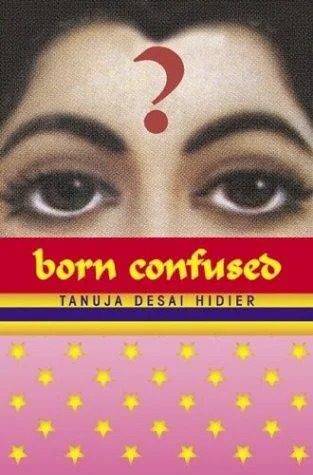
Born confused
 79
79

Born confused
Tanuja Desai Hidier's *Born Confused* presents a compelling, if occasionally uneven, exploration of a young woman's spiritual awakening amidst familial and cultural expectations. The novel's strength lies in its authentic portrayal of the protagonist's internal conflict; her wrestling with inherited traditions and her personal quest for meaning feels palpably real. Hidier masterfully uses the protagonist's journey to illustrate the inherent tension between prescribed roles and the search for individual truth. However, the narrative sometimes falters under the weight of its philosophical underpinnings, occasionally feeling more like an exposition of esoteric ideas than a seamless integration into the plot. A particularly effective passage involves the protagonist's contemplation of the interconnectedness of all beings, a concept that transcends simple youthful angst. Despite its occasional narrative density, *Born Confused* offers a valuable perspective on contemporary spiritual searching. It is a novel that attempts, with considerable success, to bridge the gap between the personal and the metaphysical.
📝 Description
79
Tanuja Desai Hidier's 2002 novel *Born Confused* uses a contemporary story to examine adolescent identity and esoteric thought.
Published in 2002, *Born Confused* is a novel that weaves together the personal journey of its protagonist with complex philosophical and spiritual questions. It is not a guide or a historical account, but a fictional exploration of identity, destiny, and the nature of reality. The book places these perennial inquiries within the everyday experiences of its main character, using a modern setting to consider deeper metaphysical concerns.
This work appeals to readers who enjoy literary fiction that touches on spiritual and philosophical themes without being preachy. Young adults questioning their identity and sense of belonging will find resonance, as will older readers interested in how spiritual concepts appear in contemporary life. Those familiar with or curious about different spiritual traditions and how they fit into modern personal lives will find much to consider.
Released in 2002, *Born Confused* reflects a period when interest in spirituality outside traditional religions was growing. This era, sometimes called the 'New Age,' saw greater access to diverse spiritual texts via the internet, encouraging blended belief systems. The novel captures this cultural moment, where individuals sought personal meaning by combining global traditions outside established institutions. Its publication predates the rise of social media, offering a view on identity development before online personas became common.
💡 Why Read This Book?
• Gain insight into the contemporary search for spiritual identity, understanding how protagonists like Dimple navigate a world of inherited traditions and personal quests, a concept explored through the novel's engagement with dharma. • Experience a narrative that integrates diverse spiritual concepts, such as the Buddhist notion of karma, into a relatable coming-of-age story, offering a unique fictional approach to these ideas. • Discover how the protagonist's journey reflects the cultural milieu of the early 2000s, a time of burgeoning global spiritual awareness and syncretism, providing a specific historical lens.
⭐ Reader Reviews
Honest opinions from readers who have explored this book.
❓ Frequently Asked Questions
What is the central theme of "Born Confused"?
The central theme is the adolescent search for identity and spiritual meaning, exploring how individuals reconcile inherited cultural and religious traditions with their own evolving understanding of self and the world.
Who is the author of "Born Confused"?
The author is Tanuja Desai Hidier, and the book was first published in 2002.
What kind of spiritual concepts does the book explore?
It delves into concepts like karma, dharma, maya, and the interconnectedness of existence, often viewed through a lens that blends Eastern philosophies with Western adolescent experiences.
Is "Born Confused" a religious text?
No, it is a work of fiction that uses religious and philosophical concepts as thematic elements within a coming-of-age narrative, rather than presenting itself as a doctrine or spiritual guide.
What is the protagonist's name?
The protagonist's name is Dimple Kapoor.
What does the title "Born Confused" refer to?
The title reflects the protagonist's state of being at the beginning of the novel, embodying the confusion and uncertainty many young people feel about their identity, heritage, and place in the world.
🔮 Key Themes & Symbolism
Spiritual Syncretism
The novel intricately examines how individuals, particularly adolescents, synthesize diverse spiritual and philosophical traditions to forge a personal belief system. It moves beyond simple adherence to one doctrine, illustrating the modern impulse to draw from various sources—like Hindu philosophy and Buddhist ethics—to address existential questions. This approach mirrors the cultural range of the early 2000s, where increased access to global information encouraged personalized spiritual journeys, often resulting in a combination of practices and beliefs reflective of the protagonist's evolving worldview.
Identity and Belonging
Fundamentally, , *Born Confused* is a narrative about finding one's place in the world. The protagonist grapples with the expectations tied to her heritage, her family's traditions, and her own burgeoning sense of self. This theme is explored through her interactions and internal monologues, questioning what it means to belong to a culture, a family, or a spiritual path when one feels inherently different. The novel posits that true belonging often arises from self-acceptance and the courage to define one's own identity.
The Nature of Reality
Hidier's work touches upon philosophical inquiries into the nature of reality, particularly the concept of maya—the illusionary nature of the perceived world. The protagonist's journey involves peeling back layers of societal conditioning and personal preconceptions to glimpse a deeper, interconnected truth. This exploration invites readers to question their own assumptions about the material world and the self, suggesting that a more profound understanding of existence lies beyond superficial appearances and ego-driven perceptions.
Karma and Destiny
The novel engages with the concept of karma not as a rigid, predetermined fate, but as a dynamic force shaped by actions and intentions. It presents karma as a complex web of cause and effect that influences an individual's circumstances and opportunities. The protagonist's struggles and choices are framed within this understanding, highlighting the interplay between past influences and present agency. This perspective encourages a nuanced view of destiny, emphasizing personal responsibility and the potential for transformation through conscious action.
💬 Memorable Quotes
Direct passages from the work, attributed to the author.
“She felt the weight of generations, a range of expectations she could neither fully embrace nor discard.”
— This captures the protagonist's internal conflict, illustrating the burden of inherited cultural and familial traditions that often clash with an individual's desire for personal autonomy and self-discovery.
“Was her path written, or was she the scribe?”
— This question captures the central tension between destiny and free will explored in the book, as the protagonist questions the extent of her agency in shaping her own life.
“Confusion was not an end, but a starting point for understanding.”
— This interpretation suggests that the protagonist's initial state of uncertainty is reframed as a necessary precursor to genuine self-awareness and spiritual insight.
“She sought a language for the whispers of her soul.”
— This highlights the protagonist's quest for authentic self-expression and spiritual understanding, a journey to articulate inner truths that defy conventional description.
💡 Key Ideas
Editorial paraphrase of the work's core concepts — not direct quotes.
The world pulsed with unseen connections, a vast web where every thread mattered.
This paraphrase reflects the novel's exploration of interconnectedness, hinting at spiritual or philosophical ideas where individual lives and events are part of a larger, unified whole.
🌙 Esoteric Significance
Tradition
The work engages with themes that align with Dharmic traditions, particularly Hinduism and Buddhism, focusing on concepts such as karma, dharma, and maya. It departs from a rigid adherence to any single lineage, instead embodying a syncretic approach common in contemporary Western spirituality. This blending reflects a modern hermeneutic where ancient wisdom is reinterpreted and personalized, moving away from strict sectarianism towards a more individualized spiritual path that seeks universal truths within diverse cultural expressions.
Symbolism
The protagonist's name, Dimple Kapoor, carries cultural resonance within Hindu traditions. The act of 'confusion' itself can be seen as a symbol for the veil of maya, obscuring true self-knowledge. The narrative's exploration of interconnectedness echoes Buddhist concepts of dependent origination, suggesting that all phenomena arise in relation to others, a profound symbolic underpinning of the protagonist's journey toward understanding.
Modern Relevance
Contemporary thinkers and practitioners exploring the intersection of psychology, spirituality, and cultural identity find resonance in *Born Confused*. Its portrayal of navigating a hybrid identity—caught between ancestral traditions and modern secular life—is relevant to second-generation immigrants and anyone seeking to integrate diverse influences into a cohesive self. The novel's exploration of personalized spirituality speaks to current trends where individuals often construct their own belief systems, drawing inspiration from various global wisdom traditions.
👥 Who Should Read This Book
• Young adults and adolescents seeking relatable narratives about identity formation, cultural heritage, and the search for personal meaning in a complex world. • Readers interested in contemporary literary fiction that thoughtfully incorporates philosophical and spiritual themes, particularly those from Dharmic traditions like Hinduism and Buddhism. • Individuals exploring spiritual syncretism and the process of creating a personalized belief system by drawing from diverse global wisdom traditions.
📜 Historical Context
Published in 2002, *Born Confused* emerged during a period when global spiritual ideas were increasingly accessible, partly due to the burgeoning internet. This era saw a rise in what scholars termed the 'spiritual marketplace,' where individuals actively curated their beliefs from diverse traditions. Tanuja Desai Hidier's novel taps into this cultural current, reflecting a generation grappling with identity amidst a complex inheritance of cultural practices and evolving personal philosophies. It predates the pervasive influence of social media, offering a look at identity formation before the digital age amplified curated self-presentation. While contemporary authors like Chitra Banerjee Divakaruni explored diasporic experiences, Hidier focused more intently on the internal, spiritual synthesis required by a younger generation, engaging with concepts that echoed both Eastern philosophies and Western existentialism, a significant departure from more traditional narratives of assimilation.
📔 Journal Prompts
The protagonist's struggle with inherited traditions versus personal desires.
Reflect on moments where you felt 'born confused' about your own path.
Analyze the symbolic meaning of the protagonist's internal conflicts.
Consider how the concept of karma influences present-day choices.
Explore the tension between destiny and free will as depicted in the narrative.
🗂️ Glossary
Karma
In Hindu and Buddhist traditions, karma refers to the principle of cause and effect where intent and actions of an individual influence their future. It is not simply fate, but a consequence of one's own deeds.
Dharma
A Sanskrit term with multiple meanings, often referring to one's duty, righteousness, or the natural order of things. In a spiritual context, it can mean one's unique life path or purpose.
Maya
A Sanskrit term often translated as 'illusion.' In Hindu philosophy, it refers to the cosmic power that conceals the true nature of reality, making the material world appear as the ultimate truth.
Syncretism
The merging or attempted merging of different religions, cultures, or schools of thought. In spirituality, it refers to combining elements from various traditions to form a new, personal belief system.
Dharmic Traditions
Religions originating in the Indian subcontinent, including Hinduism, Buddhism, Jainism, and Sikhism. They share concepts like karma, dharma, and reincarnation.
Diaspora
People who have spread out from an original homeland, often forced or due to circumstances, maintaining cultural connections to their origin while living in new environments.
Existentialism
A philosophical movement emphasizing individual existence, freedom, and choice. It suggests that individuals define their own meaning in life and are responsible for their actions.
🔮 Readers Also Liked
Browse all →








More by Tanuja Desai Hidier
All books →
More Free Occult Philosophy Books
View all →