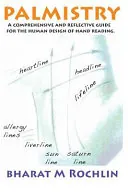
Enchantment and Disenchantment
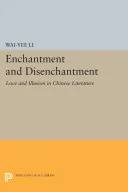
 84
84

Enchantment and Disenchantment
Wai-yee Li's "Enchantment and Disenchantment" provides a rigorous academic lens on the spiritual architecture of Chinese literary masterpieces, most notably *The Dream of the Red Chamber*. The strength of the work lies in its meticulous dissection of the goddess Disenchantment's pronouncement to Pao-yü: "disenchantment through enchantment." Li avoids simplistic interpretations, instead tracing the philosophical lineage and literary manifestations of this paradox across various texts. While the prose is dense and assumes a considerable background in Chinese literature and philosophy, the insights gained are substantial. A particularly illuminating passage details the function of the Illusory Realm of Great Void not as mere escapism, but as a crucible for spiritual clarity. The book's limitation is its accessibility; it demands dedicated scholarly engagement. Nevertheless, it offers a vital corrective to superficial readings of these profound narratives. It is an indispensable resource for those seeking to understand the sophisticated spiritual mechanics embedded within classical Chinese fiction.
📝 Description
84
Wai-yee Li's 2014 book examines spiritual themes in Chinese literature, focusing on "disenchantment through enchantment."
Published in 2014, Wai-yee Li's "Enchantment and Disenchantment" offers a scholarly look at spiritual and philosophical ideas in Chinese literature. The book centers on the concept of "disenchantment through enchantment," as seen in Cao Xueqin's 18th-century novel, *The Dream of the Red Chamber*. Li analyzes how divine figures and narrative structures in this and other classic texts help protagonists achieve understanding through difficult emotional and spiritual experiences.
This work is for readers seriously interested in comparative literature, religious studies, and East Asian philosophy. Academics, graduate students, and advanced undergraduates will find it useful for understanding the complex relationship between mysticism, attachment, and detachment in classical Chinese stories. Those curious about the philosophical roots of literary traditions and the idea of spiritual awakening will discover much within its pages.
The book engages with the long history of Chinese literary and philosophical thought, drawing on Neo-Confucian and Buddhist ideas common during the Ming and Qing dynasties. It places its analysis within the wider discussion of spiritual realization and how art conveys these concepts. The 18th century, when *The Dream of the Red Chamber* was written, was a period of significant literary output and philosophical reflection in China.
💡 Why Read This Book?
• Understand the concept of "disenchantment through enchantment" as presented in 18th-century Chinese literature, gaining insight into how spiritual clarity can emerge from worldly entanglements, a core idea explored in relation to *The Dream of the Red Chamber*. • Explore the role of divine figures and illusory realms in guiding protagonists toward enlightenment, learning how these literary devices function as catalysts for spiritual growth, as Li analyzes within classical Chinese narratives. • Gain a deeper appreciation for the philosophical underpinnings of East Asian literary traditions, specifically the interplay of attachment and detachment, as illuminated by Wai-yee Li's scholarly analysis of various genres.
⭐ Reader Reviews
Honest opinions from readers who have explored this book.
❓ Frequently Asked Questions
What is the primary literary work analyzed in "Enchantment and Disenchantment"?
The primary literary work analyzed is Cao Xueqin's 18th-century masterpiece, *The Dream of the Red Chamber*. The book extensively examines its depiction of the goddess Disenchantment and the Illusory Realm of Great Void.
What does Wai-yee Li mean by 'disenchantment through enchantment'?
Wai-yee Li uses this phrase to describe a paradoxical spiritual process found in Chinese literature, where profound worldly experiences or attachments paradoxically lead to a state of detachment and spiritual insight.
What is the publication year of "Enchantment and Disenchantment"?
The book "Enchantment and Disenchantment" by Wai-yee Li was first published on July 14, 2014.
Who is the author of "Enchantment and Disenchantment"?
The author of "Enchantment and Disenchantment" is Wai-yee Li, a scholar specializing in Chinese literature and philosophy.
What academic fields does this book contribute to?
The book significantly contributes to comparative literature, religious studies, East Asian philosophy, and sinology, offering sophisticated analysis of spiritual themes in classical Chinese narratives.
Does the book focus only on one literary work?
While *The Dream of the Red Chamber* is central, the book examines a range of genres from different periods of Chinese literature to explore its core concepts.
🔮 Key Themes & Symbolism
Paradox of Spiritual Growth
The work centers on the paradoxical notion that spiritual awakening, or disenchantment, can arise from deep engagement with worldly phenomena and emotional attachments, rather than solely through asceticism. This concept is exemplified by the goddess Disenchantment's instruction to Pao-yü in *The Dream of the Red Chamber*. Li explores how literary narratives use complex character arcs and plot devices to illustrate that profound understanding often emerges from embracing, rather than rejecting, the entanglements of life.
The Illusory Realm
Li analyzes the function of spiritual or illusory realms within Chinese literature, such as the Illusory Area of Great Void. These spaces are not depicted as mere escapes but as crucial pedagogical environments. Within them, characters confront the nature of desire, illusion, and reality, facilitating a process of profound self-discovery and detachment. The work scrutinizes how these realms serve as literary tools for philosophical instruction.
Attachment vs. Detachment
A core theme is the intricate relationship between attachment and detachment in the pursuit of spiritual wisdom. The book examines divine female figures in Chinese literature who embody this duality, inspiring both connection and renunciation in the protagonists they encounter. Li investigates how literary characters navigate these opposing impulses, demonstrating that true detachment may require first understanding the nature of attachment.
Literary Embodiment of Philosophy
The book posits that classical Chinese literature serves as a sophisticated medium for exploring complex philosophical and spiritual ideas. Li demonstrates how various genres and narrative techniques are employed to convey concepts of enlightenment, the nature of the self, and the path to spiritual realization. It highlights literature's capacity to articulate abstract metaphysical principles through concrete storytelling and character development.
💬 Memorable Quotes
Direct passages from the work, attributed to the author.
“Disenchantment through enchantment, or enlightenment through love.”
— This central aphorism, spoken by the goddess Disenchantment, captures the book's thesis: that profound spiritual understanding and detachment can be achieved not by avoiding worldly experience, but by engaging with it fully and learning from its inherent complexities.
“The purpose of his dream visit is 'disenchantment through enchantment'.”
— This phrase highlights the paradoxical nature of spiritual realization explored in the text. It suggests that the path to clarity and liberation often involves confronting and understanding the very illusions and attachments one seeks to transcend.
“The goddess, one of the divine women in Chinese literature who inspire contradictory impulses of attachment and detachment.”
— This describes a recurring archetype in Chinese literary tradition. These figures are not simple guides but complex entities that simultaneously draw individuals into worldly affairs while also prompting the necessary detachment for spiritual growth.
“Examining a range of genres from different [periods/traditions]...”
— This indicates the book's comparative and broad approach, suggesting that the themes of enchantment and disenchantment are not confined to a single text or style but are recurring motifs across Chinese literary history.
“The Illusory Area of Great Void.”
— This refers to a specific symbolic space within *The Dream of the Red Chamber*. The work interprets this realm not as mere fantasy, but as a critical pedagogical tool designed to facilitate a character's spiritual and psychological development.
🌙 Esoteric Significance
Tradition
This work engages primarily with East Asian esoteric and philosophical traditions, particularly Buddhism (Chan/Zen) and Daoism, as they manifest within classical Chinese literature. It examines how these traditions' concepts of emptiness, illusion, and the path to enlightenment are woven into narrative structures and character development, departing from Western esoteric lineages.
Symbolism
Key symbols include the 'Illusory Area of Great Void,' representing a liminal space for spiritual testing and insight, and the archetypal 'divine woman' who embodies the paradox of attachment and detachment. These figures and realms are symbolic tools used to guide protagonists toward understanding the impermanent and illusory nature of worldly existence.
Modern Relevance
Contemporary scholars of comparative literature and religious studies continue to draw on Li's meticulous textual analysis. Her work informs modern discussions on the intersection of art and spirituality, particularly how literary narratives can serve as vehicles for exploring profound metaphysical questions relevant to mindfulness and existential inquiry in the 21st century.
👥 Who Should Read This Book
• Advanced students and scholars of East Asian literature and philosophy seeking rigorous textual analysis of spiritual themes in classical Chinese works. • Researchers in comparative religion and mythology interested in cross-cultural explorations of enlightenment, illusion, and the paradoxes of spiritual development. • Readers of *The Dream of the Red Chamber* who wish to deepen their understanding of its complex philosophical and spiritual dimensions beyond surface-level interpretation.
📜 Historical Context
Published in 2014, Wai-yee Li's work engages with the intellectual currents surrounding classical Chinese literature and philosophy, particularly during the Ming and Qing dynasties. The 18th century, the era of *The Dream of the Red Chamber*, was a period of immense cultural sophistication and philosophical exploration. This era saw the flourishing of vernacular novels that, like *The Dream*, often grappled with Buddhist and Daoist concepts of illusion, emptiness, and the nature of reality, influencing figures like Cao Xueqin. Li's analysis stands in dialogue with sinological scholarship that has long debated the novel's spiritual and allegorical dimensions. While not directly a critique of a specific school, the work implicitly contrasts its nuanced textual analysis with more simplistic allegorical interpretations prevalent in earlier scholarship, such as those influenced by traditional Confucian readings or early Western sinology.
📔 Journal Prompts
The goddess Disenchantment's pronouncement of 'disenchantment through enchantment'.
The function of the Illusory Area of Great Void in Pao-yü's spiritual education.
Literary representations of divine women inspiring both attachment and detachment.
The interplay of worldly entanglements and spiritual insight in narrative arcs.
How classical Chinese literary genres convey metaphysical concepts.
🗂️ Glossary
Disenchantment through Enchantment
A core concept articulated in the book, suggesting that spiritual clarity or detachment can paradoxically arise from deep engagement with worldly experiences and attachments, rather than from their rejection.
Illusory Area of Great Void
A symbolic space within *The Dream of the Red Chamber* where characters confront the nature of reality, illusion, and desire, serving as a critical site for spiritual development and understanding.
Pao-yü
The central male protagonist of *The Dream of the Red Chamber*, whose spiritual journey and encounters with divine figures and illusory realms are central to the analysis in Wai-yee Li's work.
Attachment and Detachment
These refer to the psychological and spiritual states of being connected to or separated from worldly desires, relationships, and phenomena, explored as dual forces in the pursuit of enlightenment.
Goddess Disenchantment
A divine figure from *The Dream of the Red Chamber* who embodies the principle of spiritual awakening through worldly experience, instructing the protagonist on the paradox of achieving detachment via enchantment.
Chinese Literature
Refers to the literary tradition of China, encompassing various genres and periods, which Wai-yee Li analyzes for its sophisticated exploration of philosophical and spiritual themes.
Neo-Confucianism
A school of Chinese philosophy that emerged during the Tang dynasty and became prominent in the Song and Ming dynasties, influencing the intellectual landscape in which works like *The Dream of the Red Chamber* were conceived.
This book appears in 1 collection
🔮 Readers Also Liked
Browse all →







From the “Enchantment” Collection
View all →





More Free Occult Philosophy Books
View all →