Palmistry
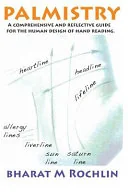
 74
74

Palmistry
MR Bharat M Rochlin’s "Palmistry" functions less as a mystical revelation and more as a rigorous academic treatise on the human hand as a cartographic tool for the psyche. The author eschews flowery language for precise anatomical and symbolic correlation, a refreshing departure from much popular chiromancy literature. A particular strength lies in the detailed breakdown of the mounts and their connection to classical planetary associations, offering a structured interpretative grid. For instance, the analysis of the Mount of Apollo and its relation to creativity and public recognition provides a concrete example of the book's systematic approach. However, the sheer density of information, while comprehensive, can sometimes feel overwhelming for the novice. The emphasis on analytical interpretation, while a virtue, might leave those seeking immediate, intuitive guidance feeling somewhat unfulfilled. Ultimately, Rochlin delivers a substantial, scholarly examination of palmistry as a complex interpretive system.
📝 Description
74
MR Bharat M Rochlin's Palmistry analyzes hand features as a dynamic map of character and potential.
This book presents palmistry not as mere fortune-telling, but as a detailed method for understanding human nature. It examines the specific lines, mounts, and shapes of the hand, linking them to psychological profiles, life trajectories, and what the author terms karmic influences. The work emphasizes the hand's ability to reflect both inherent tendencies and an individual's ongoing personal development. Rochlin's text is designed for those seriously interested in esoteric studies and self-awareness. It appeals to readers who see divination as a tool for active introspection and growth, rather than passive acceptance of destiny. Those interested in comparative mythology, psycho-spiritual analysis, and the history of divination will find its structured, analytical approach valuable. The book aims for a systematic understanding of palmistry's principles, moving beyond anecdotal accounts.
The practice of palmistry has ancient origins, with significant study occurring during the Renaissance and again in the late 19th and early 20th centuries. Rochlin's work builds on this historical foundation. It systematically breaks down the hand into its core components, including major lines like Life, Head, and Heart, as well as minor lines and the various mounts. The book correlates these physical attributes with psychological traits and life paths.
Palmistry's roots extend to ancient India, Greece, and Rome, with notable development in Western esotericism during the Renaissance and the occult revival of the 19th and early 20th centuries. Figures like William Lilly and thinkers within the Theosophical movement contributed to its formalization. Rochlin's book engages with this lineage, offering a modern synthesis that acknowledges earlier systematic approaches while considering contemporary interpretive frameworks for hand analysis.
💡 Why Read This Book?
• Gain a systematic understanding of hand analysis beyond fortune-telling, by exploring the detailed correlations between specific hand mounts (like the Mount of Jupiter) and personality traits, as presented in the book. • Learn to interpret the dynamic interplay of lines and shapes on the palm, recognizing how they can reflect evolving life paths and psychological states, a concept central to Rochlin's approach. • Discover the historical lineage of chiromancy, understanding its place within esoteric traditions since ancient Greece, as contextualized within the book's broader historical overview.
⭐ Reader Reviews
Honest opinions from readers who have explored this book.
❓ Frequently Asked Questions
What is the primary focus of MR Bharat M Rochlin's "Palmistry"?
The book focuses on chiromancy as a method for understanding human nature and potential, moving beyond simple prediction to a comprehensive analysis of the hand's lines, mounts, and shapes.
When was "Palmistry" by MR Bharat M Rochlin first published?
The first edition of "Palmistry" by MR Bharat M Rochlin was published on October 25, 2015.
Is "Palmistry" suitable for beginners interested in hand reading?
Yes, while comprehensive, the book offers a structured approach that can guide beginners through the fundamentals of interpreting the human hand systematically.
What kind of historical context does the book provide for palmistry?
It situates palmistry within its ancient Indian, Greek, and Roman origins, and discusses its development in Western esotericism, particularly during the Renaissance and the 19th century.
Does the book discuss the idea that hands can change over time?
Yes, "Palmistry" emphasizes the dynamic nature of the palm, explaining how lines and hand features can evolve, reflecting personal growth and changes in an individual's life trajectory.
What are the main elements of the hand analyzed in this book?
The book meticulously analyzes major and minor lines (like the Life, Head, and Heart lines), the various mounts (e.g., Venus, Saturn, Apollo), and the overall shape and texture of the hand and fingers.
🔮 Key Themes & Symbolism
Hand as Psychological Map
The central theme is the hand's function as a detailed map of the individual's psyche and destiny. Rochlin presents the lines, mounts, and finger shapes not as arbitrary signs, but as symbolic representations of innate character traits, potentials, and life challenges. The work argues that by meticulously studying these physical attributes, one can gain profound self-awareness and insight into the underlying patterns that shape a person's experiences and choices.
Systematic Interpretive Framework
Rochlin offers a structured methodology for palmistry, moving away from purely intuitive readings. This theme emphasizes the importance of a coherent system for correlating specific hand features with psychological and life events. The book details the traditional meanings assigned to each line and mount, providing a comprehensive lexicon for interpretation and encouraging a disciplined, analytical approach to the practice.
Dynamic Nature of Destiny
Contrary to deterministic views, the book highlights that the palm is not static. This theme explores how the lines and markings on the hand can evolve over time, reflecting changes in an individual's consciousness, choices, and life circumstances. It suggests that while the hand may indicate predispositions, it also reveals the capacity for personal growth and the active shaping of one's own path.
Chiromancy and Human Design
The work positions palmistry as a tool for understanding 'human design,' a holistic concept encompassing physical, mental, and spiritual dimensions. It connects the study of the hand to broader inquiries into human nature and potential, suggesting that chiromancy offers a unique lens through which to view the intricate interplay of innate talents, karmic lessons, and the unfolding journey of the soul.
💬 Memorable Quotes
Direct passages from the work, attributed to the author.
“The hand is a living document of the soul.”
— This concise statement expresses the book's core premise: that the physical palm serves as a profound, ever-evolving record of an individual's inner life, potential, and life journey.
“Each line and mount corresponds to a specific faculty or influence.”
— This highlights the systematic nature of the interpretive process advocated by Rochlin, where specific physical features of the hand are directly linked to distinct psychological traits or life energies.
“Understanding the palm offers insight into both innate character and evolving destiny.”
— This interpretation emphasizes the dual function of palmistry as presented in the book: revealing inherent qualities while also tracking the dynamic progression and potential shifts in a person's life path.
“The texture and temperature of the skin speak volumes about inner vitality.”
— This points to the detailed examination of subtle hand characteristics beyond mere lines and shapes, suggesting that even the physical condition of the hand offers significant clues to a person's energetic state.
💡 Key Ideas
Editorial paraphrase of the work's core concepts — not direct quotes.
Chiromancy is a reflective practice, not merely a predictive one.
This paraphrased concept underscores the book's stance that palmistry serves as a tool for self-examination and understanding, rather than solely for foretelling future events.
🌙 Esoteric Significance
Tradition
The work aligns with the Western Esoteric tradition of divination, particularly chiromancy, which has historical links to Hermeticism and Neoplatonism through its ancient Greek roots. It also draws from the systematic approaches developed during the Renaissance and the 19th-century occult revival. Rochlin's text fits within this lineage by offering a structured, analytical method for understanding the human condition through the hand, serving as a tool for self-knowledge and spiritual development.
Symbolism
Key symbols include the major lines—Life, Head, and Heart—representing vitality, intellect, and emotion, respectively. The mounts, named after classical deities (e.g., Mount of Jupiter for ambition, Mount of Venus for love and passion), are crucial symbolic representations of different human drives and potentials. Finger shapes and lengths also carry symbolic weight, offering further layers of interpretation within the system.
Modern Relevance
Rochlin's detailed approach to palmistry continues to inform contemporary practitioners and students of esoteric arts. It provides a solid foundation for those interested in psychological astrology, human design systems, and somatic psychology, offering a tangible method for exploring archetypal patterns and personal narratives. The emphasis on self-awareness and potential development appeals to modern therapeutic and self-improvement movements.
👥 Who Should Read This Book
• Aspiring practitioners of esoteric arts seeking a structured, analytical introduction to palmistry, moving beyond superficial readings. • Students of comparative divination and Western esotericism interested in the historical development and systematic interpretation of chiromancy. • Individuals engaged in self-discovery and psychological exploration who wish to use the hand as a mirror for understanding their innate traits and life path.
📜 Historical Context
MR Bharat M Rochlin's "Palmistry," published in 2015, enters a field with deep historical roots. Chiromancy gained prominence in ancient civilizations like India and Greece, and saw a resurgence during the European Renaissance. By the 19th century, figures like Cheiro (William John Warner) popularized hand reading, often blending it with astrology and physiognomy. The Theosophical Society, founded in 1875, also contributed to the esoteric revival, integrating various occult practices, including palmistry, into its broader spiritual framework. Rochlin’s work engages with this lineage, presenting a modern, comprehensive synthesis. While contemporaries like Liz Greene explored astrological psychology, and various New Age movements offered simplified versions of divination, Rochlin’s approach appears to lean towards a more systematic, analytical interpretation, seeking to ground the practice in a detailed understanding of its traditional components, acknowledging its place within a long-standing esoteric tradition.
📔 Journal Prompts
The Mount of Jupiter's characteristics as detailed in the book.
Reflect on the interpretation of the Head Line's variations.
How does the concept of the 'dynamic hand' apply to your personal journey?
Consider the symbolic meaning of the Mount of Saturn.
Analyze the significance of the Heart Line's clarity and depth.
🗂️ Glossary
Chiromancy
The practice of divination and character analysis through the examination of the palm, including lines, mounts, and hand shape.
Mounts
The fleshy, raised areas on the palm, named after classical deities, each associated with specific psychological traits and life energies (e.g., Mount of Venus, Mount of Apollo).
Life Line
One of the primary lines on the palm, traditionally interpreted as indicating vitality, physical health, and major life events or changes.
Head Line
A major palm line typically representing intellectual capacity, thinking patterns, communication style, and mental focus.
Heart Line
A primary palm line associated with emotional nature, romantic life, relationships, and the expression of affection.
Fate Line
A line, not present on all hands, often interpreted as reflecting career path, life purpose, and external influences affecting one's destiny.
Human Design
In this context, refers to the holistic understanding of an individual's physical, mental, and spiritual makeup as revealed through various interpretive systems, including palmistry.
This book appears in 1 collection
🔮 Readers Also Liked
Browse all →








From the “Palmistry” Collection
View all →








More Free Occult Philosophy Books
View all →