ESP
 84
84

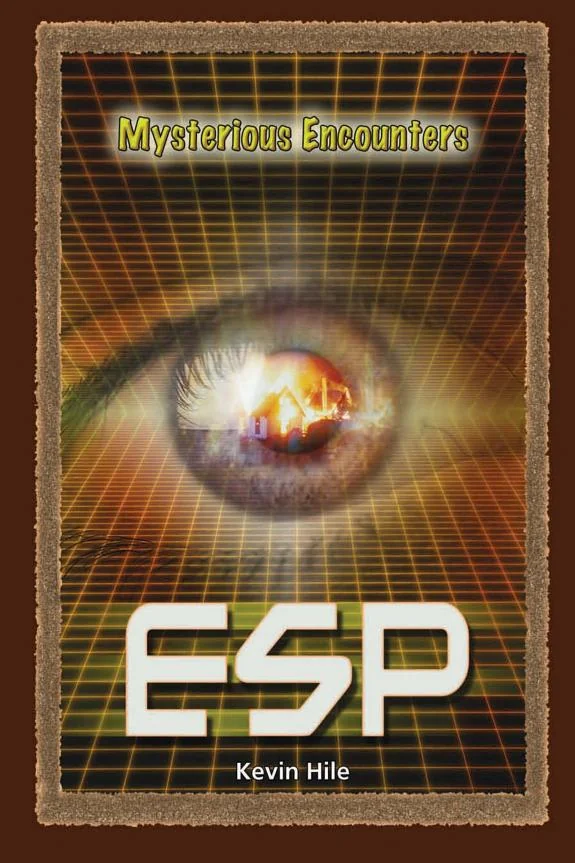
ESP
Kevin Hile and Rachel Lynette’s *ESP* functions less as an academic treatise and more as a compendium of curious occurrences. The strength lies in its direct presentation of eyewitness accounts, offering a raw glimpse into personal experiences of the uncanny. For instance, the detailed descriptions of purported precognitive dreams, while lacking rigorous verification, provide a vivid sense of how these events are perceived by those who experience them. However, the book's primary limitation is its reliance on anecdotal evidence. While alternative explanations are considered, they often feel secondary to the presentation of the extraordinary claims. The work explores the phenomenon of 'coincidence' as a potential demystifier, but the sheer volume of reported 'coincidences' can leave the reader questioning the adequacy of this dismissal. The authors’ engagement with the 2009 publication date places it in a context where skepticism is prevalent, yet the presented material leans heavily into the mystery. It serves as a repository of reported ESP events, but its analytical depth remains shallow. This book is a collection of intriguing personal testimonies about psychic phenomena, rather than a definitive exploration of their reality.
📝 Description
84
Kevin Hile and Rachel Lynette's 2009 volume collects firsthand accounts of psychic phenomena.
This book compiles anecdotal evidence and case studies related to extrasensory perception (ESP). Authors Kevin Hile and Rachel Lynette gathered stories from individuals who report experiencing or observing psychic abilities like telepathy, precognition, and clairvoyance. The work's stated aim is to document these claims, presenting them without immediate judgment as a catalog of reported instances.
Readers interested in the personal testimonies within parapsychology and the history of belief in psychic powers will find this volume engaging. It is suited for those who appreciate examining personal narratives and claims of the unusual. Individuals curious about alternative explanations for events that defy easy categorization, including psychological and sociological viewpoints, may also find value in its pages.
Published in 2009, *ESP* arrives in a period of continued interest in parapsychology, building on a century of documented study and popular engagement with psychic phenomena. Figures like J.B. Rhine at Duke University established early experimental approaches. This book, by focusing on eyewitness accounts, connects to an older tradition of collecting personal testimony, a method that predates more formalized scientific inquiry into such claims. It sits within a broad spiritualist and parapsychological literature that seeks to understand experiences beyond conventional scientific explanation.
💡 Why Read This Book?
• Gain an understanding of diverse reported ESP phenomena, such as telepathy and precognition, through specific eyewitness accounts detailed in the book, offering a tangible collection of personal testimonies. • Explore the concept of 'alternative explanations' discussed in relation to the case studies, providing a framework for critical analysis of extraordinary claims beyond simple acceptance. • Understand the historical context of ESP belief by examining how accounts from the early 21st century align with or diverge from earlier traditions of parapsychological inquiry, as highlighted by the book's 2009 publication date.
⭐ Reader Reviews
Honest opinions from readers who have explored this book.
❓ Frequently Asked Questions
What types of extrasensory perception does the book 'ESP' cover?
The book 'ESP' by Kevin Hile and Rachel Lynette explores various forms of extrasensory perception, including telepathy, precognition, clairvoyance, and psychokinesis, through eyewitness accounts and discussions of alternative explanations.
Are there scientific explanations offered for the ESP phenomena in the book?
Yes, the book discusses alternative explanations for the reported occurrences, such as coincidence, misinterpretation, suggestion, and fraud, alongside the eyewitness accounts of ESP.
Who are the authors of the book 'ESP'?
The authors of 'ESP' are Kevin Hile and Rachel Lynette. It was first published on March 13, 2009.
What is the primary focus of the book 'ESP'?
The primary focus is on presenting eyewitness accounts of alleged extrasensory perception and examining potential mundane explanations for these experiences.
Is 'ESP' a scholarly research book or a collection of stories?
It functions more as a collection of personal stories and anecdotal evidence of ESP experiences, while also touching upon rational explanations, rather than a formal academic research paper.
What historical period does the book 'ESP' relate to?
Published in 2009, the book reflects on ESP phenomena and beliefs prevalent in the late 20th and early 21st centuries, placing itself within the modern context of parapsychological inquiry.
🔮 Key Themes & Symbolism
Eyewitness Testimony
The book heavily relies on firsthand accounts of alleged extrasensory perception. These narratives form the core of the work, presenting individuals' subjective experiences with phenomena like telepathy and precognition. The authors compile these stories, aiming to document instances where people believe they have encountered psychic abilities, offering a raw, unmediated glimpse into personal encounters with the unexplained.
Alternative Explanations
Beyond documenting ESP claims, Hile and Lynette critically examine potential mundane explanations for these events. This includes exploring how coincidence, psychological suggestion, misinterpretation of sensory input, or even deliberate deception might account for experiences attributed to psychic powers. This analytical layer aims to provide a balanced perspective, encouraging readers to consider rational possibilities alongside extraordinary ones.
Manifestations of ESP
The work categorizes and describes various forms of extrasensory perception. Key concepts explored include telepathy, the direct transfer of thoughts or feelings between minds; precognition, the ability to foresee future events; and clairvoyance, the perception of distant objects or situations not accessible through normal senses. These distinct categories help structure the anecdotal evidence presented.
💬 Memorable Quotes
Direct passages from the work, attributed to the author.
“Eyewitness accounts of situations in which people have displayed extrasensory perception.”
— This phrase captures the book's primary function: to serve as a repository for reported instances of psychic abilities, directly presenting the raw material of alleged paranormal experiences.
“Discusses alternative explanations for these occurrences.”
— This highlights the book's analytical dimension, indicating that it doesn't solely present claims but also engages with potential rational or skeptical interpretations of the reported phenomena.
“The authors provide accounts of people experiencing psychic phenomena.”
— This interpretation emphasizes the human element and subjective reality of the experiences documented, focusing on the individuals who believe they have had encounters with ESP.
“Compiles personal testimonies of psychic events.”
— This interpretation focuses on the method of evidence gathering, presenting the book as a collection of personal narratives that collectively build a case for or against the reality of ESP.
💡 Key Ideas
Editorial paraphrase of the work's core concepts — not direct quotes.
The book examines both the claims of ESP and possible mundane causes.
This paraphrase underscores the balanced approach Hile and Lynette purportedly take, suggesting an investigation into the evidence for psychic abilities alongside an exploration of more conventional explanations.
🌙 Esoteric Significance
Tradition
While not explicitly tied to a singular esoteric lineage like Hermeticism or Theosophy, *ESP* engages with themes central to Western occultism and spiritualism. The exploration of telepathy, precognition, and clairvoyance directly addresses faculties long posited by various esoteric traditions as latent human potentials or gifts. The book can be seen as a modern, secularized attempt to catalog and understand these phenomena, moving them from the area of mystical revelation to observable (though often unverified) personal experiences.
Symbolism
The book's focus is less on symbolic interpretation and more on direct experience. However, the phenomena themselves – telepathy, precognition, clairvoyance – can be viewed as symbolic representations of expanded consciousness or connection beyond the material. Telepathy symbolizes unity and interconnectedness, precognition represents the perceived fluidity of time and causality, and clairvoyance signifies an intuitive apprehension of reality beyond ordinary sensory input. These are not explicitly analyzed as symbols but are the core 'events' described.
Modern Relevance
In an era increasingly dominated by digital communication and virtual reality, the concepts of telepathy and direct mind-to-mind connection explored in *ESP* hold renewed interest. Modern thinkers in consciousness studies and transpersonal psychology often reference historical accounts of psychic phenomena when discussing the potential for non-local consciousness or altered states. The book’s approach to presenting anecdotal evidence also appeals to contemporary interest in personal narrative and lived experience, even within more scientifically oriented fields.
👥 Who Should Read This Book
• Individuals curious about parapsychology and the history of belief in psychic phenomena, seeking a collection of documented personal accounts. • Critical thinkers interested in examining claims of extrasensory perception and exploring the balance between extraordinary experiences and mundane explanations. • Researchers of modern spiritualism and anecdotal evidence in the study of consciousness, looking for case studies from the early 21st century.
📜 Historical Context
Published in 2009, Kevin Hile and Rachel Lynette's *ESP* entered a cultural landscape where parapsychology had moved from the fringes to a more established, albeit still debated, academic pursuit. The mid-20th century, particularly the work of J.B. Rhine at Duke University starting in the 1930s, had formalized the experimental study of ESP. By 2009, researchers were grappling with replicability issues and the legacy of earlier, often less rigorous, methods. This book’s approach, heavily reliant on anecdotal evidence and eyewitness accounts, echoes earlier traditions of psychic investigation that predated Rhine’s experimental focus. It stands in contrast to the more statistically driven approaches favored by many contemporary parapsychologists. The authors’ inclusion of alternative explanations aligns with a persistent critical discourse that sought to explain psychic phenomena through conventional means, a debate that has engaged figures from psychologists like Ray Hyman to skeptics such as James Randi.
📔 Journal Prompts
Reflection on a purported telepathic experience and its emotional impact.
Analyzing the role of coincidence in a personal event that seemed uncanny.
Exploring personal interpretations of precognitive dreams or premonitions.
Considering the limits of sensory perception versus intuitive knowledge.
Documenting an instance of perceived clairvoyance and its aftermath.
🗂️ Glossary
Telepathy
The purported direct transmission of thoughts, feelings, or information from one person to another without the use of the normal senses.
Precognition
The ability to foresee future events or have knowledge of future occurrences before they happen, often experienced as visions, dreams, or strong premonitions.
Clairvoyance
The supposed ability to perceive objects, events, or people that are not present to the physical senses, often described as 'seeing' distant places or hidden truths.
Psychokinesis
The purported ability of the mind to influence physical objects or processes, often referred to as 'mind over matter'.
Eyewitness Account
A firsthand report or testimony from someone who directly observed an event or phenomenon, serving as primary evidence in the context of the book.
Alternative Explanations
Rational or mundane interpretations offered for phenomena that are otherwise attributed to supernatural or psychic causes, such as coincidence, misinterpretation, or suggestion.
Parapsychology
The field of study that investigates alleged psychic phenomena and other paranormal claims, including ESP and psychokinesis, often using scientific methodologies.
This book appears in 1 collection
🔮 Readers Also Liked
Browse all →







From the “Clairsentience” Collection
View all →






More Free Occult Philosophy Books
View all →