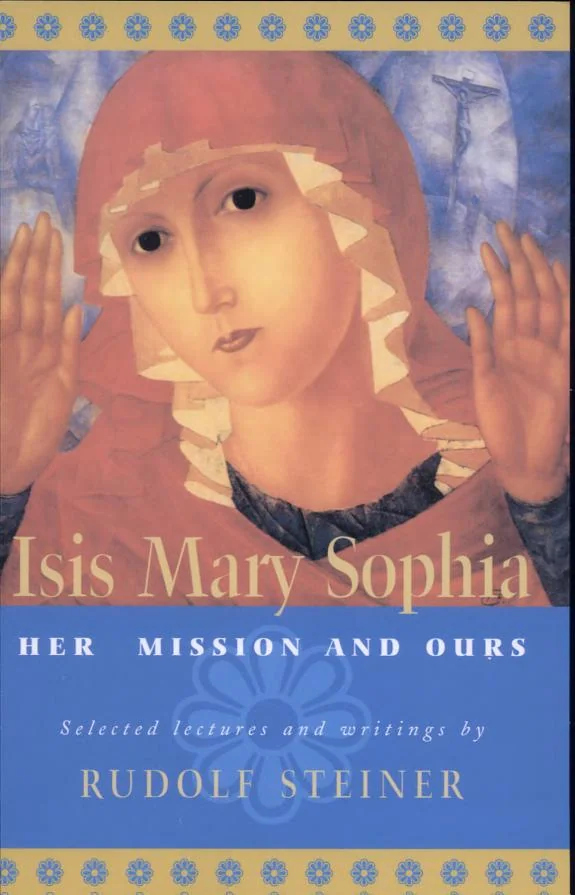
Isis Mary Sophia
 73
73

Isis Mary Sophia
Rudolf Steiner's "Isis Mary Sophia" presents a challenging, yet ultimately rewarding, exploration of the feminine divine's role in spiritual evolution. The work’s strength lies in its ambitious synthesis of ancient mythologies and esoteric philosophy, particularly its detailed exegesis of the Egyptian Isis and the Gnostic Sophia. Steiner connects these figures to a perceived spiritual necessity for balancing patriarchal spiritual traditions. However, the lecture-based format, while characteristic of Steiner, can sometimes lead to dense, repetitive passages. A particularly striking concept is his interpretation of Sophia not merely as wisdom but as a cosmic feminine being whose re-emergence is vital. While the language is often abstract, Steiner offers a unique perspective on historical spiritual currents and their impact on contemporary consciousness. It’s a demanding but illuminating text for dedicated students of his work.
📝 Description
73
Rudolf Steiner lectured in the early 20th century on the re-emergence of feminine divine principles.
Rudolf Steiner's "Isis Mary Sophia" connects ancient feminine deities, such as the Egyptian Isis and the Gnostic Sophia, with the spiritual needs of the early 1900s. The book, compiled from lectures given by the Austrian philosopher and esotericist, suggests that a renewed understanding of the feminine divine is necessary for humanity's spiritual development. Steiner, the founder of Anthroposophy, presented these ideas during a time of significant interest in comparative religion and spiritual alternatives to materialism.
The work addresses the spiritual shifts of its era, implicitly challenging patriarchal structures in Western thought by reasserting the importance of ancient feminine divine forces. It appeals to those interested in Anthroposophy, comparative religion, and the evolution of consciousness. Readers seeking to understand the role of feminine spiritual energies and the deeper spiritual causes of societal change will find this text valuable. It is aimed at serious students of esoteric thought, offering a different perspective from figures like Annie Besant within the broader Theosophical movement of the time.
This work stems from Rudolf Steiner's Anthroposophical lectures, given during a period when Western esotericism was exploring theosophical ideas and seeking alternatives to materialism. Steiner, who developed Anthroposophy after a period with the Theosophical Society, focused on a spiritual-scientific approach to understanding human and cosmic evolution. "Isis Mary Sophia" places within this context, specifically examining the spiritual significance of feminine forces and their historical manifestations, linking them to contemporary spiritual needs.
💡 Why Read This Book?
• Gain a unique Anthroposophical perspective on the evolution of spiritual consciousness, specifically how Steiner links the "rebirth of the feminine" to humanity's future development, drawing on early 20th-century esoteric thought. • Understand Steiner's specific interpretation of ancient figures like the Egyptian Isis and the Gnostic Sophia, moving beyond common mythological understandings to their spiritual-scientific significance. • Explore the concept of Sophia not just as wisdom but as a cosmic feminine entity, and its relevance to addressing contemporary spiritual imbalances, as articulated in Steiner's lectures.
⭐ Reader Reviews
Honest opinions from readers who have explored this book.
❓ Frequently Asked Questions
When were Rudolf Steiner's lectures on Isis Mary Sophia originally delivered?
While the book "Isis Mary Sophia" was first published in 2003, it compiles lectures given by Rudolf Steiner primarily in the early 20th century, specifically around 1917, during a critical period of global upheaval and spiritual searching.
What is the connection between Isis, Mary, and Sophia in Steiner's work?
Steiner connects these figures to represent evolving aspects of the feminine divine. Isis embodies ancient mystery wisdom, Mary represents the vessel for divine incarnation in a human form, and Sophia signifies cosmic wisdom and the creative feminine principle.
Is 'Isis Mary Sophia' a good starting point for beginners interested in Rudolf Steiner?
It is not typically recommended as a first book for beginners. Steiner's works, especially lecture compilations, often assume familiarity with his broader philosophical and spiritual concepts. "Theosophy" or "An Outline of Esoteric Science" might be more accessible starting points.
How does Steiner's concept of Sophia differ from traditional philosophical views?
Steiner elevates Sophia beyond a mere abstract concept of wisdom. He presents her as a living, cosmic spiritual being, intrinsically connected to the earth's evolution and humanity's spiritual destiny, whose influence is currently reawakening.
What societal changes was Steiner responding to in his lectures on the feminine divine?
Steiner was responding to the perceived spiritual and social imbalances of the early 20th century, including the rise of materialism, the aftermath of World War I, and a perceived suppression of feminine spiritual forces in Western culture.
Does this book offer practical exercises for spiritual development?
While Steiner's work is deeply practical in its intent, "Isis Mary Sophia" focuses more on conceptual understanding and the intellectual grasp of spiritual dynamics rather than providing specific meditative or practical exercises.
🔮 Key Themes & Symbolism
The Divine Feminine Reborn
The work posits a cyclical re-emergence of feminine spiritual power in human evolution. Steiner identifies this through ancient figures like the Egyptian Isis, arguing that a spiritual imbalance caused by over-emphasis on masculine, intellectual forces necessitates this rebirth. The book explores the nature of this divine feminine principle as a creative, nurturing, and wisdom-bearing cosmic force essential for humanity's next stage of development.
Sophia as Cosmic Being
Central to the text is the Gnostic figure Sophia, presented not merely as abstract wisdom but as a conscious, spiritual entity. Steiner elaborates on Sophia's role in creation and her connection to Earth's spiritual evolution. He suggests her influence is waning and waxing, and her current reawakening is tied to humanity's capacity to integrate spiritual knowledge with emotional and volitional forces.
Spiritual Science and Ancient Mysteries
Steiner utilizes his framework of Spiritual Science (Anthroposophy) to reinterpret ancient mystery traditions, particularly those surrounding Isis. He seeks to reveal the underlying spiritual truths obscured by historical and cultural layers. This approach aims to bridge the gap between ancient esoteric knowledge and the perceived spiritual needs of the modern, post-Enlightenment individual.
Balance of Opposites
A recurring theme is the necessity of balancing spiritual polarities, particularly the masculine and feminine principles. Steiner argues that Western civilization's trajectory has overly favored the masculine, intellect-driven aspect, leading to a spiritual deficit. The integration of the divine feminine is presented as the antidote, fostering a more holistic and balanced approach to spiritual and social life.
💬 Memorable Quotes
Direct passages from the work, attributed to the author.
“Sophia is not merely wisdom, but a divine being.”
— This highlights Steiner's unique conceptualization of Sophia, elevating her from an abstract attribute to a personified, active spiritual force crucial for cosmic and human evolution.
“The re-emergence of the feminine divine is essential for humanity's spiritual future.”
— This statement captures the core thesis of the book, emphasizing the urgency and significance of integrating feminine spiritual principles to overcome modern spiritual deficiencies.
“Ancient Isis represents a profound spiritual knowledge being rediscovered.”
— Steiner uses the Egyptian goddess Isis as a symbol for ancient, potent feminine wisdom traditions that hold keys to understanding current spiritual needs and potential future developments.
“A spiritual imbalance exists, requiring the return of feminine forces.”
— This points to Steiner's diagnosis of the spiritual condition of his time, suggesting that an overemphasis on masculine principles has created a void that only the re-engagement with feminine divine energies can fill.
“The earthly incarnation of Sophia is tied to human spiritual progress.”
— This interpretation suggests a direct link between the presence and activity of the Sophia principle and humanity's capacity for spiritual growth and transformation.
🌙 Esoteric Significance
Tradition
This work fits within the lineage of Western Esotericism, drawing heavily from Gnostic cosmology (Sophia) and ancient Egyptian mysteries (Isis). It is foundational to Anthroposophy, Rudolf Steiner's distinct spiritual-scientific path. While it echoes Theosophical ideas about divine feminine principles, Steiner's approach emphasizes a structured, 'spiritual-scientific' method for understanding these concepts, departing from earlier mystical or purely philosophical treatments.
Symbolism
The primary symbols are Isis and Sophia. Isis represents ancient, potent feminine wisdom, the hidden knowledge of the mysteries, and the creative, nurturing power of the cosmos. Sophia, particularly in her Gnostic context, symbolizes divine wisdom, often depicted as a fallen or seeking entity whose restoration is linked to cosmic and human redemption. Together, they signify the reawakening of the sacred feminine essential for balancing current spiritual trajectories.
Modern Relevance
Steiner's concepts regarding the divine feminine and Sophia continue to influence contemporary esoteric circles, spiritual feminism, and Anthroposophical communities. Thinkers and practitioners in these fields draw upon his ideas to understand gender dynamics in spirituality, the evolution of consciousness, and the need for a more holistic spiritual paradigm that integrates wisdom and heart-centered knowing.
👥 Who Should Read This Book
• Students of Rudolf Steiner and Anthroposophy seeking to understand his specific teachings on the evolution of consciousness and the feminine divine. • Scholars of comparative religion and mythology interested in esoteric interpretations of figures like Isis and Sophia, and their spiritual-scientific significance. • Individuals exploring feminine spirituality and seeking a deeper, historical esoteric framework for understanding the re-emergence of goddess archetypes and divine feminine principles.
📜 Historical Context
Rudolf Steiner delivered the lectures forming "Isis Mary Sophia" in 1917, a period marked by the cataclysm of World War I and profound societal upheaval across Europe. This era was ripe with esoteric and spiritual seeking, partly as a reaction against the perceived soullessness of materialism and the destructive forces unleashed by industrial warfare. Steiner, having broken from the Theosophical Society in 1913 to establish Anthroposophy, was actively articulating his spiritual-scientific worldview. His work engaged with the spiritual currents of the time, including interest in Gnosticism, Kabbalah, and ancient mystery traditions, but sought to provide a distinct, spiritually grounded understanding. While figures like Annie Besant were influential in Theosophy, Steiner's path diverged significantly, focusing on a rigorous phenomenological approach to spiritual experience. The reception of Steiner's ideas was often polarized, met with both fervent adherence and skepticism from academic and religious establishments.
📔 Journal Prompts
Reflect on the qualities associated with Isis and Sophia as divine feminine forces.
Consider how the concept of Sophia as a cosmic being might inform your understanding of wisdom.
Analyze the perceived spiritual imbalance Steiner describes and its connection to masculine/feminine principles.
Explore the relationship between ancient mystery traditions and contemporary spiritual needs.
How might the "rebirth of the feminine" manifest in personal spiritual development?
🗂️ Glossary
Anthroposophy
A spiritual philosophy founded by Rudolf Steiner, aiming to understand the spiritual world through a disciplined approach he termed 'spiritual science'. It seeks to bridge the gap between the material and spiritual realms.
Sophia
In Gnosticism and Steiner's work, Sophia represents divine wisdom, often personified as a feminine spiritual being whose nature and role in creation are central to cosmic and human salvation.
Isis
An ancient Egyptian goddess revered as a mother, wife, and healer, embodying powerful feminine principles, magic, and mystery wisdom. Steiner interprets her as a key figure in ancient esoteric traditions.
Spiritual Science
Steiner's term for his method of investigating the spiritual world through clairvoyant faculties honed via specific meditative and cognitive exercises, aiming for objective, verifiable results.
Feminine Divine
Refers to the sacred feminine principle in spirituality, encompassing divine goddesses, wisdom figures, and nurturing/creative cosmic forces traditionally associated with the feminine aspect of divinity.
Gnosticism
A diverse set of ancient religious movements emphasizing personal spiritual knowledge (gnosis) for salvation. Key elements include dualism and the concept of Sophia.
Mystery Traditions
Ancient religious practices characterized by secret teachings and initiations, often involving symbolic rituals and esoteric knowledge, such as those associated with Isis in Egypt.
This book appears in 1 collection
🔮 Readers Also Liked
Browse all →





From the “Anthroposophy” Collection
View all →







More Free Theosophy & Anthroposophy Books
View all →