Ecstatic Religion
 78
78

Ecstatic Religion
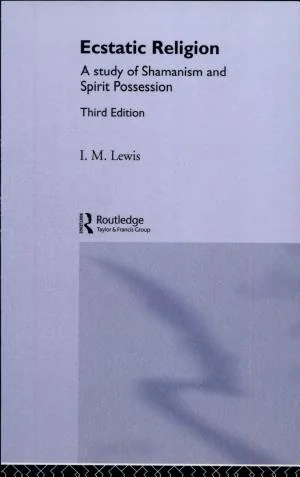
I. M. Lewis's *Ecstatic Religion* remains a foundational text for understanding the visceral expressions of faith. The book's signal strength is its broad comparative scope, drawing parallels between seemingly disparate traditions, from the frenzied rituals of West African spirit cults to the contemplative ecstasy of Sufi mystics. Lewis avoids sensationalism, instead offering a sober analysis of the social and psychological mechanisms at play. A particularly illuminating section discusses the social control and integration of ecstatic practitioners within their communities, demonstrating that possession is rarely a purely individualistic affair. However, the text's academic rigor can sometimes lead to a dryness that might alienate readers seeking a more experiential account. Despite this, the work provides an indispensable framework for analyzing the powerful, often chaotic, manifestations of religious fervor.
This is an essential academic survey of a core religious phenomenon.
📝 Description
78
I. M. Lewis's 2003 book examines spiritual possession and ecstatic states across world religions.
Published in 2003, I. M. Lewis's *Ecstatic Religion* meticulously analyzes spiritual possession and ecstatic states as they appear in global religious traditions. The book moves beyond simple ethnographic accounts to dissect the psychological and social elements that underlie these intense spiritual experiences. Lewis charts the ways individuals, feeling divinely inhabited, transcend normal consciousness. This state, often marked by frenzy and rapture, is a potent, if sometimes unpredictable, expression of faith. The study appeals to scholars of comparative religion and anthropology, as well as anyone with a serious interest in the phenomenology of religious experience. It is especially relevant for readers who investigate the intersection of the sacred and the psychological, and how altered states of consciousness are integrated into belief systems. Those studying shamanism, mysticism, and ritualistic practices will find substantial material within its pages.
Lewis's original research on ecstatic religion arose during a time of growing interest in altered states of consciousness. This interest was partly shaped by anthropological studies and psychological theories from the mid-20th century. The book engages with existing scholarship on Dionysiac cults, Haitian Vodou, and various forms of Christian and Sufi mysticism. Its lasting value comes from its thorough approach to a common human experience, connecting different academic fields.
This work sits within the tradition of comparative mysticism and shamanism studies. Lewis draws on mid-20th century anthropological and psychological theories to understand ecstatic experiences. He connects phenomena found in traditions like Dionysiac cults, Haitian Vodou, and Christian and Sufi mysticism. The book examines how these intense spiritual states are not merely individual occurrences but are often shaped by social structures and rituals within religious communities. It bridges academic disciplines to explore a universal human quest for divine connection through altered states of consciousness.
💡 Why Read This Book?
• Gain a structured understanding of spirit possession by examining Lewis's analysis of its social and ritualistic functions, allowing you to differentiate between mere psychological states and culturally embedded religious practices. • Explore the historical breadth of ecstatic phenomena, from ancient Dionysiac cults to modern Sufi mysticism, providing concrete examples to contextualize your own understanding of religious expression. • Understand the concept of "possession" as a socially recognized role, moving beyond simplistic notions to grasp how communities integrate and manage ecstatic experiences, as detailed in the book's ethnographic sections.
⭐ Reader Reviews
Honest opinions from readers who have explored this book.
❓ Frequently Asked Questions
What is the earliest historical reference to ecstatic religion discussed in the book?
The book references ancient Dionysiac cults, indicating a historical trajectory of ecstatic religious practices stretching back to antiquity, long before the formal establishment of many later religious traditions.
How does I. M. Lewis differentiate between various forms of ecstatic experience?
Lewis categorizes ecstatic experiences based on their intensity, social context, and the perceived nature of the inhabiting spirit, distinguishing between shamanic flight, mystical union, and cultic possession.
Does *Ecstatic Religion* focus on any specific geographical regions?
While the book covers a global range, it gives significant attention to examples from West Africa, Haiti (Vodou), and various European mystical traditions, offering a diverse yet focused selection of case studies.
What is the author's stance on the 'reality' of spirit possession?
Lewis adopts an analytical, anthropological perspective, focusing on the social, psychological, and cultural functions of ecstatic experiences rather than asserting or denying their supernatural reality.
Is *Ecstatic Religion* an academic text or a practitioner's guide?
It is primarily an academic work for scholars and students of religion, anthropology, and sociology. It analyzes ecstatic phenomena rather than providing instructions for achieving such states.
What is the significance of the 2003 publication date?
While the original work was published in 1971, the 2003 edition likely includes updated introductions or minor revisions, but the core analysis remains rooted in mid-to-late 20th-century scholarship.
🔮 Key Themes & Symbolism
Spirit Possession as Social Structure
This theme investigates how states of perceived spirit possession are not isolated incidents but are often integrated into the social fabric of religious communities. Lewis examines how societies create roles for possessed individuals, defining their authority, rituals, and responsibilities. This framework moves beyond individual psychology to reveal the communal functions of ecstatic experiences, demonstrating how they can reinforce social order or, at times, challenge it. The work analyzes instances where possession confers status or mandates specific actions within a group, highlighting its role in social cohesion and religious authority.
The Phenomenology of Ecstasy
Lewis meticulously details the subjective experience of ecstatic states across diverse cultures. This includes the altered perceptions, intense emotions, and loss of ordinary self-control reported by individuals. The book maps the spectrum of these experiences, from the controlled trance states of shamans to the uninhibited frenzy found in certain cultic celebrations. By describing the commonalities in sensory and emotional experiences, Lewis provides a framework for understanding the universal human capacity for transcending ordinary consciousness through religious engagement.
Comparative Religious Expression
A central pillar of the work is its broad comparative analysis, drawing parallels between seemingly disparate traditions. Lewis juxtaposes Dionysiac rites, Haitian Vodou, Sufi mysticism, and shamanic practices to illustrate recurring patterns in ecstatic religious expression. This comparative approach reveals how different cultural contexts shape the manifestation and interpretation of possession and trance, while also highlighting underlying universal psychological and spiritual impulses that drive these experiences across the globe.
Ritual and Altered States
The book underscores the crucial role of ritual in eliciting and managing ecstatic states. Lewis explores how specific ceremonies, chants, music, and symbolic actions are employed to induce altered consciousness and facilitate communion with the divine or spirit world. It examines the deliberate use of these techniques to achieve predictable (or sometimes unpredictable) outcomes, demonstrating the intricate relationship between structured religious practice and the profound, often overwhelming, experiences of ecstasy and possession.
💬 Memorable Quotes
Direct passages from the work, attributed to the author.
“States of spirit possession... are found in almost all known religions.”
— This statement captures the book's foundational premise: that the experience of being divinely inhabited is a near-universal feature of human religious life, transcending cultural and geographical boundaries.
“From Dionysiac cults to Haitian voodoo, Christian and Sufi mysticism to shamanic ritual...”
— This phrase highlights the immense scope of Lewis's study, showcasing the wide array of traditions examined to illustrate the pervasive nature of ecstatic religious expression across history and geography.
“the rapture and frenzy of ecstatic experience forms an iconic expression of faith in all its devastating power and unpredictability.”
— This interpretation emphasizes the intensity and often uncontrollable nature of ecstatic religious states, portraying them as potent, albeit sometimes dangerous, manifestations of deep-seated belief.
“Ecstatic Religion has, since its first appearance in 1971, became the classic...”
— This highlights the book's established academic importance and influence within the study of religion, marking it as a seminal text that has shaped scholarly discourse on the subject since its initial publication.
“believer's feel themselves to be 'possessed' by the deity and raised to a new plane of existence”
— This describes the core subjective experience of spiritual possession, emphasizing the sense of external control by a divine entity and the resulting transformation of the individual's state of consciousness.
🌙 Esoteric Significance
Tradition
While not strictly confined to a single esoteric lineage, *Ecstatic Religion* engages with themes relevant to various mystical and shamanic traditions. It provides a comparative framework that touches upon practices often found within Hermeticism, Neopaganism, and certain schools of Western esotericism that explore altered states for spiritual insight or communion. The work analyzes how different traditions structure and interpret ecstatic experiences, offering a meta-perspective on the universal human drive towards transcendence, a core concern in many esoteric paths.
Symbolism
The book frequently encounters symbols associated with divine presence or spiritual agency, such as masks in shamanic rituals or specific divine figures in possession cults like Haitian Vodou's Lwa. These symbols are not merely decorative but function as conduits for spiritual power or as visual representations of the possessing entity. Lewis examines how these motifs help structure the ecstatic experience, providing a tangible focus for the worshipper's devotion and facilitating the perceived communication between the human and the divine realms.
Modern Relevance
Contemporary practitioners and scholars in fields like transpersonal psychology, psychedelic-assisted therapy, and neo-shamanic movements often draw upon Lewis's work. His detailed analysis of possession and trance states provides a foundational understanding for those exploring altered consciousness for healing or spiritual growth. Furthermore, scholars of religion and anthropology continue to reference *Ecstatic Religion* for its comprehensive comparative methodology and its nuanced examination of how ecstatic experiences are socially and culturally mediated in diverse contexts.
👥 Who Should Read This Book
• Students of comparative religion and anthropology seeking to understand the global prevalence and diverse manifestations of spirit possession and ecstatic states. • Scholars of shamanism and mysticism interested in the phenomenological and social dimensions of altered consciousness in religious contexts. • Individuals exploring the psychological and cultural frameworks surrounding intense religious experiences, seeking academic analysis beyond devotional texts.
📜 Historical Context
I. M. Lewis's *Ecstatic Religion* emerged from the intellectual currents of the mid-to-late 20th century, a period marked by robust anthropological engagement with non-Western religions and a growing academic interest in altered states of consciousness. First published in 1971, the book contributed significantly to the study of comparative religion by analyzing ecstatic phenomena—such as spirit possession and shamanism—across a wide array of global traditions. It entered a scholarly landscape where functionalist anthropology, championed by figures like E.E. Evans-Pritchard, often sought to explain religious practices in terms of their social utility. Lewis’s work, however, offered a more phenomenological and comparative approach, moving beyond purely sociological explanations. While contemporaries like Mircea Eliade explored shamanism through a lens of comparative mythology and religious history, Lewis focused more intently on the direct experience and social integration of ecstatic states. The book's comprehensive scope and analytical rigor quickly established it as a key text, frequently cited in subsequent studies of religious experience and ritual.
📔 Journal Prompts
The concept of "spirit possession" as a socially sanctioned role.
Dionysiac cults and their ecstatic practices.
The role of ritual in inducing trance states.
Comparative analysis of shamanic flight versus cultic frenzy.
Interpreting the "devastating power and unpredictability" of faith.
🗂️ Glossary
Spirit Possession
A state in which an individual believes they are controlled or inhabited by a supernatural entity, deity, or spirit, leading to altered behavior and consciousness.
Ecstasy
An intense state of emotion, often religious, characterized by profound joy, rapture, or spiritual transcendence, typically involving a loss of self-awareness.
Shamanism
A religious practice characterized by a practitioner (shaman) who is believed to interact with a spirit world, often through trance states, for purposes of healing or divination.
Dionysiac Cults
Ancient Greek religious groups dedicated to the god Dionysus, known for their ecstatic rituals involving wine, music, and frenzied dancing.
Haitian Vodou
A syncretic religion practiced in Haiti, blending West African spiritual traditions with elements of Roman Catholicism, featuring possession by spirits known as Lwa.
Sufism
The mystical dimension of Islam, characterized by ascetism and esoteric practices aimed at achieving direct experience of God, often through ecstatic states like sama (listening).
Trance
A state of consciousness characterized by a marked alteration in perception, thought, and behavior, often induced by ritualistic practices or meditation.
This book appears in 1 collection
🔮 Readers Also Liked
Browse all →









From the “Shamanism” Collection
View all →





More Free Occult Philosophy Books
View all →