Dragon Ethics & Pactcraft
 71
71

Dragon Ethics & Pactcraft
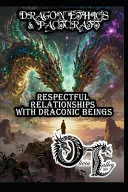
Olivia Talley's Dragon Ethics & Pactcraft confronts the thorny issue of power dynamics in advanced magical practice head-on. Unlike texts that treat spirit work as a conquest, Talley insists on a paradigm of respectful negotiation. Her articulation of 'Draconic Sovereignty' is particularly striking, demanding a level of recognition for non-human intelligences rarely explored in contemporary esoteric literature. While the book excels in establishing this ethical framework, the practical application of 'Pactcraft' could benefit from more detailed case studies, moving beyond theoretical principles to offer clearer templates for engagement. The section on 'Resonant Exchange' offers a compelling alternative to traditional pacts. Ultimately, this volume is essential for any serious practitioner seeking to move beyond mere spell-slinging into genuine spiritual diplomacy.
📝 Description
71
Olivia Talley's Dragon Ethics & Pactcraft, published February 5, 2026, examines the ethical framework for interacting with draconic entities.
This book shifts focus from spellcasting to the principles governing relationships with dragonkind. Talley argues that dragon magick's power is neutral, its use determined by the practitioner's ethics. True skill, she suggests, comes from building respectful, lasting pacts rather than simple command. The text is for those already familiar with dragon magick basics. It appeals to practitioners who prioritize ethical considerations and wish to develop more responsible connections with powerful, non-human beings. Advanced students of spirit evocation and pact-making will find it particularly relevant. The early 2020s saw a renewed interest in older mythologies and elemental spirits, including the ethics of dealing with them. Talley's work stands apart from earlier, more human-centered or forceful methods of spirit interaction. While figures like Aleister Crowley investigated complex relationships with other intelligences, Talley's 2026 publication specifically centers on reciprocal ethics with beings often portrayed as adversaries or servants.
Emerging in the early 2020s amidst renewed interest in pre-Abrahamic mythologies and elemental spirits, Dragon Ethics & Pactcraft addresses the ethics of spiritual interaction. Talley's approach contrasts with earlier grimoire traditions that often favored anthropocentric or authoritarian methods. Unlike many historical accounts that depict dragons as purely adversarial or subservient, this work emphasizes the concept of 'Draconic Sovereignty' and the establishment of mutually beneficial pacts.
💡 Why Read This Book?
• Gain actionable strategies for 'Pactcraft' by learning to define terms and boundaries for mutual agreement, moving beyond simple command-based magic. • Understand the core principle of 'Draconic Sovereignty' to foster respectful alliances, recognizing the inherent autonomy of draconic beings. • Explore 'Resonant Exchange' as a method for establishing balanced magical partnerships, ensuring reciprocity and energetic integrity in your workings.
⭐ Reader Reviews
Honest opinions from readers who have explored this book.
❓ Frequently Asked Questions
What is the core difference between Dragon Ethics & Pactcraft and earlier dragon magick books?
This 2026 publication by Olivia Talley shifts focus from commanding dragon power to establishing ethical, reciprocal pacts, emphasizing mutual respect and sovereignty, a departure from earlier, more authoritarian approaches.
Is this book suitable for beginners in magick?
No, this book is designed for practitioners who have already familiarized themselves with foundational dragon magick concepts and are ready to explore advanced ethical considerations in spirit alliances.
What does 'Draconic Sovereignty' mean in the context of this book?
It refers to the inherent right of dragons to self-determination and autonomy, a principle Talley stresses for building respectful, long-term magical alliances, rather than viewing them as mere tools.
What is 'Resonant Exchange'?
Resonant Exchange is a concept introduced in the book for creating balanced magical partnerships through energetic alignment and mutual benefit, contrasting with forceful imposition of will.
When was Dragon Ethics & Pactcraft first published?
The book was first published on February 5, 2026, making it a recent contribution to the field of esoteric studies concerning draconic entities.
Does the book provide specific rituals for pact-making?
While it lays the ethical groundwork and principles for pactcraft, the book focuses more on the philosophy and ethical framework of these alliances rather than providing a compendium of prescriptive rituals.
🔮 Key Themes & Symbolism
Ethical Pactcraft
This theme centers on the formalized art of creating agreements with draconic beings. Talley argues that power derived from dragons is contingent on ethical engagement, moving beyond coercive tactics. Pactcraft involves understanding draconic psychology, establishing clear boundaries, and mutual consent, thereby fostering sustainable magical relationships. It is presented as a sophisticated evolution of spirit work, requiring careful consideration and respect for the other party involved.
Draconic Sovereignty
A core concept, Draconic Sovereignty asserts the inherent autonomy and self-determination of dragons. Talley uses this principle to challenge anthropocentric views within esoteric traditions, advocating for recognition of these beings as independent entities with their own rights and wills. This perspective is crucial for developing genuine alliances, distinguishing the work from mere spirit commanding or enslavement narratives prevalent in older grimoires.
Resonant Exchange
This theme details a method for achieving balance and reciprocity in magical alliances. Resonant Exchange involves aligning one's magical energies with those of a draconic entity to create a harmonious flow of power and benefit. It emphasizes shared goals and mutual energetic contributions, ensuring that pacts are not one-sided but are built on a foundation of energetic compatibility and shared understanding.
Power and Responsibility
Talley frames the immense power associated with dragon magick as intrinsically linked to profound responsibility. The book posits that the capacity to wield such power necessitates a robust ethical compass. Without this, the power can become destructive or self-defeating. This theme underscores the critical need for practitioners to cultivate wisdom and ethical maturity alongside magical prowess.
💬 Memorable Quotes
Direct passages from the work, attributed to the author.
“Power builds or burns; the ethics of the relationship dictates the outcome.”
— This statement captures the book's central thesis: the neutral nature of draconic power, whose manifestation as creation or destruction hinges entirely on the practitioner's ethical framework and approach to alliance.
“True pactcraft is not about command, but about consensual alliance.”
— This highlights the shift in perspective Talley advocates for, moving away from forceful imposition towards a model of negotiated, mutually agreed-upon relationships with draconic beings.
“Recognize Draconic Sovereignty, and you lay the foundation for enduring magic.”
— This emphasizes the practical benefit of respecting draconic autonomy, suggesting it is the key to establishing stable, long-lasting, and effective magical partnerships.
“Resonant Exchange ensures that the energy given is met with energy returned.”
— This explains the principle of balance in pacts, illustrating that effective alliances are characterized by a reciprocal flow of magical energy, not a one-way extraction.
“The crossroads of power demand ethical clarity before commitment.”
— This metaphor underscores the critical decision point practitioners face when accessing draconic power, stressing the necessity of ethical deliberation prior to forming any pact.
🌙 Esoteric Significance
Tradition
This work extends and reframes contemporary approaches to spirit evocation and pact-making, particularly within the Western Esoteric Tradition. While drawing implicitly from older grimoire traditions that detail interactions with various spiritual beings, Talley's emphasis on reciprocal ethics and the concept of 'Draconic Sovereignty' represents a departure from purely hierarchical or command-based models. It aligns with a modern, post-theosophical trend that seeks more egalitarian relationships with the unseen world, moving beyond anthropocentric assumptions.
Symbolism
The dragon itself serves as a primary symbol, representing primal power, ancient wisdom, and elemental forces often associated with earth and fire. Talley's work reframes this potent symbol not merely as a force to be controlled, but as an independent sovereign entity. Other symbolic motifs likely include scales (representing balance and judgment), hoards (symbolizing accumulated power or knowledge), and flight (representing transcendence or the bridging of realms), all re-contextualized through an ethical lens.
Modern Relevance
Dragon Ethics & Pactcraft speaks directly to contemporary discussions in animism, neo-shamanism, and witchcraft concerning respectful engagement with non-human intelligences. Thinkers and practitioners exploring interspecies communication and ecological spirituality find Talley's emphasis on consent and sovereignty particularly relevant. Her work informs modern approaches to spirit partnerships that prioritize mutual understanding and ethical boundaries, moving away from exploitative paradigms.
👥 Who Should Read This Book
• Advanced practitioners of Western Esotericism seeking to deepen their understanding of spirit alliances beyond basic spellcasting. • Students of comparative religion and mythology interested in contemporary ethical frameworks for interacting with powerful non-human entities. • Individuals drawn to dragon lore and draconic magick who desire a responsible, ethical approach to forging connections and pacts.
📜 Historical Context
Olivia Talley's Dragon Ethics & Pactcraft, published in 2026, arrived during a period of intense re-evaluation within esoteric circles regarding human-spirit relationships. The early 2020s saw a proliferation of online magical communities and a renewed interest in pre-modern spiritual frameworks, often divorced from their original cultural contexts. Talley's work distinguished itself by actively engaging with the ethical implications of interacting with powerful, non-human entities, a topic sometimes sidestepped in earlier occult literature which, like some interpretations of the Key of Solomon tradition, leaned towards hierarchical command structures. While contemporary authors like Frater U.D. explored spirit evocation with a critical eye, Talley's focus on reciprocal ethics and 'Draconic Sovereignty' offered a distinct perspective. The book's emphasis on consensual pacts and responsible power management resonated with a growing desire for more nuanced and less exploitative magical practices, particularly among younger occultists.
📔 Journal Prompts
Reflect on the concept of Draconic Sovereignty and its implications for your magical worldview.
Consider the principles of Resonant Exchange when evaluating a potential magical partnership.
Analyze the ethical considerations presented in Chapter 3 regarding power dynamics.
Document your understanding of 'Pactcraft' before beginning any new spiritual agreements.
Explore the balance between power and responsibility in your personal magical practice.
🗂️ Glossary
Pactcraft
The art and practice of establishing formal, ethical agreements and alliances with spiritual or non-human entities, emphasizing mutual consent and understanding.
Draconic Sovereignty
The principle recognizing the inherent autonomy, self-determination, and independent will of draconic beings, essential for ethical interaction.
Resonant Exchange
A method for creating balanced magical partnerships through energetic alignment, mutual benefit, and reciprocal contribution between practitioner and entity.
Primal Power
Refers to the raw, fundamental energies often associated with elemental forces or ancient intelligences, such as those embodied by dragons.
Ethical Framework
The set of moral principles and guidelines that govern a practitioner's approach to magical workings and interactions with spiritual entities.
Consensual Alliance
A magical partnership formed through mutual agreement, respect, and understanding, rather than coercion or unilateral command.
Spiritual Diplomacy
The practice of navigating relationships with spiritual beings through negotiation, clear communication, and mutual respect, akin to diplomatic relations.
This book appears in 1 collection
🔮 Readers Also Liked
Browse all →









From the “Spellcraft” Collection
View all →



More Free Occult Philosophy Books
View all →