Atlantis
 72
72

Atlantis
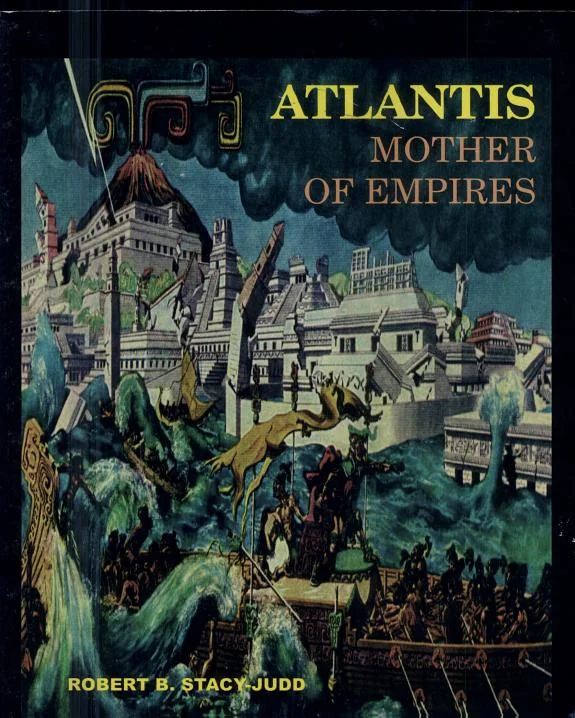
Stacy-Judd’s *Atlantis* presents a compelling argument for the physical existence of the sunken continent, leveraging his background as an architect to provide detailed visual and structural hypotheses. The strength of this book lies in its unique perspective; rather than relying on ancient texts or mystical visions, Stacy-Judd reconstructs Atlantis through the lens of engineering and design. His meticulously drawn plates, illustrating hypothetical Atlantean cities and structures, are particularly striking. However, the work’s focus on architectural possibility, while its greatest asset, can also be its limitation. The narrative sometimes feels more like a technical brief for a hypothetical civilization than a historical or cultural exploration. A notable concept is Stacy-Judd's detailed visualization of Atlantean city grids, showcasing a rational, planned urban environment that challenges more chaotic or purely magical depictions. The book ultimately offers a tangible, albeit speculative, vision of a lost world.
*Atlantis* is a valuable, visually driven architectural study of a legendary civilization.
📝 Description
72
Robert B. Stacy-Judd's 1999 book applies architectural principles to the lost continent of Atlantis.
Robert B. Stacy-Judd, an architect, brought a draftsman's precision to the Atlantis mystery with his 1999 book. He moved past common speculation to build a logically and visually supported argument for the continent's existence and form. Stacy-Judd focused on the physical and architectural possibilities, visualizing Atlantis's layout, structures, and engineering. His professional understanding of building principles informed specific theories about Atlantean city planning and monumental architecture.
This work is for students of ancient mysteries, particularly those interested in archaeological and architectural interpretations of legendary sites. It appeals to readers who appreciate detailed theoretical reconstructions and a reasoning approach, even when the subject is myth. Those who value visual aids and precise renderings of hypothetical structures will find Stacy-Judd's approach particularly satisfying.
Published in 1999, Stacy-Judd's work joined a late 20th-century resurgence of interest in esoteric history and pseudohistory, following earlier figures like Ignatius Donnelly. While many contemporary theories focused on philosophical or spiritual aspects of Atlantis, Stacy-Judd's background as an architect provided a unique, visually and structurally focused perspective. His approach sought to ground the legend in plausible physical and engineering terms, offering a distinct contribution to the discourse on lost civilizations.
💡 Why Read This Book?
• Gain a unique architectural perspective on Atlantis, understanding Stacy-Judd's theories on city planning and monumental structures, as detailed in his original drawings from 1999. • Explore the concept of Atlantean engineering and its potential integration with environmental design, offering a tangible, reasoned approach to a mythical subject. • Appreciate how an architect’s analytical skills can reconstruct a lost civilization, moving beyond pure speculation to offer visually grounded hypotheses about Atlantean life.
⭐ Reader Reviews
Honest opinions from readers who have explored this book.
❓ Frequently Asked Questions
What makes Robert B. Stacy-Judd's approach to Atlantis different from other authors?
Stacy-Judd, an architect, uses his training in drafting and structural design to offer visually detailed, potentially plausible reconstructions of Atlantean cities and architecture, unlike many authors who rely solely on textual or spiritual interpretations.
When was Robert B. Stacy-Judd's book on Atlantis first published?
The book *Atlantis* by Robert B. Stacy-Judd was first published in 1999, making it a relatively modern entry into the extensive literature on the lost continent.
Does the book provide evidence for Atlantis?
Stacy-Judd's 'evidence' is primarily his architectural and engineering reasoning applied to hypothetical Atlantean structures. He presents theories and visual evidence through his drawings, aiming for logical plausibility rather than empirical proof.
What kind of illustrations are in the book?
The book features detailed architectural drawings and plates created by Stacy-Judd himself, illustrating his conceptualizations of Atlantean buildings, city layouts, and infrastructure.
Is this book suitable for beginners interested in Atlantis?
Yes, it's suitable for beginners who appreciate a visually driven, analytical approach to the Atlantis myth, especially if they are interested in architecture or engineering concepts.
What is the main focus of Stacy-Judd's Atlantis theory?
The main focus is on the physical, architectural, and engineering aspects of Atlantis, presenting it as a highly developed civilization with sophisticated urban planning and monumental construction, as visualized by an architect.
🔮 Key Themes & Symbolism
Architectural Reconstruction
Stacy-Judd applies his professional expertise as an architect and draftsman to visualize Atlantis. This theme centers on the detailed, structural proposals for Atlantean cities, buildings, and infrastructure. The work emphasizes the potential for sophisticated urban planning and monumental construction, presenting Atlantis not just as a myth but as a civilization whose physical manifestation could be understood through architectural principles. His drawings serve as key evidence, offering a tangible representation of his theories.
Civilization Design
Beyond individual structures, this theme explores the grand design of Atlantean society as envisioned by Stacy-Judd. It explores how a highly advanced civilization might have organized its living spaces, public works, and overall environment. The book posits a rational, organized approach to civilization, suggesting that Atlantis possessed an advanced understanding of logistics, engineering, and possibly social structuring, all reflected in its hypothetical physical layout.
Visual Evidence
Central to Stacy-Judd's work is the concept of visual evidence. As an architect, his primary contribution is the series of detailed drawings and plates that illustrate his theories. This theme highlights how visual representation can serve as a form of argumentation in esoteric studies. The book encourages readers to engage with these visual elements, interpreting them as Stacy-Judd's unique contribution to the ongoing discussion about Atlantis's existence and nature.
Myth vs. Plausibility
This theme examines the boundary between myth and potential reality. Stacy-Judd's work attempts to bridge this gap by grounding the legend of Atlantis in plausible architectural and engineering concepts. It explores how a civilization described in myth might have operated on practical, physical principles. The book invites readers to consider the possibility that a civilization like Atlantis, with its purported advanced nature, could have existed and possessed tangible, understandable forms.
💬 Memorable Quotes
Direct passages from the work, attributed to the author.
“Stacy-Judd's training as an architect and draftsman put him in a unique position to evaluate and express in drawing his theories and evidence for Atlantis.”
— This statement highlights the book's core strength: the author's professional background. It suggests that the exploration of Atlantis is not mere speculation but is informed by technical skill and analytical rigor, offering a different kind of evidence through visual representation.
“The book reconstructs Atlantis through the lens of engineering and design.”
— This interpretation underscores the unique methodology employed by Stacy-Judd. It signifies a departure from purely textual or spiritual analyses, focusing instead on the practical, physical possibilities of constructing a lost civilization.
“The publication offers a visually and logically grounded exploration of the legendary continent.”
— This interpretation points to the dual strengths of Stacy-Judd's work: its visual appeal through drawings and its logical structure through architectural reasoning. It positions the book as a serious, if speculative, attempt to make the Atlantis legend more concrete.
💡 Key Ideas
Editorial paraphrase of the work's core concepts — not direct quotes.
The work presents detailed visualizations of hypothetical Atlantean structures and city plans.
This paraphrased concept emphasizes the book's reliance on Stacy-Judd's drawings. It points to the detailed renderings as the primary means through which the author communicates his theories about Atlantis's physical form and organization.
Stacy-Judd applied his architect's eye to the enduring mystery of Atlantis.
This paraphrased concept emphasizes the author's specific professional viewpoint. It suggests a methodical, structured approach to understanding Atlantis, informed by principles of design, spatial organization, and structural integrity.
🌙 Esoteric Significance
Tradition
While not strictly adhering to a single esoteric lineage like Theosophy or Hermeticism, Stacy-Judd's work taps into the Western esoteric tradition's fascination with lost golden ages and hidden knowledge. His architectural approach can be seen as a form of applied esotericism, attempting to manifest or visualize esoteric concepts (advanced civilization, lost wisdom) through rational, albeit speculative, design principles. It aligns with a broader esoteric aim of uncovering hidden truths about humanity's past.
Symbolism
Within Stacy-Judd's architectural visions, symbols of order, advanced technology, and monumental power are prevalent. The concentric circles often associated with Atlantis, for instance, might be interpreted not just as geographical divisions but as symbols of cosmic order or hierarchical societal structures. His hypothetical grand structures can symbolize the aspiration towards perfection, mastery over nature, and the elevated status of Atlantean civilization.
Modern Relevance
Stacy-Judd's work remains relevant for contemporary thinkers interested in archaeoastronomy, ancient futurism, and speculative architecture. His detailed visualizations offer a tangible reference point for discussions on advanced ancient technologies and urban planning. Researchers and enthusiasts in fields like ancient civilizations, comparative mythology, and architectural history continue to reference his unique, visually driven approach to the Atlantis myth.
👥 Who Should Read This Book
['• Students of esoteric history seeking alternative perspectives on Atlantis, particularly those interested in physical and architectural reconstructions rather than purely textual or spiritual theories.', '• Architects, designers, and engineers intrigued by speculative design challenges and the application of their professional skills to historical and mythological subjects.', "• Readers who appreciate detailed visual aids and logical reasoning when exploring ancient mysteries, finding value in Stacy-Judd's unique, draftsman-informed approach to the legend."]
📜 Historical Context
Robert B. Stacy-Judd's *Atlantis*, first published in 1999, emerged during a period of sustained popular interest in ancient mysteries and lost civilizations, a trend amplified by the rise of the internet and accessible global communication. While the foundational theories of Atlantis had been popularized by figures like Ignatius Donnelly in the late 19th century, Stacy-Judd's architectural perspective offered a distinct contribution. This era also saw a flourishing of esoteric and New Age thought, with many authors exploring ancient wisdom, alternative histories, and psychic phenomena. Stacy-Judd’s work stood apart from more spiritual or purely textual interpretations prevalent at the time, engaging instead with the physical and structural possibilities of the legendary continent. His approach, grounded in architectural plausibility, offered a counterpoint to the more speculative or mystical accounts that often dominated the discourse on Atlantis, providing a unique visual and logical framework.
📔 Journal Prompts
Stacy-Judd's architectural drawings of Atlantis: How do these visual interpretations influence your perception of the lost continent?
The concept of Atlantean urban planning: Reflect on the principles of organization Stacy-Judd suggests for a hypothetical advanced civilization.
Architectural plausibility in esoteric studies: Consider the role of visual evidence and engineering logic in exploring legendary sites like Atlantis.
Stacy-Judd's unique perspective: How does viewing Atlantis through the eyes of an architect alter traditional interpretations of the myth?
The integration of technology and environment in hypothetical Atlantean structures: What does this suggest about advanced civilization design?
🗂️ Glossary
Architectural Reconstruction
The process of recreating the hypothetical appearance and structure of buildings or cities based on available evidence, historical context, and theoretical reasoning, as employed by Stacy-Judd for Atlantis.
Draftsman
A person skilled in technical drawing and drafting, responsible for creating precise plans and illustrations, a role Stacy-Judd utilized in his exploration of Atlantis.
Urban Planning
The technical and political process concerned with the development and design of land use and the built environment, including transportation, infrastructure, and amenities, which Stacy-Judd theorized for Atlantis.
Monumental Architecture
Large-scale building projects, often of a public or symbolic nature, intended to impress or commemorate, a key feature Stacy-Judd envisioned for Atlantean civilization.
Speculative Design
The creation of concepts and visualizations for hypothetical entities or systems, often lacking empirical proof but based on logical extrapolation and creative interpretation, central to Stacy-Judd's approach.
Esoteric Studies
The study of hidden or secret knowledge, often concerning spiritual, mystical, or occult traditions, to which the exploration of Atlantis belongs.
Lost Civilization
A culture or society that has disappeared from history, often subject to myth and speculation, with Atlantis being a prime example.
This book appears in 1 collection
🔮 Readers Also Liked
Browse all →









From the “Atlantis” Collection
View all →








More Free Occult Philosophy Books
View all →