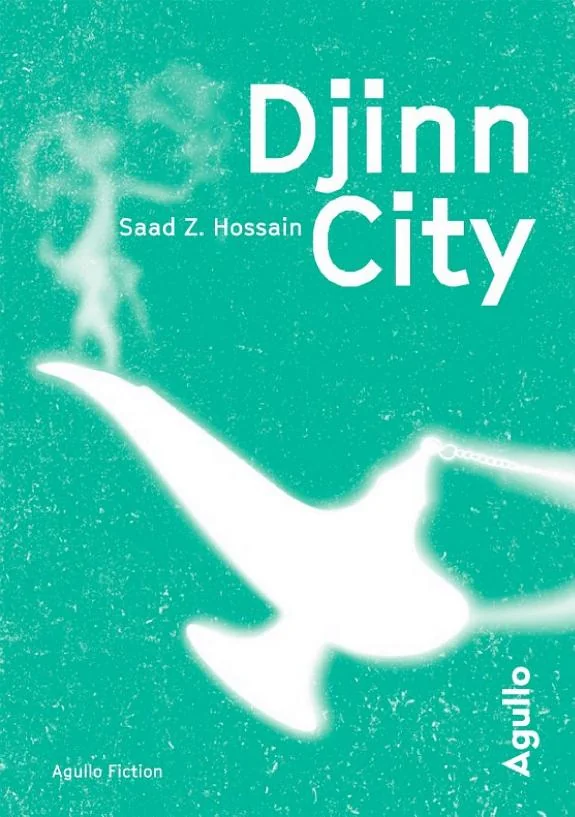
Djinn City
 79
79

Djinn City
Saad Z. Hossain's Djinn City offers a disorienting yet compelling immersion into a world where the veil between human and djinn is perilously thin. The novel’s strength lies in its audacious premise and its often-surreal depiction of supernatural interactions, refusing to shy away from the grotesque or the absurd. The early insistence that humanity has learned "not to fornicate with djinns" sets a darkly humorous and cautionary tone that permeates the narrative. However, the sheer density of its imaginative leaps can occasionally leave the reader struggling to keep pace, particularly as the intricate familial history and the mechanics of the djinn world unfold. A passage detailing the specific repercussions of a forbidden union, while striking, feels somewhat rushed in its exposition.
Djinn City is a bold, often bizarre, exploration of ancient lore recontextualized. It is a work that demands attention and rewards it with a unique brand of speculative fiction, even if its ambition sometimes outstrips its narrative clarity. A singular vision for those who seek the strange.
📝 Description
79
Saad Z. Hossain's 2014 novel places djinns in a surreal urban setting.
Djinn City follows Indelbed, the son of Dr. Kaikobad Khan Rahman, whose father's mysterious coma pulls him into a hidden world of supernatural beings. The novel reimagines the folklore of djinns, setting these entities against a contemporary, albeit surreal, urban backdrop. Hossain's narrative weaves together elements of mythology, fantasy, and speculative fiction. It offers readers a departure from conventional storytelling, incorporating dark humor and unsettling themes.
The book engages with pre-Islamic Arabian mythology and folklore concerning djinns, supernatural beings traditionally depicted as capable of influencing human lives. Hossain updates this ancient tradition for a modern audience, integrating its potential within a contemporary narrative framework. The story examines themes of legacy, identity, and the repercussions of forbidden knowledge.
The novel draws on pre-Islamic Arabian folklore about djinns, often described as elemental spirits or supernatural beings. These entities hold a significant place in various Middle Eastern mythologies, sometimes seen as intermediaries between the divine and human worlds, or as powerful forces that can affect human destiny. Hossain's work updates this traditional concept, situating these beings within a modern, urban surrealism and using them to symbolize unseen forces and hidden influences shaping reality.
💡 Why Read This Book?
• Gain a fresh perspective on ancient Arabian folklore, understanding how the concept of djinns can be reinterpreted in contemporary speculative fiction, as seen in the novel's unique portrayal of these entities. • Explore the unsettling consequences of forbidden interactions, particularly the early warning about "not to fornicate with djinns," offering a cautionary tale about crossing supernatural boundaries. • Engage with a narrative that interrogates familial legacies and hidden secrets, providing a framework for understanding how ancestral actions and supernatural influences can shape individual destinies, as Indelbed uncovers his own lineage.
⭐ Reader Reviews
Honest opinions from readers who have explored this book.
❓ Frequently Asked Questions
What is the central premise of Djinn City?
Djinn City centers on Indelbed, who, after his father Dr. Kaikobad Khan Rahman falls into a coma, uncovers a hidden world of djinns and the dangerous secrets associated with them.
What is the significance of the quote about not fornicating with djinns?
This opening line from the original blurb serves as a darkly humorous and cautionary thesis for the novel, highlighting the perilous consequences of interspecies relations and forbidden knowledge.
What mythological creatures are featured in Djinn City?
The novel prominently features djinns, supernatural creatures from Arabian mythology, reimagined within a modern speculative fiction context.
Who is the author of Djinn City?
Djinn City was written by Saad Z. Hossain and was first published on October 8, 2020.
What kind of themes does Djinn City explore?
The book delves into themes of legacy, identity, the burden of secrets, and the impact of supernatural forces on human lives.
Is Djinn City a traditional fantasy novel?
While it features supernatural elements, Djinn City is better described as speculative fiction, blending elements of fantasy, horror, and surrealism with a unique take on folklore.
🔮 Key Themes & Symbolism
Djinn Mythology Reimagined
The novel revitalizes the ancient Arabian concept of djinns, moving them from abstract folklore to tangible, often terrifying, characters interacting within a contemporary setting. Hossain explores their complex nature, their influence on human affairs, and the dire warnings associated with them, such as the explicit caution against intermingling. This reimagining serves as a lens to examine human desires and their potentially catastrophic outcomes when entangled with the supernatural.
Legacy and Familial Secrets
Fundamentally, Djinn City is a story about inheritance – not just of bloodline, but of secrets and consequences. Indelbed's journey is driven by the need to understand his father, Dr. Kaikobad Khan Rahman, and the hidden truths that led to his current state. The narrative probes how past actions, particularly those involving forbidden knowledge or pacts, ripple through generations, impacting identity and destiny.
The Unseen and the Forbidden
Hossain masterfully crafts an atmosphere where the ordinary world coexists with a hidden, often dangerous, supernatural reality. The book plays on the idea of what lies beneath the surface, the powers that operate beyond human comprehension, and the profound risks of seeking or stumbling upon such knowledge. The explicit warnings serve to underscore the esoteric danger inherent in breaching these boundaries.
Identity in the Shadow of the Supernatural
Indelbed's quest to understand his origins and his father's fate is intrinsically linked to the supernatural world he is forced to confront. His identity is forged not only by his human lineage but also by the djinns and their influence. The novel examines how such external, otherworldly forces can shape one's sense of self and place in the world, blurring the lines between personal agency and predetermined fate.
💬 Memorable Quotes
Direct passages from the work, attributed to the author.
“Ne pas forniquer avec les djinns.”
— This stark, direct warning from the original blurb captures the novel's central cautionary theme. It immediately signals that the narrative will explore forbidden interactions and their severe repercussions, setting a tone of dark humor and impending danger.
“The work explores the perilous nature of familial secrets.”
— This concept highlights how inherited or hidden truths, particularly those connected to supernatural entities like djinns, can have devastating consequences for individuals and families, driving much of the plot's conflict and character motivation.
“Indelbed's journey into the world of djinns.”
— This phrase points to the protagonist's forced entry into a hidden, dangerous realm, essential for uncovering his own identity and the truth about his father, Dr. Kaikobad Khan Rahman.
“The legacy of Dr. Kaikobad Khan Rahman.”
— This refers to the lingering influence and mysterious circumstances surrounding the protagonist's father, whose actions and secrets are central to the unfolding plot and the supernatural elements encountered.
“The novel presents a reinterpretation of Arabian djinn folklore.”
— This statement emphasizes the book's unique approach to ancient myths, grounding djinn in a contemporary speculative fiction framework and exploring their potential impact on modern human lives.
🌙 Esoteric Significance
Tradition
Djinn City does not adhere strictly to a singular Western esoteric tradition like Hermeticism or Kabbalah. Instead, it draws directly from pre-Islamic Arabian and Islamic folklore concerning djinns, which themselves contain elements of animism, elemental magic, and the interaction between the unseen and material worlds. The novel can be seen as a contemporary exploration of folkloric magic and the concept of spirit interactions, relevant to those interested in comparative mythology and earth-based spiritualities.
Symbolism
The djinns themselves serve as potent symbols of the hidden, the forbidden, and the primal forces that lie beneath the veneer of civilization. Their interactions with humans, particularly the explicit warning against fornication, symbolize the dangers of unchecked desire, the transgression of boundaries, and the profound consequences of seeking power or knowledge from realms beyond human understanding. Dr. Kaikobad Khan Rahman's coma can symbolize a spiritual or magical incapacitation due to forbidden dealings.
Modern Relevance
Contemporary thinkers and practitioners interested in folklore-infused speculative fiction, particularly those exploring non-Western mythologies, find resonance in Djinn City. Its re-imagining of djinns speaks to a modern fascination with ancient beings and their potential relevance to understanding contemporary anxieties about hidden influences, societal undercurrents, and the blurred lines between reality and the supernatural. It appeals to writers and readers interested in mythic retellings and the exploration of the uncanny.
👥 Who Should Read This Book
• Readers of speculative fiction interested in unique mythic retellings, particularly those seeking a modern, often unsettling, take on Arabian folklore and the concept of djinns. • Individuals fascinated by the intersection of family sagas and supernatural elements, who appreciate narratives exploring inherited secrets and the consequences of forbidden knowledge. • Those who enjoy dark humor and surrealism in literature, and are looking for a narrative that deliberately subverts conventional storytelling to explore profound, often disturbing, themes.
📜 Historical Context
Published in 2020, Saad Z. Hossain's Djinn City emerged in a literary landscape increasingly open to genre fusion and the re-exploration of global mythologies. While not directly aligned with a specific esoteric school like Golden Dawn Hermeticism, the novel taps into a broader interest in folkloric entities and their potential for narrative exploration, a trend seen in contemporary fantasy and speculative fiction. It engages with the rich tradition of djinn lore, which predates Islam and has roots in pre-Islamic Arabian mythology, often portraying them as powerful, capricious beings capable of influencing human fate. The contemporary reception of such works often involves comparisons to authors who similarly combine folklore into modern settings, though Djinn City distinguishes itself with its specific focus and darkly surreal tone, diverging from more overtly magical or fantastical interpretations.
📔 Journal Prompts
Indelbed's discovery of his father's secrets.
The consequences of the warning: 'Ne pas forniquer avec les djinns.'
The portrayal of djinns in Djinn City.
Dr. Kaikobad Khan Rahman's legacy and coma.
The atmosphere of the supernatural encroaching on the ordinary.
🗂️ Glossary
Djinn
Supernatural creatures from Arabian mythology, often depicted as beings made of smokeless fire, capable of interacting with humans, possessing great power, and sometimes malevolent intent. They predate Islamic tradition and feature heavily in folklore.
Indelbed
The protagonist of Djinn City, son of Dr. Kaikobad Khan Rahman, who becomes entangled in the world of djinns after his father falls into a mysterious coma.
Dr. Kaikobad Khan Rahman
The father of the protagonist, Indelbed. A figure whose past actions and mysterious coma are central to the novel's plot, hinting at dealings with supernatural entities.
Coma
In the context of Djinn City, the coma of Dr. Kaikobad Khan Rahman is not merely a medical condition but a supernatural affliction, signaling a deep entanglement with the world of djinns.
Arabian Mythology
The collection of myths, legends, and folklore originating from the Arabian Peninsula, encompassing beliefs about spirits, creation, and the cosmos, including the prominent figures of djinns.
Speculative Fiction
A broad genre of fiction that often includes elements of fantasy, science fiction, horror, and the supernatural, exploring 'what if' scenarios and possibilities beyond current reality.
Khan Rahman Clan
An illustrious family mentioned in the book, from which the protagonist Indelbed and his father Dr. Kaikobad Khan Rahman hail, suggesting a lineage with hidden histories.
This book appears in 1 collection
🔮 Readers Also Liked
Browse all →







From the “Djinn” Collection
View all →





More Free Occult Philosophy Books
View all →