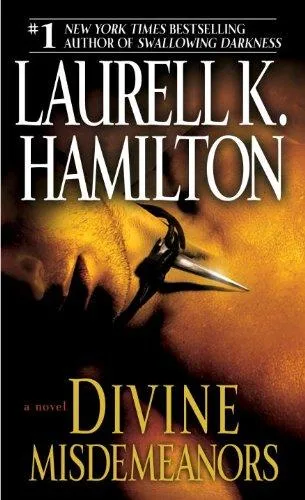
Divine Misdemeanors
 69
69

Divine Misdemeanors



Marcus Thorne (Esoteric Sciences Reviewer) — 'Divine Misdemeanors' plunges readers into a unique synthesis of urban fantasy and occult lore. Hamilton expertly crafts a narrative that, while entertaining, offers subtle insights into the archetypal struggle for sovereignty, both personal and political. Meredith Gentry's exile and her navigation of dual realms serve as a potent metaphor for the alchemical process of transformation. The book delves into the inherent complexities of power, lineage, and the sacrifices demanded by duty, resonating deeply with practitioners of esoteric arts. It's a compelling read for those who appreciate nuanced explorations of supernatural hierarchies and the enduring human (and fey) quest for belonging and purpose.
📝 Description
69
Laurell K. Hamilton's 2000 novel 'Divine Misdemeanors' places a Fae princess in Los Angeles.
In 'Divine Misdemeanors,' Meredith Gentry, a princess of the Fae, has left her royal court to live in Los Angeles. She navigates the mortal world while dealing with her Fae heritage. The story examines her choices as she balances her identity between two different societies.
Hamilton uses Fae mythology to reflect human struggles with morality and power. The narrative connects ancient prophecies with contemporary challenges, questioning the definition of divinity through Meredith's experiences. The book is for readers interested in supernatural elements and personal quests for self.
The author blends magical lore with the realities of urban life. Meredith's journey involves confronting both external threats and her own inner conflicts. This approach explores the tension between predetermined paths and individual agency.
This novel situates itself within modern urban fantasy, a genre that often draws on folkloric traditions and occult themes. It engages with concepts of faerie, which in esoteric thought often represents a liminal space between the physical and spiritual worlds, or a personification of primal nature. The story's focus on prophecy and the questioning of divinity touches on ideas found in various mystical traditions that seek to understand higher powers and their influence on human lives. The narrative, by contrasting Fae laws with human dilemmas, reflects a common esoteric interest in the interplay between cosmic order and individual free will.
💡 Why Read This Book?
For seekers of hidden lore and practitioners of the esoteric, 'Divine Misdemeanors' offers a compelling narrative that mirrors the challenges of integrating spiritual truths with earthly existence. It's an ideal read for those who resonate with themes of ancestral legacy, the power of choice against destiny, and the complex nature of supernatural governance. Discover the intricate dance between power and vulnerability, and the profound journey of self-sovereignty.
⭐ Reader Reviews
Honest opinions from readers who have explored this book.
❓ Frequently Asked Questions
What is the core conflict in 'Divine Misdemeanors'?
The core conflict revolves around Meredith Gentry's struggle to navigate her dual existence as a Fae princess and a human private investigator, balancing royal duties with personal desires and confronting enemies from both realms.
What makes this book relevant to esoteric studies?
It explores themes of power, lineage, identity, and the clash between ancient supernatural laws and modern realities, offering symbolic interpretations of leadership and self-determination.
Who is Meredith Gentry?
Meredith Gentry is the protagonist, a princess of Faerie who has renounced her royal claim to live in the human world as a private investigator, seeking a life free from courtly intrigue.
What role do fairies play in the story?
Fairies are central to the plot, representing ancient power, complex social structures, and the mystical forces that influence both the Fae and human realms.
Is this book part of a series?
Yes, 'Divine Misdemeanors' is part of Laurell K. Hamilton's Meredith Gentry series, which follows the ongoing adventures of the titular character.
🔮 Key Themes & Symbolism
The Dual Nature of Identity
The narrative intensely probes the concept of identity, particularly for Meredith Gentry, who embodies the schism between her celestial Fae heritage and her chosen mortal existence. This duality is not merely a plot device but a profound exploration of how individuals reconcile conflicting aspects of themselves, their responsibilities, and their desires. It examines the archetypal struggle of integrating the spiritual and the material, the past and the present, ultimately questioning what truly defines one's essence when torn between two worlds.
Sovereignty and the Burden of Power
The book dissects the nature of sovereignty, both personal and political. Meredith's rejection of her royal lineage and her pursuit of autonomy in the human world highlight the arduous path to self-rule. The Fae court, with its treachery and malevolence, serves as a potent symbol of the corrupting influence of absolute power and the complex responsibilities that accompany it. This theme appeals to esoteric traditions that emphasize inner authority and the mastery of one's own destiny.
The Veil Between Realms
Hamilton masterfully draws a vivid depiction of the permeable veil separating the mystical Fae realm from the mundane human world. This boundary is not a rigid barrier but a liminal space where magic seeps through, ancient laws exert influence, and supernatural beings interact with mortal life. The constant interplay between these realms underscores the esoteric belief that reality is multilayered and that hidden forces are perpetually at work, shaping events and influencing human consciousness in unseen ways.
💬 Memorable Quotes
Direct passages from the work, attributed to the author.
“I turned my back on court and crown, choosing exile in the human world.”
— A declaration of agency and rebellion, signifying a deliberate rejection of predetermined fate in favor of forging a new, self-defined path, a core theme of self-sovereignty.
“Among my own, I have confronted horrendous enemies.”
— This hints at the perilous nature of the Fae world and the intense, often life-threatening, challenges faced by those within its hierarchy, suggesting a deep dive into occult warfare and spiritual battles.
“Honored my duty to conceive a royal heir--all for the right to claim the throne.”
— Reveals the immense pressure and sacrifice involved in Fae succession, framing procreation as a political act tied to destiny and the acquisition of power, a concept with ancient mystical undertones.
“In the fey and mortal realms alike, my life is the stuff of royal intrigue.”
— Emphasizes the pervasive influence of Fae power dynamics, suggesting that even in the mundane world, the ancient machinations of the supernatural are constantly at play, shaping events unseen.
💡 Key Ideas
Editorial paraphrase of the work's core concepts — not direct quotes.
My life is the stuff of royal intrigue and celebrity drama.
This line expresses the combination of high-stakes Fae politics and the glitzy, often superficial, world of human celebrity, highlighting the protagonist's extraordinary circumstances.
🌙 Esoteric Significance
Tradition
The novel draws heavily from Celtic mythology and folklore, particularly concerning the Sidhe (the Fae). It explores themes akin to the alchemical journey of transformation, the archetypal struggle for inner sovereignty, and the concept of divine right versus chosen destiny. The intricate social hierarchy of the Fae court can be seen as mirroring ancient societal structures where spiritual and political power were intertwined, reflecting esoteric concerns with cosmic order and the influence of higher powers on the material plane.
Symbolism
Key symbols include the dichotomy of Faerie and the human world, representing the spiritual versus the material, the ancient versus the modern, and instinct versus intellect. Meredith herself is a potent symbol of the integrated self, striving to reconcile her innate Fae nature with her chosen human life. The concept of lineage and heirship symbolizes the continuity of power and destiny, while the throne represents ultimate authority and responsibility. The very act of a Fae princess becoming a private investigator is a powerful metaphor for uncovering hidden truths and working through the shadowed corners of existence.
Modern Relevance
In an era increasingly concerned with identity politics, personal empowerment, and the search for meaning beyond material pursuits, 'Divine Misdemeanors' offers a compelling narrative. Meredith's struggle for autonomy and her refusal to be defined solely by her birthright resonate with contemporary desires for self-actualization. The book's exploration of hidden power structures and the influence of unseen forces speaks to a growing interest in spirituality and the esoteric, suggesting that true understanding often lies beyond the superficial. It encourages readers to question societal norms and to embrace their own many-sided nature.
👥 Who Should Read This Book
This book is a treasure for the discerning reader. For **beginners** in esoteric literature, it offers an accessible yet rich entry point into themes of mythology and the supernatural. **Scholars** of folklore and comparative mythology will find fascinating reinterpretations of Fae lore. **Seekers** of spiritual insight will appreciate the metaphorical depth and the exploration of identity and destiny. **Practitioners** of the occult arts may find resonance in the themes of power, sovereignty, and the interplay of different realms, offering a fictional lens through which to contemplate these concepts.
📜 Historical Context
While 'Divine Misdemeanors' is a contemporary work of fiction, its themes resonate with historical and mythological narratives surrounding the Fae and their interactions with humanity. The concept of a hidden field of powerful beings influencing mortal affairs has deep roots in European folklore, from Celtic myths of the Tuatha Dé Danann to the medieval tales of elves and fairies. The book's exploration of royal intrigue and succession carries the political dramas of historical monarchies, while Meredith's choice of exile reflects a timeless human desire for freedom and self-determination. In the context of its publication era, the novel taps into a resurgence of interest in urban fantasy and the reinterpretation of mythological figures within modern settings, offering a fresh, feminist perspective on ancient archetypes.
📔 Journal Prompts
Reflect on a time you felt torn between two significant aspects of your identity. How did you navigate this internal conflict?
Consider a situation where you had to choose between a predetermined path and forging your own. What were the consequences of your choice?
What does 'sovereignty' mean to you, both personally and in relation to external influences?
Explore the concept of a 'veil' in your own life – a separation between what is perceived and what truly exists. What lies beyond this veil?
Imagine you possessed a hidden heritage or power. How would you choose to wield it in the mundane world?
🗂️ Glossary
Fae
A collective term for supernatural beings originating from folklore, particularly Celtic mythology, often depicted as having magical powers, living in a separate realm, and possessing a complex social structure.
Sidhe
A term specifically referring to the fairy folk or supernatural beings of Ireland, often associated with mounds and ancient burial sites, embodying power and mystery.
Liminal Space
A transitional or in-between state or place, often associated with magical potential, where boundaries are blurred and transformation can occur. In this context, it refers to the boundary between the Fae and human realms.
Archetype
A universal, primordial symbol or motif that recurs across cultures and time, representing fundamental human experiences or patterns of behavior. Meredith embodies archetypes of the exiled royalty and the empowered feminine.
Esoteric
Intended for or likely to be understood by only a small number of people with a specialized knowledge or interest; relating to or concerned with the occult or mystical.
This book appears in 3 collections
🔮 Readers Also Liked
Browse all →







More by Laurell K. Hamilton
All books →





From the “Tarot” Collection
View all →








More Free Divination & Tarot Books
View all →