Divine Child
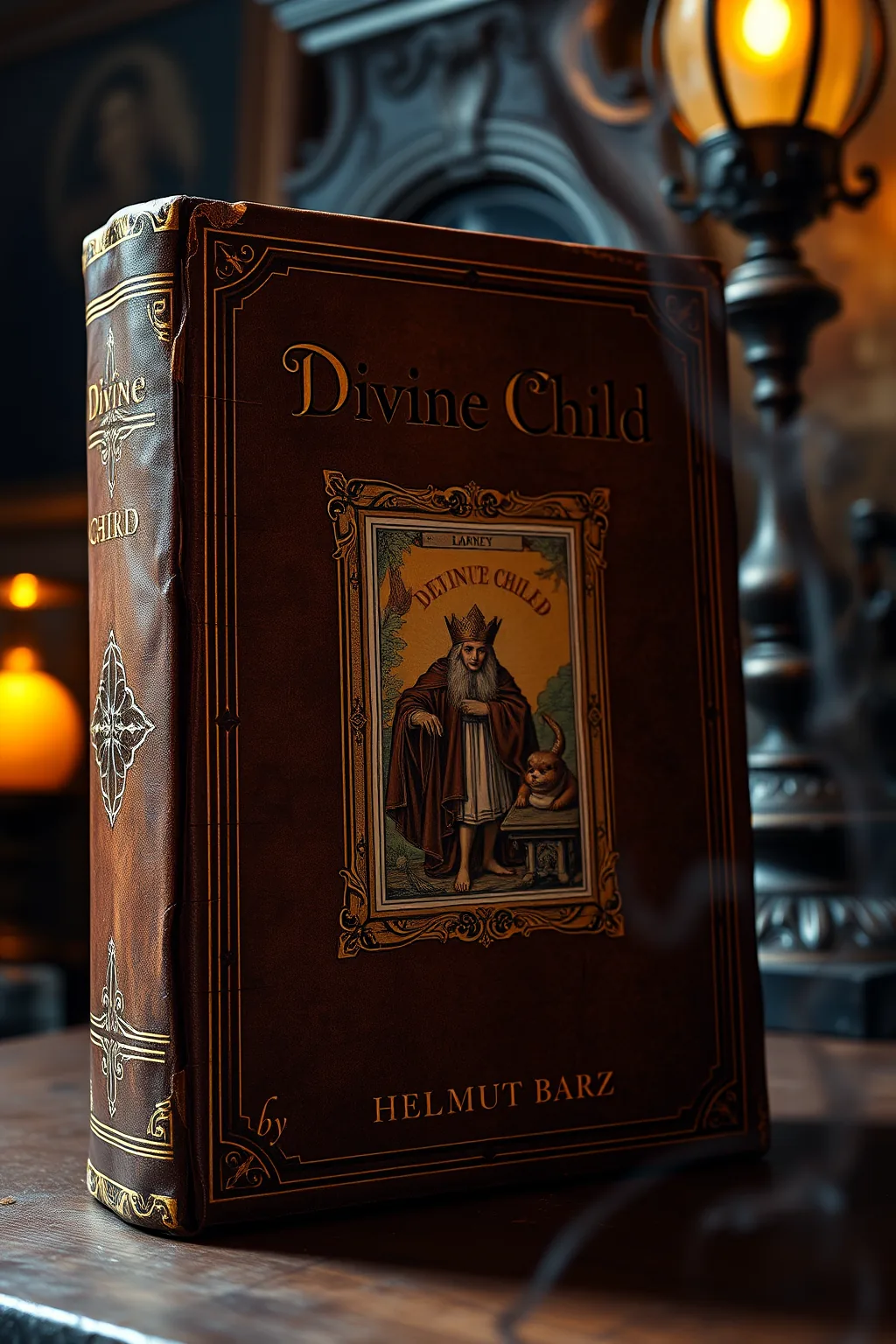
 61
61

Divine Child



Helmut Barz's 'Divine Child' is a revelation for serious students of esoteric lore. Moving beyond superficial interpretations, Barz delves into the psychological and spiritual underpinnings of Tarot, revealing its profound connection to the 'Divine Child' archetype—a symbol of nascent consciousness and potential. His scholarship is impeccable, offering lucid explanations of complex symbolism. This book is indispensable for those seeking to integrate Tarot practice with deeper self-knowledge and esoteric understanding. Aurelia Blackwood, Occult Philosophy Critic.
📝 Description
61
Helmut Barz's 'Divine Child' (1984) examines the Tarot's symbolic language.
Helmut Barz's 'Divine Child' analyzes the symbolic language within the Tarot. The book moves beyond simple prognostication, detailing the psychological and spiritual significance of the cards' imagery. Barz aims to illuminate the deeper meanings of these archetypes for those interested in occult philosophy.
The work invites readers to contemplate the Self and its connections to larger cosmic forces. It is presented not as a mere instructional text, but as a tool for unlocking inner potentials. The goal is to encourage a greater awareness of universal currents through the study of symbolic archetypes.
This book fits within the Western esoteric tradition's engagement with the Tarot. It follows in a line of authors who view the Tarot as more than a divinatory tool, but as a system of symbolic representation for psychological and spiritual insights. Barz's approach aligns with interpretations that connect Tarot imagery to concepts of consciousness and universal patterns, often seen in Jungian psychology and various forms of Hermeticism.
💡 Why Read This Book?
Delve into the profound psychological and spiritual dimensions of Tarot archetypes. 'Divine Child' offers a unique esoteric perspective, illuminating hidden meanings and fostering deeper self-awareness. Ideal for seekers, scholars, and practitioners desiring to transcend surface-level interpretation and connect with the universal language of the soul.
⭐ Reader Reviews
Honest opinions from readers who have explored this book.
❓ Frequently Asked Questions
What is the central theme of 'Divine Child'?
The central theme revolves around the 'Divine Child' archetype within Tarot, exploring its representation of nascent consciousness, potential, and the spiritual journey of individuation.
Is this book suitable for beginners?
While offering profound insights for experienced practitioners, 'Divine Child' also provides a solid foundation for dedicated beginners willing to engage with its rich symbolism and philosophical depth.
How does Barz differentiate his approach to Tarot?
Barz differentiates his approach by emphasizing the psychological and spiritual significance of the archetypes, moving beyond predictive divination to explore self-realization and esoteric wisdom.
What is the 'Divine Child' archetype in esoteric terms?
In esoteric terms, the 'Divine Child' represents the pure, unmanifested potential within the human psyche, the spark of divinity, and the beginning of a spiritual journey towards wholeness.
Can this book be used for practical divination?
Yes, while its primary focus is on esoteric understanding, the insights gained from 'Divine Child' can profoundly enhance and deepen one's practical divination practice.
🔮 Key Themes & Symbolism
The Archetype of the Divine Child
This core theme explores the complex nature of the 'Divine Child' archetype within the Tarot. It explores its representation of innocence, pure potential, nascent consciousness, and the beginning of a spiritual quest. Barz positions this archetype as a gateway to understanding the unfolding of the soul's journey, connecting it to concepts of divine spark and uncorrupted wisdom inherent in all beings. The exploration transcends simple symbolism, inviting readers to recognize and integrate this potent force within their own lives for profound personal transformation and spiritual awakening.
Symbolic Language of Tarot
Helmut Barz masterfully deciphers the intricate symbolic language of the Tarot, presenting it not as a mere predictive tool, but as a profound repository of universal wisdom. The book meticulously examines the archetypal imagery, unveiling the hidden meanings and interconnections between the cards. It emphasizes how these symbols serve as a cosmic map, reflecting the cyclical nature of life, the human psyche, and the underlying spiritual laws governing existence. Readers will learn to perceive the Tarot as a living text, capable of revealing deep truths about themselves and the cosmos.
Esoteric Psychology and Individuation
A crucial element of 'Divine Child' is its profound exploration of esoteric psychology and the process of individuation. Barz connects the Tarot's archetypes to the internal field of the human psyche, illustrating how understanding these symbolic forces can lead to greater self-awareness and integration. The book guides the reader through the alchemical process of transforming inner conflicts and unconscious patterns into conscious understanding and spiritual wholeness. It highlights the Tarot's role as a catalyst for individuation, facilitating the journey towards realizing one's true, divine potential.
💬 Memorable Quotes
Direct passages from the work, attributed to the author.
“Within each card lies a universe waiting to be discovered.”
— This highlights the profound depth and complexity of the Tarot, suggesting that each card is not merely an image but a gateway to vast esoteric knowledge and personal insight.
“Divination is the art of listening to the whispers of the soul.”
— This elevates divination beyond simple fortune-telling, framing it as an intuitive and spiritual practice of connecting with one's inner wisdom and the subtle guidance of the universe.
“The journey inward is the most sacred pilgrimage.”
— This speaks to the book's emphasis on self-discovery and spiritual development, positing that true understanding and fulfillment are found through introspective exploration.
💡 Key Ideas
Editorial paraphrase of the work's core concepts — not direct quotes.
The Child sees the world anew, unburdened by the past.
This quote expresses the essence of the Divine Child archetype, emphasizing its capacity for pure perception and unadulterated potential, free from the constraints of experience.
Archetypes are the timeless traces of divine consciousness.
This quote defines archetypes as fundamental, universal patterns that resonate with the divine essence, serving as profound indicators of spiritual truths and cosmic order.
🌙 Esoteric Significance
Tradition
Barz's work deeply engages with Hermeticism and Jungian psychology, tying together ancient esoteric principles with modern psychological insights. It aligns with traditions that view the Tarot as a symbolic map of the soul's journey and a key to understanding the unconscious mind. The emphasis on archetypes and individuation places it within the lineage of thinkers who saw symbolic systems as pathways to spiritual enlightenment and psychological integration.
Symbolism
The 'Divine Child' archetype is central, symbolizing pure potential, nascent consciousness, and the unmanifested divine spark within the human psyche. Other key symbols explored include the Fool's journey, the concept of innocence as a source of profound wisdom, and the interconnectedness of the Major Arcana as stages in spiritual development. The book illuminates how these symbols function as conduits for accessing higher truths and understanding the cyclical nature of existence.
Modern Relevance
In a world often characterized by superficiality and disconnection, 'Divine Child' offers a potent antidote by guiding readers towards inner exploration and a deeper understanding of universal principles. Its emphasis on archetypal psychology and self-realization remains profoundly relevant for anyone seeking meaning, psychological integration, and spiritual growth. The book provides timeless tools for navigating life's challenges with wisdom and insight.
👥 Who Should Read This Book
This work is a treasure for the dedicated seeker of esoteric knowledge. Tarot practitioners looking to deepen their understanding beyond mere prediction will find invaluable insights. Students of comparative mythology and psychology will appreciate the scholarly approach to archetypes. Those starting a journey of self-discovery and spiritual individuation will find 'Divine Child' an informative companion, guiding them through the symbolic landscapes of the soul.
📜 Historical Context
Published in an era of burgeoning interest in psychology and esoteric thought, Helmut Barz's 'Divine Child' emerged during a period when disciplines like Jungian psychology were gaining traction, resonating with the exploration of archetypes. The mid to late 20th century saw a resurgence of interest in occult and metaphysical studies, moving beyond Victorian spiritualism into more philosophical and psychological interpretations. Barz's work fits within this intellectual milieu, offering a sophisticated, scholarly approach to the Tarot that distinguished it from more simplistic or purely predictive texts. It contributed to the growing academic and serious practitioner's engagement with symbolic systems as tools for self-understanding and spiritual growth, reflecting a broader cultural shift towards exploring inner landscapes.
📔 Journal Prompts
Reflect on a time you experienced a sense of pure, unadulterated potential. How did that feel, and what actions did you take?
Consider the 'Divine Child' within you. What aspects of this archetype are currently unexpressed or underdeveloped in your life?
How do the archetypal energies of the Tarot mirror the challenges and opportunities you are currently facing in your life?
What 'whispers of the soul' have you been ignoring? How can you begin to listen more attentively?
Explore the concept of the 'Fool's journey' in your own life. What are the essential lessons you are learning at this stage?
🗂️ Glossary
Archetype
A universal, archaic pattern and image that derives from the collective unconscious and is the psychic counterpart of an instinct. In Tarot, these are the fundamental symbolic figures and themes represented by the cards.
Individuation
In Jungian psychology, the lifelong psychological process of differentiation of the self, by which one integrates the conscious and unconscious aspects of one's personality to become a whole, unique individual.
Hermeticism
A philosophical and religious tradition based on writings attributed to Hermes Trismegistus, emphasizing esoteric knowledge, alchemy, astrology, and the interconnectedness of the macrocosm and microcosm.
Esoteric
Intended for or likely to be understood by only a small number of people with a specialized knowledge or interest; relating to mystical or secret knowledge.
Macrocosm
The universe regarded as a complex and orderly entity that is analogous to the structure and the processes of the human body or the soul (microcosm).
This book appears in 3 collections
🔮 Readers Also Liked
Browse all →









From the “Tarot” Collection
View all →








More Free Divination & Tarot Books
View all →