The Science of Near-Death Experiences
 79
79

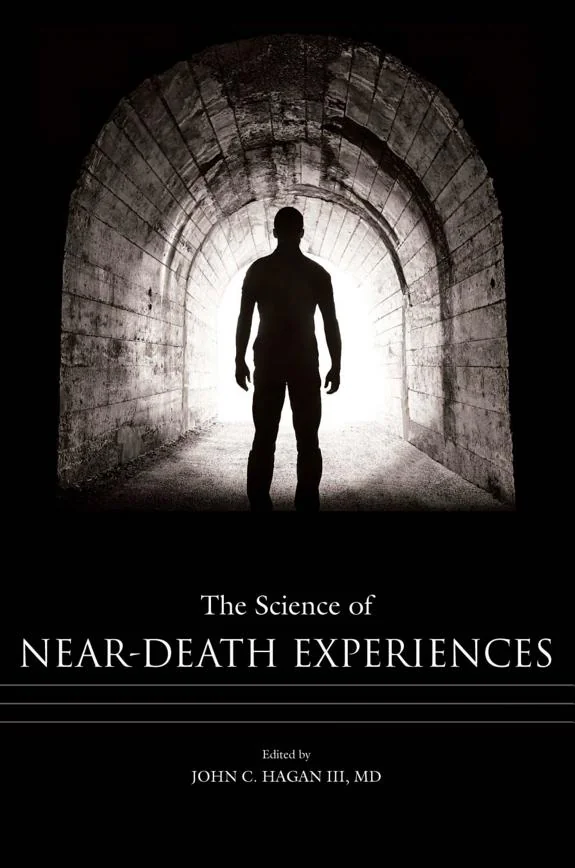
The Science of Near-Death Experiences
John C. Hagan’s exploration of near-death experiences (NDEs) moves beyond mere compilation, attempting a more rigorous, though sometimes strained, scientific appraisal. The strength lies in its detailed accounts and the author’s clear intention to reconcile these with medical understanding. Hagan highlights the persistent discrepancies between subjective NDE reports and the physiological limitations of a dying brain, particularly the concept of 'hallucinations' as a catch-all explanation. A notable limitation is the inherent difficulty in objectively verifying subjective states; while Hagan presents compelling cases, the leap to definitive conclusions about consciousness's independence from brain function remains an interpretive challenge. The book’s discussion of specific NDE elements, such as the perception of light or a tunnel, offers a solid foundation for further inquiry. Ultimately, Hagan’s work serves as a valuable, if cautiously debated, contribution to the ongoing dialogue between the material and the immaterial.
📝 Description
79
John C. Hagan’s 2017 book examines near-death experiences and their challenge to medical explanations.
Published in 2017, The Science of Near-Death Experiences analyzes accounts from individuals who report vivid recollections after approaching death. These narratives often conflict with standard medical understandings, especially regarding the brain's function when deprived of oxygen. Hagan treats these reports not just as personal stories but as data that can inform our view of consciousness separate from the physical body. The book is aimed at those curious about the intersection of science and subjective consciousness during extreme states. It will interest parapsychology researchers, medical professionals encountering patient testimonies, and individuals contemplating existential questions about life and death.
Hagan's work follows earlier researchers who documented near-death phenomena. Pioneers like Elisabeth Kübler-Ross brought attention to the dying process, and Raymond Moody Jr. began systematic NDE documentation in the 1970s. Hagan applies a modern scientific perspective, considering advances in neuroscience and critical care medicine to analyze these events. The book’s central focus is the empirical observation of NDEs and their impact on consciousness theories. It notes the commonalities in reported experiences across different people and cultures, contrasting them with current neurological models. Concepts such as out-of-body sensations, life reviews, and encounters with spiritual figures are examined for their subjective reality and possible objective connections, prompting questions about consciousness that go beyond biological explanations.
This book engages with a tradition that seeks to understand consciousness and potential existence beyond the material world. It builds on decades of anecdotal collection and early scientific inquiry into phenomena that appear to transcend ordinary biological limits. By analyzing reported NDEs through a contemporary scientific lens, Hagan places these personal accounts within a broader historical and philosophical discourse concerning the nature of reality and the self, particularly at the threshold of death.
💡 Why Read This Book?
• Gain an understanding of the scientific challenges posed by documented near-death experiences, learning how consistent NDE phenomena defy purely physiological explanations, as explored in the book's analysis of patient accounts. • Discover the specific neurological and psychological models that John C. Hagan examines and critiques, providing insight into the limitations of current scientific paradigms when confronted with NDEs. • Explore the phenomenon of 'out-of-body experiences' as presented in the book, understanding how these reported sensations during critical medical events prompt deeper questions about consciousness and its relationship to the physical body.
⭐ Reader Reviews
Honest opinions from readers who have explored this book.
❓ Frequently Asked Questions
What is the primary scientific challenge presented by near-death experiences?
The primary challenge is reconciling vivid, coherent consciousness and memory recall during events where the brain is severely compromised, such as cardiac arrest or oxygen deprivation. These experiences often appear to transcend normal brain function.
Who is John C. Hagan and what is his background?
John C. Hagan is the author of 'The Science of Near-Death Experiences.' While his specific professional background isn't detailed here, the book approaches NDEs from a perspective informed by medical and scientific inquiry.
Are near-death experiences considered hallucinations?
Some medical explanations propose NDEs are hallucinations caused by brain chemistry changes under stress. However, the book questions this, highlighting the structured and often profound nature of these experiences that seem to defy simple hallucination.
What is the historical context of studying near-death experiences?
Systematic study of NDEs gained momentum in the 1970s with researchers like Dr. Raymond Moody Jr. Hagan's 2017 work builds on decades of collected testimonies and evolving scientific understanding.
Can near-death experiences provide evidence for an afterlife?
While NDEs are often interpreted as evidence for an afterlife, the book focuses on the scientific data and the implications for consciousness, rather than definitively proving or disproving such concepts.
What role does consciousness play in the study of near-death experiences?
Consciousness is central. The book investigates whether consciousness can exist independently of a functioning brain, using NDE accounts as case studies to challenge materialistic views.
🔮 Key Themes & Symbolism
Consciousness and Brain Function
This theme centers on the perplexing question of whether consciousness is solely a product of the physical brain. The book meticulously examines near-death experience (NDE) accounts where individuals report coherent thoughts, perceptions, and memories during periods of extreme physiological distress, often when the brain is severely compromised. Hagan contrasts these subjective reports with established neurological models, questioning if current scientific understanding adequately explains the persistence and nature of consciousness under such conditions. The work highlights instances where NDEs seem to exhibit a complexity and lucidity that biological explanations struggle to fully encompass.
Empirical Data vs. Scientific Theory
The book engages with the tension between anecdotal evidence from NDE survivors and established scientific theories. Hagan presents numerous case studies, emphasizing the commonalities in reported phenomena across diverse individuals, which he argues provides a form of empirical data. This data, he suggests, challenges prevailing scientific paradigms that often dismiss NDEs as mere hallucinations or oxygen-deprived brain activity. The work calls for a re-evaluation of how science approaches subjective phenomena, particularly those that arise at the thresholds of life and death.
The Nature of Dying
Beyond the NDE itself, the book explores the process of dying from the perspective of those who have neared it. It discusses the reported sensations, emotional states, and perceived transitions that occur during resuscitation or critical medical procedures. Hagan investigates how these accounts might inform our understanding of death not as a sudden cessation, but as a potential process with subjective dimensions. The work implicitly questions the solely biomedical view of dying, opening up possibilities for a more holistic interpretation that includes the patient's experiential reality.
Challenges to Materialism
A significant underlying theme is the challenge NDEs pose to a purely materialistic worldview, which posits that consciousness is entirely dependent on physical matter. By presenting detailed accounts of experiences that appear to occur independently of normal brain function, the book invites readers to consider alternative frameworks. Hagan analyzes phenomena such as out-of-body experiences and encounters with spiritual entities as potential indicators of consciousness operating beyond the confines of the physical body, prompting a critical look at philosophical assumptions within science.
💬 Memorable Quotes
Direct passages from the work, attributed to the author.
“Recollections often refute physicians' scientific explanation of how an oxygen-starved brain can produce such vivid recollections.”
— This core assertion highlights the book's central argument: that the detailed and coherent nature of near-death experiences frequently contradicts the expected effects of severe brain oxygen deprivation.
“What happens to consciousness during the act of dying?”
— This question frames the entire inquiry, setting the stage for an exploration into the nature of consciousness at the edge of physical existence and its potential persistence.
“The most compelling answers come from people who almost die and later recall events that occurred while lifesaving resuscitation or surgery was performed.”
— This emphasizes the unique and powerful source of data for understanding death: the firsthand testimonies of those who have experienced clinical death and returned.
“Their recollections often refute physicians' scientific explanation...”
— This points to the inherent conflict between subjective NDE accounts and objective medical interpretations, suggesting a need for broader scientific consideration of consciousness.
“The Science of Near-Death Experiences”
— The title itself suggests an attempt to apply scientific rigor and methodology to a phenomenon traditionally relegated to faith or speculation, seeking empirical understanding.
🌙 Esoteric Significance
Tradition
While not explicitly tied to a single esoteric lineage, *The Science of Near-Death Experiences* engages with themes common in Gnostic and Theosophical thought concerning the separation of consciousness from the physical body. The emphasis on out-of-body experiences and perceived spiritual realms aligns with mystical traditions that posit a soul or spiritual essence capable of independent existence. Hagan's work can be seen as an attempt to bridge these ancient metaphysical concepts with modern scientific inquiry, seeking empirical validation for phenomena traditionally explored through meditative or visionary practices.
Symbolism
The book frequently touches upon symbolic elements reported during NDEs, such as the 'tunnel of light' and encounters with 'beings of light.' The tunnel often symbolizes a transitionary passage, a liminal space between life and what lies beyond, echoing ancient archetypes of journeys through the underworld or into higher dimensions. Beings of light represent divine or enlightened entities, offering comfort and wisdom, a motif found across many religious and esoteric traditions, symbolizing pure consciousness or spiritual guidance encountered at profound existential junctures.
Modern Relevance
Hagan's work remains relevant for contemporary thinkers exploring consciousness studies, parapsychology, and transpersonal psychology. It provides valuable data for researchers like those at the Consciousness and Healing Initiative (CHI) who seek to integrate subjective experience with scientific understanding. Modern spiritual teachers and practitioners who discuss near-death phenomena and the nature of consciousness also draw upon such accounts. The book contributes to an ongoing cultural conversation about mortality, consciousness, and the possibility of existence beyond physical death, resonating with the growing interest in mindfulness and altered states of awareness.
👥 Who Should Read This Book
• Individuals interested in the intersection of consciousness, neuroscience, and existential questions, seeking scientific perspectives on phenomena that challenge materialist explanations. • Medical professionals, chaplains, and caregivers who encounter patients reporting NDEs and wish to understand the scientific discourse surrounding these experiences. • Students and researchers of comparative religion, psychology, and parapsychology looking for empirical case studies that explore altered states of consciousness and potential post-mortem existence.
📜 Historical Context
Published in 2017, John C. Hagan's *The Science of Near-Death Experiences* arrived at a time when the scientific study of NDEs, while established, was still often met with skepticism. The field had been significantly shaped by pioneers like Dr. Raymond Moody Jr., whose 1975 book *Life After Life* brought NDEs into mainstream discussion, and Dr. Elisabeth Kübler-Ross, who had already begun exploring the stages of dying in the 1960s. Hagan's work builds upon this legacy, engaging with contemporary neuroscience and critical care medicine. It operates within an intellectual climate where cognitive science and philosophy of mind are actively debating the nature of consciousness, with figures like Daniel Dennett advocating for strong materialistic explanations. Hagan’s contribution can be seen as a direct engagement with these debates, using NDE data to question purely materialistic interpretations, a stance that places him in dialogue with, and often in opposition to, emergent neuroscientific consensus.
📔 Journal Prompts
The consistency of near-death experience phenomena across diverse individuals.
Physicians' explanations versus patient recollections of NDEs.
The concept of consciousness during resuscitation.
The symbolism of light and transition in NDE accounts.
The implications of out-of-body experiences for materialism.
🗂️ Glossary
Near-Death Experience (NDE)
A profound personal experience associated with being close to death or undergoing a trauma, often involving altered states of consciousness, vivid imagery, and a sense of transcending the physical body.
Consciousness
The state or quality of awareness, or of being aware of an external object or something within oneself. The book explores its nature and potential independence from brain function.
Oxygen-Starved Brain
A brain suffering from a lack of oxygen (hypoxia or anoxia), typically occurring during cardiac arrest or severe respiratory distress, conditions under which conventional science posits cognitive function is impossible.
Out-of-Body Experience (OBE)
A sensation of perceiving oneself and the world from a location outside one's physical body, often reported during NDEs.
Life Review
A common element reported in NDEs where individuals perceive a rapid, comprehensive review of their life events, often accompanied by emotional and moral evaluation.
Hallucination
A perception in the absence of external stimulus that has the qualities of real perception. Often used as a conventional explanation for NDE phenomena.
Materialism
The philosophical view that matter is the fundamental substance in nature, and that all phenomena, including consciousness, are results of material interactions.
This book appears in 1 collection
🔮 Readers Also Liked
Browse all →









From the “Out-of-Body Experience” Collection
View all →









More Free Occult Philosophy Books
View all →