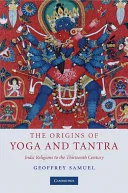
The Origins of Yoga and Tantra
 81
81

The Origins of Yoga and Tantra
Geoffrey Samuel’s *The Origins of Yoga and Tantra* offers a crucial, if sometimes dry, re-evaluation of how these intertwined traditions coalesced. Instead of tracing a direct, unbroken lineage, Samuel meticulously dissects the archaeological and textual evidence, particularly concerning the period up to 1200 CE. His strength lies in questioning assumptions; for instance, his examination of early ascetic figures and their practices challenges the notion that yoga and tantra sprang fully formed from Vedic roots. A minor limitation is the density of academic debate, which can occasionally obscure the broader narrative for the less specialized reader. However, the work’s persistent focus on reassessing evidence, such as the archaeological findings at sites like Paunar, is invaluable for understanding the actual historical development. Samuel provides a necessary corrective to overly romanticized origin stories.
📝 Description
81
Geoffrey Samuel's 2017 book re-examines yoga and tantra before 1200 CE.
This scholarly work revisits the historical development of yoga and tantra within the context of Indic religions, focusing on the period up to roughly 1200 CE. Geoffrey Samuel questions common understandings that simplify or overlook the early history of these traditions. He carefully examines the available evidence, considering what can be reliably known about the formative centuries of yogic and tantric practices.
The book is aimed at dedicated students of religious history, comparative religion, and the evolution of South Asian spiritual paths. Academics, graduate students, and advanced practitioners looking for an evidence-based view of yoga and tantra, distinct from popular ideas, will find it valuable. Those interested in the historical origins of meditation, asceticism, and ritual in India will encounter significant content.
Samuel places the growth of yogic and tantric traditions within the complex religious environment of ancient and early medieval India. This era saw the rise of various philosophical schools, including early Mahayana Buddhism and the formation of Puranic Hinduism. The study engages with existing scholarship, reassessing established timelines and influences, particularly regarding the appearance of practices that would later characterize yoga and tantra. His analysis offers a contrast to earlier accounts that relied more heavily on mythology.
This book situates yoga and tantra within the broader spectrum of South Asian spiritual traditions. It moves beyond simplistic portrayals to investigate their historical emergence, particularly in relation to asceticism, ritual, and the body's potential for transformation. By distinguishing between different historical practices and their development within complex religious currents like early Buddhism and Puranic Hinduism, Samuel provides a more grounded understanding of these often mystified paths.
💡 Why Read This Book?
• Gain a critical understanding of the historical development of yoga and tantra before 1200 CE, moving beyond popular mythologies, by examining the specific evidence Samuel presents for early ascetic practices. • Understand the complex interplay between different Indic religious traditions, such as early Buddhism and Puranic Hinduism, and how they shaped yogic and tantric forms, as detailed in Samuel's analysis of the period. • Appreciate the challenges in reconstructing ancient spiritual practices, recognizing how the book questions established chronologies and reassesses textual and material evidence for yogic traditions.
⭐ Reader Reviews
Honest opinions from readers who have explored this book.
❓ Frequently Asked Questions
What is the primary focus of Geoffrey Samuel's The Origins of Yoga and Tantra?
The book focuses on re-interpreting the historical development of yoga and tantra in Indic religions up to approximately 1200 CE, critically examining the evidence and challenging conventional narratives about their origins.
Does the book cover modern yoga practices?
No, the book concentrates on the ancient and early medieval roots of yoga and tantra, up to around 1200 CE, rather than contemporary forms of practice.
What kind of evidence does Samuel use to support his arguments?
Samuel draws upon a range of evidence, including textual analysis of ancient Indian scriptures and inscriptions, as well as archaeological findings from significant sites.
How does this book differ from typical introductions to Hinduism or Buddhism?
Unlike many introductions, it offers a detailed, critical assessment of the historical evolution of yogic and tantric traditions, highlighting what is known and unknown about their formative periods.
Is Geoffrey Samuel an academic or a practitioner?
Geoffrey Samuel is a renowned anthropologist and scholar of religion, known for his in-depth academic research into the history and practice of yoga and tantra.
What is the timeframe covered by the book's historical analysis?
The book's primary historical analysis covers the period from the earliest evidence of yogic practices up to approximately 1200 CE.
🔮 Key Themes & Symbolism
Reconstructing Ancient Practices
This work critically interrogates the historical reconstruction of yogic and tantric practices, emphasizing the challenges posed by limited and often ambiguous evidence from antiquity. Samuel meticulously examines textual sources and archaeological findings, questioning established chronologies and the assumptions underlying them. The book highlights how much remains speculative regarding the precise nature and evolution of techniques practiced by early ascetics and yogis, particularly in the centuries leading up to 1200 CE.
The Body as a Locus
A central theme is the concept of the body as a primary site for spiritual transformation within both yoga and tantra. The book explores how these traditions developed sophisticated understandings of the body's energetic, physiological, and psychological dimensions. Samuel investigates the historical emergence of practices aimed at manipulating bodily states, from ascetic austerities to esoteric tantric techniques, demonstrating the body's integral role in achieving spiritual goals.
Indic Religious Evolution
The book situates the development of yoga and tantra within the broader evolutionary context of Indic religions. It analyzes how these traditions interacted with and diverged from other major currents, such as early Buddhism, Jainism, and the developing Puranic Hinduism. Samuel’s work provides a nuanced perspective on the syncretic nature of religious thought in ancient India, illustrating how yogic and tantric elements were integrated, adapted, and sometimes resisted by different religious communities.
Challenging Lineage Narratives
Samuel directly confronts and challenges simplistic or idealized narratives of continuous, unbroken lineages for yoga and tantra. He argues that our understanding of these traditions’ origins is often shaped by later agendas and a desire for historical legitimacy. By focusing on the available historical data, the book encourages a more critical and evidence-based approach to tracing the historical roots of these widespread spiritual disciplines.
💬 Memorable Quotes
Direct passages from the work, attributed to the author.
“Most introductions to Hinduism or Buddhism tell only part of the story of how they developed.”
— This highlights Samuel's central thesis: that conventional religious histories often present incomplete or biased accounts of the complex origins of yogic and tantric traditions, necessitating a more thorough historical investigation.
“This book is an interpretation of the history of Indic religions up to around 1200 CE, with particular focus on the development of yogic and tantric traditions.”
— This statement clearly defines the book's scope and primary objective – to offer a specific, evidence-based perspective on the historical formation of yoga and tantra within the wider religious range of ancient India.
“It assesses how much we really know about this period, and asks what sense we can make of the evolution of yogic and tantric pract”
— This indicates the book's critical methodology, emphasizing the importance of evaluating the reliability of historical sources and constructing a coherent understanding from potentially fragmented evidence concerning yogic and tantric evolution.
“Yoga, tantra and other forms of Asian meditation are practised in modernized forms throughout the world today.”
— This opening observation serves to connect the ancient historical inquiry of the book to the contemporary relevance and widespread practice of yoga and meditation globally.
“The book assesses how much we really know about this period.”
— This is an interpretation of the work's methodological rigor, pointing to its commitment to acknowledging the limitations of historical data and avoiding unsubstantiated claims about ancient spiritual practices.
🌙 Esoteric Significance
Tradition
While not strictly aligned with a single Western esoteric lineage like Hermeticism or Theosophy, Samuel's work is crucial for understanding the historical roots of practices often incorporated into modern esoteric systems. It provides an anthropological and historical lens on traditions that have become central to global esoteric movements, offering a scholarly grounding for practices that might otherwise be viewed through myth or speculation.
Symbolism
The book's focus on the historical development means it doesn't heavily emphasize specific esoteric symbols in a contemporary interpretive sense. However, it implicitly deals with symbols of asceticism, the body as a microcosm, and the evolving iconography of deities associated with yogic and tantric practices within ancient India. The meaning of these evolving visual and conceptual elements is explored through their historical context.
Modern Relevance
Contemporary practitioners and scholars of yoga, tantra, and meditation draw heavily on Samuel's work to understand the historical depth and diversity of these traditions. His meticulous research informs discussions on authenticity, historical development, and the complex relationship between ancient practices and their modern, often globalized, manifestations, influencing how these disciplines are taught and understood today.
👥 Who Should Read This Book
['• Advanced students of religious studies and anthropology: Will gain a critical framework for analyzing the historical development of South Asian spiritual traditions and understanding the methodologies for reconstructing ancient practices.', '• Yoga and Tantra practitioners seeking historical depth: Will benefit from a scholarly examination that moves beyond popular narratives, offering a nuanced view of the origins and evolution of their chosen disciplines.', "• Comparative religion researchers: Can utilize Samuel's detailed analysis of Indic religious history to inform broader studies on asceticism, meditation, and the formation of religious movements across different cultures."]
📜 Historical Context
Geoffrey Samuel's *The Origins of Yoga and Tantra* emerged in 2008, a time when academic and popular interest in these traditions was high, yet often based on simplified historical accounts. The book engages with the intellectual currents of religious studies and anthropology, challenging earlier, more hagiographic or diffusionist models. It operates within a landscape shaped by scholars like Mircea Eliade, whose theories on asceticism and the archaic Samuel implicitly or explicitly revisits. The work's significance lies in its rigorous reassessment of evidence, particularly concerning the period up to 1200 CE, providing a counterpoint to existing scholarship by meticulously analyzing textual and archaeological data. It addresses the evolution of practices within the complex interplay of nascent Buddhism, Jainism, and the developing Puranic traditions, offering a more grounded historical perspective.
📔 Journal Prompts
The historical evidence for early yogic practices.
The body as a locus of spiritual transformation in ancient India.
Reconciling textual evidence with archaeological findings in religious history.
The evolution of tantric traditions before 1200 CE.
The relationship between asceticism and evolving Indic religions.
🗂️ Glossary
Asceticism
A lifestyle characterized by abstinence from various types of worldly pleasure, often for the pursuit of spiritual goals. In ancient India, various forms of ascetic practice were central to the development of yogic traditions.
Indic Religions
A term referring to the diverse religious traditions that originated in the Indian subcontinent, including Hinduism, Buddhism, Jainism, and Sikhism.
Puranic Hinduism
A phase of Hinduism characterized by the compilation of Puranas, texts detailing cosmology, genealogies of deities, and narratives. It emerged significantly during the period covered by Samuel's study.
Yogic Traditions
Refers to the historical lineages and practices associated with yoga, encompassing physical postures, breath control, meditation, and ethical principles aimed at spiritual development.
Tantric Traditions
A complex set of esoteric traditions originating in India, characterized by ritual practices, visualization, mantra, and a focus on harnessing energy for spiritual or worldly ends.
Archaeological Findings
Material evidence from past human life and activities, such as artifacts, structures, and ecofacts, used by scholars to reconstruct historical events and cultures.
Textual Analysis
The critical examination of written documents to understand their meaning, context, and historical significance, a key method used in Samuel's work.