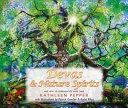
Devas and Nature Spirits
 76
76

Devas and Nature Spirits
Kathleen Pepper and Bodel Rikys's 'Devas and Nature Spirits' attempts to map the invisible architecture of the biosphere. The book's strength lies in its earnest attempt to bridge the gap between the observable world and the energetic intelligences it posits. The section detailing specific elemental associations, particularly for water and earth, feels grounded and offers a tangible framework for contemplation. However, the work occasionally struggles with a lack of critical distance, presenting speculative concepts as established fact without sufficient qualification. A notable limitation is the broad categorization of 'lesser beings,' which could benefit from more nuanced distinctions drawn from comparative esoteric traditions. The inclusion of photographic plates is a welcome visual aid, though their integration could be more seamlessly woven into the textual analysis. Ultimately, the book serves as a gentle invitation into a particular view of nature's animating forces.
📝 Description
76
Published in 2019, 'Devas and Nature Spirits' examines intelligences animating the natural world.
This volume looks at the unseen intelligences that animate the natural world, moving beyond common angelic lore. It focuses on elemental beings and nature spirits believed to govern creation. The work details their roles in sustaining life and provides guidance on perceiving and interacting with these entities. Readers interested in animism, elemental magic, or nature-based spirituality will find this book relevant. It suits those seeking to deepen their connection with the earth and understand the subtle energies present in gardens, landscapes, and the broader environment. Those familiar with Kathleen Pepper's earlier work, 'Hand in Hand with Angels,' will notice a continuation of her inquiry into existence's spiritual dimensions.
The book introduces concepts like the 'secret kingdom' of nature and the distinct intelligences associated with earth, air, fire, water, and ether. It discusses the role of these beings in spiritual initiation. The authors posit that understanding and acknowledging these entities is crucial for spiritual development and harmonious coexistence with the planet. This perspective builds upon earlier esoteric traditions.
Published in 2019, 'Devas and Nature Spirits' connects with a modern interest in esoteric nature traditions. It draws parallels with late 19th and early 20th-century Theosophical and Anthroposophical writings on elemental beings. Authors like Rudolf Steiner extensively detailed these nature spirits, often called the 'little people.' This book offers a contemporary viewpoint, making these concepts accessible to a modern audience interested in practical engagement with these subtle realms.
💡 Why Read This Book?
• Understand the specific roles of elemental spirits (earth, air, fire, water, ether) in sustaining natural processes, as detailed in the book's core chapters on the secret kingdom. • Learn practical methods for perceiving and communicating with nature spirits, moving beyond abstract concepts to actionable techniques suggested by Kathleen Pepper. • Explore the connection between working with devas and spiritual initiation, a concept explored in the book's later sections, offering a unique perspective on personal growth.
⭐ Reader Reviews
Honest opinions from readers who have explored this book.
❓ Frequently Asked Questions
What is the primary focus of 'Devas and Nature Spirits'?
The book's main focus is on the unseen intelligences and elemental beings that govern the natural world, exploring how to perceive and communicate with them, extending beyond typical angelic studies.
Who are the authors of 'Devas and Nature Spirits'?
The book is authored by Kathleen Pepper, also known for 'Hand in Hand with Angels,' and Bodel Rikys, with its first publication dating to September 2019.
Does the book discuss angels as well as nature spirits?
Yes, while primarily focused on lesser nature spirits, the book also touches upon angels, framing them within the broader context of creation's spiritual hierarchy.
What kind of content can be found in the chapters on nature spirits?
Chapters cover angels and spirits of earth, air, fire, and water, as well as ether, exploring their specific domains and influence on the living world.
Are there practical applications or exercises in the book?
The book suggests methods for seeing and communicating with nature spirits and includes sections on gardens dedicated to the secret kingdom, implying practical engagement.
What is the significance of the photographic section?
The book includes a section with photos of nature intended to illustrate the presence and subtle forms of the natural world's hidden inhabitants.
🔮 Key Themes & Symbolism
Elemental Beings
The work details the distinct intelligences associated with the classical elements: earth, air, fire, water, and ether. It posits that these beings are not merely symbolic but are active participants in the functioning of the planet, from the growth of a plant to the flow of a river. Understanding their nature is presented as key to harmonizing with the environment and recognizing the subtle forces that shape our physical reality.
The Secret Kingdom
This theme refers to the hidden, spiritual dimension of nature that is accessible to those who develop their inner sight. The book suggests that specific locations, such as gardens, can be cultivated to become focal points for communion with these nature spirits. It emphasizes a reciprocal relationship, where dedicated attention and respect can foster a connection with this unseen realm.
Spiritual Initiation
The book links interaction with devas and nature spirits to the process of spiritual initiation. It proposes that engaging with these beings helps individuals to expand their consciousness and deepen their understanding of cosmic laws. This perspective frames the exploration of nature's hidden world not just as an intellectual pursuit but as a vital component of personal spiritual evolution.
Perception and Communication
A core aspect of the book is the guidance it offers on developing the faculty to perceive and communicate with nature spirits. This involves cultivating sensitivity to subtle energies and quieting the rational mind to make space for intuitive awareness. The authors present this as an achievable skill, encouraging readers to actively seek out and engage with the life force around them.
💬 Memorable Quotes
Direct passages from the work, attributed to the author.
“The lesser beings who are behind all life.”
— This phrase expresses the book's central thesis: that the vitality and ongoing existence of the natural world are not accidental but are guided and sustained by a hierarchy of subtle intelligences distinct from the higher angelic realms.
“Gardens dedicated to the secret kingdom.”
— This suggests that intentional cultivation of natural spaces can transform them into sanctuaries, facilitating clearer communication and interaction with nature spirits, making the unseen visible through focused intent and care.
“Angels and spirits of earth, air, fire and water, as well as ether.”
— This highlights the elemental framework of the book, assigning specific spiritual agents to each of the classical elements, providing a structured way to understand their influence on the physical plane.
“How to see and communicate with them.”
— This points to the practical, experiential aim of the book, offering methods and encouragement for readers to develop their innate psychic senses and engage directly with the spiritual forces inherent in nature.
“The hidden world behind nature.”
— This serves as a concise summary of the book's subject matter, indicating that the physical world we perceive is only one layer of reality, with a vibrant, intelligent spiritual dimension operating beneath the surface.
🌙 Esoteric Significance
Tradition
This work aligns with the Western Esoteric tradition, particularly drawing from the Hermetic principle of 'As Above, So Below.' It fits within a broader lineage that includes Theosophy and contemporary paganism, focusing on the immanence of spirit within the natural world. Unlike purely Kabbalistic or Gnostic texts, its emphasis is less on cosmic hierarchies and more on the direct interaction with the animating forces of the terrestrial environment.
Symbolism
Key symbols include the elements (earth, air, fire, water, ether), each representing distinct energetic qualities and associated intelligences. Gardens function symbolically as microcosms and sacred spaces, bridging the material and spiritual realms. The concept of the 'secret kingdom' symbolizes the hidden, intelligent spiritual layer of nature that requires specific attunement to perceive.
Modern Relevance
Contemporary practitioners of eco-spirituality, animism, and nature-based witchcraft often reference or implicitly draw upon the concepts presented in this book. Thinkers exploring consciousness, environmental psychology, and the potential for interspecies communication find value in its framework for understanding the subtle life of the planet.
👥 Who Should Read This Book
• Aspiring practitioners of nature-based magic and animism seeking foundational knowledge on elemental spirits and their roles. • Students of esoteric traditions interested in comparing contemporary views on nature spirits with historical Theosophical or Anthroposophical concepts. • Individuals feeling a strong call to connect more deeply with the natural world and seeking guidance on perceiving its unseen spiritual dimensions.
📜 Historical Context
Published in 2019, 'Devas and Nature Spirits' arrives amidst a contemporary revival of interest in animism and nature-based spiritualities, echoing themes explored by earlier esoteric movements. It shares conceptual ground with the Theosophical Society, founded in 1875, and subsequent movements like Anthroposophy, where figures such as Rudolf Steiner (1861-1925) extensively detailed elementals and nature spirits. While these earlier traditions often presented their findings through complex philosophical systems or clairvoyant pronouncements, Pepper and Rikys aim for a more direct, accessible approach for the modern reader. The book’s focus on practical engagement and perception differentiates it from purely academic or historical analyses of these entities, positioning it within a lineage of practical occultism that seeks direct experience of the unseen.
📔 Journal Prompts
Reflect on the 'secret kingdom' as it might manifest in your immediate environment.
Consider the elemental associations of earth, air, fire, and water in your daily life.
How might acknowledging nature spirits alter your perception of a common plant or animal?
Explore potential methods for 'seeing' beyond the physical when observing a natural landscape.
What does spiritual initiation, in the context of interacting with devas, mean to you?
🗂️ Glossary
Deva
In this context, a benevolent spiritual being or intelligence associated with natural forces and phenomena, often perceived as a higher form of nature spirit.
Nature Spirit
An elemental or subtle being believed to inhabit and animate specific aspects of the natural world, such as plants, rocks, water bodies, or weather patterns.
Secret Kingdom
The hidden, spiritual dimension of nature, populated by devas and nature spirits, which can be accessed through developing inner perception and awareness.
Elemental
A being associated with one of the classical elements (earth, air, fire, water, ether), embodying its qualities and influencing its domain.
Ether
Often considered a fifth element or subtle medium, representing the space or connecting principle through which other elements and energies operate.
Spiritual Initiation
A process of conscious spiritual development and transformation, which the book suggests can be aided by understanding and interacting with nature spirits.
Perception
In this book, refers to the ability to sense or become aware of subtle energies and spiritual entities beyond the normal five physical senses.
This book appears in 1 collection
🔮 Readers Also Liked
Browse all →








From the “Nature Spirits” Collection
View all →








More Free Occult Philosophy Books
View all →