The active side of infinity

 76
76

The active side of infinity
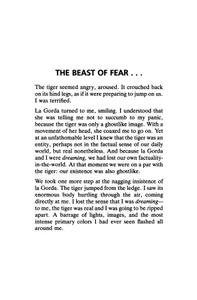
Carlos Castaneda's final offering, "The Active Side of Infinity," presents a dense, often abstract, distillation of his shamanic teachings. While lacking the narrative momentum of his earlier works, it attempts to codify the principles of "seeing" and "intent" for the serious practitioner. The strength lies in its relentless focus on perceptual shifts and the mechanics of awareness, particularly the exploration of the "assemblage point." However, the book suffers from a certain theoretical dryness, a departure from the more visceral accounts of his earlier encounters. The repeated emphasis on abstract energy constructs can feel repetitive, and the absence of concrete, experiential anchors for the uninitiated reader is a notable limitation. A passage discussing the "active side of infinity" as a domain of pure awareness, accessible through disciplined shifts in perception, exemplifies both the book's ambition and its challenge. Ultimately, it’s a text for the devoted follower, offering a complex theoretical framework rather than an accessible introduction.
📝 Description
76
Carlos Castaneda's final book, 'The Active Side of Infinity,' was published posthumously in 2000.
'The Active Side of Infinity' is presented as the last testament from Carlos Castaneda, appearing in print in 2000 after his death. This work continues his long-standing examination of shamanism, sorcery, and altered consciousness. Castaneda first introduced these subjects to a Western readership in the 1960s. The book blends personal accounts, philosophical discussion, and instructional elements, all intended to transmit the teachings attributed to his alleged teacher, Don Juan Matus. Readers will find descriptions of specific methods and perceptual shifts designed to broaden awareness beyond normal experience.
This book is suitable for those already familiar with Castaneda's earlier writings and who are seriously interested in shamanistic practices, especially those he associated with a particular lineage. A prior grasp of terms like "sorcery," "intent," and "seeing," as used in his previous books, is beneficial. The work addresses individuals looking to engage with a complex knowledge system that questions standard views of self and reality. It also offers material for reflection for those interested in the philosophical aspects of altered states and subjective perception.
Published in 2000, 'The Active Side of Infinity' arrived during a later phase of the New Age movement, though Castaneda resisted its categorization. His earlier anthropological claims had faced scrutiny for inconsistencies and potential fabrication. Nevertheless, his writings had a significant impact on counterculture thought and esoteric studies, placing him in dialogue with figures influential in altered states research. The book reflects his ongoing engagement with a system of knowledge that purports to offer a different way of perceiving reality, distinct from mainstream Western thought.
💡 Why Read This Book?
• Gain understanding of the "assemblage point" concept, a core idea in Castaneda's system for altering perception, which offers a framework for examining how consciousness constructs reality. • Explore the notion of "seeing" as a direct, non-conceptual mode of perception, as detailed in the book's later chapters, providing an alternative to analytical thought processes. • Contemplate the "active side of infinity," a concept central to the book, which proposes a realm of pure energy and potential accessible through focused intent and disciplined awareness.
⭐ Reader Reviews
Honest opinions from readers who have explored this book.
❓ Frequently Asked Questions
What is the significance of the "assemblage point" in Castaneda's work?
The "assemblage point" refers to a hypothetical locus of human awareness that, when shifted, alters an individual's perception of reality. Castaneda suggests that sorcerers can consciously manipulate this point to access different realities and states of consciousness.
When was "The Active Side of Infinity" first published?
"The Active Side of Infinity" was first published in the year 2000, posthumously, following the author's passing.
Who was Don Juan Matus in the context of Carlos Castaneda's books?
Don Juan Matus is presented as Carlos Castaneda's shamanic mentor, a figure from whom Castaneda purportedly learned the principles of sorcery and "seeing." He is the central teacher figure throughout Castaneda's early works.
Does the book "The Active Side of Infinity" offer practical exercises?
Yes, while dense with theory, the book details specific practices and perceptual shifts intended to alter awareness and facilitate "seeing," building upon techniques introduced in earlier volumes.
Is "The Active Side of Infinity" a good starting point for new readers of Castaneda?
This book is generally considered more theoretical and abstract than Castaneda's earlier works. New readers are often advised to begin with "The Teachings of Don Juan" for a more narrative and accessible introduction to his ideas.
What is the "active side of infinity" as described by Castaneda?
The "active side of infinity" is presented as a fundamental realm of pure energy and potential, the source of all phenomena, which can be accessed and apprehended through advanced stages of shamanic awareness and intent.
🔮 Key Themes & Symbolism
The Assemblage Point
Central to Castaneda's later work, the "assemblage point" is conceptualized as the focal nexus of human awareness that organizes our perception of reality. The book posits that ordinary consciousness is fixed at a specific position, leading to a predictable world. Sorcerers, through rigorous practice and the harnessing of "intent," learn to shift this point, thereby accessing entirely different perceptual landscapes and states of being. This concept challenges the notion of objective reality, suggesting that our experience is a construct determined by the position of this energetic assemblage point.
Intent and Energy
Castaneda distinguishes between "will" and "intent," positing "intent" as a fundamental, impersonal force that governs the universe. The book explores how sorcerers learn to align their personal will with this universal "intent" to effect changes in their perception and reality. This is not about personal desire but about tapping into a primal energetic flow. The "active side of infinity" is depicted as the source from which this potent "intent" emanates, and mastering its manipulation is key to the sorceric path described.
Seeing as Direct Perception
Beyond ordinary visual perception, "seeing" in Castaneda's framework represents a direct, non-intellectual apprehension of energy and the world as pure energy. This involves bypassing the analytical mind and engaging with phenomena in their raw, unmediated state. The book describes "seeing" as the ultimate goal of the sorceric path, enabling practitioners to perceive the "active side of infinity" and the energetic nature of all existence. It requires immense discipline to overcome ingrained habits of thought and perception.
Stopping the World
This is presented as a crucial technique for breaking the habitual patterns of perception that "stop the world" as we know it. By disrupting the fixed assemblage point and the internal dialogue, practitioners can momentarily suspend their ordinary reality. This "stopping" allows for the possibility of "seeing" and for the assemblage point to shift more freely. It is a method of disengaging from the ego's constant narration of reality, thereby opening a space for direct experience.
💬 Memorable Quotes
Direct passages from the work, attributed to the author.
“The assemblage point is the energy field that organizes our awareness.”
— This statement captures the core idea that our perception of reality is not inherent but is actively constructed by a specific energetic locus of consciousness, the assemblage point.
“Intent is the impersonal force that moves the universe.”
— This highlights Castaneda's concept of intent as a fundamental, non-personal power that underlies all existence, distinct from individual human will or desire.
“To see is to perceive energy directly.”
— This defines the shamanic faculty of "seeing" as a direct, unmediated experience of the energetic nature of reality, bypassing intellectual interpretation.
“The active side of infinity is the area of pure energy.”
— This succinctly describes the ultimate domain of existence as Castaneda's system presents it: a boundless field of pure, undifferentiated energy and potential.
“We stop the world by interrupting our habitual ways of perceiving.”
— This emphasizes the practice of "stopping the world" as a method of de-automating perception, freeing awareness from its ingrained patterns and assumptions.
🌙 Esoteric Significance
Tradition
Castaneda's work draws heavily from what he presents as a lineage of Mesoamerican shamanism, specifically referencing Toltec sorcery. While distinct from established Western esoteric traditions like Hermeticism or Kabbalah, it shares common ground in its focus on altered states of consciousness, the manipulation of perception, and the pursuit of hidden knowledge. His system emphasizes a non-dualistic view of reality and the potential for human awareness to transcend ordinary limitations, aligning with certain Gnostic or mystical impulses, albeit framed within a unique conceptual vocabulary.
Symbolism
Key symbols in Castaneda's work include the "nagual" and the "tonal." The "nagual" represents the ineffable, the unknown, and the area of pure energy or spirit, often associated with dreams and the active side of infinity. The "tonal," conversely, signifies the known, the structured world of everyday consciousness and ego identity. The "assemblage point," as discussed in this book, functions symbolically as the pivot upon which the transition between these states occurs, representing the locus of subjective reality construction.
Modern Relevance
Contemporary practitioners of shamanism, particularly those influenced by the Western shamanic revival, often engage with Castaneda's conceptual framework, even while acknowledging the controversies surrounding his work. His ideas about the assemblage point and the manipulation of intent continue to inform discussions in consciousness studies and transpersonal psychology. Thinkers exploring non-ordinary states of consciousness and alternative epistemologies find value in his rigorous, albeit debated, descriptions of shamanic perception and reality construction.
👥 Who Should Read This Book
• Dedicated students of Carlos Castaneda's previous works seeking to understand the theoretical culmination of his teachings on shamanism and perception. • Practitioners of consciousness exploration interested in detailed conceptual frameworks for altering awareness and challenging subjective reality. • Researchers and enthusiasts of comparative religion and esoteric traditions looking to analyze a unique, influential, albeit controversial, system of shamanic knowledge.
📜 Historical Context
Published in 2000, "The Active Side of Infinity" arrived during a period when Carlos Castaneda's work was both highly influential and deeply controversial. His initial books, beginning with "The Teachings of Don Juan" in 1968, were initially presented as anthropological accounts of Yaqui shamanism. By the late 20th century, however, critics and academics widely questioned the authenticity of his claims, with many suggesting his narratives were literary creations rather than factual reporting. Despite this, Castaneda's writings tapped into a deep cultural current, influencing the burgeoning New Age movement and esoteric studies. While figures like Timothy Leary explored consciousness through psychedelic means, Castaneda offered a path through disciplined shamanic practice, creating a distinct intellectual space. His work was often discussed alongside that of authors like Robert Anton Wilson, who also explored altered states and alternative realities, though from a more skeptical and postmodern perspective. The reception of his later works, including this one, was often divided between devoted followers who saw them as advanced teachings and skeptics who viewed them as elaborate fictions.
📔 Journal Prompts
The assemblage point's position and its influence on perceived reality.
The relationship between personal intent and the universal force of intent.
Experiences of "seeing" beyond ordinary perception.
The practice of "stopping the world" and its effects.
Reflections on the "active side of infinity" as a source of energy.
🗂️ Glossary
Assemblage Point
A hypothetical energetic locus of awareness that determines an individual's perception of reality. Shifting this point allows access to different states of consciousness and realities.
Intent
A fundamental, impersonal force or power that governs the universe. Castaneda distinguishes it from personal will, describing it as the primal energy that shapes existence.
Nagual
In Castaneda's system, the nagual represents the ineffable, the unknown, the area of pure energy, and the spiritual aspect of existence, often accessed through dreams and altered states.
Tonal
Represents the known world, the area of everyday consciousness, the ego, and the structured reality perceived through ordinary means. It is the "self" as commonly understood.
Seeing
A mode of direct, non-conceptual perception of energy as it truly is, bypassing the analytical mind and habitual interpretations of reality.
Stopping the World
A technique used by sorcerers to interrupt the habitual, automatic processes of perception that create the illusion of a fixed, external reality.
Active Side of Infinity
The fundamental area of pure, undifferentiated energy and potential from which all phenomena arise. It is the source of universal intent.
🔮 Readers Also Liked
Browse all →









More by Carlos Castaneda
All books →


More Free Occult Philosophy Books
View all →