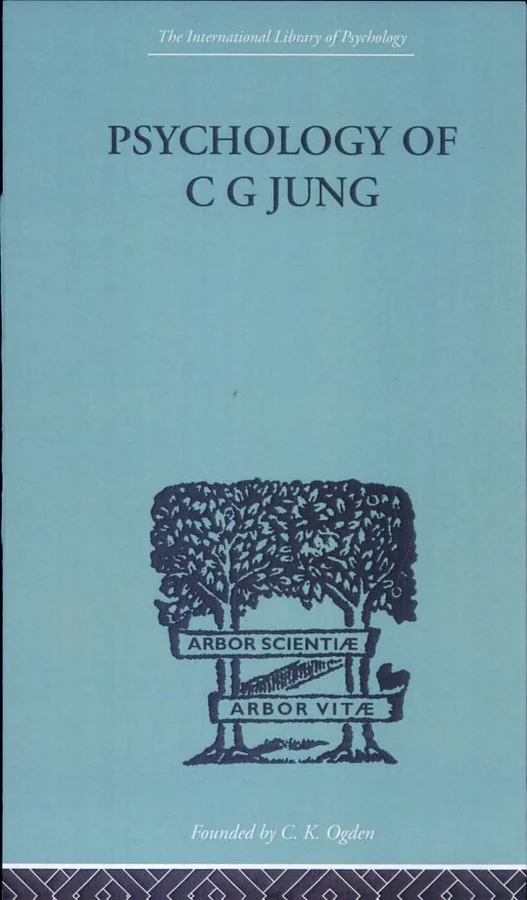
Psychology of C G Jung
 72
72

Psychology of C G Jung
Jolande Jacobi’s "Psychology of C G Jung" functions less as a critical dissection and more as a lucid primer on Jung’s expansive system. Its primary strength lies in its clarity; Jacobi, a direct student of Jung, distills complex theories like the collective unconscious and archetypes into digestible prose. For instance, the explanation of the anima and animus as psychic counterparts is particularly well-articulated, offering a less intimidating entry point than Jung’s own often dense writings. However, the book's 1999 publication date means it doesn't engage with later developments or critiques of Jungian thought that have emerged since. Furthermore, its accessibility sometimes leads to a simplification that might leave seasoned Jungian analysts wanting more nuance. Nonetheless, for those encountering Jung’s ideas for the first time, it provides a solid, if somewhat dated, foundation. It serves as a dependable guide through the labyrinth of the psyche.
📝 Description
72
Jolande Jacobi's 1999 book clarifies C.G. Jung's complex psychology.
This 1999 text by Jolande Jacobi offers a clear explanation of Carl Gustav Jung's psychological theories. It simplifies Jung's ideas, which reach beyond typical psychology to include myth, religion, and the unconscious mind. The book aims to make Jung's core concepts understandable to a wider audience, not just those in clinical practice.
Jacobi's work is for anyone wanting to grasp the main points of Jungian psychology without needing an academic background. It suits readers interested in the deep patterns of the human mind, the nature of the unconscious, and the journey of individuation. Students of comparative religion, mythology, and esoteric studies will also find it useful. The book was published by Routledge.
Jacobi's work engages with Jung's exploration of symbols, myths, and the unconscious, which often touches upon esoteric traditions. Jung saw these elements as vital to understanding the human psyche, connecting individual experience to broader spiritual and mythical patterns. The book discusses concepts like archetypes and individuation, which have resonance in various spiritual and philosophical systems seeking inner transformation.
💡 Why Read This Book?
• Gain a foundational understanding of the collective unconscious, a concept central to Jung's work since his 1934 publication of "The Archetypes and the Collective Unconscious," enabling a deeper grasp of shared human symbolic patterns. • Learn about the process of individuation, a lifelong psychological journey toward self-realization that Jung termed the "central goal of psychological development," providing a framework for personal growth. • Explore the archetypes like the Shadow and Anima/Animus, which Jacobi clarifies as universal psychic structures, offering specific symbolic interpretations that can inform dream analysis and self-understanding.
⭐ Reader Reviews
Honest opinions from readers who have explored this book.
❓ Frequently Asked Questions
What is the relationship between Jolande Jacobi and C.G. Jung?
Jolande Jacobi was a close student and collaborator of Carl Gustav Jung. She worked with him for many years, assisting in the organization of his papers and becoming a recognized authority on his psychological theories in her own right.
When was Jolande Jacobi's "Psychology of C G Jung" first published?
The book was first published in 1999, making it a relatively modern introduction to Jungian concepts, though it draws on decades of Jung's own work.
Does this book cover Jung's theories on alchemy?
While Jacobi's work focuses on the core psychological concepts, it touches upon Jung's broader interests, including his engagement with symbolism found in alchemy and other esoteric traditions as expressions of the psyche.
Is this book suitable for beginners in psychology?
Yes, the book is designed to be an introduction to Jung's complex ideas, making it suitable for those new to Jungian psychology or psychology in general.
What are archetypes according to Jungian psychology as explained by Jacobi?
Jacobi explains archetypes as universal, inherited patterns of thought or symbolic imagery derived from the collective unconscious, manifesting in myths, dreams, and art across cultures.
Where does "Psychology of C G Jung" fit within Jung's own writings?
This book serves as a secondary source, offering an interpretation and systematization of Jung's vast and often intricate body of work, making his theories more accessible.
🔮 Key Themes & Symbolism
The Collective Unconscious
Jacobi details Jung's concept of the collective unconscious as a transpersonal layer of the psyche, distinct from the personal unconscious. It comprises inherited, universal structures and potentials shared by all humanity, manifesting as archetypes. This shared psychic inheritance forms the bedrock of human experience, explaining commonalities in myths, symbols, and religious impulses across diverse cultures and historical periods. The work explores how accessing this layer through dreams and active imagination can lead to profound self-knowledge and connection to the greater human experience.
Archetypes and the Self
The book elucidates Jung's theory of archetypes – primordial images and patterns that organize psychic experience. Jacobi focuses on key archetypes like the Shadow, the Anima/Animus, and the Self. The Shadow represents the repressed, darker aspects of the personality, while the Anima (in men) and Animus (in women) embody the contrasexual psychic component. The ultimate archetype, the Self, symbolizes wholeness and the integration of all psychic contents, serving as the goal of individuation. Understanding these figures is presented as crucial for psychological balance.
Individuation Process
Central to Jacobi's exposition is the concept of individuation, Jung's term for the lifelong psychological process of becoming a distinct, integrated individual. It involves confronting and integrating unconscious material, differentiating oneself from collective norms while also connecting to the collective unconscious. This path is not about achieving perfection but about realizing one's unique potential and wholeness. The book frames individuation as a natural developmental trajectory, essential for psychological maturity and spiritual well-being.
Symbolism and Meaning
Jacobi emphasizes the vital role of symbols in Jungian psychology, viewing them as bridges between the conscious and unconscious realms. Dreams, myths, fairy tales, and religious imagery are rich sources of symbolic expression. The work explores how interpreting these symbols, rather than reducing them to simplistic meanings, unlocks access to the unconscious psyche. This approach highlights the inherent meaningfulness of psychic life and the potential for transformation through engagement with symbolic language.
💬 Memorable Quotes
Direct passages from the work, attributed to the author.
“The collective unconscious is not a theoretical assumption but a demonstrable fact.”
— This statement underscores Jacobi's adherence to Jung's empirical approach, presenting the collective unconscious not as mere speculation but as a verifiable aspect of psychic reality, observable through consistent patterns in human experience.
💡 Key Ideas
Editorial paraphrase of the work's core concepts — not direct quotes.
The goal of individuation is not to become perfect, but to become whole.
This paraphrased concept highlights a key distinction in Jungian thought: wholeness, which includes integrating both light and shadow aspects of the personality, is the aim, rather than an unattainable state of moral or psychological perfection.
Archetypes are the psychic organs of the collective unconscious.
This interpretive paraphrase suggests that archetypes function as the fundamental structures or 'organs' through which the contents and energies of the collective unconscious are organized and expressed in human consciousness.
The Shadow is the personification of the negative qualities we deny in ourselves.
This interpretive paraphrase clarifies the Shadow archetype as a projection of our disowned traits and imperfections, representing the darker, less acceptable aspects of the ego-personality that require conscious acknowledgement.
Dreams are messages from the unconscious, often compensating for conscious attitudes.
This interpretive paraphrase captures Jung's view of dreams as purposive phenomena that reveal unconscious needs and perspectives, often offering a corrective balance to one-sided conscious viewpoints.
🌙 Esoteric Significance
Tradition
While primarily a psychological text, Jacobi's work draws heavily on elements often found within Western esoteric traditions, particularly Hermeticism and Gnosticism, through Jung's own engagement with these fields. Jung saw alchemical symbolism and Gnostic cosmology as profound expressions of the psyche's unconscious dynamics. Jacobi’s explication of archetypes and individuation can be seen as a psychological interpretation of ancient quests for wholeness and divine integration, fitting within a lineage that seeks inner transformation and understanding of the soul's journey.
Symbolism
The book frequently discusses symbols that hold significance in esoteric lore. Archetypes like the 'Shadow' and the 'Anima/Animus' can be viewed as psychological correlates to figures or forces encountered in Gnostic or Hermetic texts representing aspects of the divine or the soul's struggle. The concept of 'The Self' as the ultimate goal of integration mirrors esoteric ideals of achieving the 'divine spark' or the 'Philosopher's Stone,' representing a unified, transcendent state of being.
Modern Relevance
Contemporary thinkers in depth psychology, transpersonal psychology, and even some strands of spiritual or self-help movements continue to draw heavily on Jungian concepts as presented by Jacobi. Her accessible explanations of archetypes and individuation provide a framework for understanding modern psychological and spiritual seeking, influencing therapeutic approaches that integrate myth, symbolism, and the exploration of consciousness beyond the purely personal.
👥 Who Should Read This Book
• Students of comparative mythology and religion: Gain psychological frameworks for understanding recurring patterns and symbols in global myths and spiritual traditions. • Individuals exploring personal growth and self-discovery: Learn about the process of individuation and the role of archetypes in shaping one's life path. • Aspiring depth psychologists and Jungian analysts: Acquire a foundational understanding of Jung's core theories from a respected early proponent.
📜 Historical Context
Published in 1999 by Routledge, "Psychology of C G Jung" emerges within a sustained academic and popular interest in Jungian thought that continued well into the late 20th century. Jung himself died in 1961, leaving a vast corpus that scholars like Jolande Jacobi sought to systematize. This era saw Jungian psychology established as a distinct school, often contrasted with Freudian psychoanalysis, which had dominated earlier discourse. While Freud focused on repressed sexuality, Jung expanded the scope to include spirituality, mythology, and the collective unconscious. Jacobi's work reflects this broader engagement, appearing at a time when Jung's ideas were being integrated into fields beyond clinical psychology, including literary criticism and religious studies. The book engages with the legacy of Jung's contemporaries and predecessors, offering a bridge for new generations to access his complex theoretical framework.
📔 Journal Prompts
The collective unconscious as a reservoir of ancestral memory.
Archetypal manifestations in personal dreams and daily life.
Identifying and integrating one's Shadow aspects.
The Anima/Animus projection in relationships.
Stages and challenges of the individuation journey.
🗂️ Glossary
Collective Unconscious
A hypothesized part of the unconscious mind composed of universal, inherited archetypes and instincts shared by all members of the human species, independent of personal experience.
Archetype
Primordial, universal patterns or images that derive from the collective unconscious and are the psychic counterpart of instinct. They manifest in myths, dreams, and art.
Individuation
The lifelong psychological process of differentiation and integration of the self, involving the conscious realization of one's unique potential and wholeness.
Shadow
The unconscious, repressed, or disowned aspects of the personality, often perceived as negative, which must be acknowledged and integrated for psychological balance.
Anima/Animus
The contrasexual aspect of the psyche: the Anima represents the unconscious feminine side in men, and the Animus represents the unconscious masculine side in women.
Self
The central archetype of wholeness and the totality of the psyche, encompassing both the conscious and unconscious, representing the ultimate goal of individuation.
Psychic Energy
Jung's concept of libido, understood not just sexually but as a generalized life force or motivation that fuels psychological processes and behavior.
This book appears in 1 collection
🔮 Readers Also Liked
Browse all →









From the “Jungian Psychology” Collection
View all →








More Free Occult Philosophy Books
View all →