The Ecology of Nature Spirits
 81
81

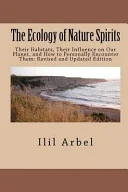
The Ecology of Nature Spirits
Ilil Arbel's *The Ecology of Nature Spirits* presents a compelling, if somewhat speculative, framework for understanding elemental beings. The author's strength lies in her ability to connect ancient notions of sprites and elementals with modern ecological concerns, moving them from mere fantasy to potential functional agents within natural systems. The book's most striking aspect is its insistence on the spirits' ecological role, a perspective seldom explored with such directness. However, the work occasionally falters in providing concrete, verifiable evidence for its claims, often relying on interpretation and anecdotal observation rather than empirical data, which might leave skeptical readers wanting. A particularly interesting section discusses the impact of human industrialization on these spirits' habitats. Ultimately, Arbel offers a unique, nature-centric spiritual perspective that challenges conventional views of both the spirit world and environmentalism.
📝 Description
81
Published in May 2010, Ilil Arbel's *The Ecology of Nature Spirits* examines elemental beings as integral to Earth's natural systems.
Ilil Arbel's *The Ecology of Nature Spirits*, released in 2010, moves past folklore to present elemental beings, commonly called nature spirits, as active participants in ecological processes. The book argues their existence is tied directly to the health and operation of ecosystems, detailing their interactions with plants, animals, and the land itself. Arbel posits these entities are not simply symbolic but are vital agents within the Earth's natural systems, influencing everything from flora growth to geological formations.
This work is for readers interested in animism, ecological spirituality, and the hidden dimensions of the natural world. It speaks to those who feel a strong connection to nature and wish to understand its unseen influences. Individuals exploring shamanism, earth-based spiritualities, or curious about traditional beliefs in elemental beings will find Arbel's perspective informative. Students of comparative mythology and religious studies seeking to examine a less documented aspect of spiritual traditions may also find value here.
Published in the early 21st century, *The Ecology of Nature Spirits* emerged during a period of growing ecological awareness and interest in alternative spiritualities. Arbel's work aligns with a broader cultural movement to re-enchant the natural world, contrasting with purely materialistic scientific views. It taps into a curiosity about pre-industrial, animistic worldviews, a trend amplified by the increasing availability of esoteric literature.
💡 Why Read This Book?
• Gain an understanding of nature spirits not just as folklore, but as integral ecological agents, a concept detailed in the book's examination of their interaction with flora and fauna. • Explore a unique spiritual perspective that bridges animistic traditions with contemporary ecological awareness, as demonstrated by the book's focus on the well-being of elemental beings and their environments. • Discover how human activity might impact the natural world on an energetic or spiritual level, a theme particularly highlighted by the book's discussion of industrialization's effects on these entities.
⭐ Reader Reviews
Honest opinions from readers who have explored this book.
❓ Frequently Asked Questions
What is the primary focus of Ilil Arbel's 'The Ecology of Nature Spirits'?
The book's primary focus is on understanding nature spirits as active participants in the Earth's ecological systems, rather than purely mythological figures. It explores their direct connection to environmental processes and the health of the natural world.
When was 'The Ecology of Nature Spirits' first published?
The book was first published on May 5, 2010, by Ilil Arbel.
Does the book provide scientific proof of nature spirits?
No, the book does not claim scientific proof. It offers an esoteric perspective, interpreting observations and traditional beliefs through an ecological lens, suggesting functional roles for these entities within nature.
What types of nature spirits are discussed?
The book discusses spirits generally associated with the classical elements: earth, air, fire, and water. It explores their specific roles and interactions within their respective domains of the natural world.
Who would benefit most from reading this book?
Individuals interested in animism, ecological spirituality, earth-based religions, comparative mythology, and those seeking to understand nature from a more spiritual or interconnected viewpoint would find this book beneficial.
How does the book connect nature spirits to ecology?
It posits that nature spirits are essential for natural processes such as growth, decay, and energy flow. Their existence and well-being are presented as intrinsically linked to the health and balance of the environment.
🔮 Key Themes & Symbolism
Spirits as Ecological Agents
This theme posits that nature spirits are not merely decorative elements of folklore but are functional components of the Earth's biosphere. The book argues for their active role in processes like plant growth, water cycles, and atmospheric phenomena, presenting them as crucial for maintaining ecological balance. Arbel suggests that understanding these spirits offers a deeper insight into the interconnectedness of all life and the subtle energies that sustain the natural world.
Human Impact on the Spirit World
The work explores the consequences of human industrialization and environmental disregard on the existence and vitality of nature spirits. It suggests that as natural habitats are destroyed or polluted, so too are the realms and energies of these elemental beings diminished. This perspective frames environmental protection not just as a human concern but as a necessity for the continued presence and influence of the spirit world.
Animism and Modern Spirituality
Arbel's book serves as a modern exploration of animistic beliefs, connecting ancient ideas about spirits in nature with contemporary spiritual and ecological movements. It provides a framework for re-enchanting the natural world and fostering a sense of sacredness in everyday landscapes. The work encourages readers to perceive the environment with a greater sense of wonder and respect for its unseen inhabitants and forces.
Elemental Beings and Their Habitats
The book categorizes and describes various types of nature spirits, often aligning them with the classical elements of earth, air, fire, and water. It details their specific functions and the natural environments where they are believed to reside and exert their influence, from forests and mountains to rivers and skies, emphasizing their deep connection to specific locales.
💬 Memorable Quotes
Direct passages from the work, attributed to the author.
“Nature spirits are not separate from the natural world; they are intrinsically woven into its fabric.”
— This statement captures the book's central thesis: that elemental beings are not external observers or mere decorations of nature, but are fundamental, active participants in its very structure and processes.
“The health of the planet is reflected in the vitality and visibility of its elemental guardians.”
— This interpretation suggests a reciprocal relationship where the degradation of the environment leads to a decline in the perceived or actual presence and power of nature spirits, linking ecological well-being to spiritual vibrancy.
“Understanding elemental ecology requires a shift from a purely materialist view to one that acknowledges subtle energies.”
— This highlights the book's call for a broader perspective, urging readers to consider non-physical dimensions and energetic influences as crucial components of understanding the natural world's functioning.
“Human actions directly impact the subtle realms inhabited by nature spirits.”
— This points to the consequence of human activity, particularly industrialization and environmental damage, on the spirit world, suggesting that our physical actions have energetic repercussions beyond the immediately observable.
“The ancient belief in nature spirits offers a framework for ecological reverence.”
— This suggests that traditional animistic views, often dismissed as superstition, can provide valuable models for developing a deeper, more respectful, and spiritually grounded relationship with the Earth.
🌙 Esoteric Significance
Tradition
This work draws heavily from animistic and folkloric traditions, particularly those found in European paganism and Shamanism, which acknowledge sentient spirits within the natural world. It aligns with Western esoteric currents that seek to reintegrate humanity with nature, moving beyond the Cartesian dualism that separates mind from matter. Arbel's approach can be seen as a modern interpretation of elemental magic and the belief in nature spirits, often associated with figures like Paracelsus and his elemental theories, placing them within a contemporary ecological framework.
Symbolism
The book explores the symbolism of elemental beings themselves, representing earth, air, fire, and water not just as physical substances but as dynamic forces and intelligences. Specific symbols might include the dryad representing the spirit of a tree, the undine of water, or the sylph of the air, each embodying the essence and function of their associated natural element and habitat. These symbols serve to illustrate the interconnectedness of the spiritual and physical realms, highlighting the vital energetic exchanges within ecosystems.
Modern Relevance
Contemporary eco-spiritual practitioners, animistic revivalists, and nature-based ritualists often find resonance in Arbel's work. Thinkers and authors exploring rewilding, deep ecology, and the concept of a 'living Earth' (similar to James Lovelock's Gaia hypothesis but with an added spiritual dimension) can draw inspiration from her ecological integration of spirit. It speaks to a modern desire to perceive the environment as alive and inhabited, fostering a sense of responsibility and connection beyond anthropocentric views.
👥 Who Should Read This Book
• Individuals interested in animism and earth-based spiritualities seeking to understand the traditional roles and ecological significance of nature spirits. • Environmental activists and advocates who wish to explore a more spiritually integrated perspective on ecological preservation and interconnectedness. • Students of comparative mythology and esoteric traditions looking for a unique approach that connects folklore with contemporary ecological concerns.
📜 Historical Context
Ilil Arbel's *The Ecology of Nature Spirits*, published in May 2010, emerged during a period of heightened global environmental awareness and a concurrent resurgence of interest in esoteric and pagan spiritualities. The early 21st century saw a growing disillusionment with purely materialistic scientific explanations for the world's complexities, fostering a search for more holistic and integrated worldviews. While not directly engaging with academic debates, Arbel's work tapped into this zeitgeist, resonating with the ecological spirituality movement that sought to re-enchant the natural world. It offered an alternative to dominant Western paradigms by exploring animistic concepts, which posit that spirits inhabit natural phenomena. The book's focus on the functional role of these spirits within ecosystems implicitly challenged reductionist ecological science, proposing a symbiotic relationship between the seen and unseen worlds. Its publication predates some of the more prominent academic works on eco-spirituality, positioning it as an accessible entry point for a general audience interested in the topic.
📔 Journal Prompts
The ecological functions of elemental beings as described in the book.
Your personal observations of subtle energies in natural environments.
The connection between human industrialization and the perceived vitality of nature spirits.
The role of specific nature spirits, such as tree spirits or water elementals, in your local ecosystem.
How viewing nature spirits as ecological agents might alter your relationship with the environment.
🗂️ Glossary
Nature Spirits
Entities believed to inhabit and influence specific aspects of the natural world, often associated with elements like earth, air, fire, and water. They are seen as integral to ecological processes.
Elementals
A term, popularized by alchemists like Paracelsus, referring to elemental beings believed to be the living spirits or consciousness of the classical elements.
Animism
The belief that objects, places, and creatures all possess a distinct spiritual essence. In this context, it refers to the belief in spirits inhabiting natural phenomena.
Ecological Agents
In the context of this book, beings that actively participate in and influence natural processes, contributing to the balance and functioning of ecosystems.
Subtle Energies
Non-physical energies or forces that are believed to permeate the universe and influence natural phenomena, often associated with spiritual or vitalistic concepts.
Elemental Ecology
The study or understanding of how elemental beings interact with and contribute to the ecological systems of the planet.
Dryad
A mythical spirit or nymph associated with trees, embodying the life force and spirit of a particular tree or forest.
This book appears in 1 collection
🔮 Readers Also Liked
Browse all →









From the “Nature Spirits” Collection
View all →





More Free Occult Philosophy Books
View all →