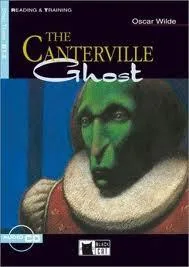
The Canterville Ghost

 74
74

The Canterville Ghost
Wilde's "The Canterville Ghost" presents a delightful inversion of the typical haunted house trope. The genius lies not in the ghost's spectral abilities, which are consistently thwarted, but in the sheer audacity of the American Otis family. Their pragmatic, almost business-like approach to Sir Simon's supernatural disturbances is brilliantly rendered. The scene where Mrs. Otis offers the ghost furniture polish for his rusty chains is a prime example of Wilde's sharp wit cutting through spectral convention. However, the novella occasionally leans too heavily on its central conceit, with the latter half feeling somewhat less inspired than the initial, explosive clash of cultures. The resolution, while poignant, feels slightly abrupt after the sustained comedic tension. Nevertheless, the work remains a sharp, amusing commentary on the anxieties of its time.
📝 Description
74
Oscar Wilde's "The Canterville Ghost" was first published in 1887, satirizing Anglo-American cultural differences.
Oscar Wilde's 1887 novella, "The Canterville Ghost," presents a humorous encounter between an American family and a British ghost. The Otis family purchases Canterville Chase in England, unaware it is inhabited by Sir Simon de Canterville, a specter from a bygone era. Sir Simon, accustomed to terrifying inhabitants, finds his traditional methods utterly ineffective against the pragmatic and unimpressed Otis clan. They view his hauntings not with fear, but with practical solutions, such as offering him lubricant for his clanking chains or suggesting cleaning products for his bloodstains.
The story contrasts the perceived effete nature of English aristocracy with the boisterous, modern American spirit. Wilde uses the ghost's plight to comment on the changing times, the fading of old superstitions, and the clash between Victorian England and the rapidly industrializing world. It is a witty examination of cultural dissonance, where the supernatural is met with mundane indifference and even helpful advice, subverting typical ghost story tropes. The narrative questions notions of tradition, modernity, and the very definition of terror in a changing society.
While not strictly an esoteric text, "The Canterville Ghost" engages with the late Victorian fascination with spiritualism and the uncanny. The popularity of ghost stories during this period often served as a vehicle to explore anxieties about national identity, industrial progress, and the perceived decline of traditional values. Wilde's work taps into this cultural current by satirizing the very idea of the supernatural and its efficacy in a world increasingly dominated by scientific rationalism and American commercialism. The ghost's struggle reflects a broader cultural questioning of the spectral and the occult in the face of modernity.
💡 Why Read This Book?
• Gain insight into the clash between Victorian English tradition and American modernity, as exemplified by Sir Simon's futile attempts to haunt the pragmatic Otis family. • Explore Wilde's unique brand of social satire, observing how the "supernatural" is deflated by sheer, unyielding practicality, a theme evident throughout the narrative. • Understand the Victorian fascination with ghost stories and spiritualism, as "The Canterville Ghost" subverts these tropes for comedic and critical effect, first published in 1887.
⭐ Reader Reviews
Honest opinions from readers who have explored this book.
❓ Frequently Asked Questions
When was Oscar Wilde's "The Canterville Ghost" first published?
Oscar Wilde's "The Canterville Ghost" was first published in 1887, appearing in The Court and Literary Journal.
What is the central conflict in "The Canterville Ghost"?
The central conflict involves the ghost of Sir Simon de Canterville attempting to haunt the new American owners of his ancestral home, only to be met with their unshakeable pragmatism and lack of superstition.
Are there any real historical figures mentioned in "The Canterville Ghost"?
While the story is fictional, it reflects the cultural zeitgeist of the late Victorian era, a period when figures like Helena Blavatsky were popularizing esoteric beliefs, though no direct historical figures are characters.
What makes "The Canterville Ghost" an "Esoteric" read?
Its esoteric appeal lies in its subtle exploration of materialism versus spiritualism, the symbolic death and rebirth of the ghost, and the underlying critique of a society losing touch with deeper, perhaps spectral, realities.
What is the significance of the bloodstain in the story?
The recurring bloodstain, which reappears despite repeated cleaning, symbolizes the indelible nature of past sins and the persistent presence of history and tragedy within the manor.
How does the American family differ from the English setting?
The American Otis family embodies a modern, forward-thinking, and unromanticized worldview, contrasting sharply with the old, tradition-bound English manor and its resident spectral inhabitant, Sir Simon.
🔮 Key Themes & Symbolism
Cultural Dislocation
The novella masterfully portrays the friction between old-world European sensibilities and the burgeoning, often brash, American spirit. Sir Simon, a relic of a more chivalrous, albeit violent, past, finds his spectral existence disrupted by the Otis family's unyielding practicality. Their scientific, almost clinical, approach to his hauntings—offering lubricant for his chains or suggesting remedies for his spectral ailments—underscores a fundamental disconnect. This theme is central to Wilde's critique of modernity's potential to erode historical consciousness and romantic idealism, as seen in the family’s casual dismissal of the manor’s spectral legacy.
The Nature of Fear
Wilde plays with the very definition of fear. Sir Simon, a ghost designed to terrify, finds himself increasingly pathetic and even pitiable as his attempts at intimidation fail. The family, particularly the twins, react to his spectral appearances with amusement or practical concern rather than terror. This subversion suggests that fear is not an inherent quality of the supernatural but is constructed by perception and belief. The story posits that a society stripped of superstition and steeped in materialism may become incapable of experiencing genuine dread, or perhaps, that true fear lies in human actions rather than spectral manifestations.
Redemption and the Past
Beneath the humor, the narrative explores themes of guilt and a yearning for peace. Sir Simon is eternally bound to Canterville Chase due to a past misdeed, his spectral existence a perpetual punishment. His ultimate release comes not through defiance or renewed attempts at haunting, but through an act of vulnerability and confession to Virginia, the youngest Otis daughter. This suggests a path to redemption found not in confronting spectral horrors, but in acknowledging past wrongs and receiving compassion, echoing certain Gnostic ideas of liberation through understanding.
Satire of Victorian Society
Wilde uses the ghost story format to satirize both English aristocracy and American arrivistes. The decaying grandeur of Canterville Chase and the spectral Sir Simon represent the fading traditions and perceived affectations of the English upper class. Conversely, the Otis family, with their modern conveniences and straightforward demeanor, embody the perceived vulgarity and materialism of the ascendant American industrial class. The novella highlights the superficiality and anxieties present in both cultures during the late 19th century, a period of rapid social and economic change.
💬 Memorable Quotes
Direct passages from the work, attributed to the author.
“The more I see of the Hon. Mrs. Otis, the more I think her clever, and the more I thank heaven that I am not married to her.”
— Sir Simon's internal monologue reveals his frustration and inability to comprehend the modern woman. It highlights the generational and cultural gap, where his antiquated notions of propriety and fear are rendered obsolete by Mrs. Otis's independent and unromanticized spirit.
“He had been literally hunted everywhere by the omnipresent and plebeian twins.”
— This phrase describes the ghost's plight at the hands of the Otis children. It vividly illustrates the theme of the supernatural being overwhelmed by the mundane and the "plebeian"—a commentary on how the modern world can strip away the mystique and terror from the traditionally uncanny.
“I have lived for three hundred years, and have not yet learned to die.”
— This melancholic statement from Sir Simon underscores his eternal torment and inability to find peace. It speaks to a profound existential struggle, where the spectral existence is a curse rather than a release, a state of perpetual being without true life or death.
💡 Key Ideas
Editorial paraphrase of the work's core concepts — not direct quotes.
I have no doubt that it is a most uncomfortable thing to be a ghost, but then I believe that is what we are all to be in the next world.
This line, spoken by Mrs. Otis, captures the story's blend of the supernatural and the mundane. It suggests a philosophical acceptance of the afterlife, even a spectral one, as merely a continuation of existence, stripped of its usual terror and treated with a pragmatic, almost social, outlook.
There are certain things as Christians we should not do. We should not commit murder, and we should not steal, and we should not lie, and we should not marry the wrong woman.
This quote, attributed to Sir Simon, frames his past crime within a moralistic context of his era. It juxtaposes the grand pronouncements of religious and social codes with his own tragic transgression, highlighting the complex relationship between sin, punishment, and societal judgment.
🌙 Esoteric Significance
Tradition
While not overtly tied to a single esoteric lineage, "The Canterville Ghost" engages with themes resonant in Western esotericism, particularly the tension between materialism and spiritual reality. It echoes Gnostic narratives of a flawed creation and the struggle for liberation from earthly bonds. The ghost's eternal torment can be seen as a form of spiritual imprisonment, a state of being disconnected from divine grace or true understanding, a concept explored in various mystical traditions seeking transcendence.
Symbolism
The recurring bloodstain on the library floor is a potent symbol of inescapable sin and the lingering weight of past actions, a motif found in many karmic or retributive spiritual frameworks. Sir Simon himself, as a spectral entity bound to a specific location, represents a soul unable to move beyond earthly attachments or unresolved guilt. The contrast between the ghost's decaying grandeur and the Otis family's modern, sterile environment symbolizes the clash between the spiritual/historical realm and encroaching, unfeeling materialism.
Modern Relevance
Contemporary practitioners of Jungian psychology might find resonance in Sir Simon as an archetype of the unresolved shadow or the persistent anima/animus figure haunting the modern psyche. Those interested in comparative mythology and folklore will note the novella's subversion of traditional ghost lore. Furthermore, the story's commentary on cultural anxieties and the commodification of experience remains relevant in today's globalized, media-saturated world, where authenticity and spiritual depth are often debated.
👥 Who Should Read This Book
• Students of Victorian literature: Gain a nuanced understanding of late 19th-century cultural anxieties, social satire, and the literary trends surrounding the supernatural, as presented in Wilde's unique style. • Aspiring writers and humorists: Analyze Wilde's masterful use of wit, irony, and subverted expectations to create a comedic yet poignant narrative, particularly in his portrayal of the clash between Sir Simon and the Otis family. • Readers interested in comparative mythology: Explore how "The Canterville Ghost" deconstructs and reinterprets traditional European ghost stories, offering a fresh perspective on spectral folklore and its cultural significance.
📜 Historical Context
Oscar Wilde penned "The Canterville Ghost" during a period of intense cultural introspection in late Victorian England, first publishing it in 1887. The era was characterized by rapid industrialization, the rise of scientific rationalism, and a concurrent, often contradictory, surge in interest in spiritualism and the occult, exemplified by figures like Madame Blavatsky and the Theosophical Society. Wilde's novella tapped into the popularity of ghost stories while simultaneously satirizing them, contrasting the perceived effete, tradition-bound English aristocracy with the dynamic, often pragmatic, American spirit. This cultural commentary resonated in a time of increasing Anglo-American interaction and economic influence. The work was received with amusement and critical interest, fitting into a literary landscape that included contemporaries like Arthur Conan Doyle, who also explored the uncanny, though often with more earnest intent.
📔 Journal Prompts
The spectral curse of Sir Simon de Canterville's guilt.
The Otis family's pragmatic response to the supernatural.
Virginia's role as a mediator between worlds.
The symbolism of the recurring bloodstain.
Wilde's critique of American materialism versus English tradition.
🗂️ Glossary
Canterville Chase
The ancestral English manor purchased by the American Otis family, serving as the primary setting for the narrative and the spectral domain of Sir Simon de Canterville.
Sir Simon de Canterville
The ghost haunting Canterville Chase, a spectral figure from Elizabethan England whose attempts to terrify the new inhabitants are met with modern indifference.
The Otis Family
The American family who buys Canterville Chase, characterized by their pragmatic, unsuperstitious, and forward-thinking demeanor, which consistently thwarts Sir Simon's ghostly endeavors.
The Twins (Stars and Stripes)
The mischievous twin sons of the Otis family, who actively torment Sir Simon, contributing significantly to his spectral humiliation and frustration.
The Bloodstain
A persistent stain in the library of Canterville Chase, which reappears despite repeated efforts to remove it, symbolizing guilt and the indelible nature of past deeds.
Lubricant for Chains
An object offered by Mrs. Otis to Sir Simon to quiet the noise of his rattling chains, symbolizing the family's practical, unromantic approach to his spectral presence.
The Garden of Death
A place described in Sir Simon's story where he was eventually murdered, representing his ultimate demise and the source of his spectral curse.
🔮 Readers Also Liked
Browse all →









More by Oscar Wilde
All books →



More Free Spiritualism & Afterlife Books
View all →