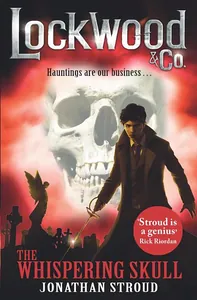
The Whispering Skull

 80
80

The Whispering Skull
Jonathan Stroud’s *The Whispering Skull* presents a chillingly effective single-case study in paranormal containment. The strength of the novel lies in its meticulous depiction of the Whispering Skull itself – not as a mere ghost, but as a distinct, insidious entity with a specific mode of operation that feels disturbingly plausible within the narrative’s framework. The agency’s bureaucratic approach to the supernatural, a recurring Stroudian element, grounds the fantastical elements and creates a compelling tension between protocol and emergent danger. However, the narrative occasionally falters in its pacing, with certain investigative sequences feeling slightly protracted before the central conflict fully ignites. A particularly memorable passage involves the subtle, psychological breakdown of a victim under the Skull’s influence, illustrating the spirit’s unique brand of terror. Ultimately, *The Whispering Skull* is a tightly constructed, atmospheric novel that offers a compelling look at the methodical confrontation of a singular, terrifying spectral threat.
📝 Description
80
Jonathan Stroud's 2014 novel, The Whispering Skull, details a special agent's fight against a malevolent spirit.
The Whispering Skull follows agent Nathaniel Barnaby as he investigates a series of disturbing events. These occurrences are tied to a dangerous spirit known as the Whispering Skull, which has a talent for influencing and tormenting its victims. The book is set in a world where supernatural beings and occult phenomena are treated as real threats that need to be managed by specialized organizations.
Barnaby and his colleagues face a significant challenge in dealing with this particular spirit due to its unique abilities. The narrative focuses on their efforts to contain and neutralize this threat, showcasing the methods and challenges involved in managing paranormal entities. Readers will find a story that blends supernatural mystery with elements of dark fantasy.
Published in 2014, The Whispering Skull enters the tradition of occult detective fiction and modern ghost stories. Stroud builds upon a history of narratives that explore the intersection of the mundane world with supernatural forces. The book specifically addresses the idea of a fictional agency tasked with managing and classifying paranormal threats, a concept familiar in various occult and speculative fiction traditions that examine how society might react to and regulate supernatural phenomena.
💡 Why Read This Book?
• Learn about spectral classification systems, such as the unique characteristics attributed to the Whispering Skull, offering a structured approach to understanding paranormal entities beyond generic hauntings. • Experience the tension between bureaucratic procedure and emergent supernatural danger, as demonstrated by agent Barnaby's mission in 2014, highlighting the practical challenges of occult investigation. • Grasp the psychological impact of spiritual manipulation, exemplified by the text's focus on how the Whispering Skull's influence affects its victims, providing insight into the human cost of confronting such entities.
⭐ Reader Reviews
Honest opinions from readers who have explored this book.
❓ Frequently Asked Questions
What is the primary focus of The Whispering Skull?
The book focuses on agent Nathaniel Barnaby's investigation into a malevolent spirit known as the Whispering Skull, which possesses the ability to psychologically torment and influence its victims.
What kind of paranormal entity is the Whispering Skull?
It is depicted as a distinct, insidious spirit with a specific modus operandi focused on psychic influence and causing profound psychological distress rather than simple poltergeist activity.
What is the tone of The Whispering Skull?
The tone is dark fantasy and mystery, characterized by atmospheric dread, investigative procedures, and the serious, often bureaucratic, handling of supernatural threats.
Is this book part of a series?
While Jonathan Stroud is known for series like *The Bartimaeus Sequence*, *The Whispering Skull* functions as a standalone novel focusing on a single case.
What makes the Whispering Skull unique as a spectral threat?
Its uniqueness lies in its deliberate psychological manipulation and insidious influence, distinguishing it from more conventional ghost manifestations described in paranormal literature.
When was The Whispering Skull first published?
The novel was first published in 2014, positioning it within the contemporary landscape of paranormal and dark fantasy fiction.
🔮 Key Themes & Symbolism
Spectral Containment Protocols
The narrative meticulously details the operational procedures and bureaucratic structures established to manage and neutralize dangerous spectral entities. This theme positions the supernatural not as an unexplainable force, but as a phenomenon requiring classification, study, and containment, akin to scientific or law enforcement agencies. Agent Barnaby's work exemplifies the practical challenges and risks inherent in such a system, where protocols are tested by the unique malevolence of spirits like the Whispering Skull.
Psychological Warfare by Spirits
Unlike typical hauntings, the Whispering Skull's primary weapon is psychological manipulation. The book explores how a spirit can exploit vulnerabilities, induce paranoia, and drive individuals to madness through insidious influence. This concept elevates the threat beyond mere physical manifestations, focusing on the internal, mental battles faced by those targeted. The narrative illustrates the profound and often devastating impact of such spiritual warfare on the human psyche.
The Bureaucratic Occult
Stroud presents a world where the occult is managed by official, often mundane, organizations. This theme blends the fantastical with the procedural, showing agents like Barnaby navigating red tape and official directives while confronting terrifying paranormal realities. It highlights the contrast between the extraordinary nature of the threats and the ordinary, methodical approach taken to combat them, suggesting that even the most esoteric dangers can be subjected to systematization.
The Nature of Malevolence
The Whispering Skull serves as a case study in concentrated spiritual malevolence. The work questions the origin and manifestation of such evil, presenting it not as random chaos but as a focused, directed force with a discernible intent. The narrative examines the characteristics that define a truly dangerous entity, moving beyond simple spectral presence to explore the active, damaging will behind it.
💬 Memorable Quotes
Direct passages from the work, attributed to the author.
“Some spirits didn't haunt houses; they haunted people.”
— This interpretation differentiates the Whispering Skull from typical ghosts, focusing on its targeted, personal attacks that prey on individual psychology rather than a physical location.
“The silence it left behind was the loudest sound.”
— This highlights the profound psychological impact of the entity's presence and subsequent absence, suggesting a lingering dread and the void left by its torment.
💡 Key Ideas
Editorial paraphrase of the work's core concepts — not direct quotes.
The Skull didn't shatter minds; it unwove them.
This line emphasizes the subtle, insidious nature of the entity's power, suggesting a process of gradual mental disintegration rather than outright psychic assault. It highlights the sophistication of its malevolence.
Bureaucracy was the first line of defense against the unnatural.
This quote underscores the novel's unique approach, presenting organized procedure and administrative control as essential tools for managing supernatural threats, blending the mundane with the arcane.
Barnaby treated ghosts like overdue invoices.
This paraphrased concept illustrates Barnaby's professional, detached, and systematic approach to dealing with paranormal phenomena, treating them as problems to be solved through procedure.
🌙 Esoteric Significance
Tradition
While not explicitly tied to a single historical esoteric tradition like Hermeticism or Kabbalah, *The Whispering Skull* draws upon the broader Western occult tradition concerning spirits and their interactions with the living. It taps into a lineage of ghost stories and demonology but frames it within a modern, quasi-governmental, investigative structure. This approach modernizes older concepts of spiritual entities and their potential for malevolence, aligning with a secularized approach to the paranormal that emerged in the 20th century.
Symbolism
The titular 'Whispering Skull' functions as a potent symbol of death, decay, and the lingering consciousness that can manifest malevolence. The 'whispering' aspect signifies insidious influence, secrets, and psychological manipulation, contrasting with overt spectral displays. The concept of 'containment' itself symbolizes humanity's attempt to rationalize, control, and compartmentalize the unknown and the terrifying, reflecting a desire for order in the face of chaos.
Modern Relevance
The work's exploration of spectral entities as distinct, catalogable phenomena with specific modes of operation speaks to modern paranormal investigation teams and enthusiasts who seek structured approaches to the unexplained. Its depiction of psychological warfare by non-corporeal entities finds echoes in contemporary discussions about consciousness, psychic phenomena, and the potential for non-physical influence. The blend of bureaucratic procedure with extreme supernatural threat continues to appeal to audiences interested in grounded, yet fantastical, explorations of the unknown.
👥 Who Should Read This Book
• Readers interested in dark fantasy and supernatural thrillers who appreciate atmospheric tension and investigative plots. They will gain a compelling narrative centered on a unique spectral threat. • Fans of Jonathan Stroud seeking a more mature, standalone exploration of paranormal phenomena beyond his popular YA series. They will experience his storytelling prowess applied to a darker, more focused concept. • Individuals intrigued by fictional explorations of ghost classification and containment. They will find a structured, albeit fictional, approach to understanding and confronting malevolent spirits.
📜 Historical Context
Published in 2014, *The Whispering Skull* entered a literary landscape where supernatural thrillers and urban fantasy held considerable sway. Jonathan Stroud, already an established author, utilized his skill in world-building and character development, honed through his *Bartimaeus Sequence*, to craft a narrative focused on a singular, terrifying entity. The era saw continued interest in paranormal investigation narratives, often blending elements of horror, mystery, and procedural drama. While Stroud's earlier work engaged with complex magical systems in a YA context, this novel shifted towards a more mature, atmospheric exploration of a specific spectral threat. Contemporaries exploring similar themes of organized supernatural control or dark fantasy included authors like Jim Butcher (though his focus was often more action-oriented) and the ongoing popularity of series like *Supernatural* on television, which shared the concept of a dedicated agency confronting paranormal dangers. The reception of the book was generally positive, noting Stroud's distinctive voice in a crowded genre.
📔 Journal Prompts
The psychological unweaving by the Whispering Skull: how might such insidious influence manifest in non-supernatural contexts?
Agent Barnaby's bureaucratic approach to the unnatural: what are the benefits and drawbacks of systematizing the unknown?
Reflect on the symbolic weight of the 'whispering skull' as an entity of death and insidious influence.
Consider the narrative's distinction between spirits that haunt places versus those that haunt people.
Analyze the tension between the mundane procedures of containment and the extraordinary nature of the spectral threat.
🗂️ Glossary
Whispering Skull
The titular spectral entity in the novel, characterized by its ability to psychologically torment and influence victims through insidious means, rather than overt physical manifestations.
Spectral Containment
The fictional process and protocols employed by an agency to capture, neutralize, or manage dangerous supernatural entities, treating them as classified threats requiring specific procedures.
Psychic Influence
The power attributed to the Whispering Skull to affect the minds and emotions of individuals, causing distress, paranoia, and mental breakdown without direct physical interaction.
Agent Barnaby
The protagonist, an investigator tasked with dealing with paranormal threats, known for his methodical, bureaucratic, and detached approach to his work.
Unnatural Phenomena
A general term used within the narrative to describe events, entities, or occurrences that fall outside the scope of conventional scientific understanding and require specialized handling.
Malevolence
The quality of being intentionally harmful or wicked, specifically applied to the inherent nature and intent of the Whispering Skull as a spiritual entity.
Psychological Warfare (Spiritual)
The tactic employed by the Whispering Skull, focusing on breaking down a victim's mental state through manipulation and dread, rather than direct physical confrontation.
🔮 Readers Also Liked
Browse all →








More by Jonathan Stroud
All books →

![The Amulet of Samarkand [graphic novel]](/img/thumb/the-amulet-of-samarkand-graphic-novel-jonathan-stroud-620896.webp)
More Free Spiritualism & Afterlife Books
View all →