Ghosts of the Deep
 75
75

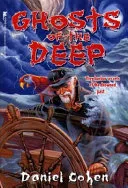
Ghosts of the Deep
Daniel Cohen's 'Ghosts of the Deep' offers a broad sweep of spectral encounters tied to the maritime world. The strength lies in its sheer volume of recounted legends, covering a wide range of oceanic lore from phantom fleets to individual sailor ghosts. Cohen's accessible prose makes these often chilling tales easy to absorb. However, the book's primary limitation is its lack of critical analysis; it presents anecdotes largely at face value, without delving deeply into the psychological or sociological underpinnings of such beliefs. A passage detailing the legend of the Flying Dutchman, for instance, is recounted with standard folkloric elements but offers little new interpretation beyond the familiar narrative. Ultimately, 'Ghosts of the Deep' serves as a comprehensive catalog of sea-bound specters for those content with the stories themselves.
📝 Description
75
Daniel Cohen's 1996 book collects maritime ghost stories and legends.
'Ghosts of the Deep' compiles tales of spectral sailors, phantom ships, and unexplained phenomena tied to oceanic and naval history. Daniel Cohen, a prolific author in the paranormal genre, gathered these accounts, drawing from centuries of seafaring superstitions.
The book appeals to enthusiasts of ghost stories, maritime history, folklore, and the paranormal. It focuses on anecdotal accounts and historical legends surrounding ships, the ocean, and the lives of those at sea. Readers interested in the uncanny and the unexplained aspects of seafaring will find material here.
This work taps into the enduring human fascination with the unexplained occurrences at sea, a theme present in folklore and ghost lore for centuries. It reflects a tradition of storytelling that seeks to understand the mysteries of the ocean and the lives of those who traverse it. The book examines how psychic energy, ancestral memories, or collective consciousness might manifest as spectral apparitions in maritime settings, connecting to broader concepts within paranormal literature.
💡 Why Read This Book?
• Gain exposure to a curated collection of maritime ghost legends, including specific accounts of phantom ships like the 'Flying Dutchman,' offering a focused exploration of sea-related spectral lore. • Understand the enduring power of folklore surrounding loss at sea, examining how tales of drowned sailors and lost vessels, such as those detailed in the book's sections on naval ghosts, shape collective memory. • Discover a range of reported paranormal phenomena specific to oceanic environments, learning about the unique atmospheric and psychological conditions that may contribute to such legends as presented in Cohen's 1996 compilation.
⭐ Reader Reviews
Honest opinions from readers who have explored this book.
❓ Frequently Asked Questions
What types of maritime ghosts are featured in Daniel Cohen's 'Ghosts of the Deep'?
'Ghosts of the Deep' includes tales of drowned admirals, captains, and common sailors, as well as spectral crews, phantom ships, and individuals lost at sea. The book covers a wide spectrum of spectral maritime encounters.
When was 'Ghosts of the Deep' by Daniel Cohen first published?
Daniel Cohen's 'Ghosts of the Deep' was first published in 1996. This edition compiles various ghost stories and legends related to the sea.
Does the book discuss famous ghost ships?
Yes, 'Ghosts of the Deep' features legends of famous phantom ships. These stories are part of the broader collection of maritime ghost tales compiled by Cohen.
Is this book suitable for paranormal investigators?
The book is suitable for paranormal enthusiasts as it provides a rich collection of anecdotal evidence and folklore from maritime history, offering a basis for further research or contemplation.
What is the author Daniel Cohen known for?
Daniel Cohen was a prolific author specializing in paranormal subjects, particularly ghosts. He authored many books on the topic, including 'Ghostly Tales of Love and Revenge' and 'The Restless Dead'.
Does the book explain the causes of these maritime ghost sightings?
While the book presents numerous accounts, it primarily focuses on recounting the legends and reported phenomena rather than offering definitive scientific or supernatural explanations for the occurrences.
🔮 Key Themes & Symbolism
Spectral Sailors and Crews
The book extensively documents tales of ghostly mariners, from high-ranking officers like drowned admirals to ordinary seamen who met their end at sea. These spectral figures are often depicted as repeating past actions or guarding their vessels. Cohen presents these accounts as traces of past lives, suggesting a form of psychic residue tied to the harsh realities and frequent tragedies of maritime existence throughout history.
Phantom Vessels of the Deep
A significant portion of 'Ghosts of the Deep' is dedicated to legendary ghost ships. The most famous example is often the 'Flying Dutchman,' a cursed vessel said to be doomed to sail the seas eternally. Cohen explores variations of these tales, examining how the concept of a spectral ship embodies maritime fears of the unknown, inescapable fate, and the profound loneliness of the open ocean.
The Ocean as a Liminal Space
Cohen's work implicitly treats the vast ocean as a liminal space, a boundary between the known world and the mysterious abyss, and by extension, between life and death. The sea itself is presented as a powerful entity capable of holding onto the spirits and memories of those it claims. The stories often highlight the isolation and vulnerability of seafarers, making the ocean a fertile ground for supernatural occurrences.
Folklore and Maritime Tragedy
The book illustrates how tragic maritime events and the collective fear and sorrow associated with them become fertile ground for folklore. Legends of ghosts and phantom ships often arise from real shipwrecks, mutinies, or battles. Cohen's collection demonstrates the enduring human need to find meaning or narrative in catastrophic loss, embedding these stories within the cultural memory of seafaring communities.
💬 Memorable Quotes
Direct passages from the work, attributed to the author.
“Tales of drowned admirals, captains, and sailors.”
— This phrase captures the core subject matter, highlighting the hierarchical nature of maritime crews and the universality of spectral appearances across all ranks, suggesting that tragedy at sea affects everyone.
“Famous ships and people lost at sea.”
— This indicates the scope of the collection, emphasizing not only the spectral nature of individuals but also the legendary status that certain vessels and the collective fate of those lost to the ocean can attain in folklore.
“Ghostly tales and legends of the drowned.”
— This points to the enduring nature of these stories, suggesting that the spirits of those lost to the water continue to manifest in folklore, serving as a reminder of the ocean's perils and mysteries.
“The restless dead of the ocean.”
— This evocative phrase captures the essence of maritime hauntings, portraying the sea as a place where spirits are unable to find peace, forever bound to their watery graves and the scenes of their demise.
“Echoes from the deep.”
— This metaphorical concept suggests that the ghostly apparitions are not necessarily conscious entities but rather lingering impressions or psychic traces of intense events and emotions that have imprinted themselves upon the maritime environment.
🌙 Esoteric Significance
Tradition
While not strictly adhering to a single esoteric lineage, 'Ghosts of the Deep' draws from a broad current of belief in spiritual persistence and psychic phenomena that speaks to animistic and folkloric traditions. It touches upon concepts common in spiritualism and parapsychology, where the environment is believed to retain energetic imprints of significant events or emotions, a notion found in various occult philosophies.
Symbolism
The phantom ship, most famously the 'Flying Dutchman,' symbolizes inescapable fate, karmic retribution, and the eternal wandering of the soul burdened by past transgressions. Drowned sailors represent the victims of overwhelming natural forces or the unconscious, embodying the primal fears associated with drowning and the unknown depths. The sea itself functions as a symbol of the collective unconscious, a vast repository of memories, emotions, and unresolved energies.
Modern Relevance
Contemporary interest in paranormal investigations, ghost hunting, and the exploration of alleged hauntings continues to draw from the types of narratives compiled in Cohen's work. Modern paranormal researchers and enthusiasts often cite classic tales of maritime ghosts as foundational examples of spectral phenomena. The book's themes also connect with discussions in comparative mythology and the psychology of fear, exploring how ancient archetypes of the sea and its denizens persist in modern consciousness.
👥 Who Should Read This Book
• Enthusiasts of maritime history and folklore seeking supernatural accounts tied to naval and seafaring life. • Readers interested in ghost stories and paranormal phenomena who want to explore tales specifically focused on the ocean and its mysteries. • Folklore researchers and students of comparative mythology interested in the evolution of legends surrounding lost souls and phantom vessels.
📜 Historical Context
Published in 1996, Daniel Cohen's 'Ghosts of the Deep' arrived in an era still captivated by paranormal phenomena, building on the popular interest in ghost stories that had seen significant growth in the preceding decades. Cohen was a respected figure in this field, having authored numerous similar works. The book taps into a vast, centuries-old tradition of maritime superstition and ghost lore, a cultural bedrock for seafaring nations. Unlike purely academic studies of folklore, Cohen's work catered to a popular audience fascinated by unexplained events. While contemporary authors like Whitley Strieber were exploring alien encounters and near-death experiences, Cohen focused on more traditional spectral apparitions, particularly those tied to the unique environment of the sea. The reception of such books generally involved enthusiastic readership among believers and skeptics alike, though academic circles often viewed them as anecdotal rather than empirical evidence.
📔 Journal Prompts
Spectral ships encountered at sea and their symbolic meaning.
The enduring folklore surrounding drowned sailors.
Personal reflections on the ocean as a place of mystery and potential hauntings.
The recurring motif of inescapable fate in maritime ghost legends.
How the tales of phantom vessels mirror human anxieties about the unknown.
🗂️ Glossary
Maritime Ghosts
Spectral apparitions or phenomena associated with the sea, ships, and seafaring individuals. These can range from phantom crews to ghostly captains and legendary lost vessels.
Phantom Ships
Legendary vessels that are said to appear supernaturally, often as ghost ships carrying spectral crews. The 'Flying Dutchman' is a prime example.
Drowned Sailors
The spirits or spectral remnants of individuals who perished at sea, often depicted as haunting the locations of their demise or their former vessels.
Sea Folklore
A body of traditional beliefs, customs, and stories related to the ocean, its inhabitants, and the experiences of those who travel upon it, often including supernatural elements.
Psychic Imprints
The concept that strong emotions or traumatic events can leave a residual energetic or psychic trace in a location, leading to alleged hauntings or apparitions.
Liminal Space
A transitional or in-between state or place, often associated with the sea, representing a boundary between the known and unknown, life and death.
The Restless Dead
A term referring to spirits or ghosts who are believed to be unable to find peace or move on to an afterlife, often tethered to earthly locations or unfinished business.