Das Sitzen der Wüstenväter
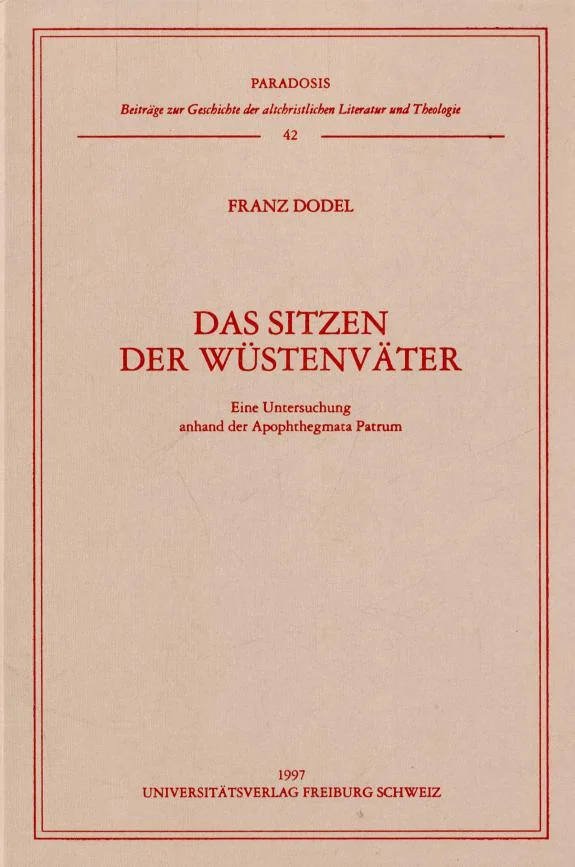
 72
72

Das Sitzen der Wüstenväter
Franz Dodel’s Das Sitzen der Wüstenväter offers a multilingual digest of the foundational texts and figures of early Christian desert spirituality. Its strength lies in its comparative presentation, providing summaries in German, French, and English, which is invaluable for cross-linguistic research. However, the brevity of the summaries, while practical for quick reference, can sometimes sacrifice the nuance of the original teachings. A notable aspect is the focus on the practical application of 'sitting' (Sitzen) as a form of contemplative prayer, a concept Dodel distills effectively. The work serves as a useful, albeit condensed, gateway to a rich spiritual tradition. It is an accessible reference for those beginning their exploration of the Desert Fathers' legacy.
📝 Description
72
Franz Dodel's 1997 book compiles teachings attributed to the Desert Fathers.
Das Sitzen der Wüstenväter, published in 1997, gathers summaries of the practices and teachings associated with the early Christian Desert Fathers. The book addresses scholars and practitioners interested in early Christian monasticism, especially those who approach it from an esoteric viewpoint and desire brief overviews in several languages. Dodel's work appeared during a late 20th century revival of interest in early Christian asceticism and desert spirituality. This period saw renewed academic and popular attention directed toward figures such as Evagrius Ponticus and the initial monastic groups in Egypt. The text focuses on core concepts central to these early ascetics. It highlights 'the cell' (Sitzen) as a primary location for spiritual discipline, the importance of prayer (hesychia), and the spiritual warfare against demonic temptations as detailed in early monastic writings.
This book engages with the esoteric dimensions of early Christian monasticism, a tradition that sought direct spiritual experience and union with the divine through ascetic practices. The Desert Fathers, in particular, developed methods of contemplation and inner prayer that became foundational for later mystical traditions. Their emphasis on the stillness of the cell and the interior battle against distractions and inner demons speaks to an understanding of spiritual life as an intensely personal and disciplined pursuit, moving beyond mere ritual or communal observance towards a transformative inner state.
💡 Why Read This Book?
• Gain a concise, multilingual overview of the Desert Fathers' core practices, as summarized in German, French, and English, facilitating comparative study. • Understand the concept of "Sitzen" (sitting/contemplation) as a central practice, directly referencing the title and its implications for early Christian asceticism. • Access essential teachings on prayer and spiritual warfare as presented by figures like Evagrius Ponticus, offering a distilled view of their ascetic disciplines.
⭐ Reader Reviews
Honest opinions from readers who have explored this book.
❓ Frequently Asked Questions
What is the original publication year of Das Sitzen der Wüstenväter?
Das Sitzen der Wüstenväter was first published in 1997, reflecting a renewed interest in early monastic literature and esoteric interpretations during the late 20th century.
What languages are the summaries in Das Sitzen der Wüstenväter provided?
The book provides summaries in German (dt.), French (franz.), and English (engl.), making its content accessible to a wider international audience interested in esoteric studies.
Who were the Desert Fathers mentioned in the book?
The Desert Fathers were early Christian hermits and ascetics, primarily active in the deserts of Egypt, Syria, and Palestine from the 3rd century onwards, whose teachings on spiritual life are central to the book.
What is the meaning of 'Sitzen' in the context of the book title?
'Sitzen' translates to 'sitting' in English and refers to the practice of monastic contemplation and ascetic discipline, particularly the stillness and prayer associated with the Desert Fathers' way of life.
Does the book offer in-depth theological analysis of the Desert Fathers?
No, Das Sitzen der Wüstenväter primarily offers summaries of the teachings rather than deep theological analysis, serving as a concise reference point for key concepts and figures.
Is Franz Dodel the original author of the Desert Fathers' teachings?
Franz Dodel is the author and compiler of this specific work, first published in 1997. He synthesizes and presents summaries of the original teachings attributed to the historical Desert Fathers.
🔮 Key Themes & Symbolism
The Practice of 'Sitzen'
The central theme revolves around 'Sitzen,' or the act of sitting in contemplative stillness, a core practice of the Desert Fathers. This is not mere physical posture but a disciplined engagement with the inner life, aimed at achieving prayerful vigilance and union with the divine. The book distills various accounts of how this practice fostered spiritual insight and resilience against internal and external distractions, forming the bedrock of their ascetic path.
Spiritual Warfare and Temptation
A significant aspect explored is the relentless spiritual warfare described by the Desert Fathers. The text highlights their encounters with various forms of temptation, often personified as demons, and their strategies for overcoming them through prayer, fasting, and unwavering faith. This theme underscores the demanding nature of their chosen path and the psychological and spiritual fortitude required to pursue it.
Multilingual Summaries
The work's unique structure lies in its presentation of summaries in German, French, and English. This approach caters to scholars and enthusiasts who may not have fluency in all primary languages of monastic literature or who seek a comparative overview. It facilitates cross-cultural understanding and academic research into the reception and interpretation of these early Christian texts.
Early Christian Asceticism
At its heart, Das Sitzen der Wüstenväter serves as a compendium of early Christian ascetic ideals. It outlines the principles of renunciation, detachment from worldly affairs, and the pursuit of virtue through rigorous self-discipline. The book provides a condensed look into the lives and doctrines that shaped this foundational period of Christian spirituality and mysticism.
💬 Memorable Quotes
Direct passages from the work, attributed to the author.
“Discernment of spirits is vital for resisting deception.”
— This interpretation highlights the Desert Fathers' emphasis on developing spiritual sensitivity to differentiate between divine inspiration and demonic illusion, a crucial skill for maintaining spiritual purity.
“Constant prayer empties the soul of worldly cares.”
— This captured idea points to the transformative power of persistent prayer, suggesting that its practice actively purges the mind and heart of attachments to material concerns and distractions.
“Fasting and vigils build resilience against temptation.”
— This interpretation reflects the Desert Fathers' view that physical ascetic practices like fasting and keeping vigil were not ends in themselves but vital tools for strengthening the will and capacity to resist spiritual adversaries.
💡 Key Ideas
Editorial paraphrase of the work's core concepts — not direct quotes.
The stillness of the cell is the beginning of prayer.
This paraphrased concept emphasizes the importance of physical and mental solitude, represented by 'the cell,' as the essential prerequisite for developing a deep, contemplative prayer life, a key tenet of the Desert Fathers.
The anchorite's struggle is primarily internal.
This paraphrased concept underscores that the true battles faced by the Desert Fathers were not external conflicts but inner struggles against passions, thoughts, and ego.
🌙 Esoteric Significance
Tradition
This work engages with the early Christian mystical tradition, a precursor to many later esoteric lineages. It draws directly from the ascetic and contemplative practices of the Desert Fathers, which laid groundwork for Hesychasm, Christian Gnosticism, and later Hermetic revivals that sought to reclaim ancient wisdom. Dodel’s synthesis highlights the practical, experiential aspects of faith that resonate with esoteric goals of inner transformation and direct experience of the divine.
Symbolism
Key symbols include 'the cell' (monasterion), representing the inner space of the soul and the physical locus of spiritual discipline; 'the desert' itself, symbolizing the purified soul stripped bare of worldly attachments; and the various 'demons' or temptations, which symbolize the psychological obstacles and negative thought-forms that must be overcome on the spiritual path.
Modern Relevance
Contemporary practitioners of contemplative prayer, Christian meditation, and even some forms of Western Esotericism find value in Dodel's distillation of the Desert Fathers' teachings. Thinkers and groups focused on mindfulness, asceticism, and the recovery of ancient spiritual technologies often reference these early figures. The emphasis on inner stillness and direct spiritual experience continues to inform modern spiritual seekers looking for non-dogmatic pathways to transcendence.
👥 Who Should Read This Book
• Students of early Christian mysticism seeking foundational texts on asceticism and contemplative prayer. • Esoteric practitioners interested in the historical roots of Western contemplative traditions and their practical applications. • Scholars of comparative religion and monastic history looking for a concise, multilingual overview of the Desert Fathers' core teachings.
📜 Historical Context
Published in 1997, Franz Dodel's work arrives during a period of sustained academic and popular interest in early Christian monasticism, particularly its mystical and ascetic dimensions. This era saw scholars like Benedicta Ward actively translating and analyzing the lives of the Desert Fathers, making figures like Evagrius Ponticus more accessible. Dodel’s contribution, offering multilingual summaries, situates itself within this broader movement to reinterpret and disseminate these ancient teachings. It emerges in contrast to more purely historical or theological analyses, aiming instead for a synthesis relevant to esoteric practitioners. While not directly engaging with a specific contemporary critique, the book implicitly addresses a desire for distilled spiritual wisdom, distinct from the more complex theological debates or the burgeoning New Age movements of the time.
📔 Journal Prompts
The practice of 'Sitzen' in relation to your own contemplative disciplines.
Identify the 'demons' of distraction in your daily life.
Reflect on the symbolism of the desert as a place of spiritual purification.
How does the concept of discernment apply to modern information overload?
Consider the role of ascetic practices in building spiritual resilience.
🗂️ Glossary
Desert Fathers
Early Christian monks and ascetics, primarily from Egypt and Syria in the 3rd-5th centuries, known for their teachings on prayer, asceticism, and spiritual struggle.
Sitzen
German for 'sitting,' referring to the monastic practice of contemplative prayer and stillness, central to the Desert Fathers' spiritual discipline.
Asceticism
A lifestyle of rigorous self-discipline, often involving fasting, prayer, and renunciation of worldly pleasures, aimed at spiritual growth.
Hesychia
A Greek term meaning 'stillness' or 'quietude,' referring to the state of inner peace and contemplative prayer cultivated by mystics.
Demons (Temptations)
In the context of the Desert Fathers, refers to internal struggles, negative thoughts, and spiritual obstacles that test and shape the practitioner's faith.
Anchorite
A religious recluse, one who lives in solitude for religious reasons, often in a remote place like the desert.
Discernment of Spirits
The spiritual practice of distinguishing between different spiritual influences, particularly between divine guidance and demonic or egoic deception.
This book appears in 1 collection
🔮 Readers Also Liked
Browse all →









From the “Desert Fathers” Collection
View all →






More Free Occult Philosophy Books
View all →