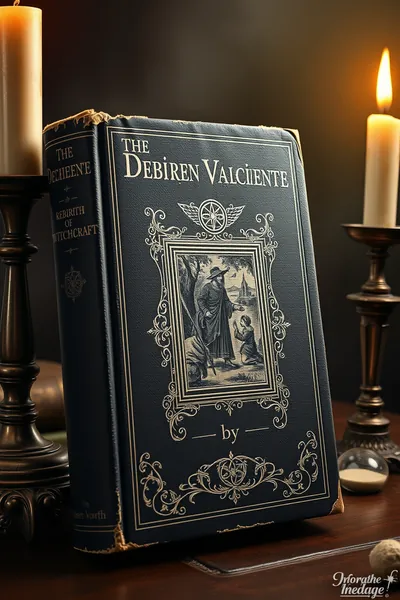
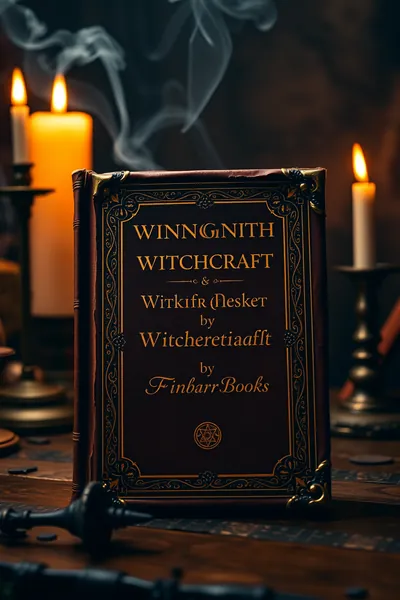
Witch Blood!
 74
74

Witch Blood!
Patricia Crowther’s Witch Blood! arrives not with the flourish of a manifesto but the quiet authority of a seasoned practitioner. Its strength lies in its unvarnished presentation of witchcraft in the post-Gardnerian era. The 1974 publication date is crucial; it places the work within a specific historical moment of witchcraft's public emergence, offering a perspective distinct from later, more commercialized interpretations. Crowther’s prose is direct, even stark at times, which lends it an undeniable authenticity. However, this same directness can feel somewhat austere to a modern reader accustomed to more elaborate narratives. The passage discussing the consecration of tools, for instance, is remarkably devoid of embellishment, focusing purely on the mechanics and intent. While this is a testament to its practical focus, it might leave some readers wanting more spiritual or philosophical exposition. Witch Blood! is a valuable artifact of witchcraft's historical development, essential for understanding its foundational texts, even if it eschews overt spiritual lyricism.
📝 Description
74
Published in 1974, Patricia Crowther's Witch Blood! details practical witchcraft rituals and spells.
Witch Blood! by Patricia Crowther, released in 1974, offers a practical guide to witchcraft. It moves beyond theory to instruct readers on the operational aspects of the Craft as practiced by its adherents. The book covers specific rituals, spells, and the underlying philosophy that supports these practices. It is written for serious students of witchcraft and esoteric history, particularly those interested in the mid-20th century development of modern witchcraft. Those who value historical accounts of magical practices from an insider's perspective will find this work significant. It is not intended for casual readers seeking sensationalism, but for those committed to understanding the roots of contemporary witchcraft.
The book emerged during a period of renewed interest in pagan traditions in the West, following the repeal of the Witchcraft Act in the UK. Crowther's work provided an insider's view, contributing to discussions about reconstructed magical traditions. It countered earlier 20th-century dismissals of witchcraft as mere folklore. The 1970s also saw a rise in feminist spirituality, which often aligned with reconstructed pagan paths, making the book relevant to those movements.
Witch Blood! is situated within the resurgence of Western witchcraft traditions in the mid-20th century. Emerging after the UK's 1951 Witchcraft Act repeal, it reflects a growing interest in reconstructed paganism and magical practices. Crowther, writing from within the tradition, offers an alternative to academic or sensationalized accounts. The book's focus on practical application, ritual, and philosophy aligns with a lineage of esoteric practitioners seeking to codify and transmit their knowledge.
💡 Why Read This Book?
• Understand the practical rituals and spellcraft central to witchcraft as described by a key figure from its 1970s resurgence, offering a tangible glimpse into mid-20th century Craft practices. • Gain insight into the historical context of modern witchcraft's development, particularly the period following the repeal of the Witchcraft Act in 1951, providing a primary source perspective. • Explore core witchcraft concepts like the Wheel of the Year and the energetic polarity of divine masculine and feminine, as presented by Patricia Crowther, a practitioner from a pivotal era.
⭐ Reader Reviews
Honest opinions from readers who have explored this book.
❓ Frequently Asked Questions
When was Witch Blood! originally published?
Witch Blood! by Patricia Crowther was first published in 1974, placing it within a significant period of witchcraft's re-emergence in modern Western esotericism.
What kind of content does Witch Blood! focus on?
The book concentrates on the practical aspects of witchcraft, including rituals, spells, and the underlying philosophy of the Craft, offering an insider's perspective.
Who is Patricia Crowther?
Patricia Crowther is a notable figure in modern witchcraft, known for her writings and involvement in the Craft during the mid-20th century, with Witch Blood! being one of her foundational works.
Is Witch Blood! suitable for absolute beginners?
While it provides practical instruction, its historical context and direct approach might be more suited for serious students of witchcraft or esoteric history rather than absolute, uninitiated beginners.
What historical period does the book reflect?
Published in 1974, the book reflects the state and practices of witchcraft in the 1970s, a time of significant growth and public awareness for the Craft.
Does the book discuss specific witchcraft traditions?
Witch Blood! engages with witchcraft traditions as they were understood and practiced in the mid-20th century, offering a practitioner's view on core elements.
🔮 Key Themes & Symbolism
Practical Ritual Application
Witch Blood! distinguishes itself by focusing on the 'how-to' of witchcraft, moving beyond mere theoretical exposition. It details the mechanics of ritual, from the preparation of sacred space to the invocation of energies and the casting of spells. This emphasis on practical application provides readers with a blueprint for engaging with the Craft's operative side. The work likely covers the use of specific tools, gestures, and verbalizations essential for effective ritual work, grounding esoteric concepts in tangible practice for adherents.
The Practitioner's Voice
As a work by Patricia Crowther, first published in 1974, Witch Blood! offers a valuable first-hand account of witchcraft during a critical period of its modern revival. It presents the Craft from the perspective of an initiated practitioner, contrasting sharply with earlier academic or sensationalist portrayals. This authentic voice lends credibility and depth to its exploration of rituals and beliefs, allowing readers to connect with the lived experience of witchcraft rather than an external interpretation.
Lineage and Vital Force
The title 'Witch Blood!' strongly suggests a focus on the concepts of lineage, inheritance, and the vital life force that underpins magical practice. This can be interpreted in both biological and spiritual terms, referencing ancestral connections and the intrinsic energy that animates the universe and the witch. The work likely explores how this 'blood' or life force is channeled and directed through ritual and magical intent, forming a core element of witchcraft practice and initiation.
Mid-20th Century Craft
Published in 1974, Witch Blood! is a window into the state of witchcraft during a key era. It reflects the practices and understanding of the Craft as it was solidifying its public identity following the repeal of the Witchcraft Act. The book serves as a primary source for understanding the lineage and evolution of modern witchcraft, particularly the traditions influenced by figures like Gerald Gardner, offering context for contemporary practices.
💬 Memorable Quotes
Direct passages from the work, attributed to the author.
“The book likely details the proper consecration of ritual tools.”
— This interpretation highlights the practical, operational focus of the text, suggesting that Crowther provides instruction on how to imbue magical implements with purpose and power, a fundamental aspect of witchcraft practice.
“The 'blood' signifies a connection to the life force.”
— This interpretation links the title directly to a core esoteric concept, suggesting the book explores the vital energy that flows through all things and how witches tap into it for magical purposes.
“The Wheel of the Year marks significant natural turning points.”
— This suggests the book's engagement with the cyclical nature of time and seasons as observed in witchcraft, likely detailing the Sabbats and their associated meanings and rituals.
“Polarity of energies is essential in Craft workings.”
— This interpretation points to the concept of divine masculine and feminine forces within witchcraft, indicating the book discusses how these complementary energies are invoked and balanced in ritual.
💡 Key Ideas
Editorial paraphrase of the work's core concepts — not direct quotes.
Ritual requires precise intent and energetic focus.
This paraphrased concept emphasizes the mental and energetic discipline required for effective witchcraft, underscoring that successful spellcraft and ritual work depend not just on form but on the practitioner's internal state.
🌙 Esoteric Significance
Tradition
Witch Blood! firmly situates itself within the lineage of modern Western esotericism, specifically the revivalist witchcraft traditions of the mid-20th century, often referred to as the 'Craft'. While drawing on historical notions of witchcraft, it represents a departure from older, folk-magic practices and earlier esoteric systems like ceremonial magic. It aligns with the post-Gardnerian Wiccan movement, emphasizing nature, cyclic time, and immanent divinity, presenting a path focused on direct experience and personal practice rather than solely theoretical study.
Symbolism
The 'blood' in the title itself is a potent symbol, potentially representing lineage, ancestral connection, vital life force, and the very essence of the Craft. Other likely symbols explored include the sacred circle as a representation of the cosmos and a contained space for magic, the elements (Earth, Air, Fire, Water) as foundational forces, and the polarity of divine masculine and feminine energies, often embodied by the Horned God and the Goddess, central to many Craft traditions.
Modern Relevance
Contemporary practitioners of various Pagan and Wiccan paths continue to engage with foundational texts like Witch Blood! for their historical insight and practical instruction. While some aspects may reflect the specific milieu of the 1970s, the core principles of ritual structure, energetic work, and connection to natural cycles remain relevant. Modern witchcraft communities often draw upon such works to understand the evolution of their traditions and to find inspiration for personal practice, making it a touchstone for those exploring the Craft's historical roots.
👥 Who Should Read This Book
• Students of modern witchcraft history seeking primary source material from the 1970s revival period, offering an insider's view distinct from academic analyses. • Aspiring or practicing witches interested in understanding the mechanics of ritual, spellcasting, and the philosophical underpinnings of the Craft as presented by a key figure. • Esoteric scholars examining the evolution of Western magical traditions and the re-emergence of pagan paths in the 20th century, providing context for contemporary spiritual movements.
📜 Historical Context
Witch Blood!, published in 1974, emerged during a dynamic period for modern witchcraft. Following the repeal of the Witchcraft Act in the UK in 1951, there was a growing interest in paganism and reconstructed magical traditions. Patricia Crowther’s work contributed significantly by offering an insider’s perspective on witchcraft practices, distinct from earlier anthropological or sensationalist accounts. The 1970s saw a burgeoning of neo-paganism, often intertwined with feminist spirituality and counter-cultural movements. Crowther’s text provided a practical manual for adherents, grounding the often-abstract concepts of the Craft in tangible ritual and spellwork. This era also saw figures like Doreen Valiente publishing her own accounts, contributing to a broader public discourse on witchcraft's modern forms, which often differed from earlier, more shadowy perceptions.
📔 Journal Prompts
The consecration of ritual tools as described in Witch Blood!.
The concept of 'Witch Blood' and its implications for personal practice.
Ritual structure and energetic focus in spellcraft.
The Wheel of the Year's significance for modern practitioners.
Balancing divine masculine and feminine energies within a ritual context.
🗂️ Glossary
The Craft
A term commonly used by adherents to refer to witchcraft, emphasizing its nature as a spiritual path, tradition, or practice rather than mere superstition.
Sabbats
The eight major festivals celebrated in many modern witchcraft traditions, marking significant points in the solar and agricultural year, such as Samhain, Yule, and Beltane.
Consecration
The act of dedicating or setting apart a person, object, or place for a sacred purpose, often involving ritual purification and invocation of divine energy.
Invocation
The act of calling upon a deity, spirit, or energy for assistance, blessing, or presence within a ritual context.
Sacred Circle
A defined space, typically circular, created through ritual for magical workings. It is often seen as a gateway between worlds and a place of amplified power.
Vital Force
The inherent energy or life principle that animates all beings and the universe. In witchcraft, this force is often seen as a primary source for magical operations.
Polarity
In esoteric contexts, the concept of complementary opposites, such as masculine and feminine, active and passive, or light and dark, whose balance and interaction are crucial for creation and magic.