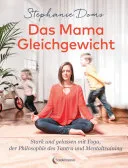
Das Mama-Gleichgewicht
 83
83

Das Mama-Gleichgewicht
Stephanie Doms' "Das Mama-Gleichgewicht" tackles the often-romanticized yet intensely demanding reality of motherhood with refreshing pragmatism. The book's strength lies in its accessible integration of yoga, Tantra, and mental training, offering concrete practices rather than vague platitudes. Doms, drawing from personal experience, successfully demystifies these potent disciplines for a stressed-out audience. A particularly effective section details specific breathing exercises derived from Tantric pranayama, designed to regulate the nervous system during moments of overwhelm. However, the conceptual links to broader Tantric philosophy could be more deeply explored; the work occasionally feels more like a self-help guide with esoteric flavors than a rigorous philosophical treatise. Despite this, the practical application is undeniable. It offers a viable path toward reclaiming inner balance for mothers.
📝 Description
83
Stephanie Doms published Das Mama-Gleichgewicht in 2020, a guide for mothers.
Das Mama-Gleichgewicht, or The Mother's Balance, by Stephanie Doms, offers mothers a practical guide to managing the challenges of early childhood. Published in 2020, the book addresses the energetic depletion and the often chaotic nature of raising young children. It provides mothers with concrete methods to find their equilibrium and reclaim joy amidst the constant demands of parenting.
Doms structures her approach around three core components: yoga practices, Tantric philosophy, and mental discipline. These are not presented as theoretical concepts but as practical techniques designed to build resilience, conserve energy, and cultivate contentment within the maternal role. The aim is to equip mothers with tools to better handle the day-to-day realities of family life.
The book draws upon contemporary interpretations of yoga and Tantra, traditions with a long history in Western esoteric thought since the late 19th century. These disciplines, influenced by figures like Helena Blavatsky and subsequent movements, are adapted here for the specific needs of mothers. Doms integrates these ancient philosophies with practical mental training to create a framework for personal well-being within the domestic sphere.
💡 Why Read This Book?
• Learn practical yoga sequences specifically designed to combat maternal fatigue, as detailed in the book's dedicated practice section. • Understand how to apply foundational Tantric principles, such as the concept of Shakti, to re-energize your daily life and maternal role. • Discover mental training techniques inspired by Doms' own journey, aiding in the return to "Mama-Gleichgewicht" after periods of stress.
⭐ Reader Reviews
Honest opinions from readers who have explored this book.
❓ Frequently Asked Questions
When was Das Mama-Gleichgewicht first published?
Das Mama-Gleichgewicht by Stephanie Doms was first published on September 11, 2020, offering a contemporary approach to maternal well-being.
What are the main pillars of Stephanie Doms' concept?
The three core pillars of Doms' concept are yoga, the philosophy of Tantra, and mental training, forming a comprehensive system for mothers.
Is this book suitable for mothers with very young children?
Yes, the book specifically addresses the challenges of parenting toddlers and young children, aiming to help mothers find balance amidst their chaos.
Does the book require prior knowledge of yoga or Tantra?
No, the work is designed to be accessible, providing practical guidance and explanations for mothers who may be new to these disciplines.
What is the primary goal of Das Mama-Gleichgewicht?
The primary goal is to help mothers feel more serene, energetic, and joyful by providing tools to return to a state of "Mama-Gleichgewicht" or maternal balance.
Who is the author of Das Mama-Gleichgewicht?
The author is Stephanie Doms, who developed this unique concept from her own experiences as a mother.
🔮 Key Themes & Symbolism
Maternal Balance
The central theme is achieving "Mama-Gleichgewicht," a state of inner equilibrium for mothers overwhelmed by the demands of childcare. Doms posits that this balance is not a static achievement but a dynamic process of returning to oneself amidst chaos. The book offers tangible practices drawn from yoga and mental training to facilitate this return, emphasizing self-care as a foundational element of effective mothering rather than a luxury.
Tantric Philosophy
Doms integrates principles from Tantra, moving beyond common misconceptions to explore its energetic and philosophical underpinnings. The work references the concept of Shakti, the divine feminine energy, suggesting that mothers can tap into this inherent power to navigate challenges. This perspective reframes motherhood not as a draining duty but as an opportunity to engage with profound creative and life-affirming forces.
Integrated Practice
The book's unique contribution lies in its synthesis of three distinct disciplines: yoga for physical and energetic alignment, Tantric philosophy for a deeper understanding of life force, and mental training for cognitive resilience. This multi-faceted approach is presented in a practical, actionable format, enabling mothers to implement these tools directly into their demanding daily lives and foster a lasting sense of well-being.
Self-Care as Empowerment
Rather than advocating for self-care as a mere indulgence, Doms frames it as an essential act of empowerment for mothers. By utilizing the techniques presented, mothers can reclaim their energy, mental clarity, and joy, which in turn positively impacts their parenting. This perspective challenges the societal narrative that motherhood requires self-neglect, promoting a more sustainable and fulfilling approach.
💬 Memorable Quotes
Direct passages from the work, attributed to the author.
“The everyday with toddlers is often turbulent, exhausting, and chaotic.”
— This opening statement immediately grounds the book in relatable reality, acknowledging the intense, often overwhelming nature of early childhood parenting without romanticization.
“Being a mother with serenity, energy, and joy? In reality, young mothers often feel miles away from that!”
— This highlights the core tension the book seeks to resolve: the gap between the ideal of joyful motherhood and the lived experience of exhaustion and stress.
“Yoga, the philosophy of Tantra, and mental training form the three pillars of this unique concept.”
— This succinctly defines the book's methodological framework, outlining the specific esoteric and psychological disciplines Doms employs to achieve maternal balance.
“The practice section offers a large...”
— This indicates the book's practical orientation, promising actionable exercises and guidance beyond theoretical concepts, directly addressing the reader's need for immediate solutions.
💡 Key Ideas
Editorial paraphrase of the work's core concepts — not direct quotes.
Finding your way back to 'Mama-Gleichgewicht' is a journey.
This paraphrased concept emphasizes that regaining balance is an ongoing process, not a one-time fix, encouraging perseverance and self-compassion in the maternal journey.
🌙 Esoteric Significance
Tradition
This work draws from the broad umbrella of Tantra, a complex and diverse set of Indian spiritual traditions. Doms adapts principles often associated with Neo-Tantric movements that emphasize the integration of spiritual practice into everyday life and the harnessing of life-force energy (Shakti). It departs from more ascetic or ritualistic forms of classical Tantra, focusing instead on psychological and energetic balance relevant to modern domestic life.
Symbolism
While the book is primarily practical, the underlying symbolism relates to the concept of Shakti, representing feminine creative power and dynamism. The "Mama-Gleichgewicht" itself can be seen as a symbolic quest for inner harmony and centeredness amidst the often chaotic energies of family life. The integration of yoga and mental training symbolizes the holistic approach required to balance the physical, mental, and energetic aspects of the self.
Modern Relevance
Doms' approach appeals to contemporary movements focused on embodied spirituality and practical applications of esoteric wisdom. Thinkers and practitioners in fields like somatic psychology, modern yoga philosophy, and conscious parenting often engage with similar principles of energy management and mindfulness. Her work offers a bridge between ancient traditions and the immediate needs of 21st-century mothers seeking grounded, empowering spiritual practices.
👥 Who Should Read This Book
['• Mothers aged 25-45 experiencing burnout, seeking practical tools to regain energy and emotional equilibrium.', '• Practitioners of yoga interested in exploring the philosophical underpinnings of Tantra for personal application.', '• Individuals interested in self-help and wellness literature that integrates psychological techniques with esoteric wisdom.']
📜 Historical Context
Published in 2020, "Das Mama-Gleichgewicht" emerges within a contemporary landscape where interest in Eastern spiritual practices, particularly yoga and Tantra, has significantly permeated Western self-help and wellness culture. This revival gained momentum in the late 20th century, moving beyond its ascetic roots to embrace more householder-oriented applications, a trend exemplified by authors like Sally Kempton. Doms' work specifically targets the modern maternal experience, a demographic increasingly seeking practical, spiritually-informed tools for stress management. While many books offer yoga or mindfulness for parents, Doms’ explicit integration of Tantric philosophy, albeit in a modernized, accessible form, positions her work within a specific niche of esoteric wellness literature. The reception of such works often focuses on their perceived efficacy in promoting well-being, with less emphasis on rigorous academic engagement, distinguishing it from earlier, more scholarly explorations of Tantra.
📔 Journal Prompts
The "Mama-Gleichgewicht" as a dynamic state: How does your internal equilibrium shift throughout a typical day?
Reflecting on Shakti: Where do you feel the flow of creative energy most strongly in your life?
Tantric philosophy's role: How can embracing paradoxes ease maternal stress?
Mental training techniques: Identify one recurring negative thought pattern and reframe it.
The practice section's utility: Which specific yoga pose or breathing exercise could address your current energy levels?
🗂️ Glossary
Mama-Gleichgewicht
Literally "Mother's Balance," this term refers to a state of inner equilibrium, serenity, and energetic well-being specifically sought by mothers amidst the challenges of childcare.
Tantra
A complex system of Indian spiritual traditions emphasizing the expansion of consciousness and the integration of all aspects of life, often involving energetic practices and the recognition of divine feminine energy (Shakti).
Shakti
In Tantric philosophy, Shakti represents the primordial cosmic energy, the divine feminine power that underlies creation, sustenance, and transformation. It is often understood as the active, dynamic force of consciousness.
Pranayama
A Sanskrit term referring to the practice of breath control or regulation, considered a fundamental aspect of yoga and Tantra for managing vital energy (prana) and influencing mental states.
Mentaltraining
Mental training, encompassing techniques like visualization, affirmations, and cognitive reframing, aimed at cultivating resilience, focus, and positive psychological states.
Esoteric
Relating to or accessible only by a select group of initiated people or those with specialized knowledge; often pertaining to spiritual or mystical traditions beyond mainstream understanding.
Turbulent
Characterized by conflict, disorder, or confusion; not controlled or stable. In this context, it describes the often chaotic and unpredictable nature of daily life with young children.