Hedge witch
 78
78

Hedge witch
Rae Beth’s *Hedge Witch* presents a compelling argument for the efficacy of solitary, nature-based magic, a perspective that feels particularly relevant today. The strength of the book lies in its grounded approach, demystifying witchcraft by rooting it in the tangible world – the garden, the woods, the hearth. The author’s palpable connection to the subject matter is evident throughout. However, a limitation for some readers might be the book’s inherent subjectivity; it reads as a personal exploration rather than a purely academic treatise, which, while adding to its charm, means certain concepts are presented through the lens of the author’s direct experience.
A particularly memorable passage details the practice of communicating with local land spirits, not as grand elemental forces, but as subtle presences tied to specific trees or stones. This focus on the immanent rather than the transcendent is what makes *Hedge Witch* stand out. It is an essential read for anyone seeking to understand witchcraft beyond the coven and the ritual circle.
📝 Description
78
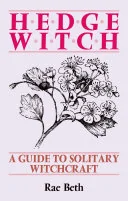
Rae Beth's 1992 book explores witchcraft outside formal traditions, focusing on solitary practice.
Published in 1992, Hedge Witch by Rae Beth examines folk magic as it exists apart from established witch covens and organized pagan groups. The book centers on the practices of individuals who work magic independently, often by drawing on their connection to the natural world. It functions more as a practical manual for self-guided magical work than a historical record, although it relies on a thorough understanding of historical witchcraft.
This text is for the solitary practitioner or anyone curious about the origins of informal magic. It appeals to those who see witchcraft as an intuitive, Earth-focused path, different from more structured ceremonial systems. Readers who believe magic is accessible in ordinary life will find it resonates with their views. The book emphasizes how magic can be found in the mundane, everyday world.
Hedge Witch appeared at a time when interest in witchcraft and paganism was growing, following the earlier work of figures like Gerald Gardner. Rae Beth's contribution focuses on the 'hedge' witch, an independent practitioner working outside initiatory structures. This approach contrasts with the more organized coven witchcraft that became popular in the 1970s and 1980s. The book offers an alternative perspective on magic, one tied to the solitary individual and their immediate natural surroundings.
💡 Why Read This Book?
• Gain an understanding of the 'hedge' as a liminal space, a concept central to solitary practice since the book’s 1992 publication, offering a distinct framework for personal magic. • Learn about the practical application of folk magic using natural elements and intuitive connection, as detailed in the book’s exploration of working with local spirits and plants. • Discover an alternative perspective on witchcraft that emphasizes self-reliance and the immanent power found in the everyday environment, distinct from more formalized traditions.
⭐ Reader Reviews
Honest opinions from readers who have explored this book.
❓ Frequently Asked Questions
What is the core philosophy of a hedge witch as described by Rae Beth?
The core philosophy centers on solitary practice, intuitive magic, and a deep connection with the natural world. A hedge witch operates outside formal traditions, drawing power from their immediate environment and developing a personal relationship with local spirits and energies, as explored in the book.
When was Rae Beth's Hedge Witch first published?
Hedge Witch by Rae Beth was first published in 1992, placing it within a significant wave of esoteric literature that re-examined and popularized various forms of witchcraft.
How does Hedge Witch differ from coven-based witchcraft?
Unlike coven-based traditions, Hedge Witch emphasizes individual, self-directed practice. It focuses on the 'hedge' as a liminal space of personal power rather than group ritual, highlighting the practitioner's direct connection to nature and the unseen world.
What kind of practices does the book suggest for hedge witches?
The book suggests practices such as communicating with local spirits, working with plants and natural materials, developing intuition, and finding magic in everyday occurrences. It promotes a hands-on, experiential approach to witchcraft.
Is Hedge Witch a historical text or a practical guide?
While drawing on historical understanding of folk magic, Hedge Witch functions primarily as a practical guide for solitary practitioners. It offers a framework and inspiration for engaging in intuitive, nature-based magical practices.
What does the term 'hedge' signify in the context of this book?
In Rae Beth's work, the 'hedge' represents a liminal threshold – the boundary between the mundane and the magical, the physical and the spiritual. It symbolizes the solitary practitioner's ability to move between these realms.
🔮 Key Themes & Symbolism
The Liminal Hedge
The central concept of the 'hedge' is explored not just as a physical boundary but as a metaphorical threshold. This liminal space is where the hedge witch operates, navigating between the seen and unseen worlds, the mundane and the magical. It signifies a place of transition and potent personal power, accessible through intuition and focused will. The book uses this idea to frame solitary practice as an inherently boundary-crossing endeavor.
Nature as a Source
Hedge Witch posits nature as the primary font of magical energy and wisdom. The book details how practitioners can attune themselves to the rhythms of the earth, the spirits of place, and the inherent qualities of plants and animals. This theme emphasizes a non-hierarchical relationship with the natural world, viewing it as a living, sentient entity to be communed with rather than controlled.
Solitary Practice and Intuition
A defining characteristic of the hedge witch is their independent path. The work champions self-reliance, intuition, and personal gnosis over dogma or group affiliation. It suggests that the most potent magic arises from the individual's direct experience and inner knowing, cultivated through mindful observation and interaction with their environment.
Immanent Spirituality
The book focuses on immanent spirituality, finding the sacred within the material world rather than seeking it in a transcendent realm. Magic is not an external force to be invoked but an intrinsic quality of life and consciousness that can be accessed and directed. This perspective grounds magical practice in the tangible, everyday reality of the practitioner.
💬 Memorable Quotes
Direct passages from the work, attributed to the author.
“The hedge witch works alone.”
— This statement expresses the essence of the hedge witch tradition as presented by Rae Beth. It highlights the solitary nature of the practice, emphasizing self-sufficiency and a personal, direct relationship with magical forces outside of organized groups.
“The hedge is the boundary between worlds.”
— This highlights the metaphorical significance of the 'hedge.' It represents the liminal space where the practitioner can access and interact with the magical or spiritual realms, acting as a threshold walker.
“Magic is found in the natural world.”
— This interpretation underscores the book's core tenet: that potent magical forces and wisdom are inherent in the earth, plants, animals, and natural phenomena, accessible through attunement and connection.
“Intuition is the primary tool.”
— This points to the reliance on inner knowing and direct perception rather than codified systems. For the hedge witch, gut feeling and personal insight guide magical work.
“The practice is rooted in the everyday.”
— This emphasizes that hedge magic is not confined to special times or places but is woven into the fabric of daily life, making the mundane itself a potential source of power.
🌙 Esoteric Significance
Tradition
While not strictly adhering to a single lineage, *Hedge Witch* draws heavily from European folk magic traditions and animistic beliefs. It can be seen as a modern manifestation of the solitary wise woman or cunning folk archetype, operating at the 'hedge' – the liminal space between the domestic and the wild, the human and the spirit world. It departs from Hermetic or Kabbalistic systems by prioritizing direct, intuitive experience over complex symbolic frameworks, focusing instead on immanent rather than transcendent power.
Symbolism
Key symbols include the 'hedge' itself, representing the threshold between worlds and the liminal space of solitary power. The natural world is replete with symbols: specific plants (like herbs associated with folk healing or protection), trees (as conduits to earth spirits), and animals (as messengers or totemic allies). These symbols are not rigidly defined but are understood through the practitioner's personal relationship and intuitive attunement.
Modern Relevance
Contemporary practitioners of ecological witchcraft, animism, and solitary pagan paths frequently reference *Hedge Witch*. Its emphasis on self-reliance, intuitive connection to nature, and finding magic in the mundane resonates strongly with modern movements seeking authentic, non-dogmatic spiritual practices. Thinkers and practitioners focused on rewilding spirituality and developing localized magical systems often find Rae Beth's foundational ideas particularly relevant.
👥 Who Should Read This Book
• Solitary practitioners seeking to deepen their connection with nature and develop intuitive magical abilities, distinct from group-based traditions. • Aspiring witches interested in the historical roots and practical applications of folk magic outside of formal Wiccan or ceremonial structures. • Readers of ecological spirituality and animism looking for a text that grounds esoteric practice firmly within the tangible, living world.
📜 Historical Context
Published in 1992, Rae Beth's *Hedge Witch* emerged during a fertile period for contemporary witchcraft studies and practice. Following the groundwork laid by figures like Gerald Gardner in the 1950s and the subsequent rise of feminist witchcraft and Dianic traditions in the 1970s, this work carved out a distinct niche. While many popular books focused on coven structures or Wiccan theology, Rae Beth championed the solitary practitioner, emphasizing an intuitive, nature-based approach. This contrasted with the more structured, initiatory paths gaining traction, offering an alternative narrative of witchcraft as an independent, earth-attuned way of life. The book implicitly engaged with the broader Neopagan revival, providing a voice for those who felt disconnected from group dynamics. Its reception was significant among individuals seeking a less formal, more personally resonant form of magical practice, aligning with a growing interest in animism and ecological spirituality.
📔 Journal Prompts
The concept of the liminal 'hedge' as a personal space of power.
Reflecting on the spirits of place in your immediate environment.
Identifying intuitive signals related to natural cycles.
The role of self-reliance in your personal magical practice.
Exploring the symbolic language of the flora and fauna around you.
🗂️ Glossary
Hedge Witch
A practitioner of magic who works solitarily, often focusing on intuitive, nature-based practices and operating at the threshold between the mundane and spiritual realms.
Liminal Space
A transitional or in-between state or place, often associated with potent magical energy. In this context, it refers to the boundary the hedge witch navigates.
Intuition
The ability to understand something immediately, without the need for conscious reasoning. It is considered a primary tool for the hedge witch.
Spirits of Place
The perceived consciousness or energetic presence associated with a specific location, such as a forest, mountain, or even a particular tree or stone.
Immanent Power
Spiritual or magical energy that is inherent within the material world and living beings, as opposed to a transcendent power residing outside of it.
Solitary Practice
Engaging in magical or spiritual activities independently, without the structure or guidance of a formal group or coven.
Folk Magic
Traditional magical practices passed down through generations, often localized and integrated into everyday life, distinct from formalized religious or ceremonial systems.
🔮 Readers Also Liked
Browse all →








More by Rae Beth
All books →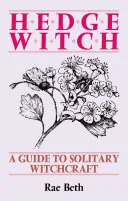



More Free Occult Philosophy Books
View all →