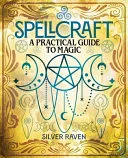
Spellcraft
 73
73

Spellcraft
Silver Raven's "Spellcraft" attempts to demystify the often-opaque world of practical magic, offering a methodical framework that could prove useful for serious students. The author's breakdown of "Ritual Efficacy Factors" in Chapter 4, for instance, provides a genuinely insightful analysis of what makes a working successful beyond mere willpower. The clarity with which complex energetic principles are presented is a notable strength. However, the book occasionally suffers from a lack of historical nuance; while it acknowledges older traditions, it sometimes presents its modern synthesis as entirely novel, overlooking the deep roots of many concepts it explores. A key concept, "Intentional Anchoring," is well-explained, but its practical application could benefit from more diverse, non-Western examples to broaden its universal appeal. Overall, "Spellcraft" is a valuable, if somewhat narrowly focused, guide for the dedicated practitioner seeking to refine their craft.
📝 Description
73
Silver Raven's 'Spellcraft,' published October 2024, structures the practical application of magical theory.
This book moves beyond purely theoretical discussions to offer a systematic approach to spellcasting. Raven details foundational principles, the construction of rituals, and the energetic mechanics that underpin various spellcasting methods. The work is intended for practitioners who already grasp basic occult concepts and wish to improve their magical effectiveness.
Readers will find this text useful whether they practice alone or within a group. It is a resource for students of esoteric traditions seeking a methodical way to develop their spells. Those interested in how intent, visualization, and energy manipulation interact will find practical guidance. A basic understanding of energy work and intention setting is assumed.
Published in 2024, 'Spellcraft' engages with a contemporary surge in accessible occult knowledge. This contrasts with the early 20th century, when figures like Aleister Crowley and Dion Fortune established formal magical orders and published seminal works. Raven's method emphasizes a pragmatic, results-oriented approach, diverging from earlier, more philosophical or theological traditions. The book aligns with modern witchcraft and neo-paganism's focus on personal practice, a trend amplified since the 1960s counterculture.
💡 Why Read This Book?
• Gain a structured understanding of "Ritual Efficacy Factors" as detailed in Chapter 4, allowing for a more analytical approach to spell construction that moves beyond guesswork. • Learn the specific technique of "Intentional Anchoring" to solidify your magical goals, providing a practical method for making abstract desires concrete. • Explore the "Principle of Energetic Resonance" to better understand how to align your personal energy with desired outcomes, enhancing the potential effectiveness of your workings.
⭐ Reader Reviews
Honest opinions from readers who have explored this book.
❓ Frequently Asked Questions
What is the "Principle of Energetic Resonance" as explained in "Spellcraft"?
The "Principle of Energetic Resonance" is a core concept in Silver Raven's "Spellcraft," suggesting that successful spellcasting involves aligning the practitioner's internal energetic state with the desired outcome's energetic frequency.
When was "Spellcraft" by Silver Raven first published?
"Spellcraft" by Silver Raven was first published in October 2024, making it a recent addition to esoteric literature.
Is "Spellcraft" suitable for complete beginners in magic?
While "Spellcraft" offers foundational principles, it assumes a basic familiarity with occult concepts. Beginners might benefit from supplementary introductory texts before diving into its more advanced sections.
What are some key components of "Intentional Anchoring" in the book?
"Intentional Anchoring" involves using symbolic representation, focused visualization, and often the creation of a physical focus object to firmly embed magical intent into the practitioner's psyche and the energetic field.
Does "Spellcraft" discuss historical magical practices?
Yes, the book implicitly engages with historical practices by building upon established esoteric concepts, though its primary focus is on a contemporary, systematic approach to spellcraft.
What is the main goal of Silver Raven's "Spellcraft"?
The primary goal of "Spellcraft" is to provide a structured, practical guide for practitioners to enhance their understanding and efficacy in spellcasting through systematic methodology.
🔮 Key Themes & Symbolism
Systematic Spell Construction
The work emphasizes a departure from haphazard magical workings, positing that spellcraft can and should be approached with a systematic methodology. This involves dissecting the components of a spell, from the initial intent to the final energetic release. Key concepts like 'Ritual Efficacy Factors' are explored, breaking down how elements such as timing, environment, and psychological state contribute to the overall success of a magical operation. The book advocates for a conscious, analytical approach, moving beyond intuitive practice to one grounded in reproducible principles and observable results.
Energetic Mechanics
A central theme is the understanding and manipulation of subtle energies. The "Principle of Energetic Resonance" is thoroughly examined, explaining how a practitioner can attune their personal energetic field to match the vibrational frequency of their desired outcome. This concept underpins much of the practical advice offered, suggesting that effective spellcasting is less about brute force will and more about harmonic alignment. The text details methods for building, directing, and grounding energy, crucial for both casting spells and maintaining energetic equilibrium.
The Power of Intent
The book places significant emphasis on the role of focused intent in magical practice. "Intentional Anchoring" is presented as a vital technique for solidifying and directing intention, ensuring that the magical will is clearly communicated to the subtle realms. This involves techniques that bind intent to physical anchors, symbols, or visualizations, making it more potent and less susceptible to dissipation. The work argues that clarity and unwavering focus of intent are paramount for achieving desired results in any magical endeavor.
Practical Application
Unlike purely theoretical grimoires, "Spellcraft" is oriented towards practical application. It provides actionable steps and exercises designed to be implemented by the reader. The focus is on efficacy and results, encouraging practitioners to develop their own methods based on the principles outlined. The book serves as a manual for translating esoteric knowledge into tangible outcomes, making it a valuable resource for those actively engaged in magical practice rather than just theoretical study.
💬 Memorable Quotes
Direct passages from the work, attributed to the author.
“Energy follows focused intent; without clarity, it disperses.”
— This statement highlights the book's emphasis on the crucial role of precise intention in directing magical energy. It suggests that a muddled or unfocused will leads to ineffective spellcasting, as the energy lacks a clear destination or purpose.
“Ritual components are not mere decoration; they are functional anchors.”
— This highlights the book's pragmatic view of ritual. It suggests that every element within a spell, from symbols to timing, serves a specific purpose in anchoring and manifesting the desired outcome, rather than being purely symbolic or traditional.
“The practitioner's energetic state is the primary crucible for spell formation.”
— This emphasizes the internal aspect of spellcasting. It posits that the magician's own energetic condition, mental clarity, and emotional state are the most critical factors in successfully creating and projecting magical energy.
“Define the destination before charting the course.”
— This aphorism expresses the importance of clear goal-setting in spellcraft. It advises that one must precisely know what they wish to achieve before engaging in the process of crafting the spell to get there.
💡 Key Ideas
Editorial paraphrase of the work's core concepts — not direct quotes.
Resonance amplifies, dissonance dissipates.
This paraphrased concept underscores the "Principle of Energetic Resonance." It implies that aligning one's own energy with the target outcome's frequency strengthens the spell, whereas a mismatch causes the intended effect to weaken or fail.
🌙 Esoteric Significance
Tradition
The work draws heavily from the practical, ceremonial, and energetic manipulation aspects found within Western Esotericism, particularly Hermeticism and certain strands of modern witchcraft. It departs from purely philosophical or theological interpretations by focusing on the mechanics and efficacy of spellcasting as a craft. While acknowledging the historical lineage of magical practices, "Spellcraft" presents a contemporary synthesis, emphasizing a systematic and analytical approach that aims to bridge the gap between theoretical knowledge and demonstrable results for the practitioner.
Symbolism
Key symbols explored include the "wand" as an extension of focused will and the "circle" as a containment and amplification field for ritual energy. The book likely discusses the energetic significance of elemental correspondences (Earth, Air, Fire, Water) not just as symbolic representations but as active forces to be invoked and directed within a spell. The "anchor" concept, central to "Intentional Anchoring," also functions symbolically, representing the binding of abstract desire to tangible reality.
Modern Relevance
Contemporary practitioners of modern witchcraft, neo-paganism, and eclectic magical paths often draw upon the systematic methodologies presented in works like "Spellcraft." Thinkers and practitioners focused on practical ritualcraft, energy work, and the psychology of magic find its structured approach valuable. Its emphasis on clear intent and energetic resonance aligns with modern approaches that seek to integrate psychological understanding with energetic principles, making it relevant to those seeking to refine their personal magical systems.
👥 Who Should Read This Book
• Practicing Witches and Spellcasters: Individuals already engaged in magical work who seek to refine their techniques, improve efficacy, and understand the underlying principles of their craft more deeply. • Students of Western Esotericism: Those studying traditions like Hermeticism or ceremonial magic who are interested in a modern, systematic approach to practical spellcraft that complements theoretical study. • Seekers of Practical Metaphysics: Individuals interested in exploring the application of consciousness and energy to manifest desired outcomes, looking for a structured guide to developing these skills.
📜 Historical Context
Silver Raven's "Spellcraft" (2024) enters a modern esoteric landscape shaped by the widespread dissemination of magical knowledge, a phenomenon accelerated by the internet age. This contrasts sharply with the early 20th century, a period dominated by the emergence of formal magical orders like the Hermetic Order of the Golden Dawn and the writings of figures such as Aleister Crowley and Dion Fortune, who were often working within more exclusive circles. "Spellcraft" implicitly engages with the contemporary resurgence of individualistic witchcraft and neo-pagan practices that gained traction post-1960s counterculture, prioritizing personal experience and adaptable techniques over rigid ceremonial structures. While it builds upon foundational concepts explored by earlier occultists, its emphasis on a systematic, almost scientific, approach to spell mechanics distinguishes it from earlier, more philosophically or theologically oriented works. The book's pragmatic focus reflects a modern tendency to clarify magic and present it as a skill that can be honed through structured practice and understanding, a trend that has seen many older, more guarded traditions being reinterpreted for a wider audience.
📔 Journal Prompts
Analyze the "Ritual Efficacy Factors" you typically employ in your spellwork.
Explore the concept of "Energetic Resonance" in relation to a recent personal goal.
How can "Intentional Anchoring" be applied to a challenge outside of magical practice?
Reflect on the distinction between symbolic representation and functional anchors in ritual.
Consider the practitioner's energetic state as the primary crucible for spell formation.
🗂️ Glossary
Principle of Energetic Resonance
A core concept suggesting that successful magical workings align the practitioner's energy field with the desired outcome's vibrational frequency, amplifying the effect.
Intentional Anchoring
A technique for solidifying and directing magical intent by binding it to symbols, objects, or visualizations, making the intent more potent and stable.
Ritual Efficacy Factors
The various components of a spell or ritual—such as timing, environment, psychological state, and specific actions—that contribute to its overall success.
Energetic Crucible
Refers to the practitioner's internal state (mental, emotional, energetic) as the primary medium or 'container' where magical energy is formed and shaped.
Symbolic Representation
The use of objects, images, or actions to stand for a concept, desire, or entity within a magical working, often serving as a point of focus.
Dissonance
In an energetic context, a lack of harmony or alignment between different energetic frequencies, which can weaken or nullify magical effects.
Harmonic Alignment
The state of energetic compatibility and resonance between the practitioner, the spell's components, and the desired outcome.