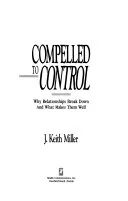
Compelled to Control
 78
78

Compelled to Control
Keith Miller’s Compelled to Control approaches the often-unacknowledged impetus for relational strife with a directness that is both disarming and necessary. The book’s strength lies in its unflinching dissection of the ‘need to control’ as the root cause of relationship breakdown, a concept Miller grounds in the practical language of the 12-Step program. He avoids abstract theorizing, instead focusing on the tangible effects of this compulsion. A particularly illuminating passage discusses the subtle ways control manifests, often disguised as care or concern, leading to resentment. However, the work’s primary limitation is its heavy reliance on the 12-Step lexicon, which may present a barrier for readers unfamiliar with or resistant to that specific framework. While inspirational, the proposed 'way out' could benefit from broader psychological integration. Miller’s analysis of control as a symptom rather than a core issue is insightful, offering a valuable perspective for those caught in cycles of conflict.
📝 Description
78
Keith Miller's 1992 book, Compelled to Control, identifies the human impulse to control others as a root of relationship problems.
First published in 1992, Compelled to Control examines the human drive to control people and situations, arguing it is a primary cause of discord in relationships. Miller dissects this behavior, moving beyond simple observation to suggest ways individuals can break free from this pattern.
This book is for those experiencing ongoing relationship difficulties, especially if they notice a tendency to manage or direct the actions and feelings of those close to them. It will resonate with individuals familiar with 12-Step principles who want a deeper grasp of the psychological roots of codependency and relational conflict. Practical psychology and self-improvement readers will find its insights valuable.
Miller's central idea is 'control addiction,' a compulsive need to manage external circumstances and individuals. He presents this as an unhealthy coping strategy arising from past trauma or unmet needs. The book discusses the false sense of control, its emotional costs, and contrasts it with acceptance and surrender as routes to better connections. It differentiates healthy influence from harmful domination.
Emerging in the early 1990s, Compelled to Control arrived during a time of growing public discussion on codependency and addiction recovery. Its framework aligns with the self-help movements of that era, which often drew on psychological principles alongside spiritual or recovery traditions. The book's emphasis on internal patterns and the need for surrender connects it to broader spiritual development ideas that suggest true freedom comes from internal shifts rather than external manipulation. It speaks to a tradition of literature focused on psychological healing and personal transformation through self-awareness.
💡 Why Read This Book?
• Gain insight into the 1992 concept of 'control addiction' as a primary driver of relationship failure, learning how to identify its subtle manifestations in your own behavior. • Understand the 12-Step approach to surrendering the need for control, offering practical steps for fostering acceptance and healthier interpersonal dynamics. • Discover how the book’s focus on the illusion of control provides a unique perspective that differs from other psychological texts on relational dynamics.
⭐ Reader Reviews
Honest opinions from readers who have explored this book.
❓ Frequently Asked Questions
What is the central argument of Keith Miller's Compelled to Control?
The book's core argument, first presented in 1992, is that the pervasive human need to control people and situations is the primary cause of breakdowns in relationships.
How does Compelled to Control relate to the 12-Step program?
The work is written with a distinct 12-Step focus, applying its principles of identification, surrender, and acceptance to the problem of controlling behavior in relationships.
What are the benefits of reading this book for personal development?
Readers can learn to recognize their own controlling tendencies, understand the negative impact of these behaviors, and find practical strategies for fostering healthier, more authentic connections.
Is Compelled to Control considered an esoteric text?
While not strictly esoteric in the sense of occult traditions, its deep dive into psychological compulsions and the path of self-mastery aligns with broader metaphysical and self-improvement themes found in esoteric literature.
Who is the intended audience for this book?
The book is primarily for individuals experiencing relationship difficulties, particularly those familiar with or open to the 12-Step approach to recovery and personal growth.
When was Compelled to Control originally published?
Compelled to Control was first published in 1992, a period when self-help and recovery literature gained significant traction.
🔮 Key Themes & Symbolism
The Illusion of Control
The work meticulously deconstructs the pervasive human tendency to believe we can, and should, manage external realities and the behaviors of others. Miller argues that this perceived need for control is not a sign of strength but a desperate attempt to avoid underlying anxieties and fears. By highlighting the inherent futility of absolute control, the book opens the door to a more authentic engagement with life's uncertainties, a concept often explored in philosophical and spiritual traditions that emphasize acceptance and letting go.
Control as Addiction
Miller frames the compulsion to control as akin to an addiction, drawing parallels with substance abuse and other behavioral dependencies common in 12-Step literature. This perspective suggests that individuals are trapped in a cycle, seeking relief through control but ultimately experiencing negative consequences. The book explores the mechanisms of this 'addiction,' including denial and the rationalization of controlling behaviors, offering a framework for recognizing and breaking free from this pattern for personal liberation.
Relationship Breakdown
The central thesis posits that the drive to control is the principal architect of discord in interpersonal relationships. Whether overt or subtle, attempts to manipulate, dictate, or manage others’ lives inevitably breed resentment, distance, and conflict. The book provides detailed analyses of how this dynamic plays out, offering readers a lens through which to examine their own relational patterns and understand the roots of recurring conflicts, suggesting that true connection requires relinquishing this need.
The Path to Release
Offering a way out of the dilemma of control, the book draws heavily on 12-Step principles, advocating for concepts like surrender, acceptance, and trust. This approach emphasizes that true freedom and healthier relationships are achieved not through tighter grip but through loosening it. It guides readers toward developing a greater capacity for self-awareness, emotional honesty, and reliance on inner strength rather than external manipulation, paving the way for genuine intimacy.
💬 Memorable Quotes
Direct passages from the work, attributed to the author.
“The need to control is the major cause of relationship breakdown.”
— This foundational statement expresses Miller's core thesis, directly linking the psychological impulse to manage outcomes and people with the dissolution of healthy connections.
“Control is an illusion, and the pursuit of it is exhausting.”
— This highlights the futility and psychological toll of attempting to dominate circumstances or individuals, suggesting that energy is better directed elsewhere.
“We often control what we fear losing.”
— This interpretation suggests that controlling behaviors are rooted in insecurity and a desire to prevent perceived threats or losses in relationships.
“Surrender is not defeat, but a strategy for peace.”
— This concept, central to 12-Step thinking, reframes relinquishing control not as a weakness but as a wise and effective method for achieving inner calm and better relationships.
💡 Key Ideas
Editorial paraphrase of the work's core concepts — not direct quotes.
Acceptance, not manipulation, fosters genuine connection.
This paraphrase points to the book's proposed solution: shifting from an active attempt to change others to a passive, yet powerful, stance of acceptance.
🌙 Esoteric Significance
Tradition
While not explicitly aligned with a specific occult lineage like Hermeticism or Gnosticism, Compelled to Control appeals to the broader esoteric tradition of self-mastery and spiritual liberation. Its emphasis on recognizing and overcoming internal compulsions aligns with practices found across various mystical paths that seek to purify the self from egoic attachments and desires, leading to a higher state of consciousness.
Symbolism
The core 'symbol' explored is the 'illusion of control' itself—a mental construct representing the ego's attempt to maintain order and avoid the perceived chaos of existence. The contrasting concept of 'surrender,' often symbolized by a yielding or opening, represents the pathway to authentic connection and inner peace, moving away from the constricting grip of the ego.
Modern Relevance
Contemporary thinkers in fields such as attachment theory, mindfulness-based therapies, and even certain strands of positive psychology echo Miller's insights. His work's focus on recognizing unhealthy relationship patterns and the need for self-awareness remains relevant for modern therapeutic approaches and personal development coaches addressing issues of codependency and emotional regulation.
👥 Who Should Read This Book
• Individuals struggling with codependency or enabling behaviors in their relationships, seeking to understand the roots of their actions and find a path toward healthier boundaries. • Those familiar with the 12-Step program who wish to apply its principles more deeply to their interpersonal dynamics and emotional lives. • Readers interested in practical psychology and self-help literature who are looking for concrete strategies to reduce conflict and foster more authentic connections.
📜 Historical Context
Published in 1992, Keith Miller's Compelled to Control emerged during a period of heightened public interest in codependency and personal recovery, heavily influenced by the widespread adoption of 12-Step programs. This era saw a surge in self-help literature, with authors like Melody Beattie achieving significant prominence for their work on addiction and enabling. Miller's book positioned itself within this burgeoning field, offering a specific psychological framework derived from the 12-Step model to address relationship dysfunction. While the humanistic psychology movement had long explored interpersonal dynamics, Miller’s work distinguished itself by its direct application of recovery principles to the seemingly universal problem of control. The book did not face significant controversy or censorship but rather contributed to the ongoing dialogue about psychological health and relational well-being that characterized the 1990s.
📔 Journal Prompts
The illusion of control as a source of relational friction.
Control addiction and its manifestation in daily interactions.
Acceptance versus manipulation in personal relationships.
The role of fear in perpetuating the need to control.
Strategies for practicing surrender in challenging situations.
🗂️ Glossary
Control Addiction
The compulsive psychological need to manage or dictate the actions, thoughts, or feelings of oneself or others, often stemming from underlying insecurity or fear.
Relationship Breakdown
The deterioration or collapse of healthy interpersonal connections, frequently caused by persistent conflict, mistrust, or emotional distance.
12-Step Focus
An approach to recovery and personal growth based on the twelve steps originally developed for Alcoholics Anonymous, emphasizing identification, surrender, and spiritual principles.
Illusion of Control
The cognitive bias where individuals believe they have more control over events than they actually do, leading to maladaptive behaviors.
Acceptance
The process of acknowledging reality, including one's own limitations and the autonomy of others, without resistance or the need to change it.
Surrender
In the context of the book, this refers to relinquishing the need to control external circumstances and people, trusting in a higher power or the natural unfolding of events.
Codependency
A dysfunctional relationship pattern where one person assumes responsibility for another's needs and behaviors, often at the expense of their own well-being.
This book appears in 1 collection
🔮 Readers Also Liked
Browse all →









From the “Spiritual Awakening” Collection
View all →









More Free Magic & Ritual Books
View all →