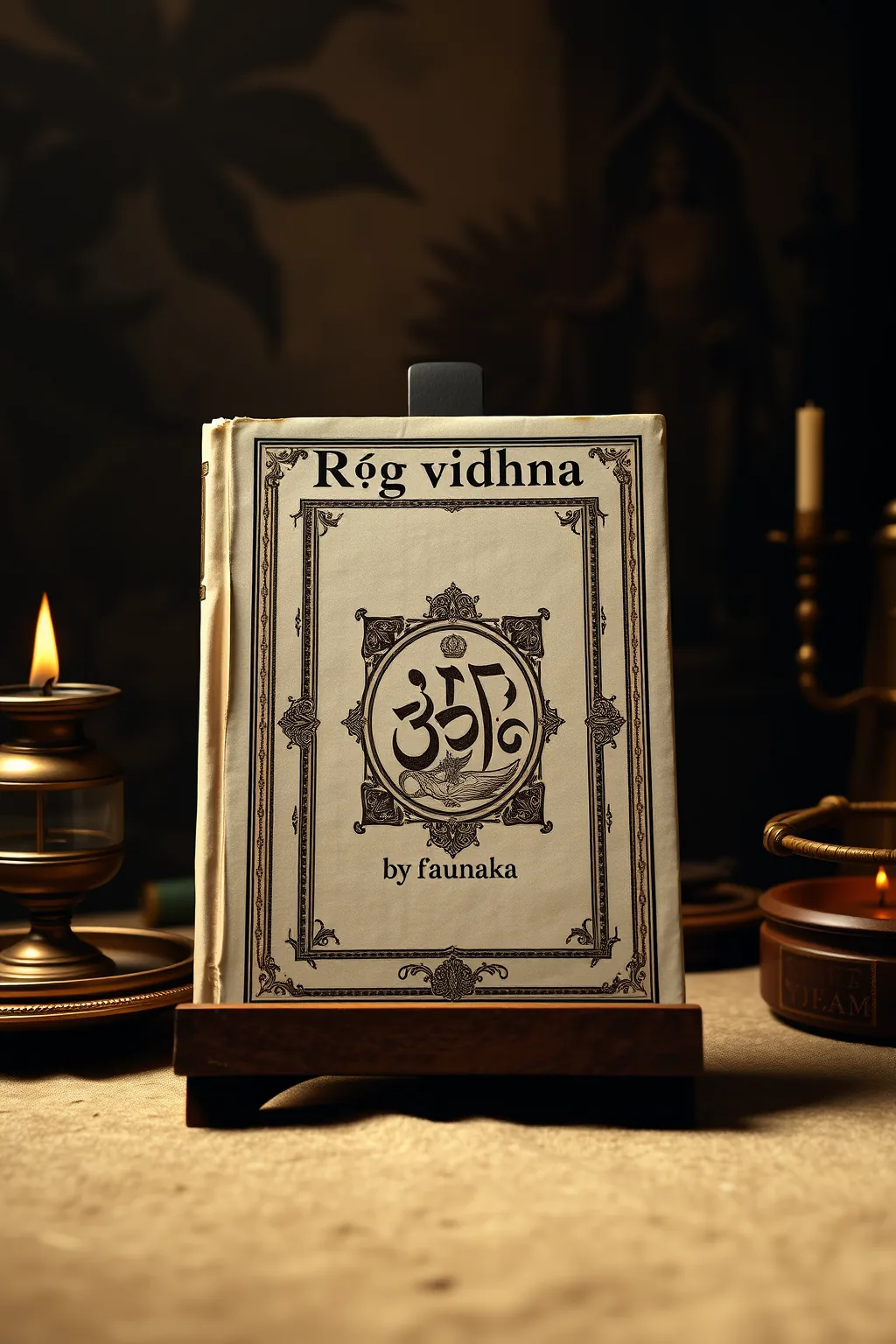
R̥g vidhāna
 61
61

R̥g vidhāna



Lorelei Sage (Contemplative Literature Editor) — The *R̥gvidhāna* is a cornerstone for any serious student of Vedic esotericism. Śaunaka masterfully illuminates the ritualistic application of the *R̥gveda*, transforming sacred verses into potent instruments of magical intent. Its strength lies in its directness, offering clear instructions for harnessing sonic vibrations for tangible spiritual and material aims. This work is not for the casual reader but for the dedicated practitioner and scholar who seeks to understand the performative aspect of ancient Indian spirituality. It bridges the gap between devotional chanting and active manifestation, offering profound insights into the mechanics of reality as understood by ancient seers.
📝 Description
61
Śaunaka's R̥gvidhāna details the ritualistic application of Vedic hymns to influence worldly and spiritual affairs.
Written by the sage Śaunaka, the R̥gvidhāna focuses on the practical application of Vedic hymns. It explains how the correct pronunciation and ritualistic use of these chants can achieve specific results, both in the material world and in spiritual development. The text presents a view where sound, sacred utterances (mantra), and the structure of the cosmos are deeply connected.
The R̥gvidhāna guides readers through ceremonies intended to control natural forces, pacify deities, and achieve spiritual freedom. It is a look into Vedic magic, examining the subtle energies that shape existence and the effects of focused vocalization. This work is for individuals interested in the applied aspects of Vedic knowledge, connecting abstract philosophy with practical spiritual methods. It appeals to those who wish to engage with fundamental universal powers through sacred sound and traditional rites.
The R̥gvidhāna belongs to the Atharvaveda tradition, specifically its ritualistic and magical applications. While the R̥gveda is primarily known for its hymns to deities, the R̥gvidhāna explores how these hymns can be employed for specific, often worldly, purposes. It is part of a broader stream of Vedic literature that examines the power of ritual (karma-kāṇḍa) and sacred sound (mantra) to shape reality. This approach contrasts with purely philosophical or devotional interpretations, emphasizing a practical, power-oriented dimension of Vedic practice.
💡 Why Read This Book?
Explore the practical application of Vedic wisdom, unlocking the latent power within sacred sounds. The *R̥gvidhāna* is essential for scholars of comparative religion, practitioners of Vedic magic, and spiritual seekers interested in the profound connection between language, consciousness, and the fabric of reality. Understand how ancient rituals were designed to influence the cosmos through precise recitation.
⭐ Reader Reviews
Honest opinions from readers who have explored this book.
❓ Frequently Asked Questions
What is the primary purpose of the R̥gvidhāna?
The R̥gvidhāna's primary purpose is to outline the ritualistic application of Vedic hymns, detailing how their specific recitation can achieve desired outcomes, whether for protection, prosperity, or spiritual attainment.
Who is Śaunaka?
Śaunaka is traditionally considered the author of the R̥gvidhāna, a sage deeply knowledgeable in Vedic lore and ritualistic practices, credited with compiling and systematizing these esoteric techniques.
Is this text suitable for beginners?
While accessible, the R̥gvidhāna is best suited for those with some familiarity with Vedic concepts or a dedicated interest in ritualistic magic and Hinduism. It requires focused study and contemplation.
What kind of rituals are described?
The text describes rituals often involving the recitation of specific R̥gvedic verses, accompanied by offerings, visualizations, and other practices aimed at invoking divine energies or influencing natural forces.
How does recitation achieve results according to this text?
The R̥gvidhāna posits that the precise sound, intonation, and context of Vedic recitation carry inherent vibrational power that can interact with and modify the subtle energies of the universe.
🔮 Key Themes & Symbolism
The Power of Sacred Sound (Mantra)
This text profoundly explores the concept of mantra as a potent force, not merely as devotional utterance but as a vibrational technology capable of shaping reality. It explores the belief that the precise phonetic structure, intonation, and rhythmic delivery of Vedic hymns possess an inherent power to influence cosmic forces, invoke specific deities, and manifest desired outcomes in the physical and spiritual realms. The *R̥gvidhāna* teaches that these sonic vibrations act as keys, unlocking hidden potentials within the universe and the practitioner's own consciousness. Understanding this theme requires an appreciation for the ancient Indian worldview where sound is considered a primary creative force.
Ritual Efficacy and Cosmic Harmony
The *R̥gvidhāna* presents rituals not as arbitrary ceremonies but as meticulously designed systems for re-establishing or enhancing cosmic harmony. Each rite is a precise choreography of sound, intention, and action, intended to align the individual with universal laws and divine energies. The text emphasizes that the efficacy of a ritual is contingent upon the purity of intention, the accuracy of recitation, and the understanding of the underlying symbolic meanings. It offers practical guidance on how to perform these sacred acts to achieve specific goals, from averting misfortune to securing blessings, thereby demonstrating a sophisticated understanding of the relationship between human action and universal order.
The Esoteric Knowledge of Vedic Seers
This work serves as a window into the hidden knowledge of the ancient Vedic seers, revealing the practical, often mystical, applications of their clear insights. It moves beyond the philosophical and theological aspects of the Vedas to explore their potential as tools for transformation and manifestation. The *R̥gvidhāna* suggests that the Vedas contain not only hymns of praise but also a sophisticated system of spiritual technology, accessible to those who possess the knowledge and discipline to wield it correctly. It invites readers to contemplate the profound interconnectedness of all things and the potential for conscious engagement with the subtle energies of existence.
💬 Memorable Quotes
Direct passages from the work, attributed to the author.
“The hymn, chanted with perfect intent, becomes the bridge between worlds.”
— This highlights the transformative potential of ritual recitation, emphasizing how precise vocalization and focused intention can facilitate communion with higher realms and influence events across different planes of existence.
“In the resonant chamber of the heart, the Vedic fire ignites.”
— This suggests that the true power of Vedic rituals lies not just in external performance but in the internal spiritual awakening and purification that occurs within the practitioner, linking cosmic fire to inner transformation.
“To know the name is to hold the essence; to chant the hymn is to invoke the power.”
— This emphasizes the principle of sympathetic magic, where knowing and vocally invoking the name or mantra of a deity or force grants a degree of control or influence over its inherent power and essence.
💡 Key Ideas
Editorial paraphrase of the work's core concepts — not direct quotes.
Sound shapes the form, and form is but the echo of the divine.
This quote expresses the core tenet of mantra's power, suggesting that the audible vibrations of sacred speech are the architects of manifest reality, mirroring the primordial creative sound of the cosmos.
The unseen currents of existence bow to the rhythm of the sacred word.
This quote speaks to the mastery over subtle energies that the R̥gvidhāna purports to teach, implying that the correct use of Vedic hymns can command and direct the fundamental forces that govern the universe.
🌙 Esoteric Significance
Tradition
The *R̥gvidhāna* is a central to Vedic esoteric tradition, specifically within the field of Mantra Shastra and ritualistic application of the *R̥gveda*. It represents a lineage of knowledge focused on the practical, magical, and transformative power of sacred sound and Vedic hymns, often considered a branch of knowledge accessible to initiated practitioners seeking to influence reality through divine means.
Symbolism
Key symbols include the *R̥gvedic* verses themselves, representing divine utterance and cosmic blueprints; sound and vibration, symbolizing the fundamental creative force of the universe; and the specific deities invoked, representing different facets of cosmic energy and consciousness. Ritual implements and offerings also carry symbolic weight, acting as focal points for channeling intent and energy.
Modern Relevance
In contemporary times, the *R̥gvidhāna* offers clear insights for those exploring sound healing, consciousness studies, and the intersection of spirituality and science. Its principles of focused intention, vibrational resonance, and the power of precise language resonate with modern understanding of psychoacoustics and quantum physics, providing ancient wisdom applicable to personal transformation and global well-being.
👥 Who Should Read This Book
This text is a treasure for the dedicated scholar of Indology, comparative religion, and ancient philosophy, offering direct access to the practical application of Vedic knowledge. Spiritual seekers interested in mantra, ritual, and the subtle energies of the universe will find it clear. Practitioners of yogic traditions, tantra, or Vedic-inspired spiritual paths will discover a rich source for deepening their understanding and practice. Beginners with a serious commitment to exploring the esoteric dimensions of Hinduism will find it a challenging yet rewarding journey into the heart of sacred power.
📜 Historical Context
The *R̥gvidhāna*, attributed to Śaunaka, likely emerged from the Brahmanical tradition, a period characterized by the meticulous systematization of Vedic rituals and the development of specialized knowledge concerning their application. This era, roughly spanning from the late Vedic period to the early centuries CE, saw the further elaboration of sacrificial practices and the growing recognition of the power inherent in the Vedic corpus beyond its purely devotional or philosophical aspects. It reflects a milieu where the intimate connection between sound, cosmic order, and human agency was deeply understood. The text's focus on the practical, magical dimensions of the *R̥gveda* situates it within a broader context of esoteric development in ancient India, where texts like the Upanishads explored metaphysical depths while works like the *R̥gvidhāna* provided the 'how-to' for harnessing the perceived energies of the cosmos through sacred utterance and ritualistic performance.
📔 Journal Prompts
Reflect on a time when sound or music had a profound effect on your emotional or mental state. How might this relate to the concept of mantra?
Consider a specific desire or intention you hold. How could the principles of focused recitation and ritual, as suggested by the R̥gvidhāna, be applied to its manifestation?
Explore the symbolism of a particular Vedic deity mentioned in the text. What cosmic forces or qualities does it represent, and how might they be invoked?
Imagine yourself as an ancient Vedic priest performing a ritual. What would be the most challenging aspect, and what would be the most rewarding?
How does the concept of 'cosmic harmony' as described in the R̥gvidhāna relate to your personal understanding of balance and order in your own life?
🗂️ Glossary
R̥gveda
The oldest of the four Vedas, a vast collection of hymns, prayers, and incantations considered to be the foundational scripture of Hinduism, revered as divinely revealed.
Mantra
A sacred utterance, syllable, word, or phrase in Sanskrit, believed to possess spiritual power and used in meditation, ritual, and magical practices to invoke deities or achieve specific effects.
Brahmanical
Pertaining to the priestly class (Brahmins) in ancient India, responsible for the performance of Vedic rituals, the preservation of sacred texts, and the transmission of spiritual knowledge.
Vibrational Power
The esoteric concept that sounds, words, and intentions possess intrinsic energetic frequencies capable of interacting with and influencing the subtle fabric of reality.
Cosmic Harmony
The state of balance, order, and interconnectedness believed to exist within the universe, which rituals and spiritual practices aim to maintain or restore.
This book appears in 2 collections
🔮 Readers Also Liked
Browse all →






From the “Ritual Magic” Collection
View all →







More Free Magic & Ritual Books
View all →