Frostbite

 72
72

Frostbite
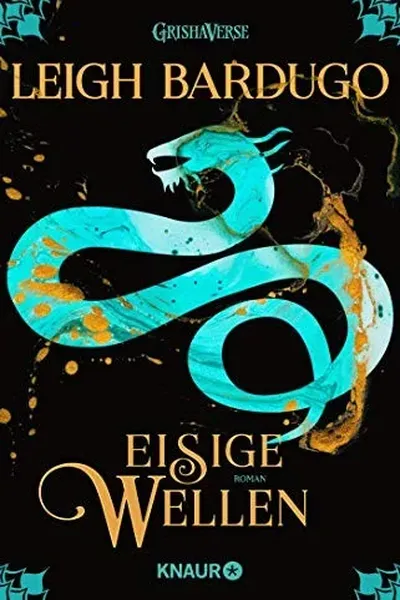
Leigh Dragoon’s Frostbite, first appearing in 2012, presents a curious blend of narrative and esoteric suggestion. The strength of the work lies in its evocative atmosphere; Dragoon masterfully crafts a sense of place that feels both alien and intimately familiar, mirroring internal states of consciousness. This is particularly evident in passages describing the protagonist’s encounters within desolate, symbolic landscapes. However, the narrative's deliberate ambiguity, while intended to foster contemplation, occasionally veers into opaqueness. For instance, the recurring motif of the frozen river, while symbolically potent, could benefit from clearer narrative anchoring to prevent reader detachment. The book excels in hinting at deeper meanings without over-explaining, allowing for personal interpretation. Ultimately, Frostbite offers a contemplative literary experience for those drawn to the symbolic undercurrents of existence.
📝 Description
72
Leigh Dragoon's Frostbite, published in 2012, uses narrative to explore arcane concepts.
Frostbite is not a manual for occult practices nor a historical account. Instead, Leigh Dragoon employs a fictional structure to engage with ideas common in esoteric traditions. The book aims to create a specific atmosphere, immersing the reader in a world where symbolic meaning shapes perceived reality. Its method is suggestive, intended to provoke thought rather than offer direct instruction. The narrative weaves together events and characters that represent deeper archetypal forces.
This work is best suited for readers already familiar with esoteric literature, occult philosophy, and symbolic interpretation. Those who appreciate speculative fiction that touches upon mystical themes without strict genre adherence will find it rewarding. Readers seeking straightforward magical instructions or historical details on specific practices may find its approach less directly applicable. Dragoon's focus is on contemplation and the evocation of a particular worldview.
Published in 2012, Frostbite emerged during a period of renewed interest in esoteric subjects, amplified by online communities and general cultural fascination with the hidden. This era saw greater accessibility of occult and metaphysical texts, allowing works like Dragoon's to reach a wider audience. The early 2010s also retained academic and popular interest in figures such as Aleister Crowley and the Hermetic Order of the Golden Dawn, reflecting an ongoing engagement with Western esotericism that Frostbite taps into.
💡 Why Read This Book?
• You will explore the concept of the 'frozen river' as a metaphor for psychic stagnation or transition, a specific symbolic landscape introduced by Leigh Dragoon. • You will gain insight into how external environments in literature can reflect internal psychological states, a technique Dragoon employs throughout the 2012 publication. • You will encounter a narrative that uses archetypal imagery to suggest universal patterns, offering a unique literary perspective distinct from direct magical instruction.
⭐ Reader Reviews
Honest opinions from readers who have explored this book.
❓ Frequently Asked Questions
What is the primary focus of Leigh Dragoon's Frostbite?
Frostbite, published in 2012, focuses on the literary exploration of esoteric and symbolic themes, using narrative to suggest deeper meanings rather than providing direct instruction or historical analysis.
Is Frostbite a practical guide to magic?
No, Frostbite is not a practical guide. It is a narrative work that engages with esoteric concepts through storytelling and symbolism, intended for contemplation rather than application.
What kind of symbolism is present in Frostbite?
The book features symbolic imagery, such as the 'frozen river,' to represent psychological states and underlying esoteric principles, encouraging readers to interpret these motifs.
Who is Leigh Dragoon and when was Frostbite first published?
Leigh Dragoon is the author of Frostbite, which was first published in 2012. Information about Dragoon's other works or background is not extensively detailed within the book itself.
Does Frostbite connect to specific occult traditions?
While not explicitly tied to one tradition, Frostbite explores themes common in Hermetic and Gnostic thought, such as hidden knowledge and the symbolic representation of consciousness.
What is the overall tone and style of Frostbite?
The tone is evocative and atmospheric, characterized by literary ambiguity and a focus on symbolic interpretation, aiming to create a contemplative reading experience.
🔮 Key Themes & Symbolism
Symbolic Landscapes
Frostbite utilizes environments as mirrors to internal states, a technique resonant with alchemical and Hermetic traditions. The desolate, often frozen, settings are not mere backdrops but active participants in the narrative, embodying psychological conditions or spiritual challenges. For instance, the recurring motif of the 'frozen river' suggests a state of suspended animation, emotional blockage, or a threshold moment in a spiritual journey. This symbolic geography invites readers to map their own inner terrain against the external world presented, fostering a connection between the macrocosm and the microcosm.
The Unveiling of Hidden Knowledge
Central to Frostbite is the theme of concealed truths and the gradual process of their revelation. The narrative structure itself mimics an unfolding mystery, where characters and events serve as veiled allusions to deeper esoteric principles. This concept aligns with Gnostic ideas of gnosis, or direct spiritual knowledge, that is often obscured by ignorance or illusion. The book suggests that true understanding is not passively received but actively sought through perception and inner work, implying that the journey towards knowledge is as significant as its attainment.
Archetypal Resonance
The characters and situations within Frostbite often carry archetypal weight, drawing upon universal patterns of human experience and consciousness. This approach allows the work to transcend its specific narrative and touch upon broader themes of transformation, struggle, and awakening. By employing imagery that resonates on a deep, subconscious level, the book carries the mythological and symbolic language found across various esoteric traditions. Readers are encouraged to recognize these archetypes within themselves and their own life experiences, fostering a sense of universal connection.
Perception and Transformation
Frostbite explores how altered states of perception can lead to profound personal transformation. The narrative suggests that the way an individual views the world is intrinsically linked to their reality. By presenting a reality infused with symbolic meaning, the book challenges conventional perspectives and encourages a more nuanced, esoteric understanding. This transformation is not necessarily about acquiring new information but about shifting one's internal lens, a process mirrored in mystical traditions that emphasize inner vision and spiritual insight.
💬 Memorable Quotes
Direct passages from the work, attributed to the author.
“The ice held secrets, a frozen silence that spoke volumes.”
— This phrase captures the book's essence: the inanimate 'frozen river' is imbued with communicative power, suggesting that stillness and apparent dormancy can contain profound, unspoken truths relevant to esoteric study.
“Each shadow was a question, each echo a potential answer.”
— This highlights the narrative's engagement with mystery and the pursuit of knowledge. It implies that the unknown elements within the story, like shadows and echoes, are not to be feared but are active prompts for understanding.
“The path ahead was obscured, yet the direction felt inherent.”
— This suggests a theme of intuitive guidance or inner knowing. Despite external uncertainty or a lack of clear markers, the protagonist possesses an internal compass, a common concept in esoteric traditions concerning spiritual direction.
“The landscape reshaped the traveler, and the traveler, in turn, observed its subtle shifts.”
— This reflects a reciprocal relationship between the individual and their environment, particularly significant in esoteric thought where outer reality is seen as a projection or teacher for the inner self.
💡 Key Ideas
Editorial paraphrase of the work's core concepts — not direct quotes.
Beneath the frost, a current persisted, unseen and unfelt by most.
This paraphrase points to the idea of hidden forces or underlying realities. It emphasizes that what appears static or dead on the surface may conceal dynamic, vital energies, a principle explored in various occult philosophies.
🌙 Esoteric Significance
Tradition
Frostbite draws from a confluence of esoteric currents, particularly those found in Hermeticism and Gnosticism, without strictly adhering to any single lineage. Its emphasis on symbolic landscapes and the veiled nature of reality aligns with Hermetic principles of correspondence (as above, so below) and the hidden nature of divine knowledge. The Gnostic theme of obscured truth and the potential for inner revelation is also palpable. The work departs from more dogmatic traditions by presenting these ideas through a literary and suggestive lens, inviting personal interpretation rather than dictating doctrine.
Symbolism
Key symbols in Frostbite include the 'frozen river,' representing states of psychic inertia, emotional stasis, or a liminal space between worlds, demanding activation or passage. 'Shadows' and 'echoes' function as archetypal motifs representing the unknown, the subconscious, or latent potentials waiting to be understood. These symbols are not merely decorative but are integral to the narrative's exploration of perception, transformation, and the uncovering of hidden truths inherent in esoteric philosophy.
Modern Relevance
Contemporary thinkers and practitioners interested in psychological alchemy, symbolic interpretation, and literary approaches to esotericism often find value in Frostbite. Its exploration of how external environments can mirror internal states appeals to modern therapeutic modalities that utilize narrative and symbolic work. Writers and artists exploring themes of consciousness, hidden realities, and the intersection of the mundane and mystical draw inspiration from its suggestive style. The book serves as a modern example of how esoteric concepts can be explored through creative, non-didactic means.
👥 Who Should Read This Book
• Readers interested in literary explorations of esoteric themes: Those who appreciate narrative fiction that subtly engages with occult philosophy, symbolism, and the nature of hidden knowledge. • Students of Hermeticism and Gnosticism: Individuals seeking to understand how core concepts like correspondence and obscured truth are presented through symbolic storytelling, rather than direct instruction. • Contemplative readers: Those who enjoy works that provoke introspection and encourage personal interpretation of symbolic landscapes and archetypal imagery.
📜 Historical Context
Leigh Dragoon's Frostbite, released in 2012, emerged during a period of increased interest in esoteric literature and symbolic interpretation, amplified by the burgeoning online community for occult studies. The early 2010s saw a resurgence of engagement with Western esotericism, building on foundations laid by earlier movements. While not a direct commentary on specific historical events, the book's thematic exploration of hidden knowledge and symbolic landscapes situates it within a broader contemporary fascination with the occult. At the time, popular culture often engaged with occult themes through fantasy literature and media, creating a receptive audience for works that explored such ideas. Frostbite offered a literary avenue into these concepts, distinct from the more direct instructional texts prevalent within established magical orders like the Hermetic Order of the Golden Dawn, which had seen renewed academic and practitioner interest.
📔 Journal Prompts
The frozen river's stillness: What personal states does this evoke?
Reflect on the narrative's use of shadows and echoes as prompts for understanding.
Consider the relationship between the external landscape and internal perception presented in the text.
How does the 'unseen current' beneath the frost symbolize potential in your own life?
Analyze the reciprocal influence between traveler and landscape as depicted.
🗂️ Glossary
Frozen River
A recurring symbolic motif in Frostbite representing states of stasis, emotional blockage, suspended animation, or a threshold requiring transition. It signifies a challenge to be overcome or a phase of inner dormancy.
Archetype
Universal, archaic patterns and images that derive from the collective unconscious and are the psychic counterpart of a biological necessity. In Frostbite, these manifest as recurring characters or situation types.
Esoteric
Intended for or likely to be understood by only a small number of people with a specialized knowledge or interest. In Frostbite, this refers to hidden or inner knowledge and symbolic meanings.
Symbolic Landscape
An environment within a narrative that is not merely descriptive but carries deeper meaning, often reflecting the psychological or spiritual state of characters or the underlying themes of the work.
Inner Knowing
A concept suggesting intuitive guidance or an innate understanding that transcends rational thought or external direction, often referenced in mystical and esoteric traditions.
Gnosis
A Greek term for knowledge, often referring to spiritual or mystical knowledge, particularly in Gnostic traditions, emphasizing direct experience and illumination over dogma.
Hermeticism
A philosophical and religious tradition based on the purported teachings of Hermes Trismegistus, emphasizing principles like correspondence, causality, and mentalism, often influencing esoteric thought.
🔮 Readers Also Liked
Browse all →







More by Leigh Dragoon
All books →

More Free Magic & Ritual Books
View all →
![Faust: a Tragedy [part 1], Translated from the German of Goethe](/img/thumb/faust-a-tragedy-part-1-translated-from-the-german-of-goethe-goethe-johann-wolfgang-von.webp)