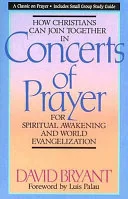
How Christians Can Join Together in Concerts of Prayer for Spiritual Awakening and World Evangelization
 79
79

How Christians Can Join Together in Concerts of Prayer for Spiritual Awakening and World Evangelization
David Bryant’s 1988 treatise, *How Christians Can Join Together in Concerts of Prayer for Spiritual Awakening and World Evangelization*, presents a practical framework for harnessing collective spiritual energy. Bryant’s conviction regarding the efficacy of synchronized prayer is palpable, particularly in his discussion of how focused intercession can precede and facilitate evangelistic efforts. The inclusion of a small-group study guide enhances its utility for congregational settings. However, the work’s evangelical focus, while its strength for a specific audience, may limit its appeal to those outside that theological tradition. The core argument, that coordinated prayer acts as a catalyst for revival, is compelling, though the specific mechanisms are presented more as articles of faith than empirically demonstrated phenomena. Bryant’s assertion that "worldwide spiritual renewal is coming and prayer is leading the way" serves as a foundational, albeit unprovable, premise.
This book is a directive for organized spiritual action.
📝 Description
79
David Bryant's 1988 book details a method for Christians to achieve spiritual awakening through organized prayer.
First published in 1988, David Bryant's book outlines a specific approach for Christian congregations to engage in coordinated prayer. He argues that these 'concerts of prayer' can unlock substantial spiritual power, leading to both individual awakening and the advancement of global evangelization efforts. The book is aimed at evangelical Christians, church leaders, and prayer groups who wish to enhance their collective spiritual life. It speaks to those interested in the practical aspects and effectiveness of praying together with a unified purpose.
Bryant's central argument centers on the idea that synchronized prayer among believers creates an amplified spiritual effect. He posits that this unified practice is crucial for preparing the ground for widespread evangelization and significant spiritual renewal. The book emerged in 1988, a time when many Christian denominations saw a resurgence of interest in spiritual practices and evangelistic campaigns. It built upon the momentum of earlier prayer movements and charismatic renewal, seeking to channel believers toward a defined objective.
While not strictly esoteric in the occult sense, Bryant's work engages with a specific Christian tradition that emphasizes direct, experiential spiritual encounters and the belief in tangible spiritual power accessed through collective faith. This approach aligns with certain streams of Christian mysticism and revivalism that seek to move beyond purely intellectual or ritualistic forms of worship towards a more dynamic, interventionist engagement with the divine. The focus on 'concerts of prayer' suggests a belief in coordinated spiritual action having measurable, world-altering effects, a concept found in various spiritual traditions that posit collective consciousness or intent can influence reality.
💡 Why Read This Book?
• Learn the principles of 'concerts of prayer' as articulated by David Bryant, understanding how synchronized intercession is theorized to unlock spiritual power for revival. • Discover practical methods for initiating and sustaining small-group prayer as detailed in the book's study guide, applicable to local church contexts. • Grasp Bryant's perspective on how coordinated prayer can serve as a precursor to and facilitator of world evangelization, a concept he emphasizes as central to spiritual awakening.
⭐ Reader Reviews
Honest opinions from readers who have explored this book.
❓ Frequently Asked Questions
What is the primary goal of 'concerts of prayer' as described by David Bryant?
The primary goal is to achieve widespread spiritual awakening and facilitate world evangelization. Bryant argues that unified, synchronized prayer among Christians amplifies spiritual power to bring about these outcomes.
When was David Bryant's book 'How Christians Can Join Together in Concerts of Prayer' first published?
The book was first published in 1988, positioning it within the broader landscape of evangelical renewal movements of the late 20th century.
Does the book offer practical tools for implementation?
Yes, the book includes a small-group study guide designed to help congregational members learn and apply the principles of concerted prayer in their local settings.
What is the underlying premise regarding prayer and evangelization?
The premise is that coordinated group prayer possesses a tremendous, catalytic power that can pave the way for the evangelization of communities and foster global spiritual renewal.
Who is the intended audience for this book?
The intended audience includes evangelical Christians, church leaders, and prayer groups who are interested in mobilizing for spiritual awakening and world evangelization through corporate prayer.
What historical period influenced the writing of this book?
Published in 1988, the book reflects the evangelical climate of the late 1980s, a time marked by interest in spiritual disciplines and large-scale evangelistic initiatives.
🔮 Key Themes & Symbolism
Corporate Prayer Efficacy
Bryant's central argument is that the collective, synchronized prayer of Christians possesses a unique and amplified spiritual potency. This theme explores the theological and practical basis for believing that 'concerts of prayer' can achieve spiritual awakening and advance world evangelization, moving beyond individualistic notions of prayer to a communal, directed force for spiritual impact.
Spiritual Awakening as a Goal
The book frames spiritual awakening not as a passive occurrence but as an active outcome facilitated by concerted prayer. It discusses the conditions and actions necessary to usher in a period of widespread spiritual renewal within communities and globally, positioning prayer as the primary catalyst.
Evangelization Strategy
This theme examines how organized prayer is presented as a strategic precursor and essential component of effective world evangelization. Bryant suggests that prayer prepares the ground and empowers the agents for spreading the Christian message, making it a foundational element of missionary outreach.
Group Study and Application
The inclusion of a small-group study guide highlights the theme of practical application and discipleship. It emphasizes that learning and implementing the principles of concerted prayer is best achieved through communal study and shared practice within a church or fellowship setting.
💬 Memorable Quotes
Direct passages from the work, attributed to the author.
“Worldwide spiritual renewal is coming and prayer is leading the way.”
— This statement expresses Bryant's core premise: a future revival is anticipated, and the strategic, unified prayer of believers is identified as the primary means to initiate and sustain it.
“Learn how the tremendous power of group prayer can pave the way for the evangelization of your community.”
— This highlights the book's focus on practical application, suggesting that collective prayer holds significant, untapped power specifically geared towards community-level outreach and spiritual transformation.
“Includes small-group study guide.”
— This indicates the book's pedagogical intent, aiming not just to inform but to equip readers with structured material for collaborative learning and practice within a church or fellowship context.
“How Christians Can Join Together in Concerts of Prayer”
— The title itself is a thematic declaration, emphasizing unity and coordinated action ('join together') in a specific form of spiritual engagement ('concerts of prayer') for defined purposes.
“for Spiritual Awakening and World Evangelization”
— These phrases articulate the ultimate objectives of the 'concerts of prayer' methodology proposed by Bryant, defining the scope and ambition of the spiritual movement he advocates.
🌙 Esoteric Significance
Tradition
While rooted in mainstream evangelical Christianity, Bryant's emphasis on the synergistic power of collective intention and its direct impact on spiritual and material realities can be seen as touching upon principles found in certain esoteric traditions that explore focused consciousness and group energetic work.
Symbolism
The 'concert' itself serves as a symbolic motif, representing harmonic convergence and amplified intent. The concept of 'leading the way' suggests prayer as an active, directional force, akin to a spiritual vanguard or vanguard movement, guiding future events.
Modern Relevance
Bryant's work finds echoes in contemporary movements focused on intentional prayer networks, spiritual mapping, and the concept of 'spiritual generation' that seeks to create favorable spiritual atmospheres for evangelism and revival.
👥 Who Should Read This Book
• Evangelical Christians seeking to understand and participate in organized prayer for revival, as the book provides a framework for 'concerts of prayer.' • Church leaders and small-group facilitators looking for practical methods and study materials to mobilize their congregations for spiritual impact. • Individuals interested in the intersection of prayer, evangelization, and communal spiritual experience within late 20th-century Christian thought.
📜 Historical Context
David Bryant's *How Christians Can Join Together in Concerts of Prayer for Spiritual Awakening and World Evangelization*, published in 1988, emerged within a late 20th-century evangelical landscape that saw significant emphasis on spiritual renewal and evangelistic campaigns. This period followed influential prayer movements and charismatic revivals that had already shifted focus towards corporate spiritual experience. Bryant’s work can be seen as a practical extension of these trends, offering a structured approach to mobilizing prayer for specific, large-scale outcomes like 'spiritual awakening.' Contemporaries such as C. Peter Wagner were also prominent in discussing spiritual warfare and church growth strategies that often incorporated prayer as a central, active force. The book's reception was largely within evangelical circles, where its call to unified action resonated with existing desires for revival. While not facing overt censorship, its theological underpinnings align with a specific strand of Pentecostal and Charismatic thought concerning the power of synchronized intercession.
📔 Journal Prompts
The concept of 'concerts of prayer' and its potential for spiritual awakening.
Bryant's assertion that 'prayer is leading the way' toward worldwide spiritual renewal.
The practical application of the small-group study guide for congregational use.
How synchronized intercession can be strategically employed for community evangelization.
Reflecting on the perceived power of group prayer versus individual prayer.
🗂️ Glossary
Concerts of Prayer
A methodology advocated by David Bryant where Christians join together in synchronized, unified prayer to achieve specific spiritual outcomes, particularly spiritual awakening and world evangelization.
Spiritual Awakening
A period of intensified religious fervor and widespread spiritual renewal within a community or society, often characterized by increased faith, repentance, and conversion experiences.
World Evangelization
The broad, concerted effort to spread the Christian gospel and message across the globe, aiming for the conversion of individuals and the establishment of churches in all nations.
Group Prayer
Prayer that is undertaken collectively by two or more individuals, emphasizing unity of purpose and shared spiritual focus as described in Bryant's framework.
Small-group study guide
A supplementary resource included in the book, designed to facilitate guided discussion and practical application of the 'concerts of prayer' principles among members of smaller Christian fellowships.
Pave the way
In Bryant's context, this phrase signifies that concerted prayer actively prepares the spiritual ground and creates favorable conditions for subsequent events like evangelization and revival.
Prayer is leading the way
Bryant's central thesis suggesting that coordinated prayer is not merely reactive but is the primary, proactive force driving the anticipated spiritual renewal and global evangelization.
This book appears in 1 collection
🔮 Readers Also Liked
Browse all →









From the “Spiritual Awakening” Collection
View all →







More Free Magic & Ritual Books
View all →