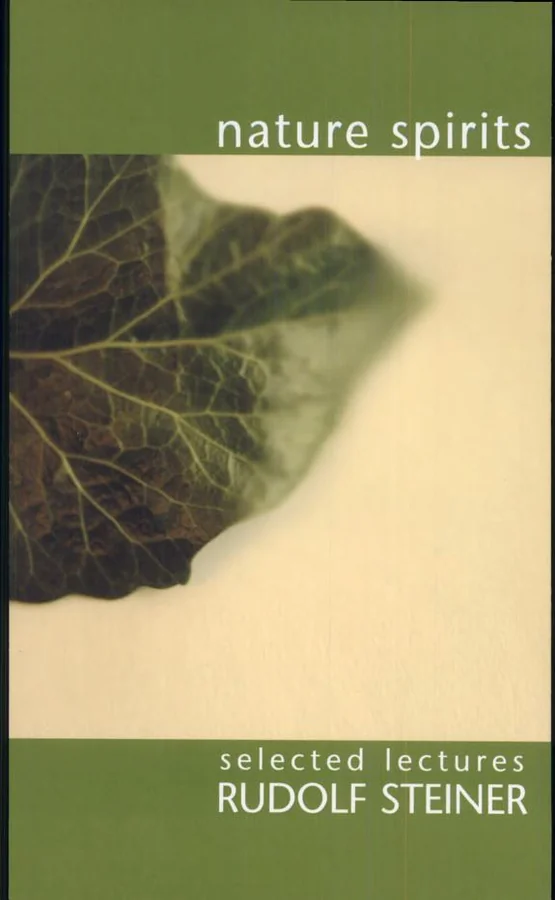
Nature Spirits
 77
77

Nature Spirits
Steiner’s "Nature Spirits" offers a compelling, albeit challenging, framework for understanding the spiritual architecture of the natural world. His assertion that folklore's fairies and gnomes are grounded in actual spiritual entities is presented not as metaphor, but as verifiable observation through trained clairvoyance. The strength lies in the detailed descriptions of elemental beings and their connection to the earth's processes, particularly how they shape plant life and atmospheric phenomena. However, the inherent reliance on subjective clairvoyant experience, without external corroboration, remains a significant hurdle for skeptical readers. A passage detailing the "undines" or water elementals, and their connection to flowing water and human emotions, exemplifies Steiner's unique ability to link the unseen to the observable, yet it demands a considerable leap of faith. The work is essential for followers of Anthroposophy but requires careful engagement for others.
This book provides a unique lens on natural phenomena for those willing to adopt its premises.
📝 Description
77
Rudolf Steiner's 1995 book explores nature spirits as a spiritual reality, not just folklore.
Rudolf Steiner's "Nature Spirits," first published in 1995, examines the entities often called elementals, fairies, or gnomes. Steiner argued from his clairvoyant perception that these beings are real spiritual forces, not simply figures of myth. He proposed that ancient humanity once possessed a connection to these spirits, a capacity that has since diminished. This work is for those interested in Anthroposophy and spiritual science, particularly individuals seeking to understand the spiritual dimensions of nature and folklore. It addresses readers curious about Steiner's cosmology and the role of non-human spiritual entities in the world.
Steiner's research into elemental beings associates them with the classical elements: earth, water, air, and fire. He details their evolution alongside humanity and how they appear in myths and legends globally. The book also touches on the development of human consciousness and its relationship with these spiritual intelligences.
Emerging from the spiritual movements of the late 19th and early 20th centuries, "Nature Spirits" reflects Steiner's departure from Theosophy to found Anthroposophy. His life's work sought to connect the material and spiritual worlds. This book fits within a broader interest in spiritualism and occultism of that era, aiming for a structured understanding of unseen realities. Steiner's approach differed from contemporaries like Besant and Leadbeater, offering a distinct view on spiritual entities.
💡 Why Read This Book?
• Learn about the concept of elemental beings, such as gnomes and undines, and their specific roles in shaping the physical world, as described by Steiner's clairvoyant observations. • Understand the historical evolution of human consciousness from ancient spiritual perception to modern materialism, and how this shift affected our relationship with nature spirits, as detailed in the text. • Gain insight into how myths and folklore about fairies and similar entities can be interpreted as echoes of a genuine, albeit forgotten, interaction with nature spirits, a core thesis of Steiner's work.
⭐ Reader Reviews
Honest opinions from readers who have explored this book.
❓ Frequently Asked Questions
What are nature spirits according to Rudolf Steiner?
Rudolf Steiner describes nature spirits, also called elemental beings, as actual spiritual entities connected to the classical elements (earth, water, air, fire). They are not imaginary but are seen as active forces shaping natural processes, from plant growth to weather patterns.
Did people in ancient times interact with nature spirits?
Steiner posits that ancient peoples possessed a natural spiritual vision that allowed them to perceive and communicate with nature spirits. This innate ability has since diminished in modern humanity, leading to a disconnect from these spiritual realms.
How does Steiner's work relate to folklore and mythology?
The book interprets figures like fairies, gnomes, and elves found in folklore and mythology as cultural memories or symbolic representations of genuine encounters with elemental beings. These stories, Steiner suggests, retain fragments of a lost awareness of the spiritual world.
What is Anthroposophy and how does this book fit in?
Anthroposophy is a spiritual philosophy founded by Rudolf Steiner. "Nature Spirits" is a key text within Anthroposophy, presenting his findings on the spiritual nature of the physical world and the beings that inhabit it, based on his concept of spiritual science.
What is the role of elemental beings in Steiner's cosmology?
Elemental beings are fundamental to Steiner's cosmology. They are presented as intermediaries between the spiritual world and the material elements, playing crucial roles in the formation and maintenance of the physical earth and its living organisms.
Can a modern person regain the ability to perceive nature spirits?
While Steiner laments the loss of ancient spiritual perception, Anthroposophy offers methods for developing spiritual faculties through inner training and conscious awareness, suggesting a path to potentially perceiving these beings again.
🔮 Key Themes & Symbolism
Elemental Beings
Steiner presents elemental beings not as fantasy, but as conscious spiritual entities integral to the natural world. These beings, associated with earth (gnomes), water (undines), air (sylphs), and fire (salamanders), are depicted as active agents in shaping physical phenomena. The work details their evolution, their connection to planetary processes, and their distinct characteristics, arguing that folklore traditions are distorted reflections of humanity's once direct experience with them.
Evolution of Consciousness
A central theme is the historical trajectory of human consciousness, particularly the transition from an age of innate spiritual perception to the current era of predominantly intellectual and material understanding. Steiner argues that in ancient times, humans directly perceived the spiritual forces in nature, including elemental beings. This book charts the fading of that faculty and its implications for humanity's relationship with the living earth.
Spiritual Reality of Folklore
Steiner offers a framework for understanding folk traditions, myths, and legends as containing kernels of truth about the spiritual world. Figures like fairies, gnomes, and sprites are interpreted as symbolic or remembered encounters with elemental beings. The work suggests that by studying these stories, one can glean insights into a forgotten spiritual reality that once permeated human experience and the natural environment.
Anthroposophical Cosmology
This book is a foundational text within Anthroposophy, outlining Steiner's specific cosmology concerning the hidden life of nature. It introduces the idea that the material world is imbued with spiritual forces and beings, accessible through clairvoyant investigation. The work contributes to a broader Anthroposophical understanding of the cosmos, humanity's place within it, and the intricate interplay between the physical and spiritual realms.
💬 Memorable Quotes
Direct passages from the work, attributed to the author.
“Folk traditions regarding nature spirits are based on spiritual reality.”
— This core assertion frames the book's thesis: that seemingly mythical beings like fairies and gnomes are not pure invention but rather cultural traces of genuine spiritual phenomena observed by humanity in past eras.
“These entities--also referred to as elemental beings--became immortalized as fairies and gnomes in myth, legend, and children's stories.”
— This explains the etiological role of folklore within Steiner's framework. He suggests that myths and stories about fairies and gnomes are the enduring, albeit transformed, records of ancient human interaction with elemental forces.
“Today the instinctive understanding that humanity once had for these beings has faded.”
— This emphasizes the current spiritual condition of humanity. The intuitive connection to the natural world's spiritual inhabitants, once common, has diminished, leading to a sense of alienation from nature.
“The elemental beings are connected to the formation and sustenance of the physical elements.”
— This points to the functional role of nature spirits in Steiner's view. They are not merely decorative spiritual entities but are actively involved in the fundamental processes that create and maintain the material world around us.
💡 Key Ideas
Editorial paraphrase of the work's core concepts — not direct quotes.
People possessed a natural spiritual vision in ancient times, enabling them to commune with nature spirits.
Steiner posits a historical decline in human spiritual perception. This quote highlights a past state of consciousness where direct communion with elemental beings was a natural human capacity, now largely lost.
🌙 Esoteric Significance
Tradition
Steiner's work stands within the Western esoteric tradition, drawing heavily on Gnostic and Hermetic concepts of spiritual hierarchies and elemental forces, but reinterpreting them through his unique system of Anthroposophy. Unlike traditional Kabbalah or Hermeticism, which often focus on human spiritual ascent through established correspondences, Steiner's approach emphasizes the evolutionary development of both humanity and spiritual beings, and the observable impact of these beings on the physical world.
Symbolism
Key symbols include the classical elements (earth, water, air, fire) which represent distinct realms inhabited by specific elemental beings—gnomes for earth, undines for water, sylphs for air, and salamanders for fire. These elements are not just physical substances but spiritual principles through which these beings operate. The fading of human spiritual vision is another potent motif, symbolizing humanity's perceived disconnection from the living, spiritual forces of nature.
Modern Relevance
Contemporary thinkers and practitioners in fields such as biodynamic agriculture (founded by Steiner), Waldorf education, and various branches of spiritual ecology continue to draw upon Steiner's concepts of nature spirits. His ideas inform approaches to understanding the subtle energies of the environment and the spiritual dimensions of natural processes, influencing alternative healing modalities and a deeper, more conscious relationship with the living world.
👥 Who Should Read This Book
• Students of Rudolf Steiner and Anthroposophy seeking foundational texts on the spiritual nature of the physical world and its inhabitants. • Researchers of comparative mythology and folklore interested in esoteric interpretations of ancient myths about fairies, gnomes, and elemental beings. • Individuals engaged in nature-based spiritual practices or ecological studies looking for a spiritual-scientific perspective on the hidden life of the earth.
📜 Historical Context
Rudolf Steiner's "Nature Spirits" emerged from a fertile period of spiritual inquiry in Europe, particularly the late 19th and early 20th centuries. Steiner himself was a prominent figure who initially engaged with Theosophy, co-authoring works with figures like Annie Besant, before breaking away to found Anthroposophy in 1912. His work sought to establish a 'spiritual science' that could offer verifiable insights into realms beyond the physical, a project distinct from the more mystical or purely devotional approaches prevalent in other esoteric circles. While contemporaries like Aleister Crowley were exploring ceremonial magic and Helena Blavatsky's Theosophy focused on ancient wisdom traditions and Eastern philosophies, Steiner aimed for a more systematic, almost scientific, method for clairvoyant investigation. His ideas about elemental beings and spiritual evolution offered a unique cosmological perspective that contrasted with the more materialistic scientific paradigms of the era and gained a dedicated following, though often met with skepticism from mainstream academia and established religious institutions.
📔 Journal Prompts
Gnomes and their connection to the earth's mineral kingdom.
The historical evolution of human spiritual perception as described by Steiner.
Undines and their relationship to water and human emotional life.
Sylphs and their role in atmospheric phenomena.
The fading of humanity's instinctive understanding of nature spirits.
🗂️ Glossary
Elemental Beings
Spiritual entities associated with the four classical elements: earth, water, air, and fire. Steiner identified specific types, such as gnomes, undines, sylphs, and salamanders, as active forces within nature.
Anthroposophy
A spiritual philosophy founded by Rudolf Steiner, aiming to provide a path for understanding the spiritual aspects of existence through 'spiritual science' and inner development.
Clairvoyance
The purported ability to perceive objects, events, or beings that are beyond the normal range of human senses, often described as a trained spiritual sight.
Gnomes
In Steiner's system, the elemental beings associated with the element of earth, often linked to the mineral kingdom and underground processes.
Undines
The elemental beings associated with the element of water, believed by Steiner to influence rivers, lakes, and oceans, and human emotional life.
Sylphs
Elemental beings associated with the element of air, thought by Steiner to be involved in weather phenomena and atmospheric currents.
Salamanders
Elemental beings associated with the element of fire, considered by Steiner to be spiritual forces within heat and combustion.
This book appears in 1 collection
🔮 Readers Also Liked
Browse all →





![The Dark Night of the Soul [microform]](/img/thumb/the-dark-night-of-the-soul-microform-saint-1542-1591-john-of-the-cross-359215.webp)

From the “Nature Spirits” Collection
View all →





More Free Occult Philosophy Books
View all →