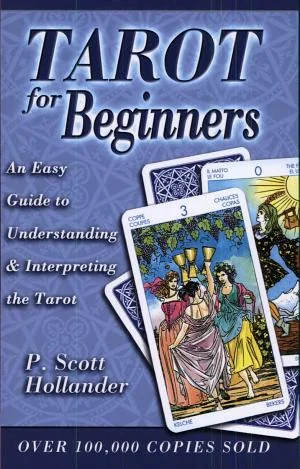
Tarot for Beginners
 74
74

Tarot for Beginners
Hollander’s "Tarot for Beginners" arrives not with a flourish, but with a quiet, methodical approach that serves its purpose admirably. The book’s strength lies in its clear, unadorned explanations of both the Major and Minor Arcana. Unlike many contemporary works that lean heavily on personal anecdote or New Age jargon, Hollander focuses on the archetypal narratives embedded within the cards themselves. His explanation of the Fool's journey through the Major Arcana, for instance, is particularly lucid, tracing a recognizable developmental arc. However, the limitation is precisely this methodical restraint; the work occasionally feels more like a technical manual than a spiritual guide. While it shows how to lay out cards and interpret them, the deeper, often chaotic, energies that the Tarot can evoke are hinted at rather than fully explored. The passage detailing the court cards, describing the Knight's forward motion and the Page's receptive stance, exemplifies this balance between information and evocative potential. Ultimately, "Tarot for Beginners" is a competent and reliable primer for those prioritizing systematic knowledge over esoteric immersion.
📝 Description
74
P. Scott Hollander's Tarot for Beginners, published in 2002, systematically breaks down the 78 Tarot cards.
This 2002 volume offers a structured approach to understanding the Tarot deck. Hollander details the 22 Major Arcana, explaining their archetypal imagery, and the 56 Minor Arcana, outlining their narrative structure. The book is aimed at newcomers to Tarot study, guiding them from basic symbolism to practical applications in readings.
It emphasizes how to read the visual language of each card as a distinct symbolic element. The text also covers how cards interact within a spread, forming a cohesive meaning. Hollander's aim is to move readers beyond surface interpretations to a deeper understanding of the cards' significance.
Published in 2002, Hollander's work draws on established interpretations of the Tarot, particularly those influenced by the Hermetic Order of the Golden Dawn. It situates itself within a contemporary resurgence of interest in esoteric subjects. The book aims to make these traditions accessible, focusing on the visual language and symbolic interconnectedness of the 78 cards for a modern audience.
💡 Why Read This Book?
• Gain a structured understanding of the 78-card Tarot deck, from the archetypal Major Arcana to the narrative Minor Arcana, as presented in Hollander's methodical breakdown. • Learn practical methods for card layout and interpretation, focusing on how individual cards interact within a spread, a technique detailed in the book's interpretive sections. • Grasp the core symbolism of key cards, such as the Fool's journey, which Hollander elucidates as a foundational concept for understanding personal growth depicted in the cards.
⭐ Reader Reviews
Honest opinions from readers who have explored this book.
❓ Frequently Asked Questions
What is the primary focus of P. Scott Hollander's Tarot for Beginners?
The book's primary focus is on describing and interpreting the symbolism of all 78 Tarot cards, including the 22 Major Arcana and 56 Minor Arcana, and demonstrating methods for card layout and interpretation.
When was Tarot for Beginners first published?
Tarot for Beginners by P. Scott Hollander was first published in September 2002.
Does the book explain how to read Tarot cards for others?
Yes, the book shows how to lay out the cards and interpret them in relation to each other, providing a foundation for reading for oneself or others.
What distinguishes the Major Arcana from the Minor Arcana according to this book?
The book distinguishes the Major Arcana by their archetypal significance and narrative progression, while the Minor Arcana are presented as detailing the unfolding of everyday life and specific situations.
Is this book suitable for experienced Tarot readers?
While it can serve as a refresher, the book is primarily geared towards beginners due to its foundational approach to symbolism and interpretation methods.
What is the historical context of Tarot for Beginners' publication?
Published in 2002, it appeared during a resurgent period for esoteric studies, building upon established interpretive traditions while aiming for accessibility.
🔮 Key Themes & Symbolism
Archetypal Journeys
The work meticulously details the 22 Major Arcana cards as representing fundamental stages of human experience and spiritual development. Hollander guides the reader through the archetypal journey, often beginning with the Fool and progressing through the challenges and triumphs symbolized by cards like The Tower and The World, framing these as universal narratives of growth and transformation.
Symbolic Language of the Minor Arcana
Beyond the grand narratives of the Majors, the 56 Minor Arcana cards are presented as reflecting the practicalities and nuances of daily life. Hollander explains how the four suits (Wands, Cups, Swords, Pentacles) correspond to different elemental forces and aspects of existence, and how numbered cards and court cards offer specific insights into events and personalities.
Interconnectedness of the Spread
A central tenet of Hollander's approach is the understanding that Tarot cards do not exist in isolation. The book emphasizes the practice of laying out cards and interpreting their relationships with one another. This method allows for a dynamic reading where the meaning of each card is influenced by its neighbors, creating a coherent message.
Foundational Interpretation Techniques
The volume provides practical guidance on how to approach a Tarot reading. It focuses on decoding the visual symbolism inherent in the card imagery, encouraging readers to connect with the intuitive aspects of interpretation while relying on established meanings. This dual approach aims to equip beginners with a solid interpretive framework.
💬 Memorable Quotes
Direct passages from the work, attributed to the author.
“The Minor Arcana detail the unfolding of everyday life.”
— This captures the essence of how Hollander categorizes the Minor Arcana, presenting them as practical guides to the events, challenges, and opportunities encountered in daily existence.
“Cards interpret each other within a spread.”
— This concise statement underscores the book's focus on relational interpretation, teaching readers that a Tarot reading is a conversation between cards, not just a collection of individual meanings.
“Understanding the symbolism of the Rider-Waite deck is key.”
— This interpretation points to the book's likely reliance on the widely recognized Rider-Waite-Smith imagery as the primary visual language for its explanations of Tarot symbolism.
💡 Key Ideas
Editorial paraphrase of the work's core concepts — not direct quotes.
The 22 Major Arcana cards represent fundamental stages of human experience.
This paraphrased concept highlights the book's emphasis on the archetypal nature of the Major Arcana, positioning them as universal milestones in a person's life or spiritual path.
The Fool starts a journey of transformation.
This paraphrased concept reflects the common narrative arc presented for the Fool card, emphasizing its role as the initiator of a significant personal or spiritual quest.
🌙 Esoteric Significance
Tradition
This work aligns with the Western Esoteric tradition, specifically drawing from the lineage that interprets Tarot as a symbolic system of spiritual development and divination. It engages with the tradition popularized by the Rider-Waite-Smith deck, which itself incorporated elements of Kabbalah and Hermeticism, presenting these complex ideas in a digestible format for newcomers.
Symbolism
The book likely focuses on core symbols within the Rider-Waite-Smith imagery. For instance, the Fool's journey represents the archetypal path of initiation and innocence confronting the unknown. The symbolism of the four suits—Wands (fire, action), Cups (water, emotion), Swords (air, intellect), and Pentacles (earth, material world)—is crucial for understanding the Minor Arcana's narrative of lived experience.
Modern Relevance
In contemporary practice, "Tarot for Beginners" serves as a foundational text for many individuals exploring self-divination and personal insight. Its clear, structured approach is relevant to modern mindfulness practices and therapeutic applications of Tarot, offering a stable interpretive framework before readers branch into more complex or personalized systems.
👥 Who Should Read This Book
• Aspiring Tarot enthusiasts seeking a clear, step-by-step introduction to the meanings and interpretation of all 78 cards. • Students of Western Esotericism interested in understanding the symbolic language of the Rider-Waite-Smith deck as a cultural and spiritual artifact. • Individuals looking for a practical guide to using Tarot for self-reflection and understanding personal challenges and opportunities.
📜 Historical Context
P. Scott Hollander's "Tarot for Beginners," published in 2002, entered a landscape shaped by the late 20th-century esoteric revival. It built upon the legacy of foundational Tarot works, many influenced by occult orders like the Hermetic Order of the Golden Dawn, which had popularized interpretations of decks like the Rider-Waite-Smith. Hollander’s approach, while acknowledging these traditions, aimed for a more accessible entry point than the dense theoretical works of figures like A.E. Waite or Aleister Crowley. The early 2000s saw continued popular interest in divination and self-help spirituality, with Tarot being a prominent subject. Unlike the more radical or esoteric philosophical explorations found in movements like Gnosticism or Theosophy, Hollander's work represents a pragmatic, instructional strand within contemporary Tarot study, focusing on practical application rather than deep philosophical divergence.
📔 Journal Prompts
Reflect on the Fool's journey as depicted in the Major Arcana, considering its initial steps.
Analyze the symbolism of the suit of Swords in relation to a recent intellectual challenge.
Consider the Knight's active symbolism within the Minor Arcana; how does it manifest in your life?
Map the interplay between the Queen and King archetypes within a specific reading context.
Explore the meaning of The World card in the context of completing a personal cycle.
🗂️ Glossary
Major Arcana
The 22 trump cards of a Tarot deck, representing significant life events, archetypal figures, and spiritual lessons. These cards are often seen as the major milestones in a journey.
Minor Arcana
The 56 cards of a Tarot deck divided into four suits (Wands, Cups, Swords, Pentacles), representing the day-to-day events, challenges, and influences in a person's life.
Spread
A specific arrangement of Tarot cards laid out for interpretation, designed to address particular questions or areas of focus in a reading.
Symbolism
The use of images, figures, or colors to represent abstract ideas or qualities, central to understanding the meaning of Tarot cards.
Court Cards
The four face cards in each suit of the Minor Arcana: Page, Knight, Queen, and King, often representing people, personality types, or specific approaches.
Rider-Waite-Smith Deck
A highly influential Tarot deck first published in 1910, known for its clear imagery and comprehensive symbolism, which forms the basis for many modern Tarot studies.
Archetype
A universal, inherited pattern of thought or imagery derived from the collective unconscious, often personified by figures like The Magician or The Hermit.
This book appears in 1 collection
🔮 Readers Also Liked
Browse all →









From the “Divination” Collection
View all →








More Free Occult Philosophy Books
View all →