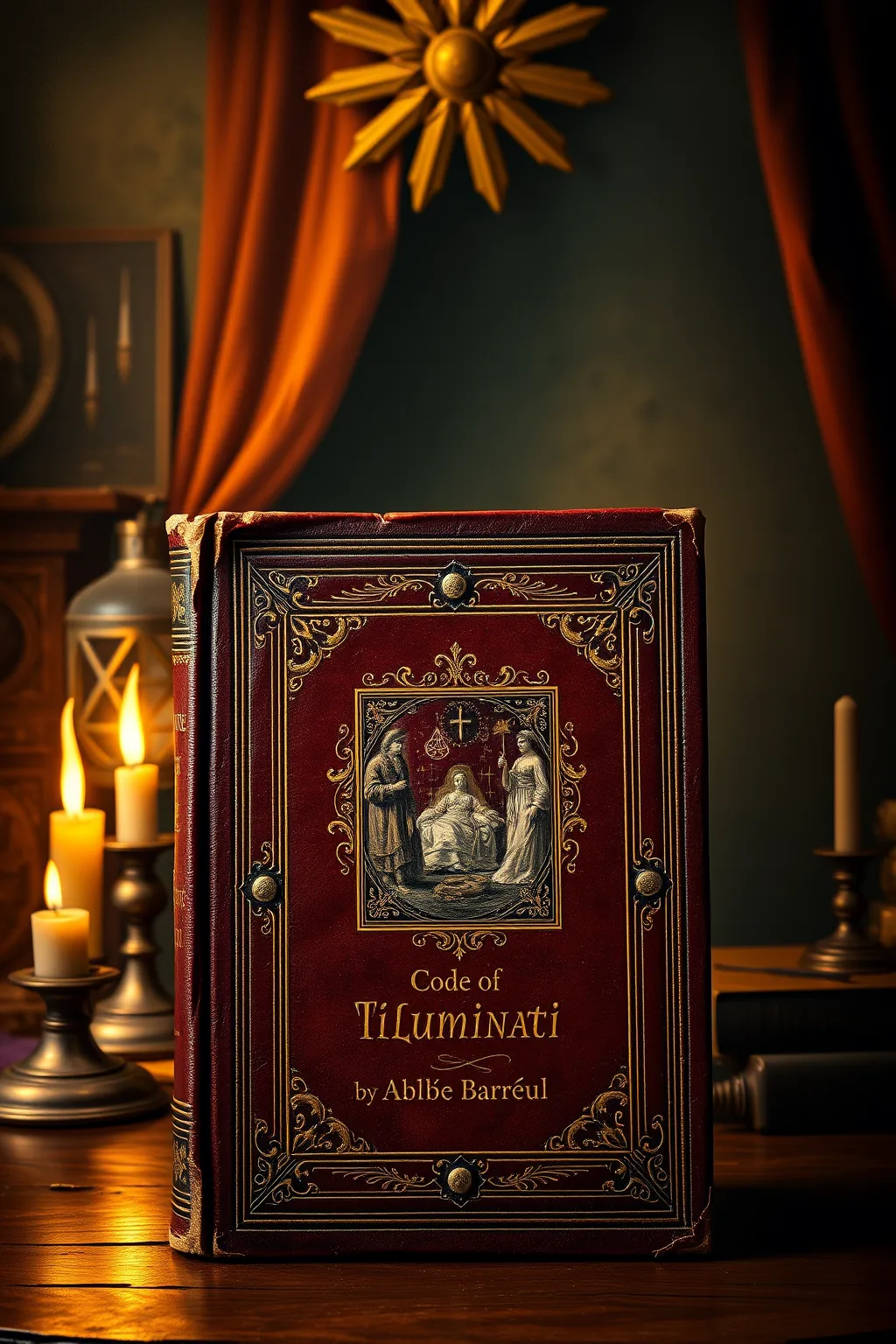
Code of the Illuminati
 76
76

Code of the Illuminati


Evander Ashcroft (Alchemy & Hermeticism Editor) — Abbé Barruel's 'Code of the Illuminati' remains an indispensable, albeit polemical, primary source for understanding the historical perception of the Bavarian Illuminati. This volume distinguishes itself by directly engaging with the foundational texts of the order, providing scholars and practitioners with unparalleled access to their purported doctrines and symbolic language. Barruel's fervent critique, while biased, inadvertently illuminates the esoteric aspirations and philosophical underpinnings that fueled such movements. For those seeking to understand the historical discourse surrounding secret societies and their perceived influence on societal upheaval, this work offers crucial, unvarnished insights into the fears and suspicions of a revolutionary era.
📝 Description
76
Abbé Barruel's 'Code of the Illuminati' (1798) claims to reveal the secret doctrines of the Bavarian Illuminati.
This is the third volume of Abbé Barruel's work concerning revolutionary movements. He details the alleged doctrines and rituals of the Bavarian Illuminati, a secret society. Barruel uses quotations from the group's own writings to explain their inner workings.
He suggests the Illuminati aimed to change society through hidden knowledge, arcane symbols, and philosophical ideas. Barruel connects their principles to Gnostic traditions and Enlightenment rationalism. The book is intended for those interested in occult philosophy and historical events.
It challenges common understandings of history by examining hidden influences. The work invites reflection on power and societal control. Barruel's book is often read alongside John Robison's 'Proofs of a Conspiracy.'
Barruel's work emerges from a late 18th-century milieu concerned with hidden societies and their perceived influence on political upheaval. It engages with traditions that posit secret knowledge or rituals as drivers of historical change. The book situates the Bavarian Illuminati within a lineage of movements, linking their aims to both esoteric Gnosticism and the secular philosophy of the Enlightenment. This perspective reflects a historical interpretation that sees occult currents as shaping public events, a common theme in esoteric literature of the period.
💡 Why Read This Book?
Uncover the purported intellectual and symbolic architecture of the Bavarian Illuminati. Gain direct access to their foundational texts as presented by a contemporary critic. Understand the historical context of secret society fears during the French Revolution. Ideal for scholars of esotericism, conspiracy theorists, and those fascinated by the hidden forces shaping history.
⭐ Reader Reviews
Honest opinions from readers who have explored this book.
❓ Frequently Asked Questions
What is the primary focus of 'Code of the Illuminati'?
This volume focuses on the detailed exposition of the Bavarian Illuminati's doctrines, rituals, and alleged revolutionary aims, directly quoting their own literature to reconstruct their inner workings and philosophical tenets.
How does this book relate to 'Proofs of a Conspiracy' by John Robison?
It is considered a complementary work, offering a different but equally significant contemporary account of the Bavarian Illuminati and their perceived threat, enriching the historical understanding of the era's secret society discourse.
Is Abbé Barruel's account considered unbiased?
No, Abbé Barruel was a fervent critic of the Illuminati and the French Revolution. While his work provides valuable quotes, his interpretations are heavily influenced by his strong anti-revolutionary and anti-Masonic stance.
What makes this book significant for esoteric studies?
It offers direct, albeit filtered, access to the primary source material and ideological framework of a historically significant esoteric organization, crucial for understanding their alleged impact and internal philosophy.
Who is the intended audience for this book?
Scholars of secret societies, historians of the French Revolution, practitioners of occult or esoteric traditions, and readers interested in the philosophical underpinnings of revolutionary movements and hidden knowledge.
🔮 Key Themes & Symbolism
The Illuminati's Esoteric Doctrine
Barruel meticulously reconstructs the purported esoteric philosophy of the Bavarian Illuminati, revealing a complex web of ideas that blended Enlightenment rationalism with veiled mystical aspirations. He looks at their alleged reinterpretation of religious and moral tenets, aiming to dismantle existing societal structures through the dissemination of hidden knowledge and the cultivation of a select elite. This theme explores the symbolic language, hierarchical progression, and the ultimate goal of achieving a transformed world order, as presented through Barruel's critical lens, offering a unique window into the perceived spiritual and intellectual underpinnings of this clandestine society.
Revolutionary Symbolism and Subversion
This volume examines the potent symbolism allegedly employed by the Illuminati to mask their subversive intentions and propagate their revolutionary agenda. Barruel highlights how seemingly innocuous signs and allegorical narratives were purportedly utilized to infiltrate and undermine established institutions, from religion to government. The 'Code' is presented as a key to deciphering this hidden language, revealing a systematic approach to societal manipulation that relied on the subtle application of ideas and the cultivation of discontent. Understanding this thematic thread is crucial for grasping Barruel's argument about the pervasive influence of secret societies on historical events.
The Polemic of Enlightenment and Occultism
Fundamentally, , 'Code of the Illuminati' is a profound polemic reflecting the anxieties of an era caught between the burgeoning forces of secular Enlightenment and enduring traditions of occult and mystical thought. Barruel frames the Illuminati as a perversion of true reason, a dangerous synthesis of Enlightenment ideals and secretive, potentially malevolent, occult practices. This theme explores the intellectual battleground of the late 18th century, where traditionalists grappled with new philosophies, and fears of hidden cabals manipulating society for nefarious ends were rampant. The book serves as a historical artifact of this intense philosophical and societal conflict.
💬 Memorable Quotes
Direct passages from the work, attributed to the author.
“Their initiation was a descent into a labyrinth of symbols, each step designed to reorient the mind.”
— This highlights the perceived ritualistic and psychological manipulation involved in Illuminati initiation, suggesting a process of indoctrination through symbolic immersion to alter one's worldview.
“They sought not to govern, but to dissolve the very foundations upon which governments stood.”
— This emphasizes the radical, anarchic potential attributed to the Illuminati's goals, suggesting their aim was not to seize power but to dismantle the existing social and political order entirely.
“Hidden knowledge was their currency, and doubt their most potent weapon.”
— This succinctly describes the perceived tools of the Illuminati: the exclusive possession of secret information to create an elite, and the strategic use of skepticism to undermine established beliefs and authorities.
💡 Key Ideas
Editorial paraphrase of the work's core concepts — not direct quotes.
The art of the Illuminati was to corrupt the spirit while appearing to reform it.
This quote captures Barruel's central argument: that the Illuminati's methods involved a deceptive manipulation of societal values, cloaking their radical agenda in the guise of progress and improvement.
The revolution was not an event, but the culmination of a carefully orchestrated, unseen design.
This quote reflects Barruel's core thesis of a conspiracy, positing that the French Revolution was not a spontaneous uprising but the product of a long-term, meticulously planned secret agenda orchestrated by groups like the Illuminati.
🌙 Esoteric Significance
Tradition
The work engages with traditions of Gnosticism and Hermeticism, albeit critically, by exploring concepts of hidden knowledge, secret initiations, and the pursuit of a radical societal transformation. Barruel's polemic highlights the perceived dangerous fusion of Enlightenment rationalism with esoteric doctrines, suggesting an attempt to manipulate spiritual principles for worldly power. The text offers insight into how these esoteric ideas were perceived and feared by contemporary conservative thinkers.
Symbolism
Barruel's analysis focuses on the symbolic language allegedly employed by the Illuminati to convey their doctrines and hierarchical structure. This includes interpretations of allegorical figures, ritualistic elements, and coded messages. The 'Code' itself implies a system of hidden meanings, where symbols are not merely decorative but are tools for indoctrination and the transmission of secret wisdom, designed to reshape the initiate's perception of reality and their role in society.
Modern Relevance
In an age where information and influence are constantly debated, Barruel's examination of how hidden knowledge and symbolic communication can be used to shape public discourse remains relevant. It prompts reflection on the nature of conspiracy theories, the historical roots of distrust in established institutions, and the enduring human fascination with secret societies and their perceived power to alter the course of history. The book serves as a case study in the anxieties surrounding hidden influence.
👥 Who Should Read This Book
Scholars of Freemasonry, secret societies, and the French Revolution will find 'Code of the Illuminati' an essential primary source, offering direct engagement with the perceived ideology of a key historical group. Esoteric practitioners and students of occult history can gain valuable context on how esoteric ideas were interpreted and feared during a central historical period. Seekers of hidden knowledge and alternative historical narratives will be drawn to the book's exposé of clandestine operations and philosophical subversion. Practitioners interested in the historical application of symbolic systems for societal influence will also find this work informative.
📜 Historical Context
Penned in the tumultuous aftermath of the French Revolution, Abbé Barruel's 'Code of the Illuminati' emerged from an era rife with fear, suspicion, and a fervent desire to understand the forces that had seemingly shattered the old order. The late 18th century was a crucible of intellectual ferment, marked by the Enlightenment's challenge to tradition and the rise of various philosophical and political movements. In this climate, secret societies, particularly the Freemasons and the more shadowy Bavarian Illuminati, became potent symbols of hidden influence and potential subversion. Barruel's work, alongside that of John Robison, was a direct product of this anxiety, aiming to expose what they believed were the clandestine machinations driving revolutionary change, shaping public perception and historical discourse for generations to come.
📔 Journal Prompts
What ethical considerations arise when analyzing a text written with a strong polemical agenda?
How does Barruel's interpretation of Illuminati symbolism differ from modern esoteric understandings?
In what ways does the concept of 'hidden knowledge' influence power dynamics in societies, both historically and today?
Reflect on the role of fear and suspicion in shaping historical narratives about secret organizations.
Consider the tension between Enlightenment rationalism and esoteric traditions as presented in this work.
🗂️ Glossary
Bavarian Illuminati
A secret society founded in Bavaria in 1776 by Adam Weishaupt, which aimed to promote Enlightenment ideals and oppose superstition and religious influence, but which Barruel depicts as a revolutionary and subversive organization.
Polemic
A strong verbal or written attack on someone or something, characterized by vigorous or aggressive argumentation, often intended to persuade or refute.
Esoteric
Intended for or likely to be understood by only a small number of people with a specialized knowledge or interest; relating to or having a hidden meaning.
Clandestine
Kept secret or done secretively, especially because illicit or forbidden; clandestine operations are conducted in secret, often with the aim of achieving a specific political or military objective.
Initiation
The process of being formally admitted to membership of a society or group, often involving rituals, symbolic acts, and the imparting of secret knowledge or teachings.
This book appears in 2 collections
🔮 Readers Also Liked
Browse all →









From the “Secret Societies” Collection
View all →








More Free Freemasonry & Secret Societies Books
View all →