The Builders
 77
77

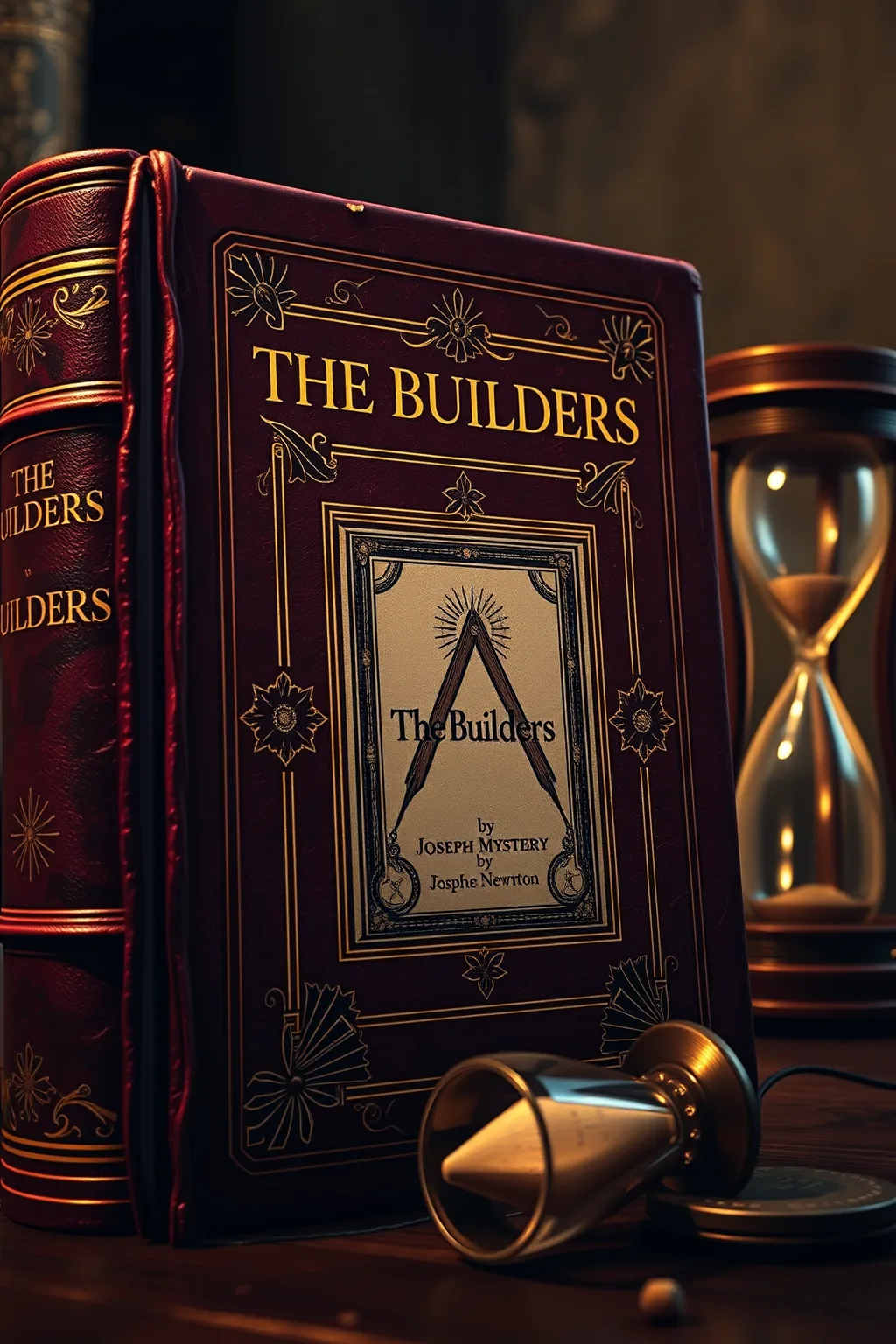
The Builders


Aurelia Blackwood (Occult Philosophy Critic) — Joseph Fort Newton's 'The Builders' is a rare gem, offering a comprehensive yet remarkably approachable survey of Masonic lore. Eschewing dry historical recitation, Newton delves into the esoteric heart of the Craft, illuminating its symbolic language and philosophical aspirations with clarity and grace. This work stands as a testament to Masonry's enduring legacy as a vehicle for spiritual growth and the pursuit of hidden knowledge. Its elegant prose and insightful interpretations make it an indispensable primer for neophytes and a valuable refresher for seasoned brethren, providing a solid foundation for further contemplation of the Great Architect's design.
📝 Description
77
Joseph Fort Newton published 'The Builders' in 1914, seeking to illuminate Freemasonry's philosophical core.
Joseph Fort Newton's 'The Builders,' first published in 1914, examines the philosophical underpinnings of Freemasonry. Newton traces the order's roots from operative stonemasons to speculative philosophers who adapted their craft into a moral allegory. The book deciphers the symbolism and veiled philosophies within the fraternity, presenting them in a way that is both scholarly and accessible.
Newton frames Freemasonry not just as a historical institution but as a symbolic system for understanding the universe and the individual's spiritual development. He connects the pursuit of light and truth within Masonic traditions to broader human aspirations across different eras. The work aims to reveal the deeper currents of wisdom embedded in Masonic teachings.
Published in 1914, 'The Builders' emerged during a period of renewed interest in esoteric traditions and secret societies. Newton positions Freemasonry within a lineage of ancient mystery schools and philosophical systems that seek to impart moral and spiritual understanding through ritual and allegory. The book connects Masonic symbolism to broader concepts of universal architecture and the divine blueprint, aligning it with Hermetic and Neoplatonic thought prevalent in esoteric literature of the time.
💡 Why Read This Book?
Embark on a journey into the soul of Freemasonry. 'The Builders' offers a clear, profound exploration of its origins, history, and philosophical depth, making esoteric wisdom accessible. Ideal for new Masons seeking foundational knowledge, scholars of secret societies, and spiritual seekers drawn to ancient symbolism and the quest for self-improvement through allegorical learning.
⭐ Reader Reviews
Honest opinions from readers who have explored this book.
❓ Frequently Asked Questions
Is 'The Builders' suitable for non-Masons?
Absolutely. While foundational to Masonic understanding, Newton's clear prose and focus on universal philosophical themes make it profoundly enlightening for anyone interested in symbolism, ancient wisdom traditions, and the pursuit of personal growth.
What is the primary focus of 'The Builders'?
The book provides a general survey of Masonic origins, history, and philosophy, emphasizing its symbolic and allegorical dimensions as a path to moral and spiritual enlightenment.
How does 'The Builders' compare to other Masonic texts?
'The Builders' is lauded for its scholarly yet approachable tone, making it a more accessible entry point than denser works like 'Morals and Dogma,' offering a solid foundation without overwhelming the reader.
What kind of symbolism is explored in this book?
Newton delves into the rich symbolism of operative stonemasonry, translating its tools and practices into allegorical lessons for spiritual and ethical development, revealing the hidden meanings within Masonic rituals.
Is this book primarily historical or philosophical?
It masterfully blends both. Newton traces the historical evolution of Freemasonry while deeply exploring its philosophical and spiritual dimensions, presenting it as a path to self-discovery and understanding the universe.
🔮 Key Themes & Symbolism
The Architect and the Blueprint
This theme explores the central concept of the Great Architect of the Universe, not as a specific deity, but as the divine principle of order and creation. Newton elucidates how Masonic philosophy views humanity as co-creators, tasked with building a spiritual temple within themselves and contributing to the betterment of society. The 'blueprint' represents the divine plan and the inherent potential for perfection within each individual, a concept deeply rooted in Hermetic and Neoplatonic thought.
Symbolism of the Craft
Newton meticulously deciphers the symbolic language of operative stonemasonry, transforming the tools and processes of building into potent allegories for moral and spiritual development. From the rough ashlar representing the unrefined self to the perfect ashlar symbolizing spiritual attainment, each symbol serves as a key to unlocking deeper truths about human nature, virtue, and the universal laws of harmony and proportion.
The Quest for Light and Truth
Fundamentally, , 'The Builders' illuminates Freemasonry as a perennial quest for 'Light'—knowledge, wisdom, and spiritual illumination. Newton frames this journey as an ascent from darkness to enlightenment, a process of self-discovery and the pursuit of higher understanding. This theme speaks to ancient mystery traditions and the alchemical pursuit of the Philosopher's Stone, symbolizing the transformation of the soul.
💬 Memorable Quotes
Direct passages from the work, attributed to the author.
“A Mason is a builder, a man who builds.”
— This highlights the active, participatory nature of Masonry, emphasizing personal responsibility and the continuous effort required for spiritual and moral construction.
“The temple is within us.”
— This profound statement points to the internal nature of spiritual growth, suggesting that true enlightenment and perfection are cultivated through introspection and self-mastery.
“Masonry is the oldest of all the orders.”
— This asserts the antiquity and universality of Masonic principles, connecting it to ancient wisdom traditions and the enduring human search for meaning and order.
“It is a fraternity of men who have taken up the tools of Masonry.”
— This emphasizes the communal aspect and the shared purpose of Masons, uniting them in a common endeavor of self-improvement and mutual support through symbolic practice.
“The Lodge is a place where men meet to build.”
— This defines the Masonic Lodge as a sacred space for collective spiritual work, a crucible where individuals are shaped and contribute to a larger edifice of brotherhood and wisdom.
🌙 Esoteric Significance
Tradition
Newton's 'The Builders' deeply engages with the Western Esoteric Tradition, drawing parallels with Hermeticism, Neoplatonism, Gnosticism, and Kabbalah. It frames Freemasonry as a continuation of ancient mystery schools, where symbolic rituals and allegorical teachings serve as keys to unlocking spiritual truths and fostering personal transformation, aligning with the perennial philosophy of universal wisdom.
Symbolism
The book is a body of Masonic symbolism, meticulously explained. Key symbols like the Square and Compasses, the Rough and Perfect Ashlars, the Trowel, and the Plumb Rule are unpacked, revealing their profound allegorical meanings concerning morality, virtue, self-discipline, and the construction of a spiritual life. Newton shows how these symbols serve as a universal language for understanding cosmic order and human potential.
Modern Relevance
In an age often characterized by materialism and fragmentation, 'The Builders' offers a compelling antidote. Its emphasis on brotherhood, moral rectitude, and the pursuit of inner light remains profoundly relevant. The book's exploration of timeless philosophical questions and its call for personal construction of character and community resonate deeply with modern seekers of meaning, wisdom, and authentic connection.
👥 Who Should Read This Book
This key work is essential for a wide audience. Newly initiated Masons will find it an invaluable, accessible guide to the core tenets and symbolism of the Craft. Experienced brethren will rediscover the profound depths of their tradition. Scholars of secret societies and Western esotericism will appreciate its comprehensive overview and insightful analysis. Spiritual seekers, regardless of affiliation, drawn to ancient wisdom, symbolic language, and the quest for self-improvement, will find 'The Builders' a deeply enlightening and inspiring read.
📜 Historical Context
Written in the early 20th century, Joseph Fort Newton's 'The Builders' emerged during a period of renewed interest in esoteric traditions and philosophical inquiry. The era saw a flourishing of scholarship on ancient civilizations, mystery religions, and the roots of Western mysticism. Freemasonry, with its detailed symbolism and historical lineage, was a focal point for many seeking deeper meaning in a rapidly changing world. Newton's work skillfully bridges the gap between historical accounts and philosophical interpretation, reflecting the intellectual currents of his time while offering timeless insights into the Craft's enduring appeal. It stands as a proof of the persistent human desire for fraternity, self-discovery, and the understanding of life's deeper mysteries.
📔 Journal Prompts
Reflect on a time you felt like a 'builder' in your own life. What were you constructing, and what tools did you use?
How does the concept of the 'Great Architect' resonate with your personal understanding of the universe and your place within it?
Choose one Masonic symbol discussed in the book and explore its personal meaning for you. How can you 'apply' it to your daily life?
Consider the idea of building a 'spiritual temple.' What are the foundational elements of such a temple for you?
In what ways can the principles of Freemasonry, as presented in 'The Builders,' contribute to creating a more harmonious and enlightened society?
🗂️ Glossary
Ashlar
Refers to a stone prepared for building. In Masonry, the 'rough ashlar' represents the unrefined individual, while the 'perfect ashlar' symbolizes the enlightened and perfected self, shaped by moral and spiritual discipline.
Operative Masonry
The historical practice of stonemasonry, focused on the physical construction of buildings. Newton uses its principles and tools as the foundation for understanding speculative Masonry.
Speculative Masonry
The philosophical and symbolic interpretation of operative Masonry, focusing on moral, ethical, and spiritual development rather than physical construction.
Lodge
The local assembly or meeting place of Freemasons, considered a sacred space for ritual, instruction, and fellowship.
Light
A central Masonic concept representing knowledge, wisdom, truth, and spiritual illumination, often sought through the Masonic journey.
This book appears in 2 collections
🔮 Readers Also Liked
Browse all →









From the “Secret Societies” Collection
View all →





More Free Freemasonry & Secret Societies Books
View all →